

The craft’s April 25 flight was conducted at speeds and distances beyond what had ever been previously demonstrated, even in testing on Earth.
NASA’s Ingenuity Mars Helicopter continues to set records, flying faster and farther on Sunday, April 25, 2021 than in any tests it went through on Earth. The helicopter took off at 4:31 a.m. EDT (1:31 a.m. PDT) , or 12:33 p.m. local Mars time, rising 16 feet (5 meters) – the same altitude as its second flight. Then it zipped downrange 164 feet (50 meters), just over half the length of a football field, reaching a top speed of 6.6 feet per second (2 meters per second).
After data came back from Mars starting at 10:16 a.m. EDT (7:16 a.m. PDT), Ingenuity’s team at NASA’s Jet Propulsion Laboratory in Southern California was ecstatic to see the helicopter soaring out of view. They’re already digging through a trove of information gathered during this third flight that will inform not just additional Ingenuity flights but possible Mars rotorcraft in the future.
NASA’s Ingenuity Mars Helicopter takes off and lands in this video captured on April 25, 2021, by Mastcam-Z, an imager aboard NASA’s Perseverance Mars rover. As expected, the helicopter flew out of its field of vision while completing a flight plan that took it 164 feet (50 meters) downrange of the landing spot. Keep watching, the helicopter will return to stick the landing. Credit: NASA/JPL-Caltech/ASU/MSSS
“Today’s flight was what we planned for, and yet it was nothing short of amazing,” said Dave Lavery, the project’s program executive for Ingenuity Mars Helicopter at NASA Headquarters in Washington. “With this flight, we are demonstrating critical capabilities that will enable the addition of an aerial dimension to future Mars missions.”
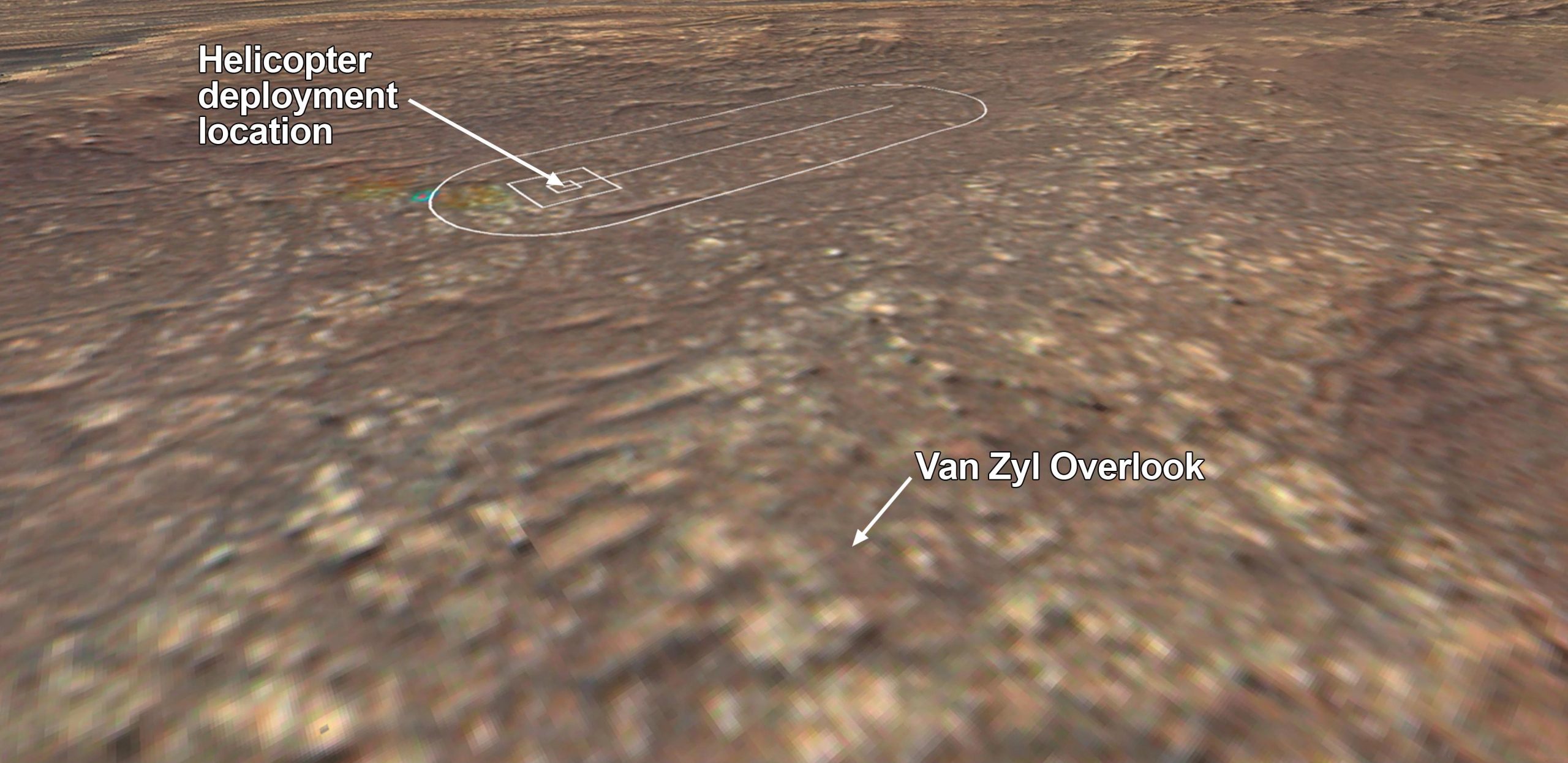
The Mastcam-Z imager aboard NASA’s Perseverance Mars rover, which is parked at “Van Zyl Overlook” and serving as a communications base station, captured video of Ingenuity. In the days ahead, segments of that video will be sent back to Earth showing most of the helicopter’s 80-second journey across its flight zone.
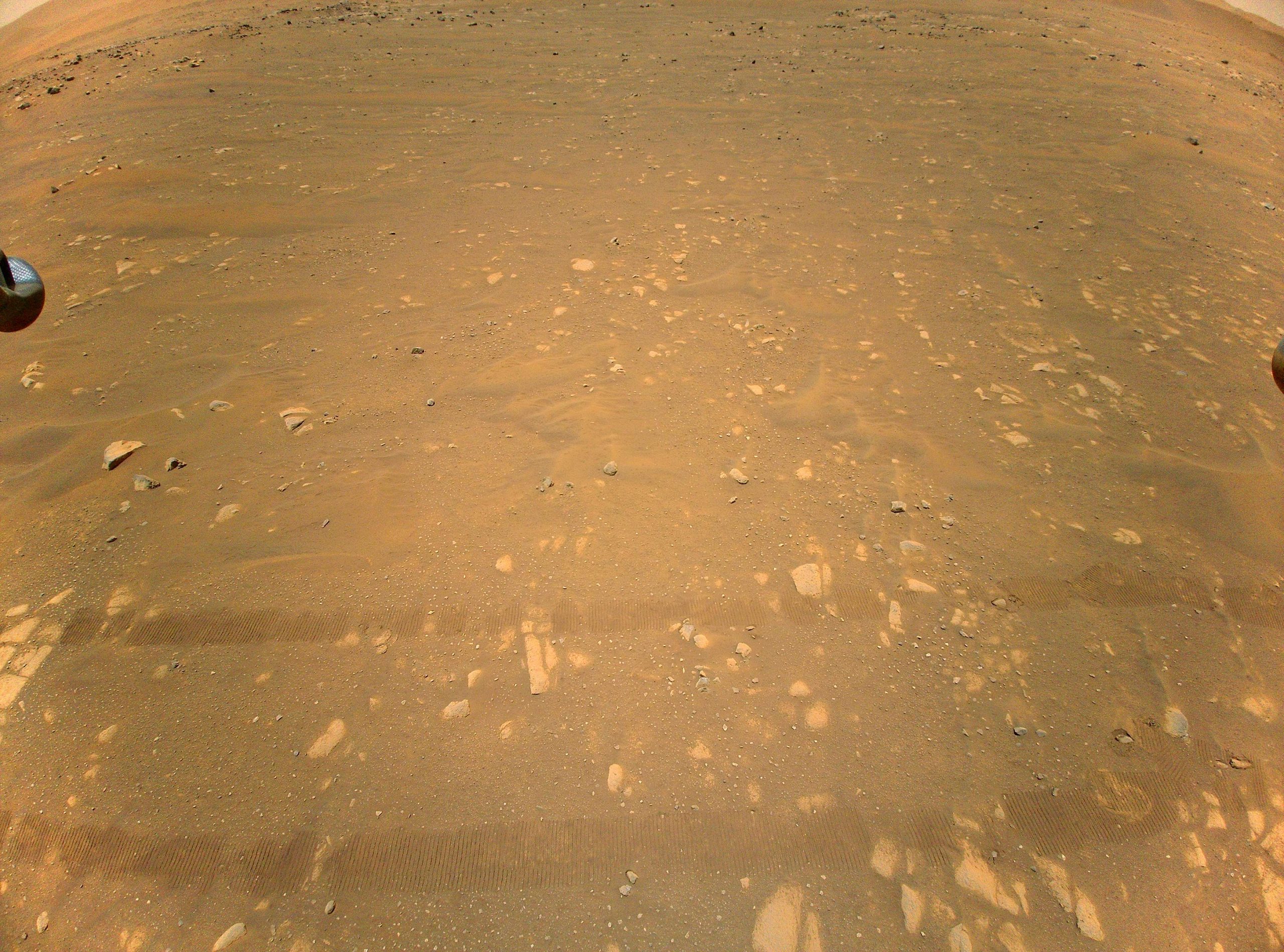
The Ingenuity team has been pushing the helicopter’s limits by adding instructions to capture more photos of its own – including from the color camera, which captured its first images on Flight Two. As with everything else about these flights, the additional steps are meant to provide insights that could be used by future aerial missions.
Ingenuity’s third flight achieved a longer flight time and more sideways movement than previously attempted. During the 80-second flight, the helicopter climbed to 16 feet (5 meters) and flew 164 feet (50 meters) downrange and back, for a total distance of 328 feet (100 meters). The third flight test took place at “Wright Brothers Field” in Jezero Crater, Mars, on April 25, 2021. Credit: NASA/JPL-Caltech
The helicopter’s black-and-white navigation camera, meanwhile, tracks surface features below, and this flight put the onboard processing of these images to the test. Ingenuity’s flight computer, which autonomously flies the craft based on instructions sent up hours before data is received back on Earth, utilizes the same resources as the cameras. Over greater distances, more images are taken. If Ingenuity flies too fast, the flight algorithm can’t track surface features.
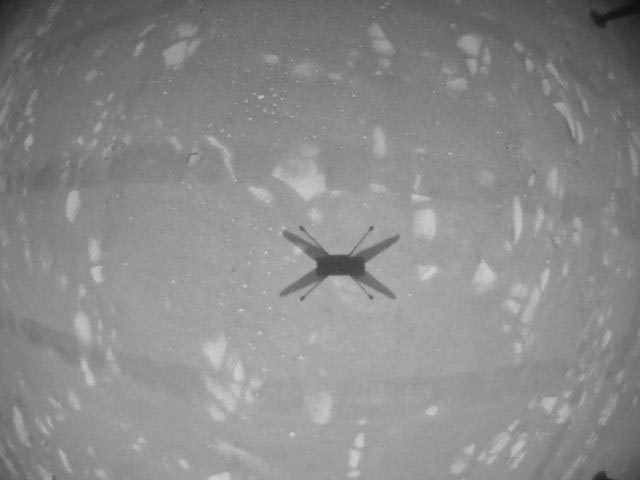
“This is the first time we’ve seen the algorithm for the camera running over a long distance,” said MiMi Aung, the helicopter’s project manager at JPL. “You can’t do this inside a test chamber.”
Vacuum chambers at JPL are filled with wispy air, primarily carbon dioxide, to simulate the thin Martian atmosphere; they don’t have room for even a tiny helicopter to move more than about 1.6 feet (half a meter) in any direction. That posed a challenge: Would the camera track the ground as designed while moving at higher speed on the Red Planet?
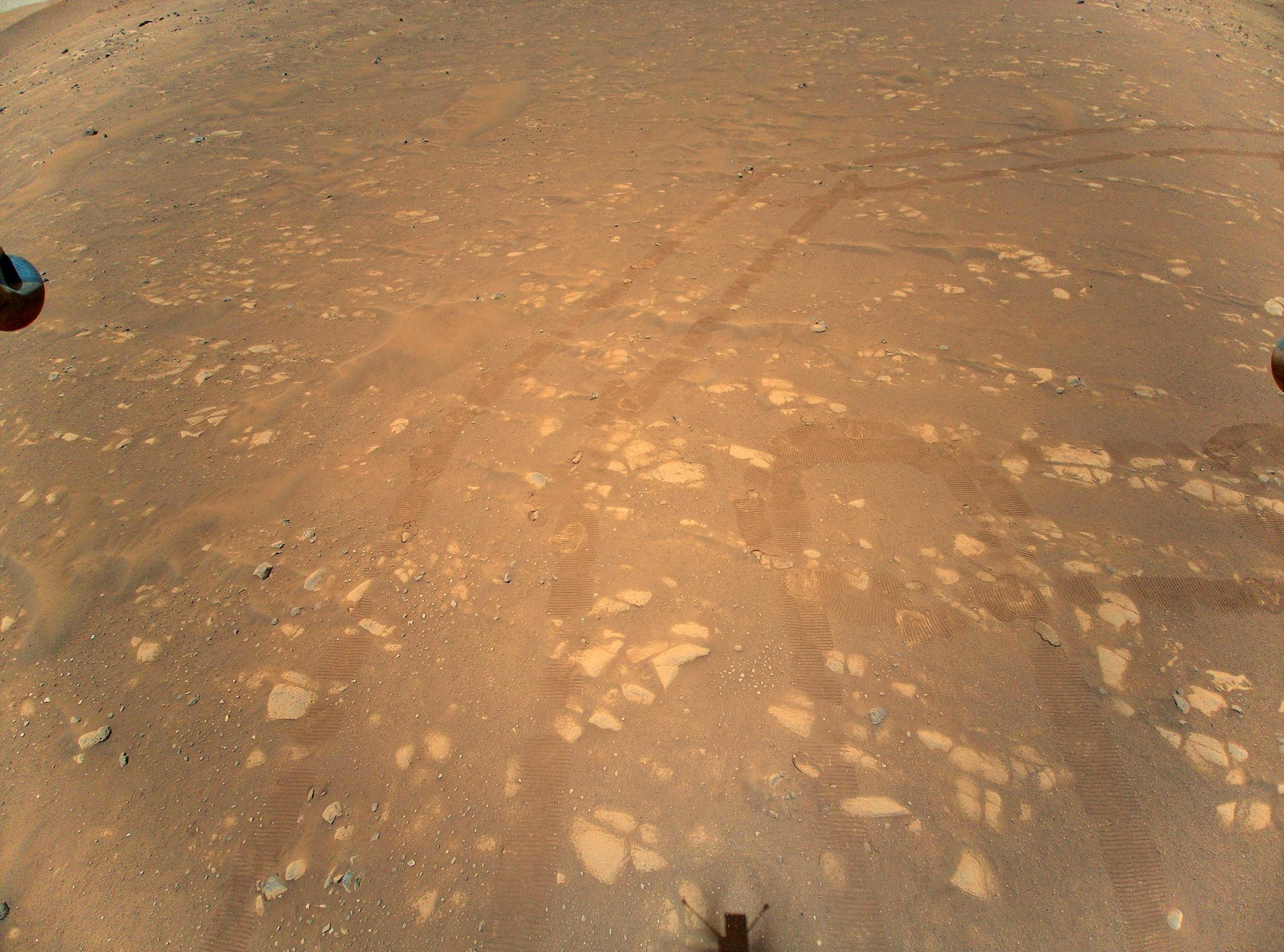
Lots of things have to go just right for the camera to do that, said Gerik Kubiak, a JPL software engineer. Aside from focusing on the algorithm that tracks surface features, the team needs the correct image exposures: Dust can obscure the images and interfere with camera performance. And the software must perform consistently.
“When you’re in the test chamber, you have an emergency land button right there and all these safety features,” Kubiak said. “We have done all we can to prepare Ingenuity to fly free without these features.”
With this third flight in the history books, the Ingenuity Mars Helicopter team is looking ahead to planning its fourth flight in a few days’ time.
The Ingenuity Mars Helicopter was built by JPL, which also manages this technology demonstration project for NASA Headquarters. It is supported by NASA’s Science Mission Directorate, Aeronautics Research Mission Directorate, and Space Technology Mission Directorate. NASA’s Ames Research Center and Langley Research Center provided significant flight performance analysis and technical assistance during Ingenuity’s development. AeroVironment Inc., Qualcomm, Snapdragon, and SolAero also provided design assistance and major vehicle components. The Mars Helicopter Delivery System was designed and manufactured by Lockheed Space Systems, Denver.
Never miss a breakthrough: Join the SciTechDaily newsletter.
Follow us on Google and Google News.
2 Comments
That is SO neat. I wondering in the future when Ingenuity is brought back, how much it will fetch on eBay?
So very cool. I’m wondering when it is brought back to Earth, how much it will fetch on eBay?