
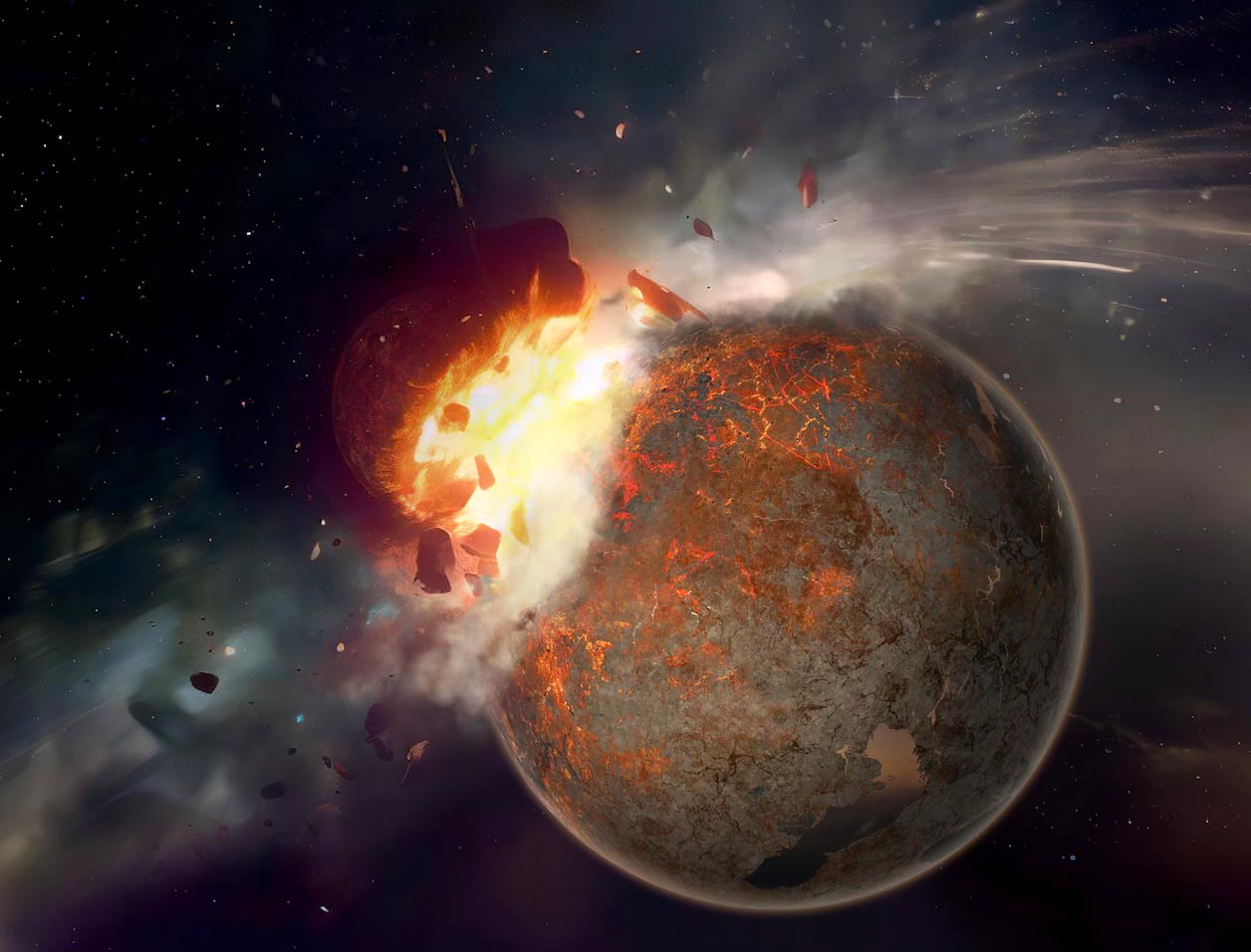
MIT researchers have found rare remnants of the planet that existed before Earth’s catastrophic formation.
Traces of an ancient potassium isotope imbalance were detected in some of the oldest rocks on the planet. These chemical clues suggest that tiny amounts of proto-Earth material survived the giant impact that created the modern Earth, revealing a glimpse into our planet’s earliest history.
Discovery of Proto-Earth Remnants
Scientists from MIT and several international institutions have uncovered exceptionally rare traces of “proto Earth,” the ancient version of our planet that existed about 4.5 billion years ago. This early Earth formed before a massive collision forever changed its makeup and created the world we know today. The results, published in Nature Geosciences, provide new insight into the original building materials that shaped both the young Earth and the wider solar system.
Billions of years ago, the solar system began as a swirling cloud of gas and dust. Over time, this material clumped together, forming the first meteorites. These early space rocks eventually merged to create the proto Earth and the other planets that orbit the Sun.
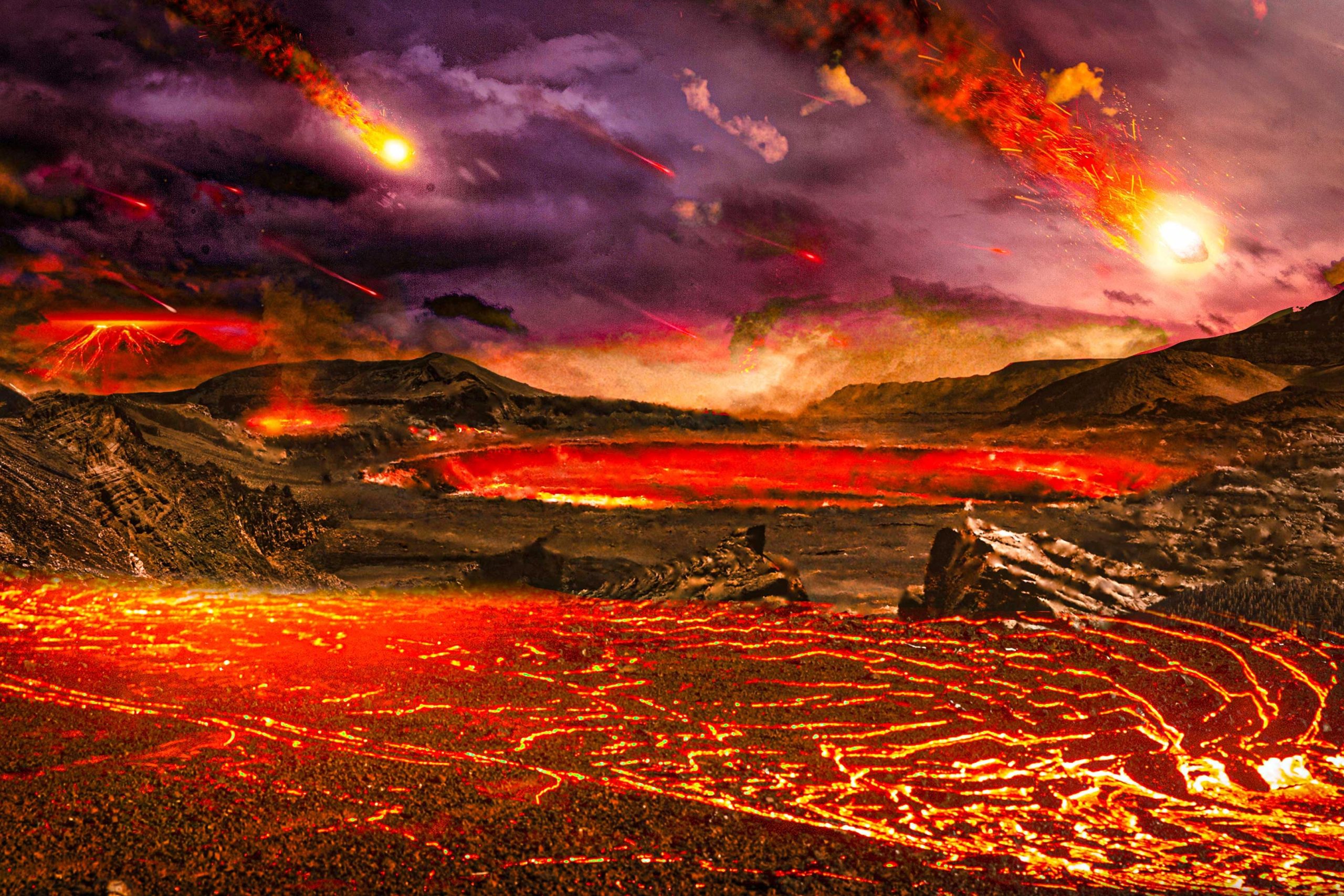
During its earliest days, Earth was a molten, volcanic world. Less than 100 million years later, a Mars-sized object collided with it in a dramatic “giant impact.” The event melted and mixed the planet’s interior, erasing almost all of its initial chemistry. Scientists had long believed that this collision completely destroyed any remaining pieces of the proto Earth.
A Surprising Signature in Ancient Rocks
The MIT team’s discovery challenges that long-held view. Researchers identified an unusual chemical pattern in some of Earth’s oldest rocks, an imbalance in potassium isotopes, that does not match most materials found on the planet today. This subtle difference was detected in samples taken from ancient, deep rock formations. The team concluded that the potassium variation could not have been caused by later impacts or by any known geological activity within the Earth.
The evidence points to a striking possibility: these rocks may preserve material from the original proto Earth, surviving intact through the planet’s violent formation and evolution.
Preserving a Piece of the Primordial Planet
“This is maybe the first direct evidence that we’ve preserved the proto Earth materials,” says Nicole Nie, the Paul M. Cook Career Development Assistant Professor of Earth and Planetary Sciences at MIT. “We see a piece of the very ancient Earth, even before the giant impact. This is amazing because we would expect this very early signature to be slowly erased through Earth’s evolution.”
The research team also included Da Wang of Chengdu University of Technology (China), Steven Shirey and Richard Carlson of the Carnegie Institution for Science (Washington, D.C.), Bradley Peters of ETH Zürich (Switzerland), and James Day of the Scripps Institution of Oceanography (California).
A Curious Anomaly Emerges
In 2023, Nie and her colleagues analyzed many of the major meteorites that have been collected from sites around the world and carefully studied. Before impacting the Earth, these meteorites likely formed at various times and locations throughout the solar system, and therefore represent the solar system’s changing conditions over time. When the researchers compared the chemical compositions of these meteorite samples to Earth, they identified among them a “potassium isotopic anomaly.”
Isotopes are slightly different versions of an element that have the same number of protons but a different number of neutrons. The element potassium can exist in one of three naturally-occurring isotopes, with mass numbers (protons plus neutrons) of 39, 40, and 41, respectively. Wherever potassium has been found on Earth, it exists in a characteristic combination of isotopes, with potassium-39 and potassium-41 being overwhelmingly dominant. Potassium-40 is present, but at a vanishingly small percentage in comparison.
Nie and her colleagues discovered that the meteorites they studied showed balances of potassium isotopes that were different from most materials on Earth. This potassium anomaly suggested that any material that exhibits a similar anomaly likely predates Earth’s present composition. In other words, any potassium imbalance would be a strong sign of material from the proto Earth, before the giant impact reset the planet’s chemical composition.
“In that work, we found that different meteorites have different potassium isotopic signatures, and that means potassium can be used as a tracer of Earth’s building blocks,” Nie explains.
“Built Different”: Earth’s Deep Chemical Secrets
In the current study, the team looked for signs of potassium anomalies not in meteorites, but within the Earth. Their samples include rocks, in powder form, from Greenland and Canada, where some of the oldest preserved rocks are found. They also analyzed lava deposits collected from Hawaii, where volcanoes have brought up some of the Earth’s earliest, deepest materials from the mantle (the planet’s thickest layer of rock that separates the crust from the core).
“If this potassium signature is preserved, we would want to look for it in deep time and deep Earth,” Nie says.
Ancient Rocks, Modern Tools
The team first dissolved the various powder samples in acid, then carefully isolated any potassium from the rest of the sample and used a special mass spectrometer to measure the ratio of each of potassium’s three isotopes. Remarkably, they identified in the samples an isotopic signature that was different from what’s been found in most materials on Earth.
Specifically, they identified a deficit in the potassium-40 isotope. In most materials on Earth, this isotope is already an insignificant fraction compared to potassium’s other two isotopes. But the researchers were able to discern that their samples contained an even smaller percentage of potassium-40. Detecting this tiny deficit is like spotting a single grain of brown sand in a bucket rather than a scoop full of of yellow sand.
The team found that, indeed, the samples exhibited the potassium-40 deficit, showing that the materials “were built different,” says Nie, compared to most of what we see on Earth today.
But could the samples be rare remnants of the proto Earth? To answer this, the researchers assumed that this might be the case. They reasoned that if the proto Earth were originally made from such potassium-40-deficient materials, then most of this material would have undergone chemical changes — from the giant impact and subsequent, smaller meteorite impacts — that ultimately resulted in the materials with more potassium-40 that we see today.
Simulating Earth’s Fiery Past
The team used compositional data from every known meteorite and carried out simulations of how the samples’ potassium-40 deficit would change following impacts by these meteorites and by the giant impact. They also simulated geological processes that the Earth experienced over time, such as the heating and mixing of the mantle. In the end, their simulations produced a composition with a slightly higher fraction of potassium-40 compared to the samples from Canada, Greenland, and Hawaii. More importantly, the simulated compositions matched those of most modern-day materials.
The work suggests that materials with a potassium-40 deficit are likely leftover original material from the proto Earth.
The Mystery of Missing Meteorites
Curiously, the samples’ signature isn’t a precise match with any other meteorite in geologists’ collections. While the meteorites in the team’s previous work showed potassium anomalies, they aren’t exactly the deficit seen in the proto Earth samples. This means that whatever meteorites and materials originally formed the proto Earth have yet to be discovered.
“Scientists have been trying to understand Earth’s original chemical composition by combining the compositions of different groups of meteorites,” Nie says. “But our study shows that the current meteorite inventory is not complete, and there is much more to learn about where our planet came from.”
Reference: “Potassium-40 isotopic evidence for an extant pre-giant-impact component of Earth’s mantle” by Da Wang, Nicole X. Nie, Bradley J. Peters, James M. D. Day, Steven B. Shirey and Richard W. Carlson, 14 October 2025, Nature Geoscience.
DOI: 10.1038/s41561-025-01811-3
This work was supported, in part, by NASA and MIT.
Never miss a breakthrough: Join the SciTechDaily newsletter.
Follow us on Google and Google News.
7 Comments
Yeeeah, I digress.. ridiculous..
Interesting. K-40 has a half life of about 1.25 billion years, so undisturbed material from the birth of the earth would survive about three half lives meaning only about 12% of the original amount would survive till now.
It would be interesting to know if there are sources of K-40 other than supernovas. Do cosmic rays impinging on meteorites create K-40 which would explain the higher levels of it there?
Interesting question. K-40 isn’t listed as cosmogenic (from cosmic rays) but most supposedly comes from massive star supernovas and some from binary star white dwarf supernovas (as they accumulate too much mass from their companion or collide with it). [Sources: Wikipedia articles.]
So you are telling us that a Mars size object collided with Earth but left no actual physical evidence?
No huge craters, no debris, nothing?
Just some isotopes in rocks?
……………………………….fairy tale.
The Moon is the remaining debris, and the collision was so huge it remelted the Earth mantle so no crater left.
Here they found added evidence, to the one’s already known.
This is not a fairy tale, it is the standard theory [Wikipedia]:
“Analysis of lunar rocks published in a 2016 report suggests that the impact might have been a direct hit, causing a fragmentation and thorough mixing of both parent bodies.[6]
The giant-impact hypothesis is currently the favored hypothesis for lunar formation among astronomers.[7] Evidence that supports this hypothesis includes:
The Moon’s orbit has a similar orientation to Earth’s rotation,[8] both of which are at a similar angle to the ecliptic plane of the Solar System.
The stable isotope ratios of lunar and terrestrial rock are identical, implying a common origin.[9]
The Earth–Moon system contains an anomalously high angular momentum, meaning the momentum contained in Earth’s rotation, the Moon’s rotation and the Moon revolving around Earth is significantly higher than the other terrestrial planets. A giant impact might have supplied this excess momentum.
Moon samples indicate that the Moon was once molten to a substantial, but unknown, depth. This might have required much more energy than predicted to be available from the accretion of a celestial body of the Moon’s size and mass. An extremely energetic process, such as a giant impact, could provide this energy.
The Moon has a relatively small iron core, which gives it a much lower density than Earth. Computer models of a giant impact of a Mars-sized body with Earth indicate the impactor’s core would likely penetrate deep into Earth and fuse with its own core. This would leave the Moon, which was formed from coalesced ejectae of lighter crustal and mantle fragments that went far enough beyond the Roche limit and thus were not pulled back by Earth’s gravity to re-fuse with Earth, with less remaining metallic iron than other planetary bodies.
The Moon is depleted in volatile substances compared to Earth. Vaporizing at comparably lower temperatures, they could be lost in a high-energy event, with the Moon’s smaller gravity unable to recapture them while Earth did.
There is evidence in other star systems of similar collisions, resulting in debris discs.
Giant collisions are consistent with the leading theory of the formation of the Solar System.
However, several questions remain concerning the best current models of the giant-impact hypothesis.”
This is fascinating! The idea that we can find traces of Earth’s earliest form is mind-blowing. It really makes you think about how much we still have to learn about our planet’s history.
Father, I desire that they also whom You gave Me may be with Me where I am, that they may behold My glory which You have given Me; for You have loved Me before the foundation of the world. (John 17:24).