
Close Menu
    Facebook X (Twitter) Instagram
    SciTechDaily
    • Biology
    • Chemistry
    • Earth
    • Health
    • Physics
    • Science
    • Space
    • Technology
    Facebook X (Twitter) Pinterest YouTube RSS
    SciTechDaily
    Home»Health»Pacemaker of the Future Could Harvest Kinetic Energy From the Heart – No Battery Needed
    Health

    Pacemaker of the Future Could Harvest Kinetic Energy From the Heart – No Battery Needed

    By American Institute of PhysicsAugust 4, 2021No Comments2 Mins Read
    Facebook Twitter Pinterest Telegram LinkedIn WhatsApp Email Reddit
    Share
    Facebook Twitter LinkedIn Pinterest Telegram Email Reddit
    Batteryless Pacemaker To Harvest Kinetic Energy
    The cardiac pacemaker of the future could be powered by the heart itself, according to researchers at Shanghai Jiao Tong University. Credit: Yi Zhiran

    Method requires scavenging heart kinetic energy as a power source.

    The cardiac pacemaker of the future could be powered by the heart itself, according to researchers at Shanghai Jiao Tong University.

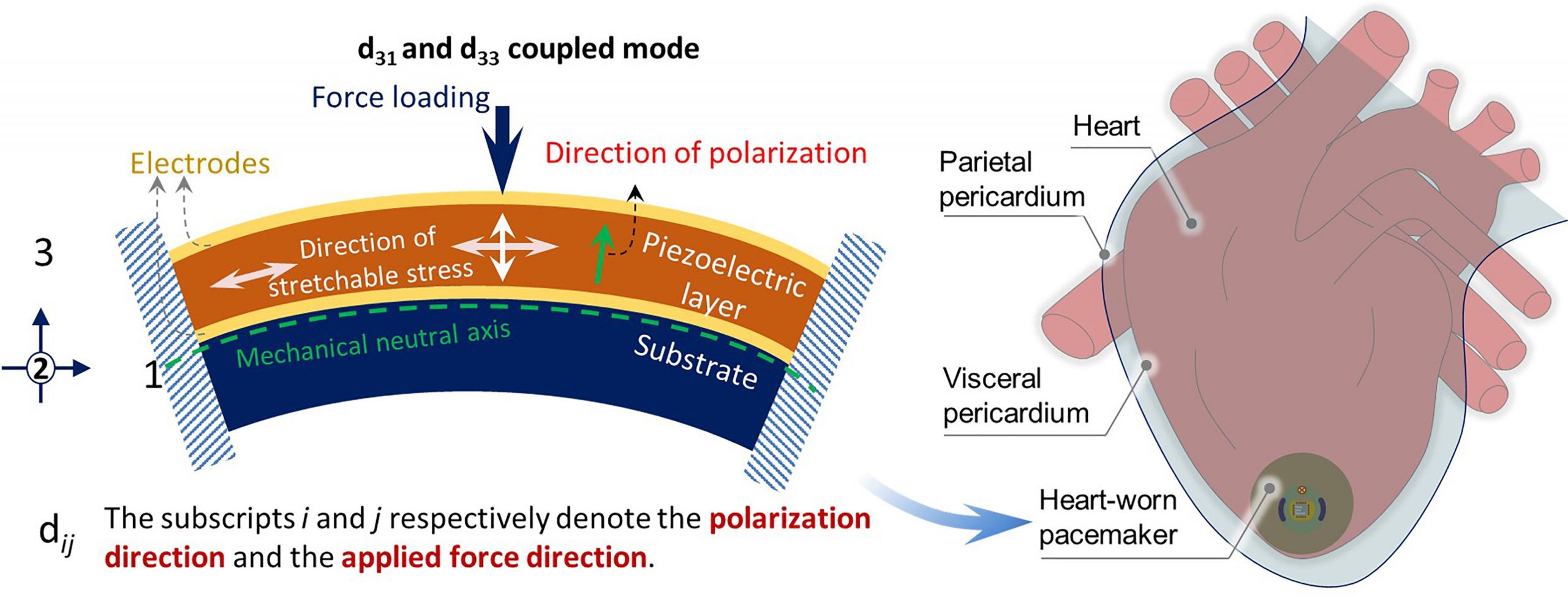
    During the AIP Publishing Horizons — Energy Storage and Conversion virtual conference, which will be held August 4-6, 2021, Yi Zhiran, from Shanghai Jiao Tong University, will present research on a way for a batteryless pacemaker to harvest kinetic energy from the heart to power the lifesaving device. The presentation, “Mechanism on Buckled Piezoelectric Energy Harvesting for Batteryless Heartworn Pacemaker,” will be available during the three-day conference.

    Current cardiac pacemakers use a battery power supply and leads to keep hearts beating regularly. Yi and his group are investing batteryless powering and leadless pacing, but the challenge has been to obtain sufficient power by scavenging heart kinetic energy.

    “If the practical force of the heart is 0.5 newtons, the output power should be about 192 microwatts,” Yi said. “Therefore, for the commercial pacemaker, just about no less than 10 microwatts is sufficient for its normal work.”

    Buckled Piezoelectric Energy Harvesting

    The energy is harvested by the buckling of the encapsulated structure of the pacemaker, creating buckled piezoelectric energy. This method of power supply varies greatly from current pacemaker designs.

    “The key difference is the method of the power supply,” Yi said. “Current paradigm mainly relies on the battery, which limits the development of many implantable biomedical devices. But a batteryless pacemaker is feasible through using implantable energy harvesting technology, which provides a sustainable power supply method.”

    Yi said the batteryless pacemaker is in the feasible verification phase. He said his group is working hard to overcome some drawbacks to the device, such as the long-term stability in vivo, the implanting method, and the integration between the rigid pacing chip and the flexible energy harvesting unit, before progressing to the next steps.

    “The first research plan is to achieve the integration of the flexible pacing circuit and the energy harvesting unit. Then, we will carry out the verification of long-term stability in vivo.”

    Never miss a breakthrough: Join the SciTechDaily newsletter.
    Follow us on Google and Google News.

    American Institute of Physics Cardiology Energy Heart Pacemaker
    Share. Facebook Twitter Pinterest LinkedIn Email Reddit

    Related Articles

    Shock Study: E-Cigarettes May Be More Harmful Than Tobacco To Heart Health

    Physical Activity Is Not Always Good for the Heart – Here’s What You Need to Know

    Frequent Drinking Worse Than Than Binge Drinking for Heart Rhythm Disorder

    Urgent Action in Children Required to Tackle Cardiovascular Deaths

    Beating Heart Patch Repairs Damage Caused by Heart Attack

    Smartphones Can Disrupt Pacemakers and Cause Painful Shocks

    Research Shows There Is a Medical Benefit to Reducing D2B Time

    UCLA Cardiologists Complete Their First Transcatheter Aortic Valve Replacement

    Survival Rates for Mitral Valve Surgery Patients Improve

    Leave A Reply Cancel Reply

    • Facebook
    • Twitter
    • Pinterest
    • YouTube

    Don't Miss a Discovery

    Subscribe for the Latest in Science & Tech!

    Trending News

    Nanoscale “Defects” Unlock a Major Heat Transfer Breakthrough

    Adults Taking More Vitamin D Scored 13% Higher on a Cognitive Test

    A 35,000-Year-Old Neanderthal Pelvis May Explain Why Men and Women Walk Differently

    Dual Stem Cell Treatment Restores Vision in First Human Trial

    Your Waist Size May Reveal More About Your Health Than You Think

    Scientists Turn Red Strawberries White With a Single Gene Edit

    A SpaceX Falcon 9 Rocket Hit the Moon and Blasted Open a 60-Foot Crater

    Study Reveals Your Organs May Be Aging at Very Different Speeds

    Follow SciTechDaily
    • Facebook
    • Twitter
    • YouTube
    • Pinterest
    • Newsletter
    • RSS
    SciTech News
    • Biology News
    • Chemistry News
    • Earth News
    • Health News
    • Physics News
    • Science News
    • Space News
    • Technology News
    Recent Posts
    • New Study: Intermittent Fasting Lowers Blood Sugar in Type 1 Diabetes
    • This Tiny Wearable Patch Could Automatically Reverse a Fentanyl Overdose
    • Alzheimer’s Brain Changes May Begin 7 Years Earlier Than Scientists Thought
    • NASA’s Roman Telescope Is Almost Ready to Leave Earth
    • Tiny Hidden Vibrations Could Make Aircraft More Fuel Efficient
    Copyright © 1998 - 2026 SciTechDaily. All Rights Reserved.
    • Science News
    • About
    • Contact
    • Editorial Board
    • Privacy Policy
    • Terms of Use

    Type above and press Enter to search. Press Esc to cancel.