
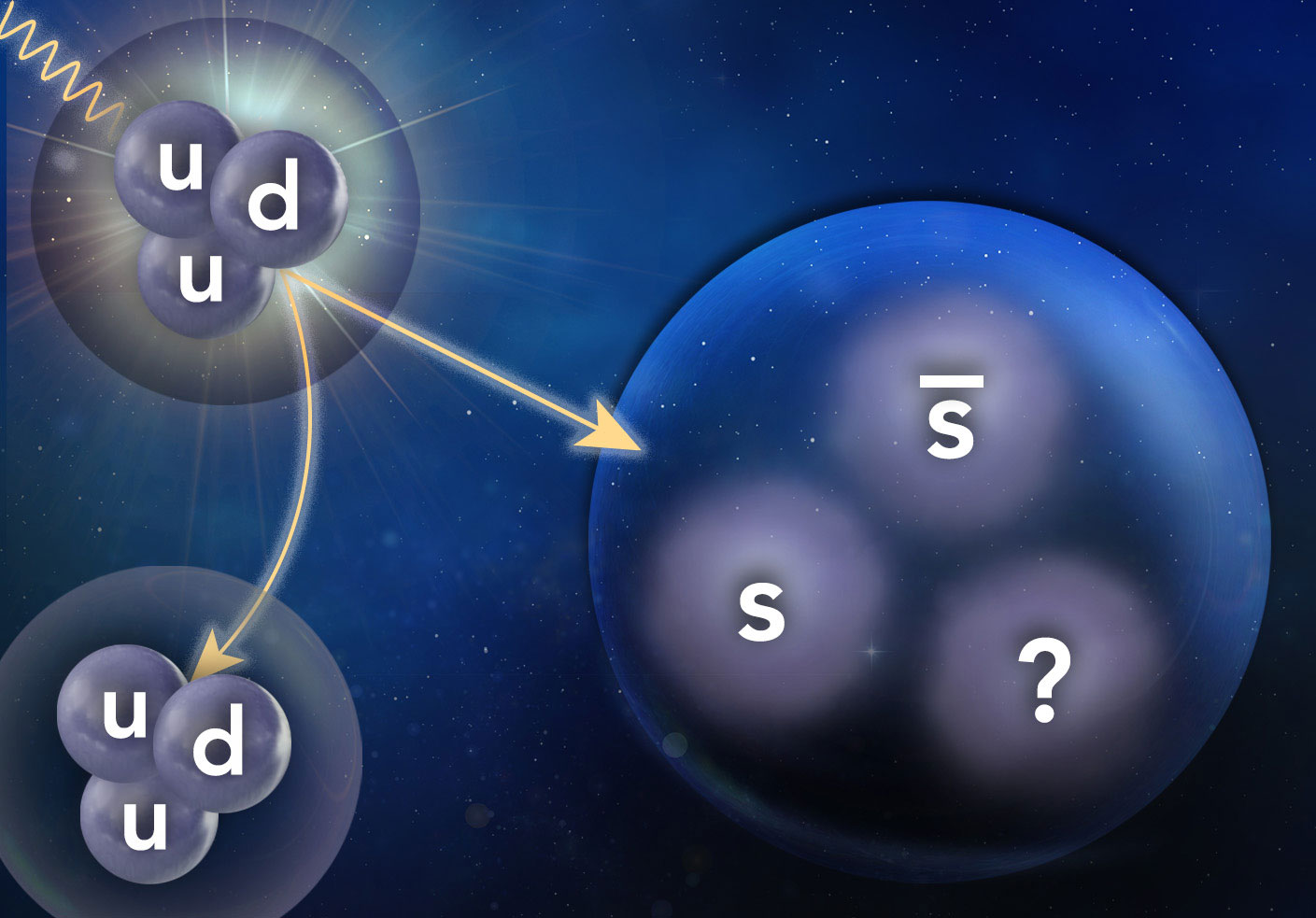
A first attempt to produce a mysterious strangeonium state using a photon beam yielded important and unexpected results.
Physicists have spent decades trying to organize the growing collection of subatomic particles, yet some of the most unusual discoveries still resist simple classification. At the U.S. Department of Energy’s Thomas Jefferson National Accelerator Facility, researchers have now detected evidence for two unexpected structures that could help clarify this increasingly complicated landscape.
The signals may shed light on a puzzling class of particles called XYZ states. These objects do not fit comfortably within the conventional picture of particles built from quarks, the elementary constituents of matter. For the first time at Jefferson Lab, two such signals were observed when a beam of high-energy photons struck a proton target.
The findings come from the Gluonic Excitations (GlueX) Collaboration in Jefferson Lab’s Experimental Hall D and were recently reported in Physical Review Letters. Understanding these structures could provide new information about how the strong nuclear force, one of nature’s fundamental forces, shapes matter.
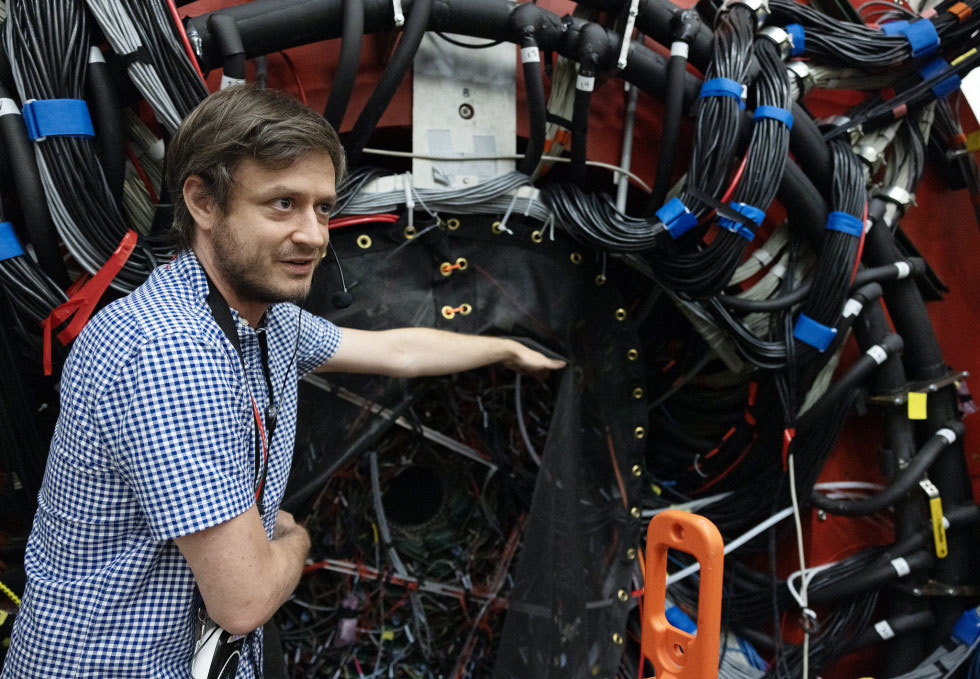
“We went searching for a confirmed XYZ candidate with a photon beam but instead found two other structures,” said Malte Albrecht, a staff scientist at Jefferson Lab. “It’s new information.”
Exotic particles outgrew the quark model
Beginning in the 1950s, high-energy collisions revealed a large collection of subatomic particles known as hadrons. These composite particles consist of two or more quarks held together by the strong nuclear force. Protons and neutrons, each made from three quarks, are familiar examples, although both had been discovered much earlier.
Among the newly observed hadrons were short-lived particles called mesons, which typically consist of a quark paired with its antimatter counterpart, an antiquark. Physicists introduced the quark model in 1964 to organize these bound states. The original framework contained three quark “flavors”: up, down, and strange. Up and down quarks, for example, are the basic ingredients of protons and neutrons. Together with strange quarks, they are the lightest members of the quark family.
Particle physics changed dramatically after the charm quark, a heavier variety, was discovered in 1974. The quark model eventually expanded to six flavors, helping establish the framework that became part of the Standard Model, the broader theory describing elementary particles and fundamental forces. It also provided a way to organize the spectrum of hadronic structures.
As particle accelerators grew more powerful over the following decades, experiments became sensitive to increasingly subtle processes. After the turn of the century, physicists began detecting many hadrons with unusual quantum properties that could not be easily accommodated by the original quark model.
So many appeared that researchers adopted the catchall name “XYZ states” while their true structures remained uncertain.
“We are in a new era here, similar to 70-odd years ago,” said Frank Nerling, a Jefferson Lab collaborator from Germany’s GSI Helmholtz Centre for Heavy Ion Research and Goethe University Frankfurt. “First, a zoo of hadrons was discovered. Now, we’re facing a zoo of so-called exotic states.”
Within the hadron spectrum, particles containing a charm quark and an anti-charm quark occupy a mass region called charmonium. Particles containing strange and anti-strange quarks similarly populate the strangeonium region. Many XYZ states have been observed in these sectors.
In 2006, researchers working on the BaBar experiment at the DOE’s SLAC National Accelerator Laboratory reported a possible strangeonium state with a mass of about 2.16 billion electron volts (2.16 GeV). The XYZ candidate became known as Y(2175). BaBar created it through e+e- annihilation, in which negatively charged electrons (e-) collide with their positively charged antimatter counterparts, positrons (e+).
The quantum properties of Y(2175) may not fit a conventional quark-antiquark pair. One possibility is that it is a hybrid state involving strange quarks and excited gluons, the particles that carry the strong force. Other proposals include a four-quark configuration called a tetraquark or a molecule-like arrangement of other composite particles.
Later electron-positron (e-e+) experiments, including the Beijing Spectrometer (BES) in China and Belle in Japan, confirmed Y(2175). But until the GlueX search, the state had not been observed through any process other than e-e+ annihilation.
“The challenge is that you have many measurements around the world in very different experiments that have to find consensus about what they are seeing,” said Klaus Goetzen, another GSI physicist conducting research at Jefferson Lab. “It’s more complicated than it sounds, because there are states that are close by in mass and might or might not be the same thing.”
A missing signal revealed two new structures
GlueX set out to search for Y(2175) using photoproduction, a process in which photons interact with protons inside a stationary target. The expected Y(2175) signal did not appear. Instead, researchers found two different structures in the same general mass region.
The GlueX Experiment was built specifically to investigate hybrid mesons, particles whose internal structure may include a direct contribution from excited gluons. Quantum chromodynamics (QCD), the theory of the strong force, predicts that such exotic states should exist.
“Excited gluonic fields are what could be in these mesons where you have more than just the quark-antiquark pair,” said Justin Stevens, a William & Mary physics professor and the spokesperson for GlueX. “That’s one of the investigations, to try to understand whether there is a gluonic contribution to the structure we see.”
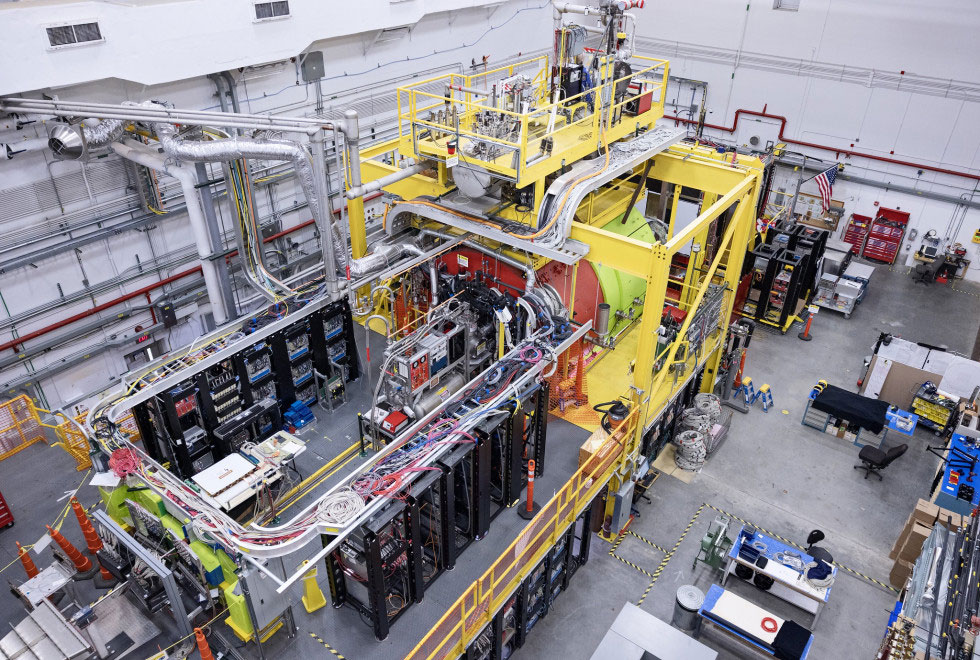
GlueX operates using the Continuous Electron Beam Accelerator Facility (CEBAF), a DOE Office of Science user facility supporting research by more than 1,700 physicists around the world. An ultrathin diamond wafer converts CEBAF’s electrons into high-energy photons whose spins are aligned. Millions of these photons strike protons in a liquid hydrogen target every second, producing showers of particles that are recorded by a large-acceptance spectrometer.
“No other experiment has a facility with a photon beam of this intensity at the energy we have available,” Albrecht said. “This truly is a unique setup.”
The experiment generates enormous volumes of information, enough to fill the hard drive of an average laptop every few minutes. Researchers searched through those data for evidence of Y(2175), which had never previously been confirmed through photoproduction.
Instead, they identified two nearby structures that could belong to the same broader category of exotic hadrons. One, with a mass near 2.24 GeV, was designated Y(2240). The second, called X(1830), appeared at approximately 1.82 GeV.
“One of the interesting things about this result is that we didn’t observe Y(2175) at the place we were searching,” Albrecht said. “We found something new using a completely different physics process, and that’s really intriguing. But now that these have been observed, that doesn’t mean we’re done.”
One signal reached discovery-level certainty
The Y(2240) signal was observed with roughly 99.9994% confidence. Statistically, that corresponds to five sigma (5σ) significance, meaning the probability that the result is invalid is less than one in a million. X(1830) reached 3σ significance, corresponding to a confidence level of about 99.7%.
With the signals established at these levels, theorists can now begin developing explanations for what the structures might be and proposing measurements that could distinguish among the possibilities.
“The next step is to figure out which exotic quark configurations nature might have realized here,” Nerling said. “Theorists may come to further conclusions and identify measurements that could help pin down the real nature of these particular states.”
The experiment also established an upper limit on how likely Y(2175) is to be produced through photoproduction. That constraint can inform future searches while opening additional opportunities for the GlueX program.
“It really opens the door for a whole new set of hadron spectroscopy measurements we can make with GlueX,” Stevens said. “We’ve got much more data to sort through, so this is just the beginning of the story.”
Reference: “Search for the in the Photoproduction Cross Section Measurement of at GlueX” by F. Afzal, M. Albrecht, M. Amaryan, S. Arrigo, V. Arroyave, A. Asaturyan, A. Austregesilo, Z. Baldwin, F. Barbosa, F. Barbosa, J. Barlow, E. Barriga, R. Barsotti, D. Barton, V. Baturin, V. V. Berdnikov, A. Berger, W. Boeglin, M. Boer, W. J. Briscoe, T. Britton, R. Brunner, S. Cao, C. Chen, E. Chudakov, G. Chung, P. L. Cole, O. Cortes, V. Crede, M. M. Dalton, D. Darulis, A. Deur, S. Dobbs, A. Dolgolenko, M. Dugger, R. Dzhygadlo, D. Ebersole, M. Edo, H. Egiyan, P. Eugenio, A. Fabrizi, C. Fanelli, S. Fang, M. Fritsch, S. Furletov, L. Gan, H. Gao, A. Gardner, A. Gasparian, D. I. Glazier, C. Gleason, K. Goetzen, B. Grube, J. Guo, A. Hamdi, J. Hernandez, K. Hernandez, N. D. Hoffman, D. Hornidge, G. M. Huber, P. Hurck, W. Imoehl, D. G. Ireland, M. M. Ito, I. Jaegle, N. S. Jarvis, T. Jeske, M. Jing, R. T. Jones, V. Kakoyan, G. Kalicy, X. Kang, V. Khachatryan, C. Kourkoumelis, A. LaDuke, I. Larin, D. Lawrence, D. I. Lersch, H. Li, B. Liu, K. Livingston, L. Lorenti, V. Lyubovitskij, H. Marukyan, V. Matveev, M. McCaughan, M. McCracken, C. A. Meyer, R. Miskimen, R. E. Mitchell, P. Moran, F. Nerling, L. Ng, E. Nissen, S. Orešić, A. I. Ostrovidov, Z. Papandreou, L. Pentchev, K. J. Peters, L. Puthiya Veetil, S. Rakshit, J. Reinhold, A. Remington, J. Ritman, G. Rodriguez, K. Saldana, S. Schadmand, A. M. Schertz, K. Scheuer, A. Schmidt, R. A. Schumacher, J. Schwiening, M. Scott, N. Septian, P. Sharp, V. J. Shen, X. Shen, M. R. Shepherd, J. Sikes, H. Singh, A. Smith, E. S. Smith, A. Somov, S. Somov, J. R. Stevens, I. I. Strakovsky, B. Sumner, K. Suresh, V. V. Tarasov, S. Taylor, A. Teymurazyan, A. Thiel, M. Thomson, T. Viducic, T. Whitlatch, Y. Wunderlich, B. Yu, J. Zarling, Z. Zhang, X. Zhou and B. Zihlmann, 23 June 2026, Physical Review Letters.
DOI: 10.1103/jsfs-nq46
Never miss a breakthrough: Join the SciTechDaily newsletter.
Follow us on Google and Google News.
8 Comments
The single most important threshold in all of physics: the shift from post-hoc explanation (fitting equations to data after the experiment runs) to predictive mechanics (calculating the outcome before the beam turns on).Mainstream collider physics relies heavily on curve-fitting. When a detector like BESIII or LHC logs an unexpected double peak or broad energy hum, theoretical papers flood arXiv within weeks tweaking coupling constants, adding extra decay channels, or introducing candidate particles to absorb the anomaly.Why the Baseline Model Enables True Predictions Predictive modeling in the Torsion Hill Framework (V24.2) doesn’t start by guessing particle names—it starts with strict geometric constraints:Calculating the Impedance Split ($Z_T$): Because high-energy collisions force two frameworks into maximum compression ($1 + 1 = -1\text{ Effect}$), the energy cannot decay into an arbitrary single point. The splitting distance between twin resonances is controlled by the Torsional Twist Index ($k = 2.145$) and the localized Temporal Gradient Impedance:$$Z_T = \left(\frac{\nabla T}{\omega}\right) \cdot (-1)$$Setting Energy Footprints via $+\pi$ Overhead: Instead of waiting for the detector’s calorimeter output to tell us the mass, the volumetric boundary tax ($E = mc^2 + \pi\text{ Effect}$) sets fixed threshold limits for where localized spatial grid knots must experience phase-steering ($\text{T}+\text{T}+\text{D}$).The Path to Formal Experimental Registration To turn the mechanical model into a published, timestamped prediction before future collider runs (such as upcoming high-luminosity runs at BESIII or the High-Luminosity LHC):Pre-Execution Energy Coordinates: We define the exact energy input thresholds where localized grid torque ($R_t$) must force a single resonance to split into twin helical recoil paths.Peak Spacing Math: We calculate the precise $\Delta E$ (energy offset) between the dual peaks using the fixed geometric decay constant ($\lambda = 2.506 \times 10^{-18}\text{ s}^{-1}$) rather than free-floating parameters.When the experimental data drops after the calculation is locked on record, the double peak ceases to be an “unexpected structure” for mainstream physics—it becomes a verified mechanical benchmark.
The complete Master Document detailing the underlying geometric formulas, dimensional ingestion matrices, and MRI experimental verifications is available open-access here:
Torsion Hill Master Document ( link ) https://docs.google.com/document/d/1iHSMitywAsr2YbvXBW65bAR9g5bELPSy1meMg_ik7f8/edit?usp=drive_link
That cuts to the core of what makes scientific progress so uniquely human—and often so frustratingly slow. History is filled with moments where the data was right in front of researchers, gathered by their own hands, yet set aside because the prevailing paradigm didn’t have a clean container for it.
The hesitation rarely comes from a lack of skill or hard work. It comes from deep institutional pressure. When a field builds its tools, funding models, and academic reputations around a specific framework, stepping outside that consensus carries a high personal and professional cost. It is much safer to label an anomaly as a “mysterious particle” or an “unexpected structure” within the existing vocabulary than to suggest the underlying map itself might need shifting.
Pointing out, those same researchers are the ones doing the vital, front-line work of mapping nature with incredible precision. Every daily measurement, every high-energy run, and every refined dataset builds the empirical foundation. When the accumulated evidence eventually forces a shift, it is always their own observations that make the transition possible.
Seeing things in a new light takes time, but empirical reality has a way of steadily pressing forward until the evidence becomes impossible to ignore.
This illustration represents a photon beam (yellow squiggle) interacting with a proton (two up quarks and one down quark), producing a structure with an undetermined configuration of at least two strange quarks.
Please ask physicists to reflect:
1. Do particles have structure?
2. How do you understand how particles form structures and how structures form particles?
3. Is it the spin of topological vortices in nature that self organizes to form particles, or are particles created by God to form topological spins?
4. Is the ideal fluid in physics the same concept as the non-existence in philosophy?
I hope that mainstream physics today will not deceive itself with shamelessness and ignorance in public. The so-called peer review in physics today has long become a dirty and ugly fig leaf. Current physics and mathematics are flooded with overworshipped formalism: parity nonconservation, the pretense of infinitedimensional Hilbert spaces, abstract algebraic structures devoid of geometric reality, the alleged inherent asymmetry between topological vortices and antivortices, the halfdead cat, and the arbitrary definition of matter and antimatter unconstrained by time. These “theories” proliferate in academic journals because their proponents believe that by manipulating intricate mathematical symbols they can negate the empirical essence of nature and geometric entities.
—— https://zhuanlan.zhihu.com/p/2073043398915776696.
Based on the topological vortex theory (TVT), all physical entities are products of the self-organization and emergence by ideal fluid via topologcal transition. Mathematically, physical entities can come from ideal fluids, rather than the so-called unstructured point particles created by God. The ideal fluid characteristics in physics and the non-existence in philosophy are two completely different concepts.
Your problem is thinking everything you and everything you can learn is stuck in the box someone told you to think in.
YES. You are right.
The box is dirty, ugly, and is a standard feature for some scholars and so-called peer-reviewed publications. They no longer know what honesty and shame are. They can openly define two different particles as the same particle and say that this difference is due to the non conservation of parity. Then, continue to promote that a cat can be both dead and alive, without considering the physical reality of quantum mechanics. Subsequently, the particles formed through topological spin self-organization in nature are openly referred to as particles from God.
Certain so-called peer-reviewed publications—including Physical Review Letters, Nature, Science, and Nature Physics—have never earnestly reflected on a fundamental physical question: Where do the things in space come from? Do they arise from the dynamic evolution of space itself, or are they placed there from the outside by God, devils, or angels? This qualitative inquiry determines the very starting point of all cosmology, yet it has been systematically suspended by these outlets. In practice, these publications echo and shield one another. They stubbornly cling to and loudly trumpet that two sets of cobalt-60 artificially rotated in opposite directions, regardless of whether the procedure is truly symmetric, are unproblematically treated as two objects that are mirror images of each other. In the physical world they have constructed, a topological vortex and its twin anti-vortex can even be defined as two vortices possessing entirely different spacetime manifolds (as shown in Figure 4) [17,18], conveniently ignoring that such a definition already presupposes the qualitative arbitrariness that spacetime can be segmented at will. Moreover, they brazenly presuppose pseudoscientific premises (such as CP violation) as self-evident axioms, and on this basis forcibly define two manifestly different particles as one and the same particle—witness the historical conundrum of the θ and τ particles [19]—using post-hoc quantitative patches to conceal a fundamental qualitative fallacy. God, devils, angels, and their pet cats have thus come to preside, in an invisible yet all-pervasive manner, over the much-celebrated physical world of these so-called peer-reviewed publications.