
Researchers at the University of Iowa and the University of Georgia have developed a vaccine that fully protects mice against a lethal dose of MERS, a close cousin of the SARS-CoV2 coronavirus that causes COVID-19.
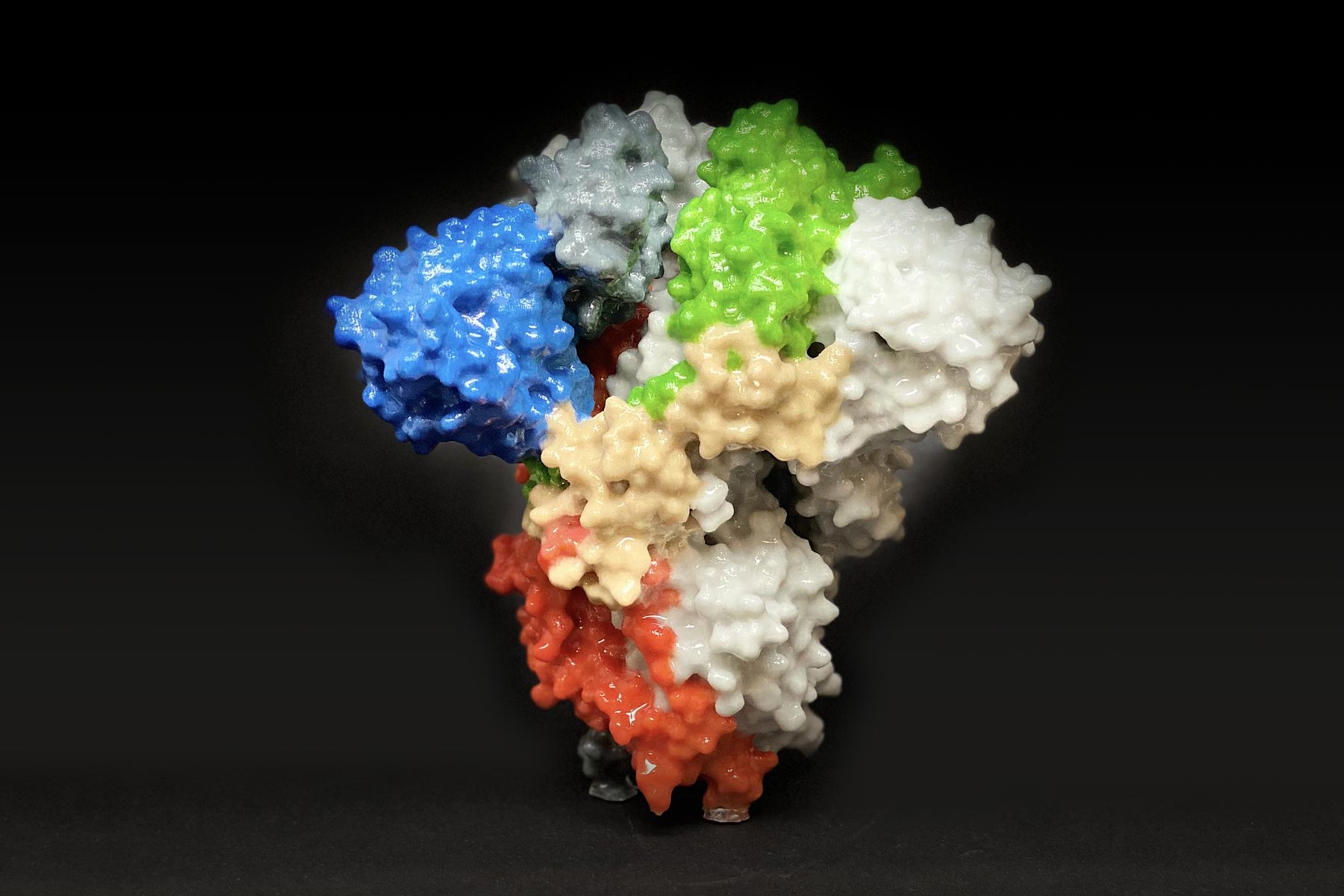
The vaccine uses a harmless virus to deliver a MERS coronavirus protein into cells to generate an immune response, and may hold promise for developing vaccines against other coronaviruses, including the one that causes COVID-19.
The team led by Paul McCray, MD, at the UI Carver College of Medicine, and Biao He, Ph.D., at the University of Georgia College of Veterinary Medicine, tested a MERS vaccine candidate in mice engineered to be susceptible to the MERS coronavirus. The vaccine is an innocuous parainfluenza virus (PIV5) carrying the “spike” protein that MERS uses to infect cells. All the vaccinated mice survived a lethal dose of the MERS coronavirus. The results of the study were published today (April 7, 2020) in the journal mBio.
“Our new study indicates that PIV5 may be a useful vaccine platform for emerging coronavirus diseases, including SARS-CoV-2, the virus causing the ongoing COVID-19 pandemic,” says McCray, UI professor of pediatrics. “Using the same strategy, vaccine candidates based on PIV5 expressing the spike protein of SARS-CoV-2 have been generated. We are planning more studies in animals to test the ability of PIV5-based vaccines in preventing disease caused by SARS-CoV-2.”
MERS (Middle East Respiratory Syndrome) and COVID-19 are both caused by coronaviruses. MERS is deadlier and is fatal in about one third of known cases, but there have been only 2,494 cases since 2012, when the virus first emerged. In contrast, there have been over 1.25 million confirmed cases of COVID-19 worldwide since it first emerged in late 2019 in Wuhan, China, and almost 70,000 people have died from the disease.
The study found that just one, relatively low dose of the vaccine given to the mice intranasally (inhaled through the nose) was sufficient to fully protect all the treated mice from a lethal dose of MERS coronavirus.
When the researchers analyzed the immune responses generated by the vaccine, they found that both antibodies and protective T cells were produced. However, the antibody response was quite weak and it seems most likely that the vaccine’s protective effect is due to the T cell response in the mouse lungs.
The researchers note several factors that make PIV5 expressing a coronavirus spike protein an appealing platform for vaccine development against emerging coronaviruses. First, PIV5 can infect many different mammals, including humans, without causing disease. PIV5 is also being investigated as a vaccine for other respiratory diseases including respiratory syncytial virus (RSV) and influenza. Second, the fact that a low dose of the vaccine was sufficient to protect the mice might be beneficial for creating enough vaccine for mass immunization. And finally, the vaccine in the current study was the most effective MERS vaccine to date in animal models of the disease.
Reference: “Single-Dose, Intranasal Immunization with Recombinant Parainfluenza Virus 5 Expressing Middle East Respiratory Syndrome Coronavirus (MERS-CoV) Spike Protein Protects Mice from Fatal MERS-CoV Infection” by Kun Li, Zhuo Li, Christine Wohlford-Lenane, David K. Meyerholz, Rudragouda Channappanavar, Dong An, Stanley Perlman, Paul B. McCray Jr. and Biao He, 7 April 2020, mBio.
DOI: 10.1128/mBio.00554-20
In addition to McCray, who also holds an appointment the UI Department of Microbiology and Immunology, and He, who is a professor of infectious disease at the University of Georgia, the research team included Kun Li, Christine Wohlford-Lenane, David Meyerholz, Rudragouda Channappanavar, and Stanley Perlman at the UI; and Zhuo Li and Dong An at the University of Georgia.
The research was funded in part by grants from the National Institutes of Health and the Cystic Fibrosis Foundation. McCray is supported by the Roy J. Carver Charitable Trust. Biao He is supported by endowment of Fred C. Davison Distinguished University Chair in Veterinary Medicine.
Never miss a breakthrough: Join the SciTechDaily newsletter.
Follow us on Google and Google News.