
A self-stabilizing nuclear clock has achieved precision equivalent to roughly one second in 30 million years, though it still trails the best optical atomic clocks.
For a clock that keeps time with laser light, even a slight shift in the laser’s frequency changes its rhythm. Researchers in Vienna have now built the world’s first nuclear clock that automatically corrects those shifts, using thorium nuclei as its reference. It remained stable for more than 24 hours without intervention, achieving the self-regulation already customary in atomic clocks.
Measurements over the course of a day put the prototype’s precision at approximately 10⁻¹⁵, corresponding to an error of roughly one second in 30 million years. “This is not yet at the level of the world’s best optical atomic clocks, but for a first prototype it is a fantastic result,” says Professor Thorsten Schumm of the Institute of Atomic and Subatomic Physics at TU Wien.
Thorium nuclei respond to laser light
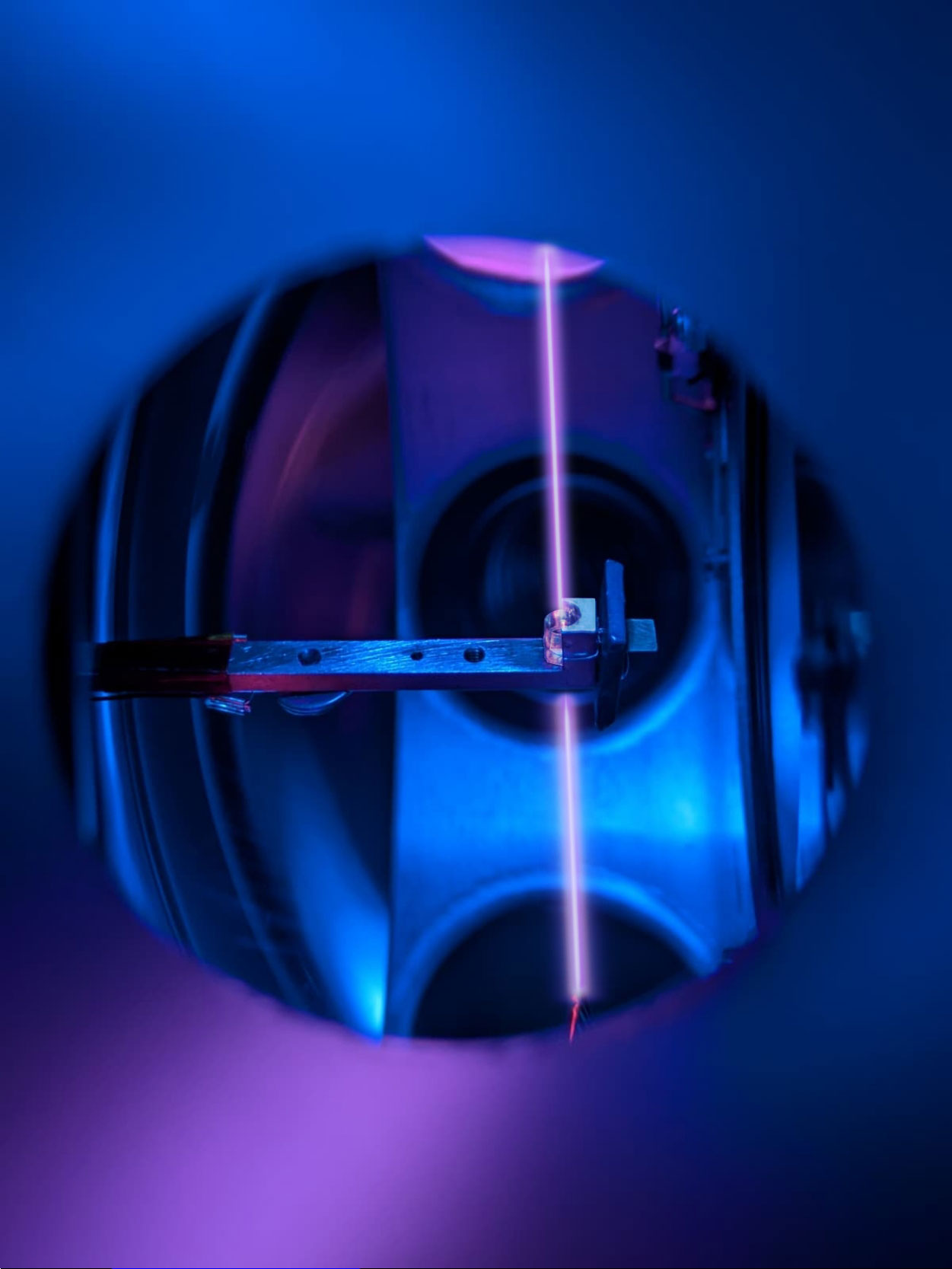
The clock is built around a crystal containing thorium atoms, produced at TU Wien and illuminated with a laser. “The oscillation of this laser light can be used for timekeeping, but the laser frequency can shift slightly from time to time, for example due to temperature fluctuations,” Schumm explains. “For high-precision measurements, you therefore need a mechanism to keep the laser frequency exactly stable, so that the clock continues to tick with precisely the same rhythm.”
Conventional atomic clocks use the energy states of electrons in atoms to establish that reference. Thorium offers a different possibility that scientists had suspected for decades: two of its nuclear energy states lie exceptionally close together. The gap is small enough for laser light to move the nucleus from one state to the other. Other atomic nuclei have much larger energy gaps, preventing laser light from driving such transitions.
A nuclear clock that tunes itself
After decades of work toward nuclear clocks by researchers around the world, Schumm’s team and a team led by Professor Ekkehard Peik at PTB Braunschweig demonstrated laser excitation of thorium nuclei for the first time in April 2024. That fall, the team coupled the thorium excitation apparatus to a conventional optical atomic clock and used the nuclei as a timekeeper, demonstrating that they could support a high-precision clock.
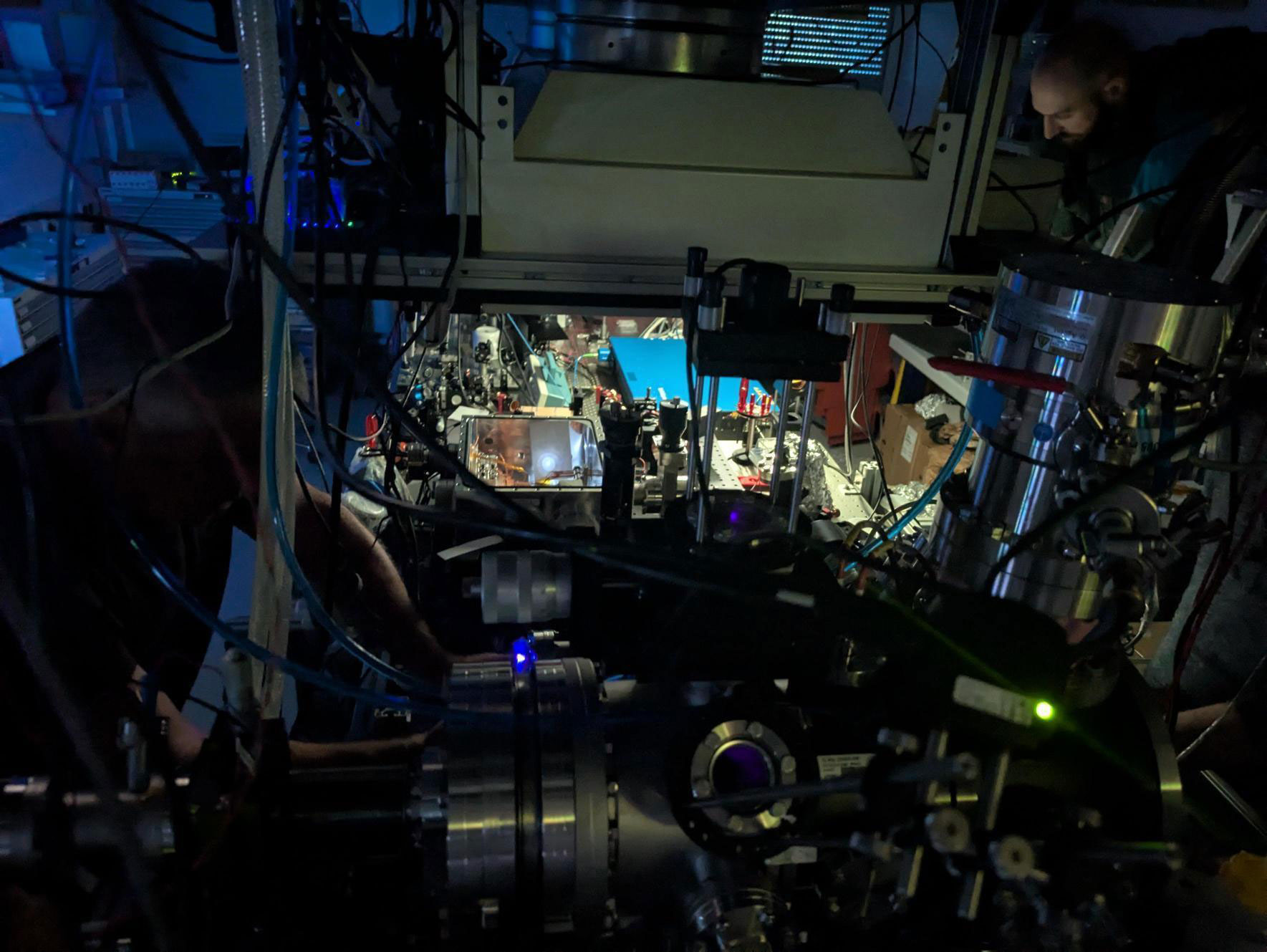
That earlier setup had not yet achieved the self-stabilization needed to pursue precision records. “What you really want is a self-stabilizing nuclear clock,” Schumm explains. “The basic idea is simple: you have a laser, and you have thorium. The laser changes the energy state of the thorium nuclei, and the thorium nuclei are used to stabilize the frequency of the laser.”
The thorium nuclei absorb laser light at the correct frequency, and even a slight departure from that frequency produces a measurable drop in absorption. The new clock uses that drop to readjust the laser automatically, allowing it to stabilize itself without necessarily relying on a conventional atomic clock.
Smaller nuclei, less outside interference
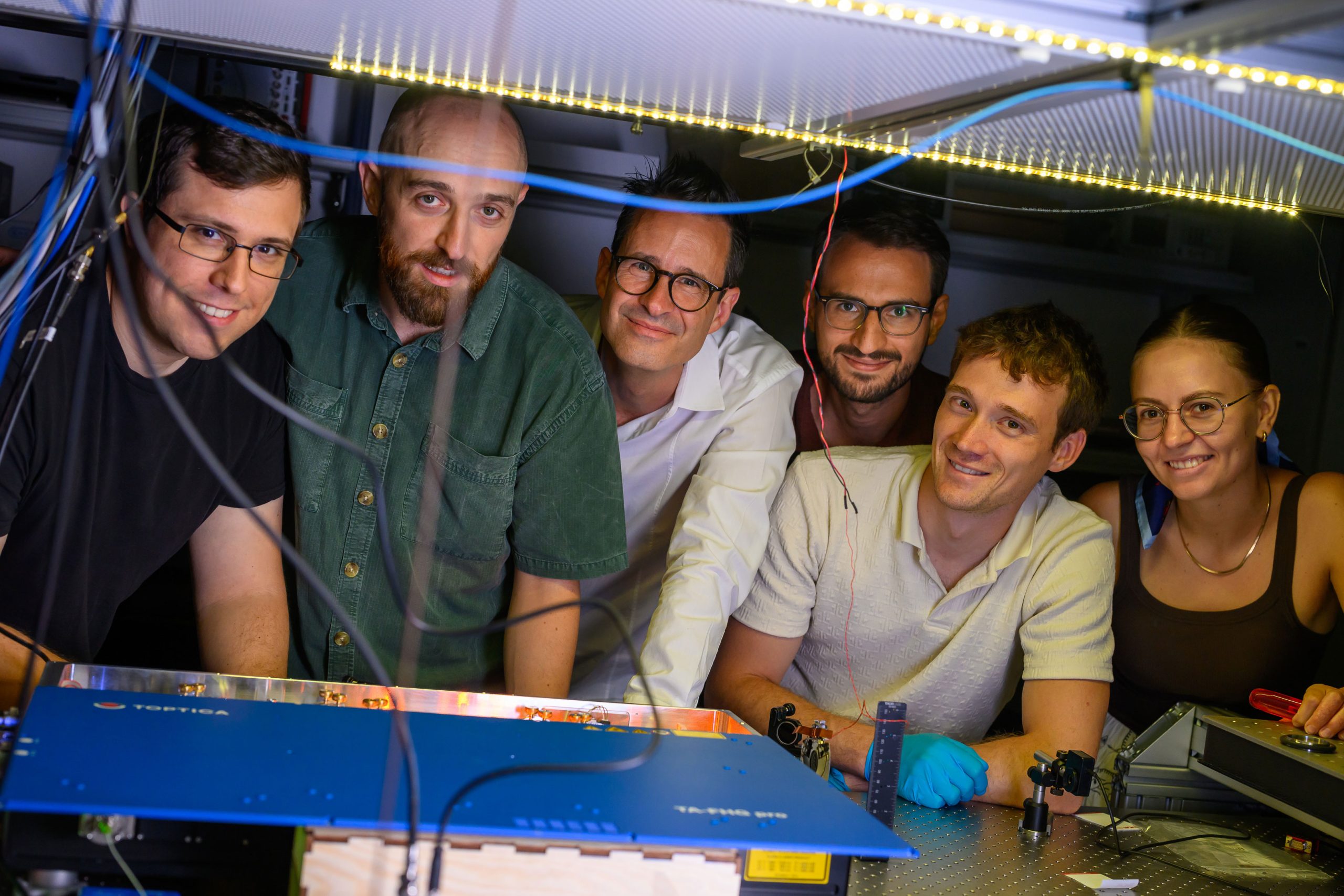
“The great advantage of the new nuclear clock in Vienna is that, if you use atomic nuclei rather than atoms, much higher precision is possible in principle,” says Schumm. Atomic nuclei are more than 10,000 times smaller than atoms and react much more weakly to external disturbances, making them more dependable timing references. That reduced sensitivity could eventually support measurements of a range of physical quantities with previously unattainable precision.
The team now aims to improve the prototype’s precision substantially with stronger lasers, better thorium crystals, and other measures.
Reference: “A thorium-229 optical nuclear clock with feedback loop” by L. Toscani De Col, T. Riebner, I. Morawetz, F. Schneider, N. Sempelmann, J. Schlachet-Lépinay, F. Schaden, M. Bartokos, G. A. Kazakov, K. Beeks, B. Gerstenecker, M. Pimon, S. Lahs, A. Hellerschmied, T. Lercher, H. Denker, J. Premper, A. Niessner, M. Matus, M. Čížek, O. Číp, V. Lal, G. Zitzer, V. Petrov, J. Tiedau, M. V. Okhapkin, E. Peik and T. Schumm, 7 October 2026, Nature.
DOI: 10.1038/s41586-026-11084-4
Part of this work was funded by the European Research Council under the European Union’s Horizon 2020 research and innovation program (Grant Agreement Number 856415) and the Austrian Science Fund (Grant DOIs 10.55776/F1004, 10.55776/J4834 and 10.55776/PIN9526523).
Never miss a breakthrough: Join the SciTechDaily newsletter.
Follow us on Google and Google News.
2 Comments
VERY GOOD.
The physical essence of a nuclear clock is to use nuclear spin to benchmark the Earth’s spin. Based on the Topological Vortex Theory (TVT), the interconnectedness of the physical world has always been deeply bound to the spin of nature.
TVT takes only the nonsticky, incompressible ideal fluid space as its axiomatic foundation, with all deductions rigorously derived through topological phase transitions.
—— https://zhuanlan.zhihu.com/p/2088659998394077633.