
Earth’s water may have survived its fiery beginnings by hiding deep within the mantle.
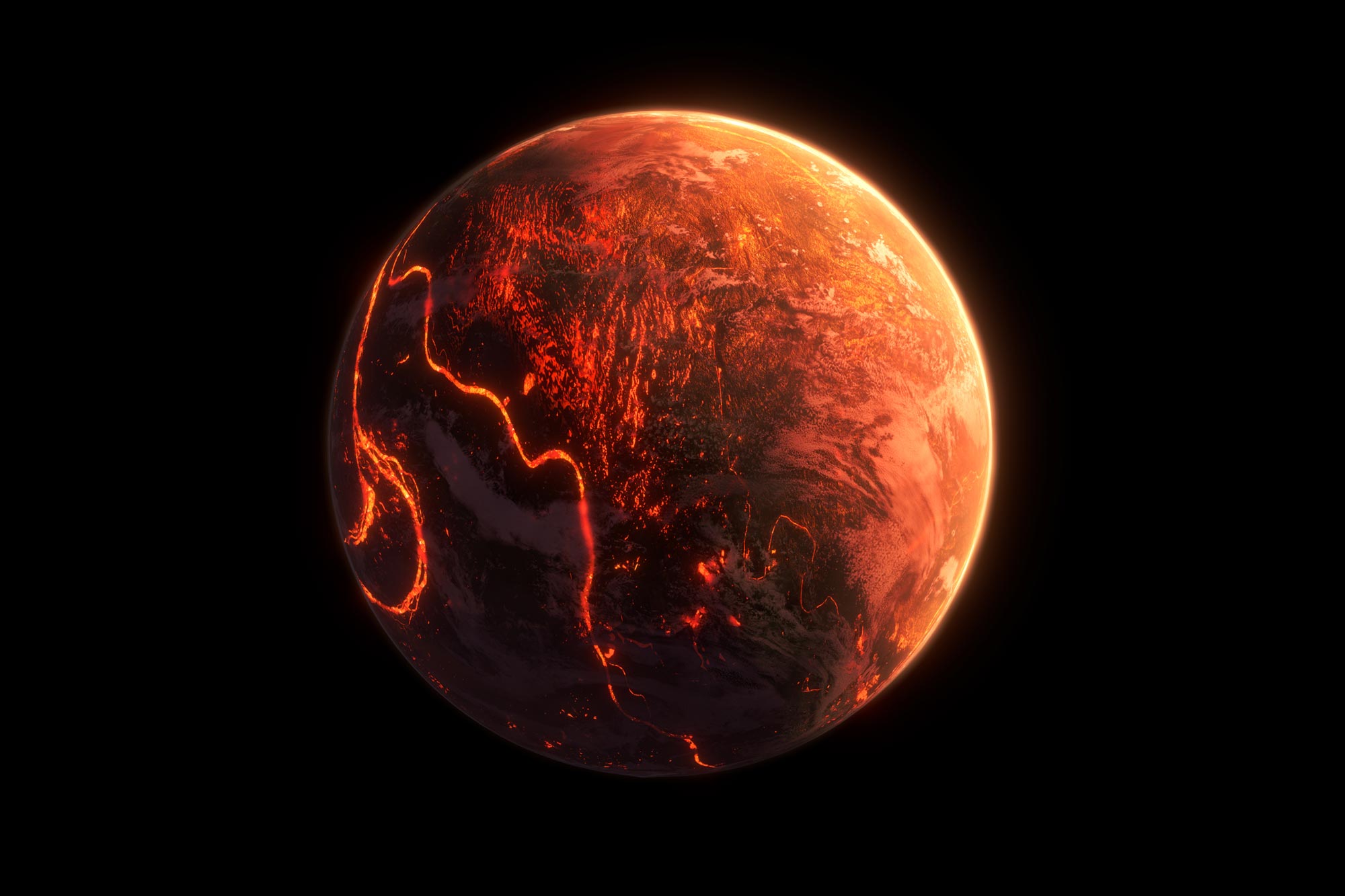
Around 4.6 billion years ago, Earth bore little resemblance to the calm blue world we see today. Repeated and powerful impacts from space kept the planet’s surface and interior in a near-constant molten state, creating a global ocean of magma. Conditions were so extreme that liquid water could not exist anywhere on the planet, which instead resembled a vast, blazing furnace.
Today, oceans cover about 70% of Earth’s surface. This stark contrast has long driven scientific interest in how water managed to survive Earth’s transition from an early molten state to a largely solid planet, and how it was preserved rather than completely lost during this violent period.
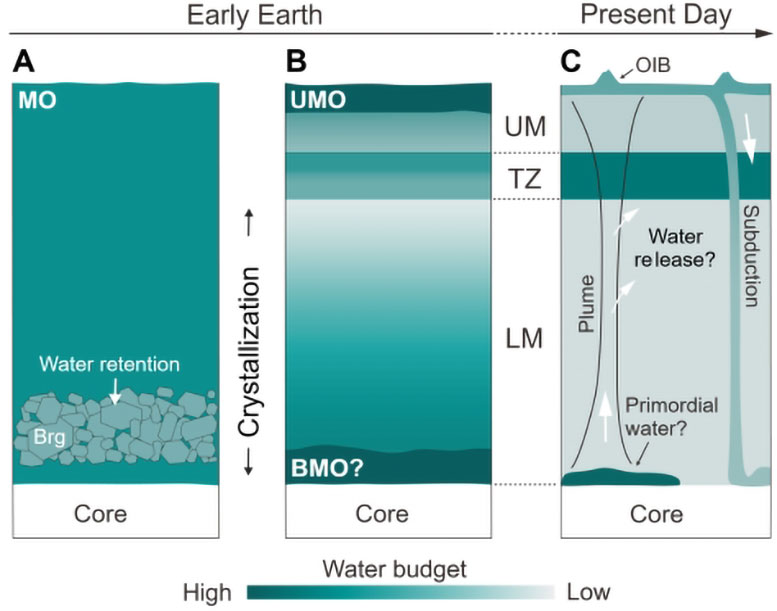
A recent study led by Prof. Zhixue Du from the Guangzhou Institute of Geochemistry of the Chinese Academy of Sciences (GIGCAS) offers new insight into this enduring mystery. The research suggests that large quantities of water could have been effectively “locked away” deep inside Earth’s mantle as it cooled and crystallized from molten rock.
The findings, published in Science, are changing how scientists think about where water is stored inside the planet. The study shows that bridgmanite, the most abundant mineral in Earth’s mantle, can function as a microscopic “water container.” This property would have allowed the early Earth to retain significant amounts of water within its interior as the planet gradually solidified.
This early-retained water, the team argues, may have been critical to transforming Earth from a fiery inferno into a habitable world.
Challenging Long-Held Assumptions
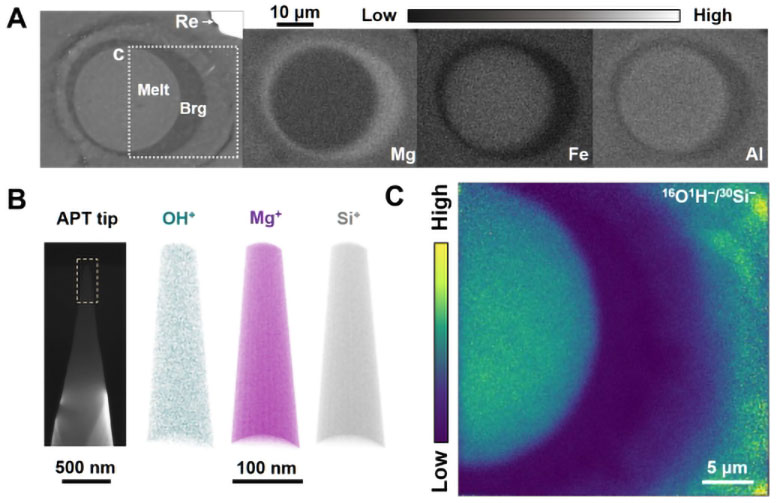
Previous studies, which relied on relatively low-temperature experimental conditions, suggested that bridgmanite had limited water storage capacity. The researchers wanted to test this hypothesis but faced two major challenges. First, they needed to simulate the extreme conditions found at depths exceeding 660 kilometers in a laboratory. Second, they had to accurately detect water signals in bridgmanite samples—some smaller than one-tenth the width of a human hair—at concentrations as low as a few hundred parts per million.
They overcame these obstacles by building a diamond anvil cell experimental setup equipped with laser heating and high-temperature imaging. This self-developed, ultra-high-pressure simulation device raised experimental temperatures dramatically—to an extreme of ~4,100 °C. This system successfully recreated deep mantle conditions and allowed for precise measurement of equilibrium temperatures, laying the foundation for understanding temperature’s role in how water is taken up by minerals.
In addition, using the advanced analytical platforms of GIGCAS, the researchers applied techniques such as cryogenic three-dimensional electron diffraction and NanoSIMS. In collaboration with Prof. Tao Long from the Institute of Geology of the Chinese Academy of Geological Sciences, they also integrated atom probe tomography (APT). Together, these tools enabled the development of innovative methods for analyzing water at the micro- to nanometer scale, effectively equipping the microscopic world with ultra-high-resolution “chemical CT scanners” and “mass spectrometers.”
This technology let the team clearly visualize water distribution in tiny samples and confirm that water is structurally dissolved in bridgmanite.
A Hotter Mantle, a Wetter Earth
The team’s data revealed that bridgmanite’s “water-locking” capacity (measured by its water partition coefficient) increases significantly with rising temperature. This means that during Earth’s hottest “magma ocean” phase, crystallizing bridgmanite could have retained far more water than previously thought, directly overturning the long-held view that the deep lower mantle is nearly dry.
Building on this discovery, the team modeled the crystallization of the magma ocean. Simulations show that, thanks to bridgmanite’s strong water-locking ability under early high temperatures, the lower mantle became the largest water reservoir in the solid mantle after the magma ocean solidified. Its storage capacity, the model indicates, could be five to 100 times greater than earlier estimates. The total amount of water retained in the early solid mantle may even have equaled 0.08 to 1 times the volume of all modern oceans.
This deeply buried water was not a static reserve. Instead, it acted as a “lubricant” for Earth’s massive geological engine: It lowered the melting point and viscosity of mantle rocks, promoting internal circulation and plate motion and providing the planet with sustained evolutionary vitality.
Over time, this sequestered water was gradually “pumped” back to the surface through magmatic activity, contributing to the formation of Earth’s primordial atmosphere and oceans. The “spark of water” sealed within Earth’s early structure, the researchers noted, likely served as the crucial force that transformed our planet from a magmatic inferno into the blue, life-friendly world we know today.
Reference: “Substantial water retained early in Earth’s deep mantle” by Wenhua Lu, Ya-Nan Yang, Tao Long, Haiyang Xian, Yuan Li and Zhixue Du, 11 December 2025, Science.
DOI: 10.1126/science.adx5883
Never miss a breakthrough: Join the SciTechDaily newsletter.
Follow us on Google and Google News.