
Close Menu
    Facebook X (Twitter) Instagram
    SciTechDaily
    • Biology
    • Chemistry
    • Earth
    • Health
    • Physics
    • Science
    • Space
    • Technology
    Facebook X (Twitter) Pinterest YouTube RSS
    SciTechDaily
    Home»Earth»Scientists Provide Evidence for Why Earth’s Early Climate Was More Stable and Warmer
    Earth

    Scientists Provide Evidence for Why Earth’s Early Climate Was More Stable and Warmer

    By Jim Shelton, Yale UniversityAugust 9, 2018No Comments2 Mins Read
    Facebook Twitter Pinterest Telegram LinkedIn WhatsApp Email Reddit
    Share
    Facebook Twitter LinkedIn Pinterest Telegram Email Reddit
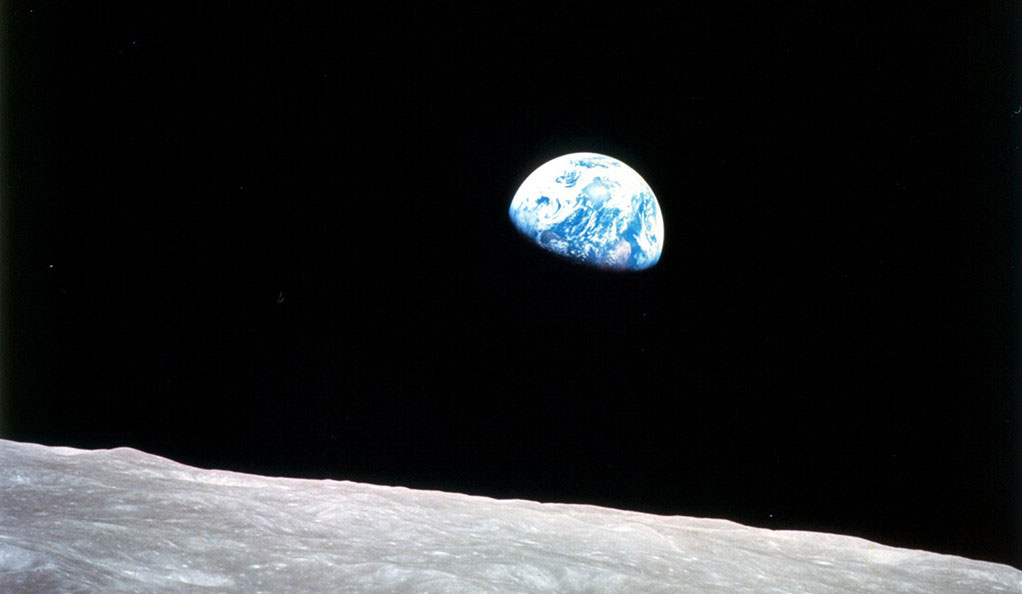
    Evidence for Why Earth’s Early Climate Was More Stable and Warmer
    Earth’s Early Climate Was More Stable and Warmer. Photo credit: NASA

    Yale researchers have provided a new explanation for why Earth’s early climate was more stable and warmer than it is today.

    When life first evolved more than 3.5 billion years ago, Earth’s surface environment looked very different. The sun was much weaker, but Earth remained warm enough to keep liquid water at the surface. The researchers said this suggests that much higher carbon dioxide levels would have been needed to keep early Earth warm enough. But how did CO2 levels get so high in the early atmosphere?

    Researchers Terry Isson and Noah Planavsky, in a study published in the journal Nature on August 8, provide a new framework for global climate regulation that explains this. While chemical weathering of rock has the ability to remove carbon from the atmosphere, the reverse of this process — reverse weathering — puts carbon back into the atmosphere, the researchers said.

    “Before the evolution of silica-secreting eukaryotic life, early oceans were more silica-rich, and this would have fueled more rapid rates of reverse weathering,” said lead author Isson, a biogeochemist in Yale’s Department of Geology and Geophysics.

    Isson said this process took place within ocean sediments, and the recycling of carbon would have kept CO2 at levels high enough to keep Earth warm and habitable. The process also ensured that Earth did not get too hot or cold, Isson said.

    “Understanding how Earth regulates climate both in the modern era and also in the distant past is critical for our understanding of planetary habitability,” said Planavsky, assistant professor of geology and geophysics at Yale. “This will help guide our search for life beyond our solar system and is an example of how the evolution of complex life fundamentally changed our planet.”

    Reference: “Reverse weathering as a long-term stabilizer of marine pH and planetary climate” by Terry T. Isson and Noah J. Planavsky, 8 August 2018, Nature.
    DOI: 10.1038/s41586-018-0408-4

    Never miss a breakthrough: Join the SciTechDaily newsletter.
    Follow us on Google and Google News.

    Climate Science Earth Science Geology Planetary Science Yale University
    Share. Facebook Twitter Pinterest LinkedIn Email Reddit

    Related Articles

    Arctic Sea Ice Loss is Impacting Atlantic Ocean Water Circulation System

    Temperature of Ancient Seas May Shape Global Climate

    Yale Scientists Solve the Problem of Sea Ice Thickness Distribution

    Siberian Traps Likely Triggered Mass Extinction

    Flat-Slab Subduction in South America Mirrors Formation of Rocky Mountains

    New Timescale Firmly Implicates Volcanic Eruptions as the Dominant Drivers of Past Climate Variability

    NASA Study Provides New Estimates for the Global Water Cycle

    Yale Study Reveals Parts of Ancient Antarctica Were as Warm as Today’s California Coast

    “Iron-Rich Blobs” Penetrate Deep Into Earth’s Mantle

    Leave A Reply Cancel Reply

    • Facebook
    • Twitter
    • Pinterest
    • YouTube

    Don't Miss a Discovery

    Subscribe for the Latest in Science & Tech!

    Trending News

    Scientists Just Discovered a Hidden Freshwater World Beneath the Great Salt Lake

    Why Your Daily Shower Could Be Worsening the Water Crisis

    Scientists Discover New “Magic Mushroom” Species That Rewrites Evolutionary History

    Mystery Deepens: Astrophysicists Say Dark Matter May Not Be One Thing

    Your BMI Might Be Wrong: Study Finds Millions Are Misclassified

    A Simple Blood Test Could Predict Dementia Risk 25 Years Early

    3.5-Billion-Year-Old Rocks Rewrite the Story of Plate Tectonics

    Why Aging Lungs Turn Mild Infections Into Life-Threatening Illness

    Follow SciTechDaily
    • Facebook
    • Twitter
    • YouTube
    • Pinterest
    • Newsletter
    • RSS
    SciTech News
    • Biology News
    • Chemistry News
    • Earth News
    • Health News
    • Physics News
    • Science News
    • Space News
    • Technology News
    Recent Posts
    • Scientists Build Five-in-One “Super Molecule” for Next-Gen Electronics
    • Physicists Discover Magnetic Mechanism That Challenges a 300-Year-Old Law of Friction
    • For the First Time, ChatGPT Has Solved an Unproven Math Problem in Geometry
    • NASA Just Found Something Strange Inside Asteroid Bennu Sample
    • This Popular Supplement May Actually Slow Biological Aging, Scientists Reveal
    Copyright © 1998 - 2026 SciTechDaily. All Rights Reserved.
    • Science News
    • About
    • Contact
    • Editorial Board
    • Privacy Policy
    • Terms of Use

    Type above and press Enter to search. Press Esc to cancel.