
Close Menu
    Facebook X (Twitter) Instagram
    SciTechDaily
    • Biology
    • Chemistry
    • Earth
    • Health
    • Physics
    • Science
    • Space
    • Technology
    Facebook X (Twitter) Pinterest YouTube RSS
    SciTechDaily
    Home»Space»Pioneer Venus Multiprobe Launched 40 Years Ago Today to Study Venus
    Space

    Pioneer Venus Multiprobe Launched 40 Years Ago Today to Study Venus

    By Danielle Carmichael, NASAAugust 9, 2018No Comments2 Mins Read
    Facebook Twitter Pinterest Telegram LinkedIn WhatsApp Email Reddit
    Share
    Facebook Twitter LinkedIn Pinterest Telegram Email Reddit
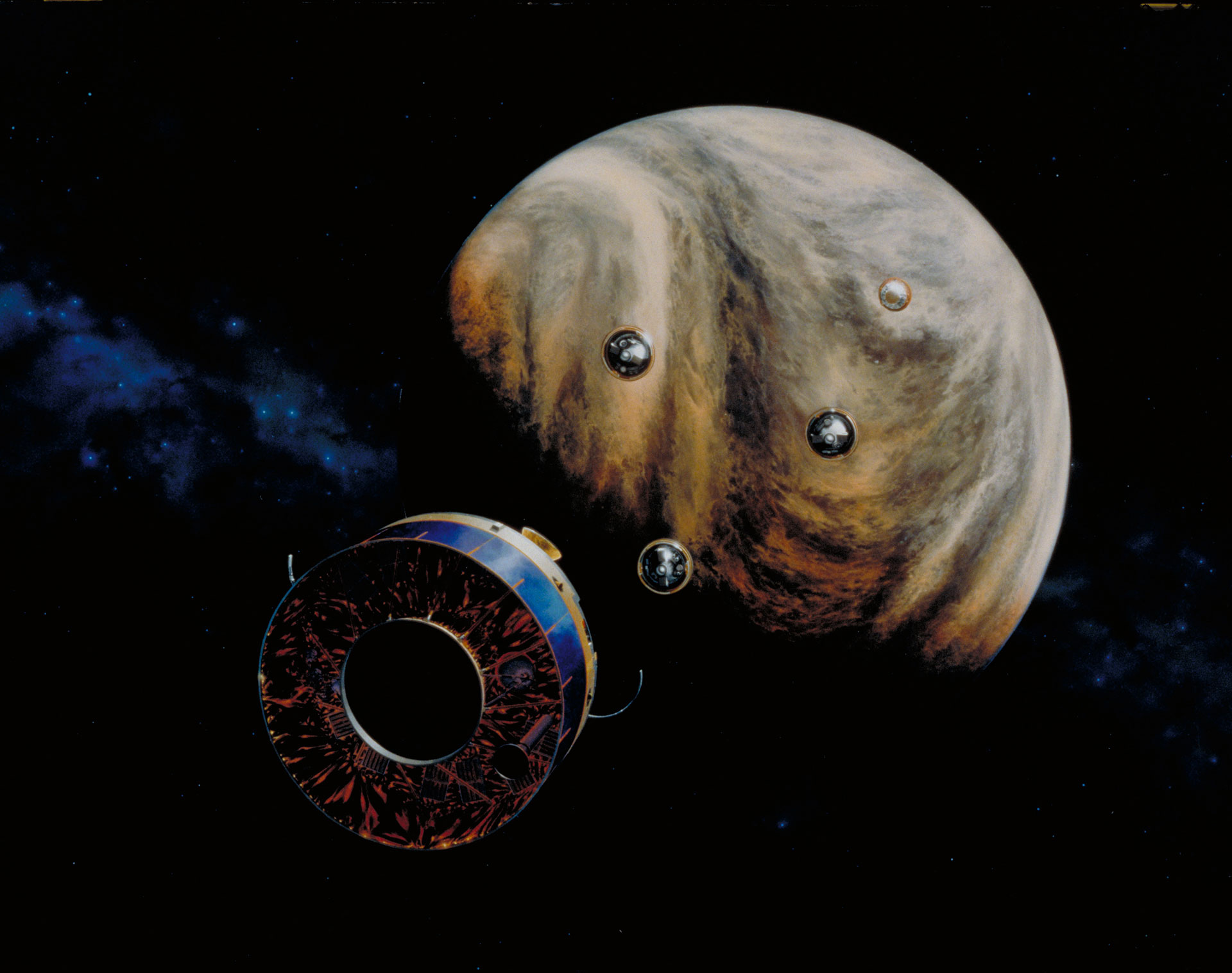
    40 Years Ago Pioneer Venus Multiprobe Launched
    Illustration of Pioneer Venus Multiprobe approaching Venus. Credit: NASA/ Paul Hudson

    On August 8, 1978, the Pioneer Venus Multiprobe spacecraft launched to study Venus, a planet that has an atmosphere 100 times denser than Earth’s atmosphere and is hotter than the melting point of zinc and lead. Pioneer Venus Multiprobe was composed of five components: the main spacecraft, the large probe, and three identical small probes named North, Day, and Night. Built by the Hughes Company in El Segundo, California, and launched on an Atlas-Centaur rocket from Cape Canaveral Air Force Station in Florida, the Pioneer Venus Multiprobe project was managed by NASA’s Ames Research Center in California’s Silicon Valley.
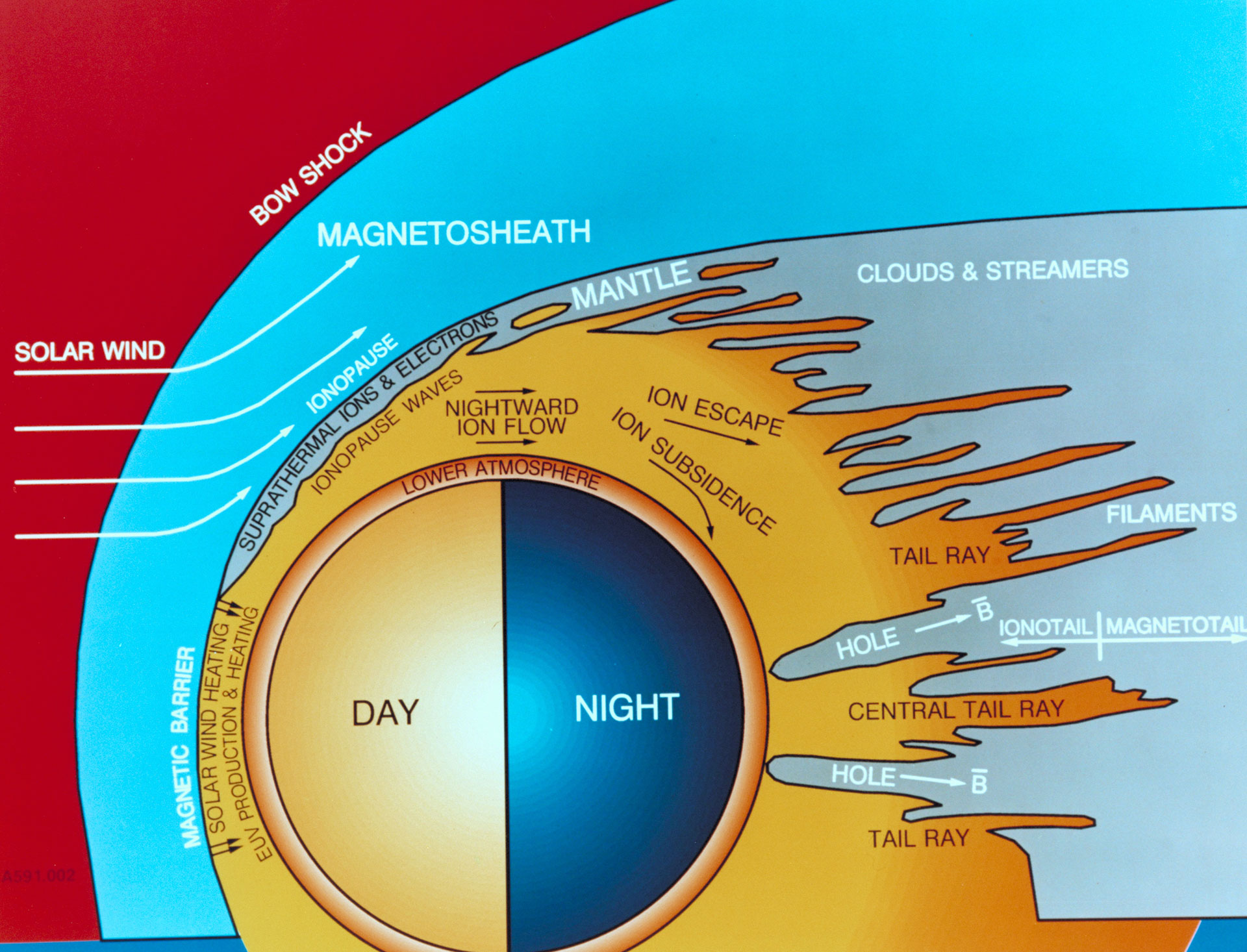
    Cloud Shrouded Planet Venus
    Venus Day/Night illustration showing solar wind, bow shock, magnetosheath, clouds, and streamers Pioneer Venus SP-461 fig 6-28 Interaction of the solar wind with the atmosphere of Venus as determined from Pioner Venus experiments and observations. Credit: NASA

    Carrying seven experiments and fitted with a parachute to slow its descent into the atmosphere, the large probe studied the composition of Venus’ atmosphere and clouds. In addition, the large probe measured the distribution of infrared and solar radiation. The three small probes were designed without parachutes, each carrying six experiments. Each probe targeted different parts of Venus. North entered Venus at the high northern latitudes, Night targeted the night side at mid-southern latitudes, and Day targeted the day side at mid-southern latitudes. The main spacecraft carried an additional two experiments designed to study Venus’ upper atmosphere. The five probes collected detailed information about atmospheric composition, circulation, and energy balance.

    The large probe separated from the main spacecraft 123 days after launch, on November 16, followed by the small probes on November 20, reaching and entering Venus’ atmosphere on December 9. While not expected to survive their fiery descent into the dense Venusian atmosphere, all four of the probes transmitted data down to the surface with the Day probe transmitting from the surface for over an hour.

    Never miss a breakthrough: Join the SciTechDaily newsletter.
    Follow us on Google and Google News.

    Astronomy Pioneer Venus Multiprobe Spacecraft Planetary Science Venus
    Share. Facebook Twitter Pinterest LinkedIn Email Reddit

    Related Articles

    NASA CubeSat Mission Receives Funding to Solve Venusian Mystery

    New Research From NASA Suggests Venus May Have Been Habitable

    Venus Transit Reveals Clues about the Venusian Atmosphere

    Mysterious Holes in the Atmosphere of Venus

    Rainbow-Like Light Phenomenon Observed on Venus for the First Time

    Researchers Confirm the Existence of a Circumsolar Dust Ring Near Venus

    ESA’s Venus Express Reveals Increasing Wind Speeds on Venus

    Scientists View Changes in Venus’s Ionosphere

    Mysterious Cold Layer Discovered in the Atmosphere of Venus

    Leave A Reply Cancel Reply

    • Facebook
    • Twitter
    • Pinterest
    • YouTube

    Don't Miss a Discovery

    Subscribe for the Latest in Science & Tech!

    Trending News

    Mezcal “Worm” in a Bottle Mystery: DNA Testing Reveals a Surprise

    New Research Reveals That Your Morning Coffee Activates an Ancient Longevity Switch

    This Is What Makes You Irresistible to Mosquitoes

    Shockingly Powerful Giant Octopuses Ruled the Seas 100 Million Years Ago

    Scientists Stunned by New Organic Molecules Found on Mars

    Rewriting Dinosaur Evolution: Scientists Unearth Remarkable 150-Million-Year-Old Stegosaur Skull

    Omega-3 Supplements Linked to Cognitive Decline in Surprising New Study

    First-of-Its-Kind Discovery: Homer’s Iliad Found Embedded in a 1,600-Year-Old Egyptian Mummy

    Follow SciTechDaily
    • Facebook
    • Twitter
    • YouTube
    • Pinterest
    • Newsletter
    • RSS
    SciTech News
    • Biology News
    • Chemistry News
    • Earth News
    • Health News
    • Physics News
    • Science News
    • Space News
    • Technology News
    Recent Posts
    • Male Birth Control Breakthrough: Scientists Find Way To Turn Sperm Production Off and Back On
    • A Common Vitamin Could Hold the Key to Treating Fatty Liver Disease
    • New Research Shows Vitamin B12 May Hold the Key to Healthy Aging
    • Scientists Map Thousands of Brain Connections With RNA Barcodes
    • This Gene Tweak Turns Strawberries Into Healthier, Tastier Superfruit
    Copyright © 1998 - 2026 SciTechDaily. All Rights Reserved.
    • Science News
    • About
    • Contact
    • Editorial Board
    • Privacy Policy
    • Terms of Use

    Type above and press Enter to search. Press Esc to cancel.