
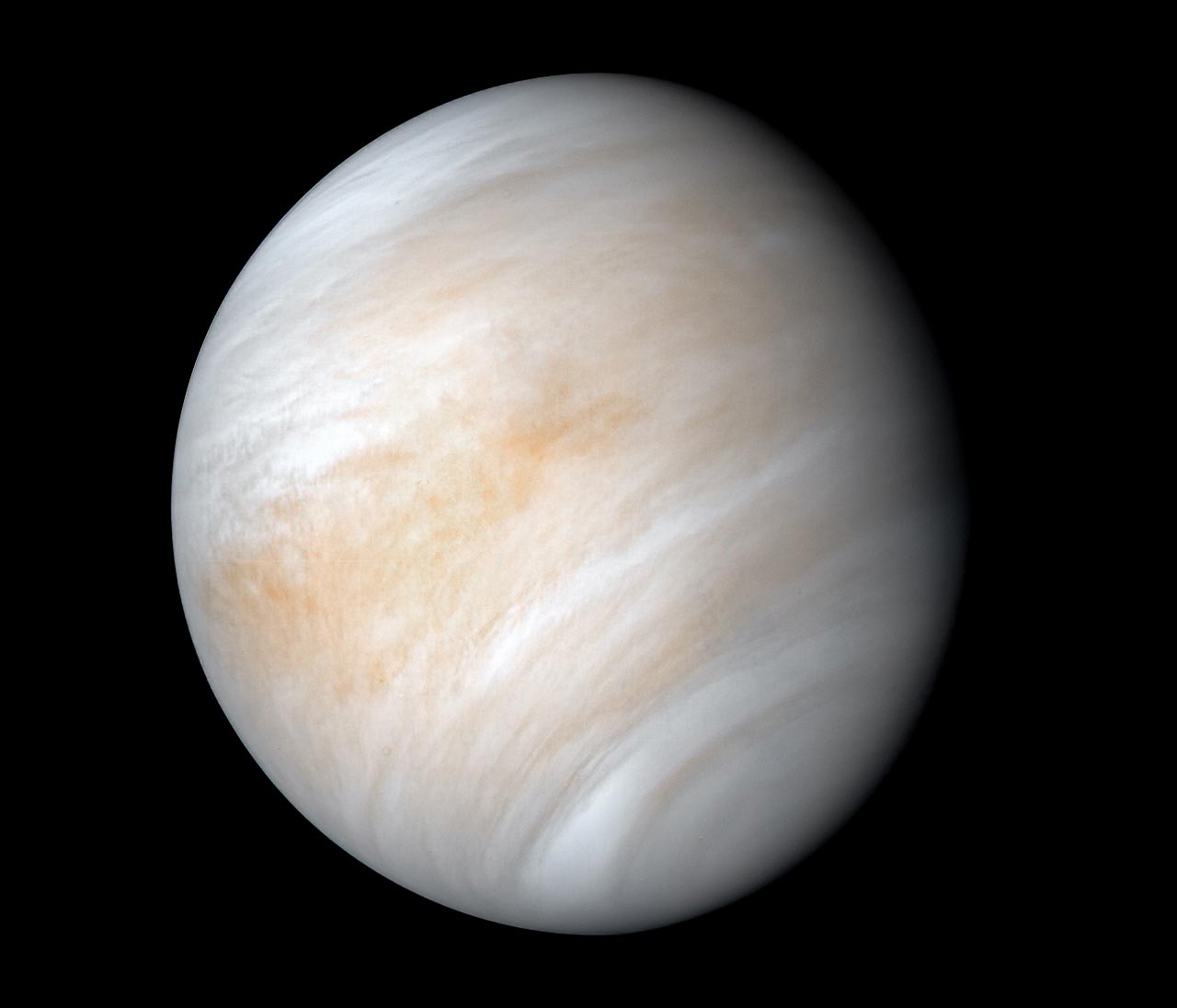
How much do you know about the planet Venus? Venus resembles the planet Earth so much that they’re called sister planets because of the similarity in size and density, although Venus is 20% smaller in mass. Because of the reduced mass of the planet and weaker gravitational pull, you’d weigh 20% less when standing on Venus relative to Earth. However, the Earth offers a far more hospitable environment, so it’s best to observe Venus by telescope. In fact, Venus is one of the quirkiest planets in the solar system. Here are some reasons.
1. Time is Strange on Venus
A day in planetary terms depends on how long it takes for the planet to rotate one time around its axis. On Earth, it takes 24 hours. But on Venus, it takes the equivalent of 243 Earth days for Venus to make a complete rotation around its axis. A year, in contrast, represents how long it takes for a planet to revolve one time around the sun. Venus does that in 224 days. It’s strange but true; a year is shorter than a day on Venus. If you could somehow survive and live there, years would pass faster than your days and you would be constantly confused about what time it is.
2. The Heat is Overwhelming
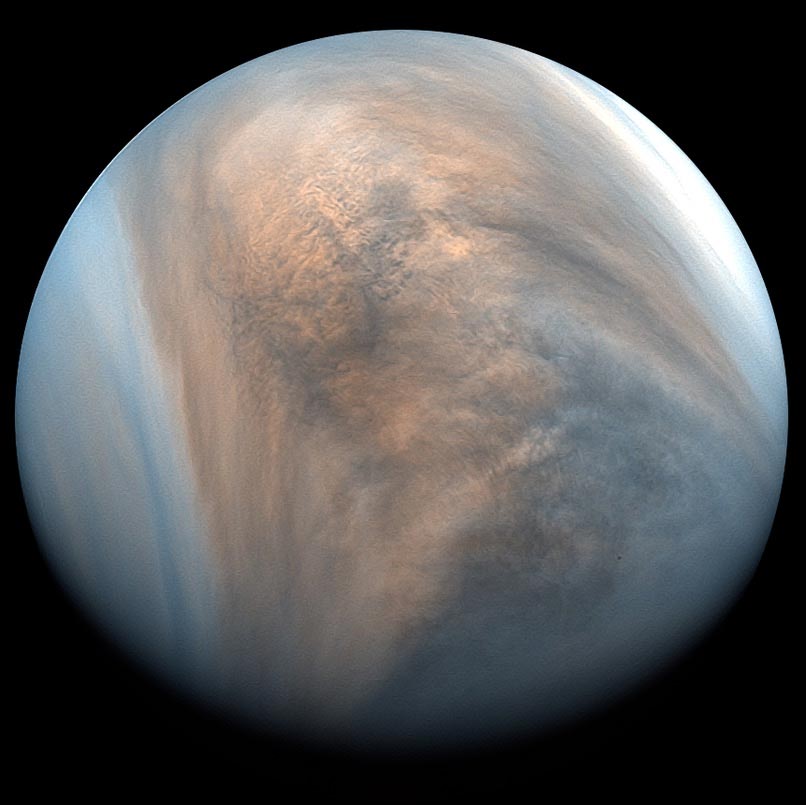
Venus and Earth may be similar in size, but the temperatures on Venus make it far less hospitable. According to NASA, the temperatures on Venus are fiery hot, enough to melt lead. Imagine what they could do to you. Why is it so hot on the earth’s sister planet? Venus’s atmosphere is composed of almost 96% carbon dioxide, with a small amount of water vapor. These greenhouse gases keep heat from leaving the surface of Venus, so the surface reaches a temperature that isn’t survivable, with temperatures between 460 and 880 Fahrenheit (240 and 470 Celsius). Even spacecraft melt after only a few hours on Venus.
3. Venus Will Crush You
If you can survive the extreme heat on Venus, the odds against survival even short term are non-existent. The reason? The air pressure is 90 times greater than it is on Earth, the equivalent of the pressure you would experience if you journeyed 3,000 feet (900 meters) underwater. In other words, the atmospheric pressure of Venus will crush you right away should you end up there. Not that you’d want to visit anyway!
4. Venus is a Bit “Backward”
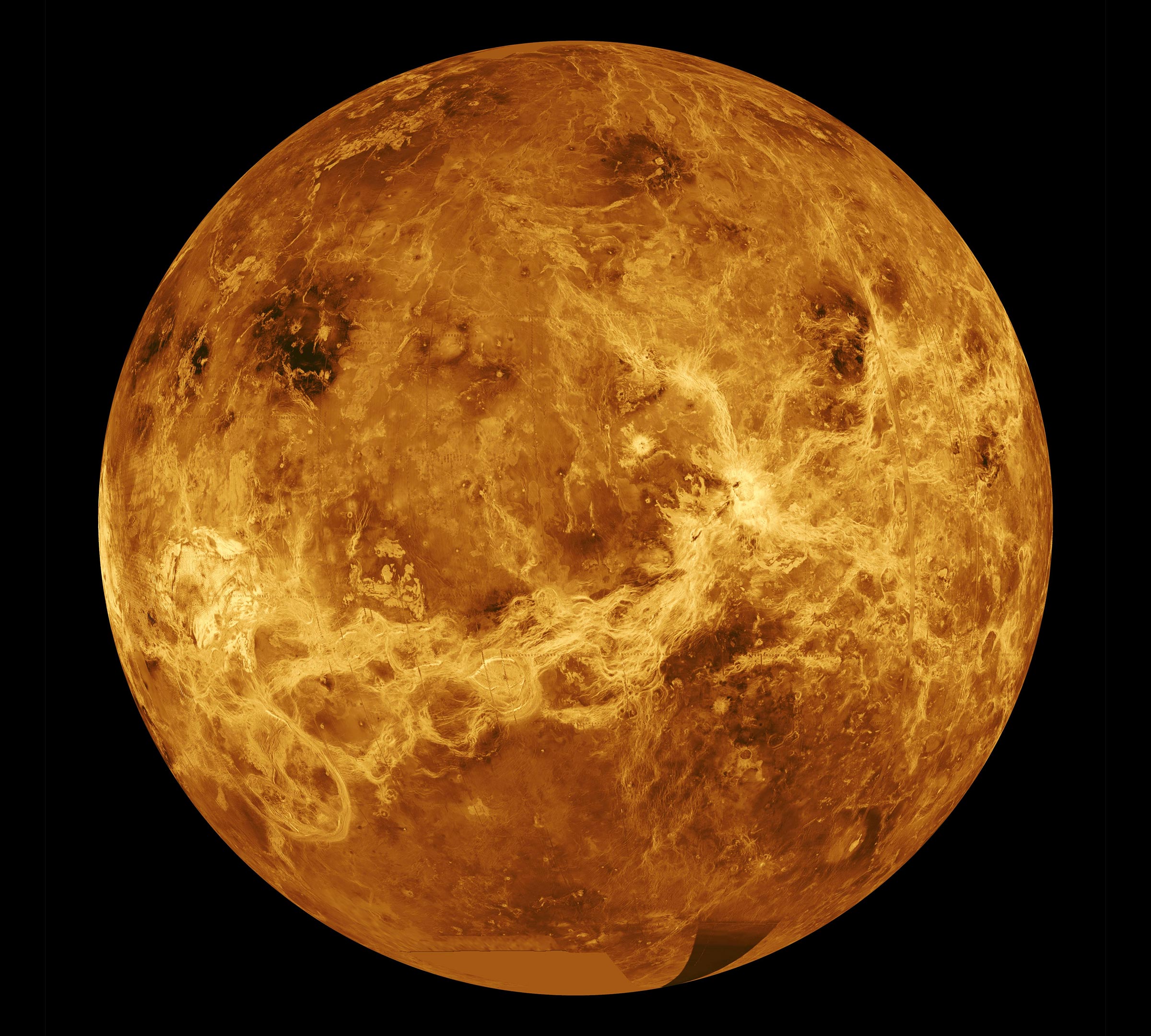
Another strange thing about Venus is its rotation. Planets and even asteroids rotate in a counterclockwise direction. That’s why on Earth the sun rises in the east and sets in the west. Things are backward on Venus; the planet rotates in a clockwise direction around its axis and the sun rises in the west and sets in the east. In fact, Venus is the only planet in the solar system that spins clockwise. They do things a little differently out there.
5. Venus Looks Lovely from Afar
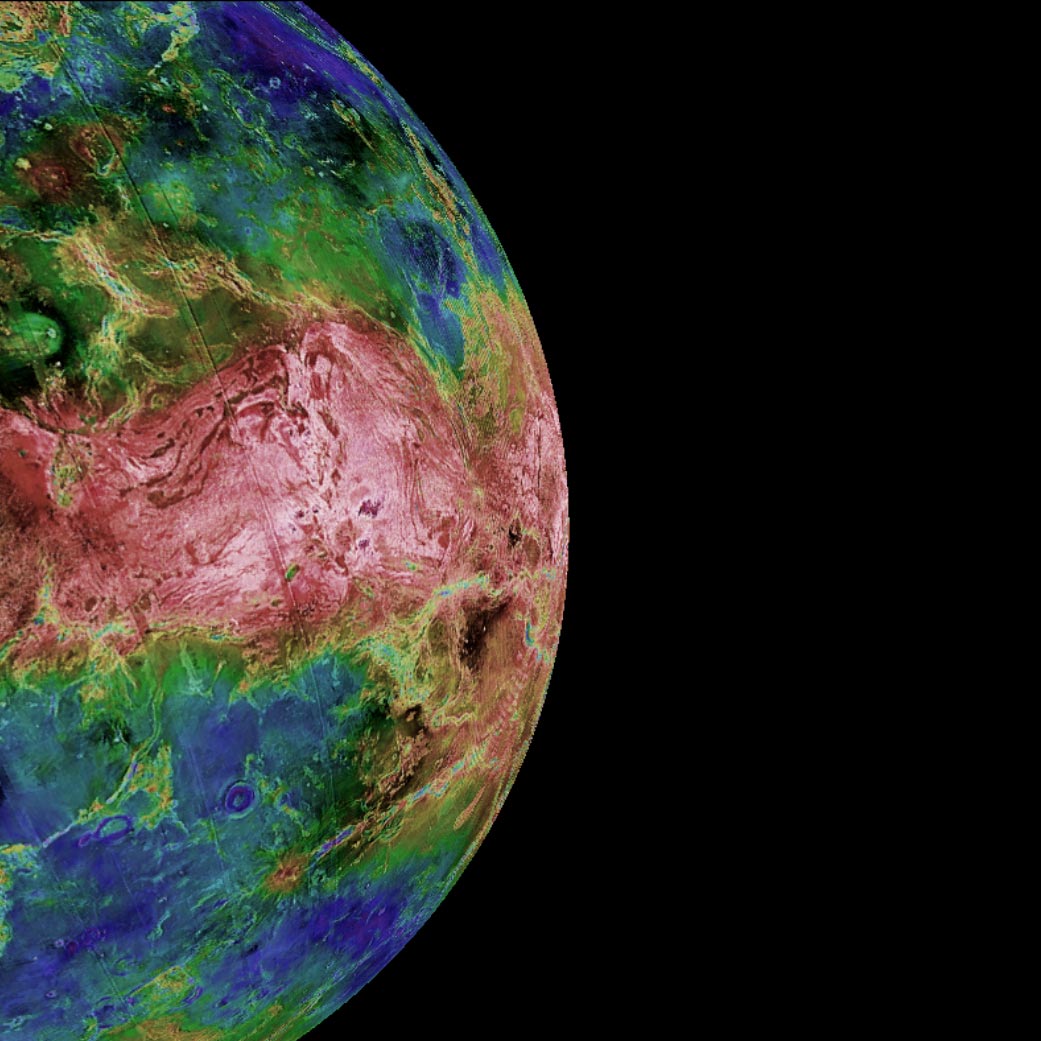
If you viewed Venus through a microscope, you would think it’s the loveliest of planets, a beautiful light in the sky. Because of its proximity to Earth, Venus appears bright and radiant in the sky. So inspired were early astronomers by the apparent beauty of Earth’s sister planet that they named it after Venus, the Roman goddess of beauty and love. However, if you got closer to its surface, you would see a myriad of deep craters and mountains. You’d also see thousands of volcanoes ranging in size from quite large to very small. In fact, it has more volcanoes than any other planet, the largest being Sapas Mons. The volcanoes play a major role in shaping its surface.
The Bottom Line
If Venus looks beautiful in the sky, but it’s not a place you’d want to visit even for a brief time, nor could you survive it. The best way to admire it is with a microscope.
Venus, our planetary neighbor, is a hot, hellish unforgiving world and NASA has selected two bold new missions to study this inferno-like planet: DAVINCI+ and VERITAS. Are Venus and Earth fundamentally unique worlds? Or are the differences between these ‘twins’ only cosmetic? Answering this question is key to understanding what makes other rocky planets habitable and, ultimately, emerge with life. Credit: NASA
NASA is going back to Venus. Learn more about the DAVINCI+ and VERITAS missions.
Learn more: 10 Astonishing Mysteries of Venus
Never miss a breakthrough: Join the SciTechDaily newsletter.
Follow us on Google and Google News.
6 Comments
If you viewed Venus through a microscope? Would be quite a challenge to do this, as you would need a pretty large specimen stage, not to mention a sizeable lab. I did look at Venus through a telescope though, this works much better!
What Gerd Jazzbeatz said. Might want to edit that to “telescope.”
I did my best, but couldn’t get the microscope to focus properly. It must need a highly trained professional.
Pretty wrong about the venus gravity !!! U asume that the venus, beacuse has 20% less mass than Earth , has also 20% , less gravity ? !!! Are u drudge ??? Where did u learned physics ??????? In your closet ?????
When you know skwat abot Astronomy , you afirm that: “The best way to admire it is with a microscope.” God help me !!!
When you know squat about Astronomy , you affirm that: “The best way to admire it is with a microscope.” God help me !!!