
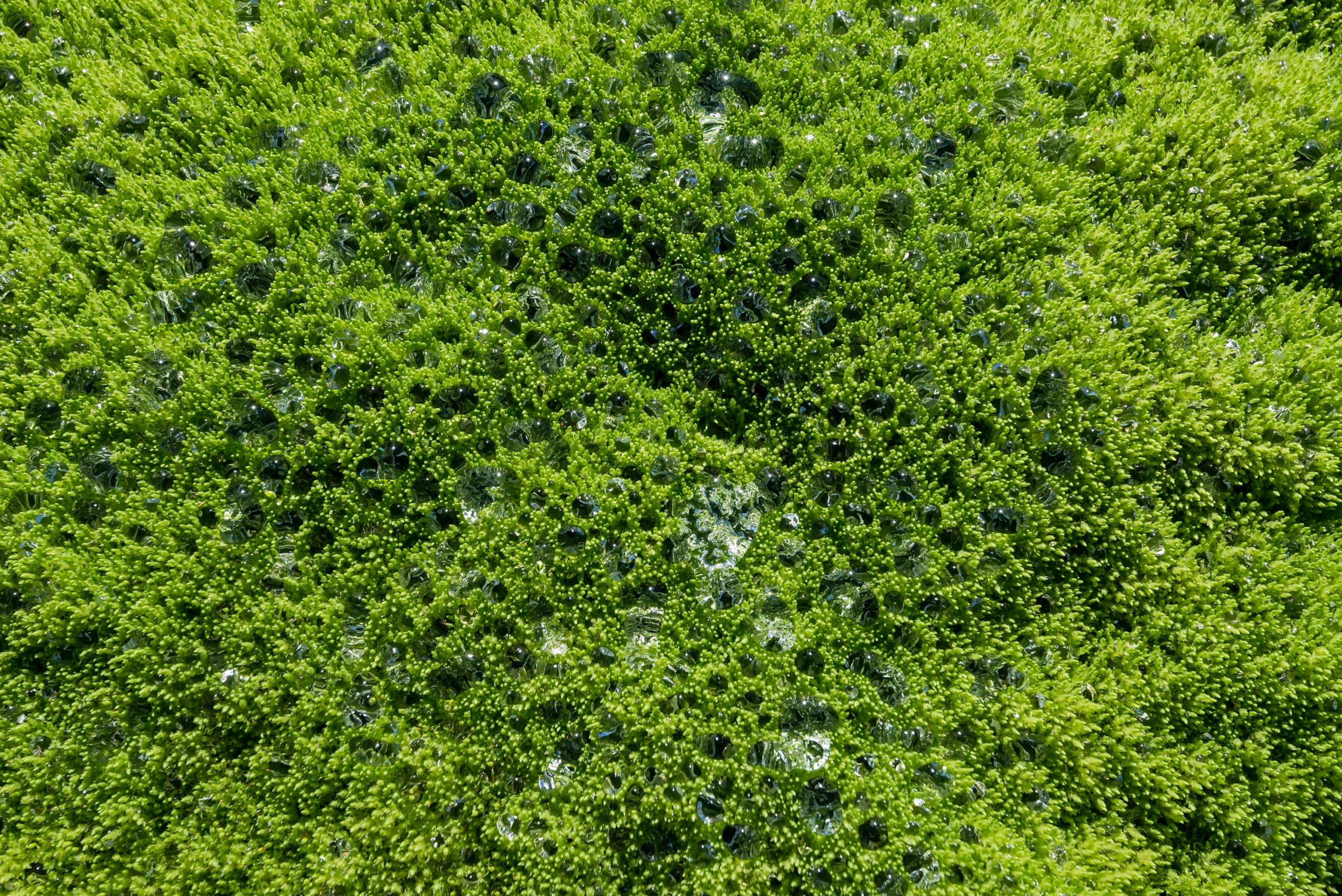
The arrival of plants on land about 400 million years ago may have changed the way the Earth naturally regulates its own climate, according to a new study led by researchers at UCL (University College London) and Yale.
The carbon cycle, the process through which carbon moves between rocks, oceans, living organisms, and the atmosphere, acts as Earth’s natural thermostat, regulating its temperature over long time periods.
In a new study, published in the journal Nature, researchers looked at samples from rocks spanning the last three billion years and found evidence of a dramatic change in how this cycle functioned about 400 million years ago, when plants started to colonize land.
Specifically, the researchers noted a change in the chemistry of seawater recorded in the rock that indicates a major shift in the global formation of clay – the “clay mineral factory” – from the oceans to the land.
Plants and the Great Clay Relocation
Since clay forming in the ocean (reverse weathering) leads to carbon dioxide being released into the atmosphere, while clay on land is a byproduct of chemical weathering that removes carbon dioxide from the air, this reduced the amount of carbon in the atmosphere, leading to a cooler planet and a seesawing climate, with alternating ice ages and warmer periods.
The researchers suggested the switch was caused by the spread of land plants keeping soils and clays on land, stopping carbon from being washed into the ocean, and by the growth in marine life using silicon for their skeletons and cell walls, such as sponges, single-celled algae and radiolarians (a group of protozoa), leading to a drop in silicon in the seawater required for clay formation.
Climate Evolution and Its Ripple Effects
Senior author Dr. Philip Pogge von Strandmann (UCL Earth Sciences) said: “Our study suggests that the carbon cycle operated in a fundamentally different way for most of Earth’s history compared to the present day.
“The shift, which occurred gradually between 400 to 500 million years ago, appears to be linked to two major biological innovations at the time: the spread of plants on land and the growth of marine organisms that extract silicon from water to create their skeletons and cells walls.
“Before this change, atmospheric carbon dioxide remained high, leading to a stable, greenhouse climate. Since then, our climate has bounced back and forth between ice ages and warmer periods. This kind of change promotes evolution and during this period the evolution of complex life accelerated, with land-based animals forming for the first time.
“A less carbon-rich atmosphere is also more sensitive to change, allowing humans to influence the climate more easily through the burning of fossil fuels.”
First author Boriana Kalderon-Asael, a PhD student at Yale University, said: “By measuring lithium isotopes in rocks spanning most of Earth’s history, we aimed to investigate if anything had changed in the functioning of the carbon cycle over a large time scale. We found that it had, and this change appears to be linked to the growth of plant life on land and silicon-using animal life in the sea.”
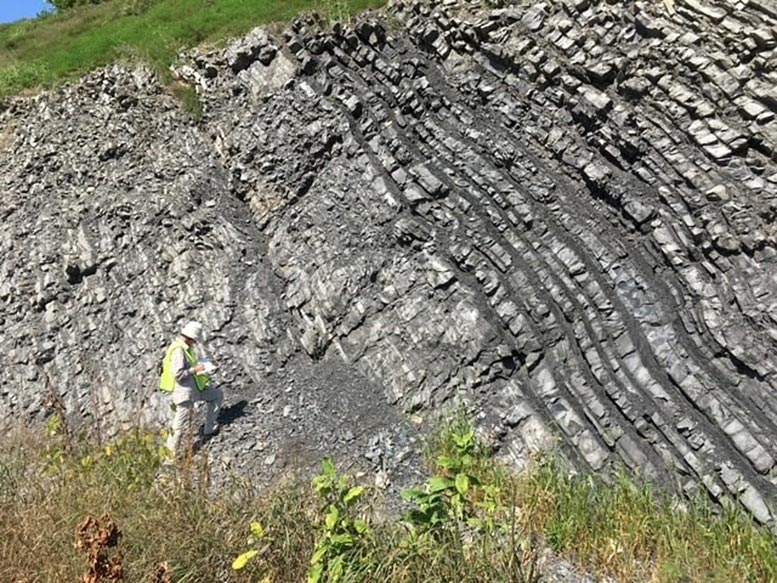
In the study, researchers measured lithium isotopes in 600 samples of rock taken from many different locations around the world. Lithium has two naturally occurring stable isotopes – one with three protons and three neutrons, and one with three protons and four neutrons.
When clay forms slowly on land, it strongly favors lithium-6, leaving surrounding water enriched with the other, heavier isotope, lithium-7. Analyzing their samples using mass spectrometry, the researchers found a rise in the levels of lithium isotope-7 in seawater recorded in the rock occurring between 400 and 500 million years ago, suggesting a major shift in Earth’s clay production coinciding with the spread of plants on land and emergence of silicon-using marine life.
How Clay Formation Regulates Carbon
Clay forms on land as a residue of chemical weathering, the primary long-term process through which carbon dioxide is removed from the atmosphere. This occurs when atmospheric carbon combines with water to form a weak acid, carbonic acid, which falls to the ground as rain and dissolves rocks, releasing ions including calcium ions that flow into the ocean. Eventually, the carbon is locked up in rocks on the ocean floor. In contrast, carbon drawdown by plant photosynthesis is negated once the plants decay, and rarely affects carbon dioxide levels on timescales longer than a few hundred years.
When clay forms in the ocean, carbon stays in the water and is eventually released into the air as part of the continual exchange of carbon that occurs when air meets water.
Reference: “A lithium-isotope perspective on the evolution of carbon and silicon cycles” by Boriana Kalderon-Asael, Joachim A. R. Katchinoff, Noah J. Planavsky, Ashleigh v. S. Hood, Mathieu Dellinger, Eric J. Bellefroid, David S. Jones, Axel Hofmann, Frantz Ossa Ossa, Francis A. Macdonald, Chunjiang Wang, Terry T. Isson, Jack G. Murphy, John A. Higgins, A. Joshua West, Malcolm W. Wallace, Dan Asael and Philip A. E. Pogge von Strandmann, 14 July 2021, Nature.
DOI: 10.1038/s41586-021-03612-1
The study received support from the European Research Council and NASA.
Never miss a breakthrough: Join the SciTechDaily newsletter.
Follow us on Google and Google News.
4 Comments
“A less carbon-rich atmosphere is also more sensitive to change, allowing humans to influence the climate more easily through the burning of fossil fuels.”
This is an important insight. It implies that not only is a climate associated with high CO2 levels more stable, but that the sensitivity of temperature to a doubling of CO2 not only appears linear with respect to the logarithm of the CO2 concentration, but the slope of the line may flatten with increasing CO2. That is to say, the so-called climate sensitivity may not be a constant.
No, it’s not constant as we know from research such as this, spanning many multiples of todays CO2 levels.
But for manmade global warming, which is problematic because of the fast change (extinction threat) and moving away from what we are used to (food threat), it doesn’t matter as far as dire consequences go. No saving grace for climate science doubters, say.
This endless search to justify things going sideways by loony commenters is absolutely psycho. The people at the office who have to debate the thermostat setting for a year before doing anything are more tolerable.
Cool [literary!] find, quite a significant isotope shift in their figure 1 [article paywalled].