
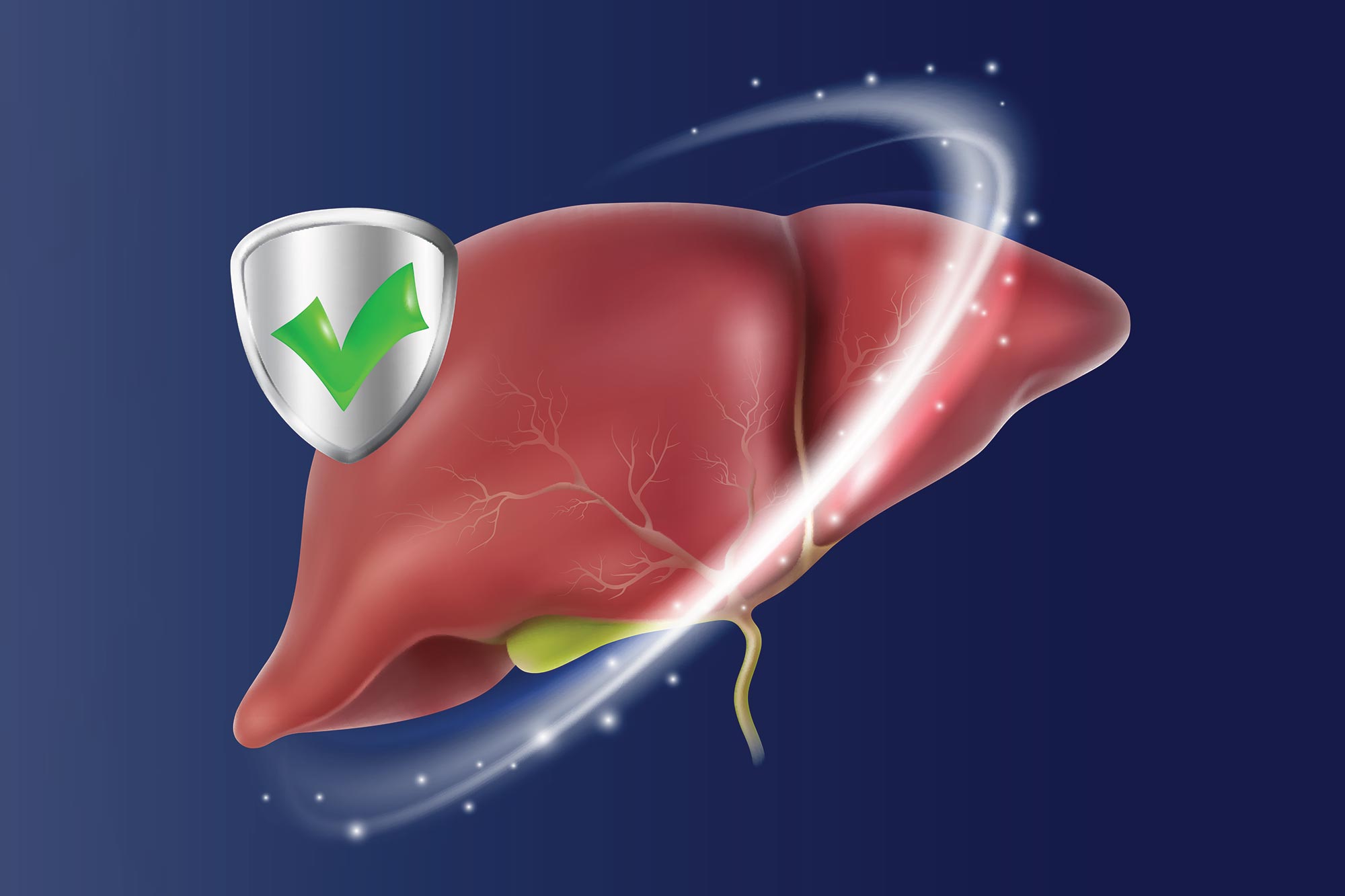
An experimental drug repaired the gut and reversed severe fatty liver disease in animals, opening the door to a promising new treatment for MASH.
Researchers at Michigan Medicine have identified how an experimental drug may treat severe fatty liver disease by repairing damage in the gut, according to findings published in The Journal of Clinical Investigation.
The compound, a glycine-based tripeptide called DT-109, reversed metabolic dysfunction-associated steatohepatitis (MASH) in animal models. It worked by interrupting a harmful biological pathway that connects the intestines and liver.
MASH affects an estimated 7% of people worldwide. The disease can progress to cirrhosis, liver cancer, and liver failure, yet treatment options remain limited despite recent advances.
“We see clear evidence that DT-109 protects the gut epithelial barrier, reducing the systemic influx of harmful microbial products that are thought to contribute to MASH development and progression,” said Eugene Chen, M.D., Ph.D., senior author of the study and Frederick G. L. Huetwell Professor of Cardiovascular Medicine at the University of Michigan Medical School.
“This compound shows benefits to the gastrointestinal system and has great potential as a treatment for MASH.”
How Gut Damage Can Drive Liver Disease
Earlier animal studies from Chen’s team had already suggested that DT-109 could be effective against MASH. The new research helps explain why the treatment appears to work.
Before evaluating the drug’s effects, the researchers confirmed an important contributor to MASH: the rapid growth of Clostridium perfringens, a bacterium that produces ammonia inside the gut.
When ammonia levels rise, they can damage the inner lining of the digestive tract and weaken the intestinal barrier. This allows toxins and other harmful microbial products to enter the bloodstream, reach the liver, and provoke inflammatory immune activity, including excessive activation of CD8+ T cells.
Through a series of experiments, the researchers found that DT-109 disrupted this damaging chain of events and helped restore the health of both the gut and liver.
The treatment reduced Clostridium perfringens levels and lowered ammonia production in the intestines of mice and nonhuman primates. These changes strengthened the intestinal barrier and limited the movement of harmful substances out of the gut.
DT-109 Reduced Liver Inflammation
The results in nonhuman primates were especially encouraging because their livers and gut microbiota are more similar to those of humans. In these animals, DT-109 reduced liver inflammation and eased the severity of MASH.
“DT-109 connects microbiota modulation with liver protection by restoring gut barrier integrity and limiting the systemic translocation of ammonia and other pro-inflammatory microbial products within the gut-liver axis,” said Jifeng Zhang, Ph.D., co-author and research professor of cardiovascular medicine at U-M Medical School.
“We also found that DT-109 primarily acts in the gastrointestinal tract, but its reach stretches much further.”
The findings suggest that DT-109 may eventually have uses beyond severe fatty liver disease.
Previous research has shown that the compound can reduce the development of atherosclerosis plaques and prevent vascular calcification in nonhuman primates. Those effects make it a potential candidate for treating cardiovascular disease as well.
Because a weakened intestinal barrier also plays a role in several digestive disorders, the researchers believe DT-109 could one day be explored as a possible treatment for conditions such as inflammatory bowel disease (IBD).
Moving Toward Human Clinical Trials
The next phase of research will involve additional testing of DT-109 with the goal of advancing it toward clinical trials. Those studies will be needed to determine whether the compound is safe and effective in humans.
“This study presents novel evidence about the pathogenesis of MASH and provides excitement about a therapeutic avenue to explore for a condition that remains difficult to treat,” said Elliot Tapper, M.D., Academic Director of Hepatology at Michigan Medicine.
“What patients with MASH need is a safe and effective therapy capable of improving their liver and heart health – of course we are excited about these developments.”
Reference: “Metabolic dysfunction–associated steatohepatitis exacerbated by Clostridium perfringens–derived ammonia is attenuated by tripeptide DT-109″ by Pengxiang Qu, Shusi Ding, Yanru Zhang, Yang Zhao, Erfei Song, Liangshuo Hu, Ruike Ding, Wenbin Cao, Yiting Hou, Jia Qi, Juan Zhao, Chenjing Duan, Shuangqing Liu, Chong Shen, Ying Zhao, Yanhong Guo, Zuowen Zheng, Shiwei Luo, Huizhong Hu, Liang Bai, Sihai Zhao, Bo Wang, Shuixiang He, Yi Wu, Xuelian Xiong, Qiutong Wu, Weiwang Gu, Oren Rom, Aimin Xu, Lemin Zheng, Jifeng Zhang, Enqi Liu and Y. Eugene Chen, 1 July 2026, The Journal of Clinical Investigation.
DOI: 10.1172/JCI200522
Additional authors: Yang Zhao, Ph.D., Ying Zhao M.S., Yanhong Guo, MD., Ph.D., all of University of Michigan. See remaining authors online.
Funding/disclosures: Ying Zhao, Oren Rom, Jifeng Zhang, and Y. Eugene Chen are inventors of the patent application (Tripeptides and treatment of metabolic, cardiovascular, and inflammatory disorders).
Chen is an inventor of the compound DT-109. The University of Michigan has patented it and licensed it to Diapin Therapeutics. Chen and the university have an ownership interest in Diapin. Diapin provided DT-109 for this study. The company is further developing the compound.
The study protocol involving humans, all amendments and the informed consent form were reviewed and approved by the Institutional Review Boards at each site, including the First Affiliated Hospital of Xi’an Jiaotong University (approval number: XJTU1AF2023LSK330), and the Institutional Review Board of Jinan University (approval number: 2016-017) and the University of Hong Kong/Hospital Authority Hong Kong West Cluster (approval number: UW 20–700). All experimental protocols involving non-human primates were approved by the Laboratory Animal Care Committee of Xi’an Jiaotong University (approval number: 20191278) and the Institutional Animal Care and Use Committee of Spring Biological Technology Development Co., Ltd. (approval number: 201901). The study was performed in accordance with the National Institutes of Health Guide for the Care and Use of Laboratory Animals.
Never miss a breakthrough: Join the SciTechDaily newsletter.
Follow us on Google and Google News.
2 Comments
Looking forward to primate trials!
Whoops guess I needed to say human trials. Had a cousin die from non alcoholic fatty liver disease sadly.