
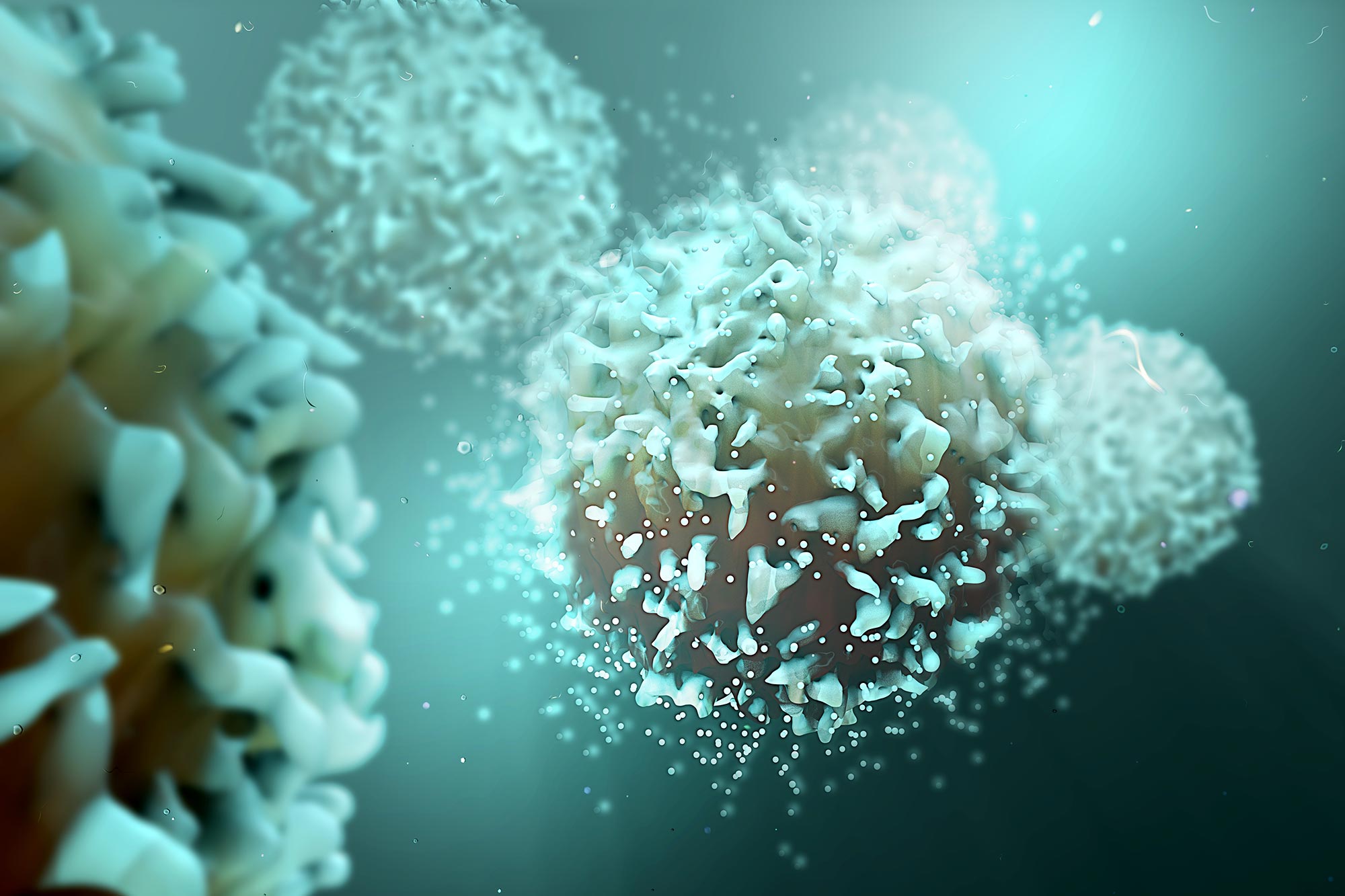
A shortage of one common nutrient could help cancer cells and viruses hide from the immune system.
Researchers at Rockefeller University found that a shortage of arginine, an amino acid obtained from food and produced by the body, can interrupt the cellular machinery needed to make MHC-I proteins. These proteins act as a surveillance system, displaying fragments from inside a cell so T cells can detect cancerous changes or viral infections.
When arginine was limited, that warning system weakened. Increasing the amount of arginine in the diets of mice restored MHC-I production, reduced colon tumor growth, and improved their response to influenza and SARS-CoV-2. The findings were published in Cell.
The results raise the possibility that an inexpensive and widely available nutrient could eventually support cancer immunotherapy or antiviral treatments. However, the experiments were conducted primarily in cells and mice. Researchers will need clinical trials to determine whether arginine supplements offer similar benefits in people.
“Our work reveals how a lack of arginine interferes with the immune system and suggests that upping arginine intake could prove beneficial,” says first author Qiushuang Wu, a postdoc in Sohail Tavazoie’s laboratory. “Perhaps that means it could be used in combination with other therapies to treat both cancer and viral infections.”
A Common Amino Acid With Major Roles
Arginine is used to build proteins and supports several other biological processes, including the removal of nitrogen waste. The body can produce it, while foods such as meat, fish, dairy products, nuts, seeds, and legumes provide additional amounts.
Scientists have long known that amino acid availability can alter metabolism and cellular signaling. The new research suggests that a shortage of one amino acid can also selectively disrupt the production of particular proteins, with consequences for immune defense.
Tavazoie, who leads Rockefeller University’s Elizabeth and Vincent Meyer Laboratory of Systems Cancer Biology, has spent years investigating the relationship between arginine and cancer.
A Hidden Complication for Cancer Cells
His team previously found that colon cancer cells exposed to low arginine levels accumulated mutations as they adapted to the shortage. That finding suggested a possible weakness in tumors: the growing number of abnormal proteins could make cancer cells easier for the immune system to recognize.
The latest study uncovered a complication. Although arginine deprivation may increase mutations, it can simultaneously interfere with the mechanism that allows immune cells to see those mutations.
The Most Depleted Amino Acid
Supported in part by the Stavros Niarchos Foundation (SNF) Institute for Global Infectious Disease Research at The Rockefeller University and the Weill Cancer East Hub, Wu examined models of colon cancer, influenza, and SARS-CoV-2, diseases in which amino acid levels can become abnormal. Among the nutrients she measured, arginine showed the most consistent and pronounced decline.
“One of the most dramatic patterns to emerge was that arginine was the most depleted amino acid in all of these diseases,” she says.
Experiments in cultured cells identified 414 proteins whose levels fell unusually low when arginine was scarce. Many were connected to arginine’s established roles in the cell, but one group stood out because of its importance to immune surveillance.
Low arginine reduced the activity of three HLA genes involved in producing MHC-I (major histocompatibility complex class I) proteins.
How Cells Expose Internal Threats
Nearly every nucleated cell in the body carries MHC-I molecules on its surface. These molecules continuously display small protein fragments from within the cell.
T cells inspect those fragments for signs that something has gone wrong. A fragment produced by a virus can reveal an infected cell, while an abnormal fragment can expose a cell that has become cancerous. Without enough MHC-I on the surface, dangerous cells may have a better chance of escaping detection.
The researchers discovered that MHC-I proteins are especially vulnerable to an arginine shortage because their construction requires the amino acid repeatedly.
Protein Production Grinds to a Halt
Proteins are assembled by ribosomes, molecular machines that read genetic instructions and join amino acids in the correct order. When ribosomes reached arginine-dependent portions of MHC-I under low-arginine conditions, they stalled because the necessary material was unavailable.
The genes themselves had not disappeared. Instead, the machinery translating their instructions could not complete the proteins.
With fewer MHC-I molecules reaching the cell surface, T cells received fewer warnings about cancer-related or viral proteins. The nutrient shortage had effectively dimmed one of the immune system’s most important alarm signals.
“These findings are exciting because they reveal that consumption of a specific amino acid can directly regulate gene expression in an organism by increasing production of a protein enriched in that amino acid,” Tavazoie says. “We believe that such selective translational tuning of gene expression through dietary manipulation likely extends to many other proteins and amino acids.”
Dietary Arginine Changes Disease Outcomes
Wu next investigated whether changing the amount of arginine in the diet would influence disease in mice.
Mice fed a low-arginine diet developed more colon tumors, while those given more of the amino acid developed fewer. The results suggest that arginine availability may affect the immune system’s ability to recognize and control cancer.
Working with Heinz-Heinrich Hoffman, a research assistant professor in Charles Rice’s Laboratory of Virology and Infectious Disease, the team also tested different arginine levels in mouse models of influenza and SARS-CoV-2.
Arginine Improves Viral Outcomes in Mice
Mice fed an arginine-rich diet had milder symptoms from viral infections. Unexpectedly, giving mice arginine after influenza infection also improved their outcomes.
“Not only did mice with an arginine-rich diet have milder symptoms from viral infections, giving the mice arginine after influenza infection improved their outcomes too,” Wu notes. “That was very surprising. From our genetic models, we knew manipulating arginine levels had a strong effect on gene expression, but we didn’t expect the dietary manipulation to be equally impactful.”
The researchers also reported that a moderate amount of arginine, comparable to the quantity in a couple of over-the-counter tablets, was sufficient to restore expression of genes involved in MHC-I production under their experimental conditions.
A Possible Boost for Immunotherapy
The researchers envision testing whether it could strengthen therapies that depend on immune recognition.
Cancer immunotherapies, for example, work by helping immune cells identify or attack tumors. If low arginine reduces the number of MHC-I molecules displayed by cancer cells, restoring the amino acid might make some tumors more visible to treatment.
“Arginine supplementation could be readily tested in patients receiving immunotherapies or given to high-risk populations exposed to viral pathogens,” Tavazoie suggests. “Considering that arginine is inexpensive and readily available, we hope that therapeutic and preventative studies could be undertaken soon.”
Aging, Nutrition, and Immune Decline
The work may also help explain why aging and poor nutrition can weaken immune defenses. Arginine levels naturally decline with age, according to the researchers, potentially making it harder for cells to produce proteins needed for immune surveillance.
“Qiushuang’s findings illuminate how poor diet and aging, during which arginine levels naturally decline, could create the perfect storm for the initiation of colon cancer. Similarly, age-related arginine loss could partially contribute to the greater mortality caused by respiratory viruses,” Tavazoie says. “We’re also investigating whether making dietary changes in other amino acids has beneficial effects in a variety of disease contexts. There are no doubt more discoveries to come.”
Reference: “Dietary arginine drives codon-dependent MHC class I translation and improves immunity in colon tumorigenesis and respiratory viral infection” by Qiushuang Wu, Lara M. Seydlitz, Vladislav Iakimov, Dennis J. Hsu, Parham Habibzadeh, H. Heinrich Hoffmann, Philip B. Paty, Charles M. Rice and Sohail F. Tavazoie, 30 July 2026, Cell.
DOI: 10.1016/j.cell.2026.07.020
Never miss a breakthrough: Join the SciTechDaily newsletter.
Follow us on Google and Google News.