
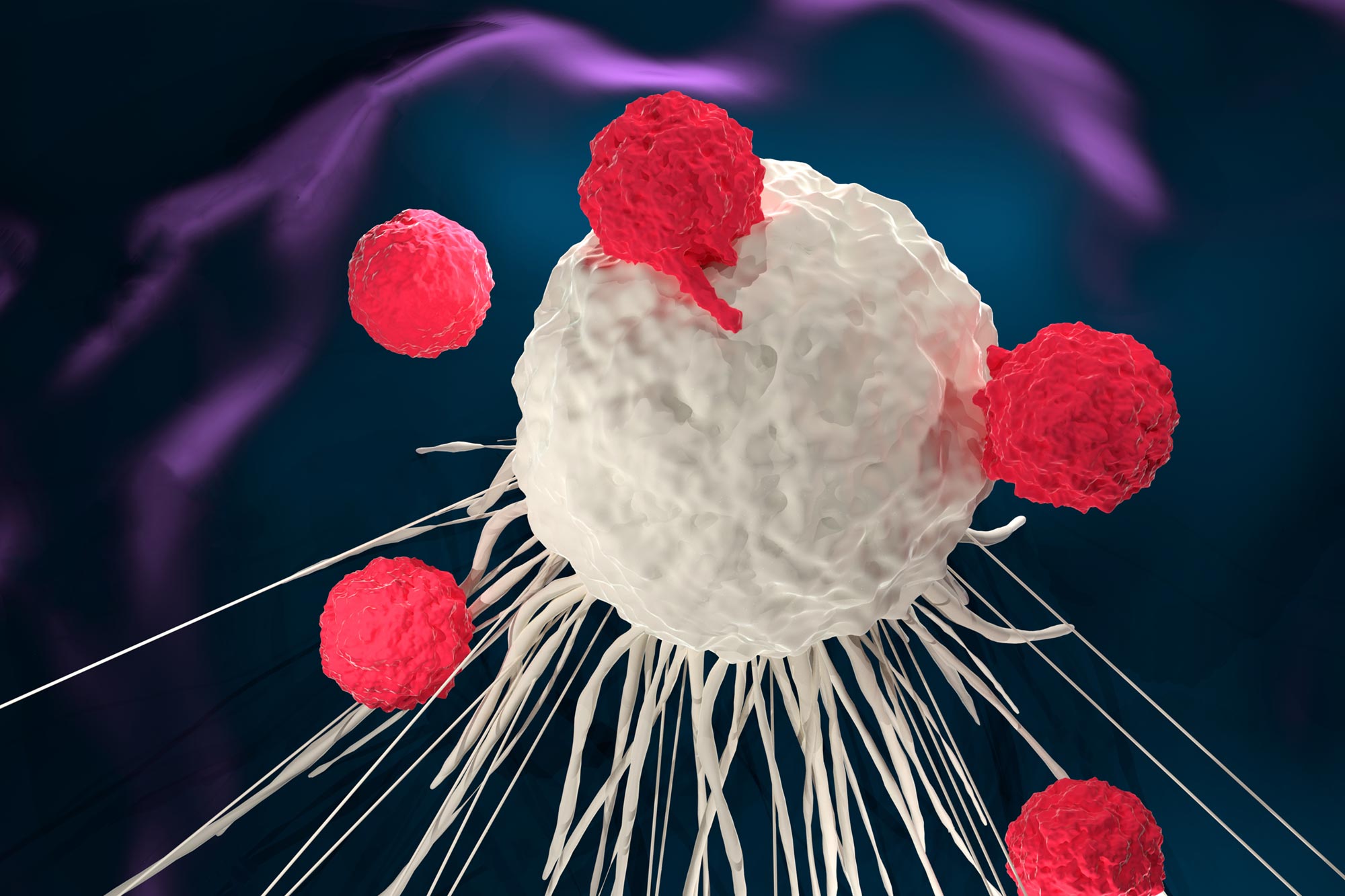
A new study has uncovered an unexpected vulnerability in some of the deadliest cancers.
Researchers at UCLA have identified a previously hidden weakness in some of the most aggressive cancers, pointing to a possible new way to attack tumors that have remained difficult to treat.
Small cell neuroendocrine cancers can develop in the lungs, prostate, and ovaries. These tumors grow quickly, spread early, and are notoriously resistant to treatment. One hallmark of these cancers is the loss of a gene known as RB, which normally helps keep cell growth under control. When RB is absent, cancer cells multiply unchecked and often evade targeted therapies.
New findings published in Proceedings of the National Academy of Sciences suggest that losing RB may also leave these cancers exposed to an important vulnerability.
The researchers discovered that cancer cells lacking RB become heavily reliant on a protein called E2F3. In laboratory experiments, blocking E2F3 stopped tumor growth. Scientists describe this relationship as “synthetic lethality.” While cancer cells can survive without RB, eliminating E2F3 at the same time creates a weakness severe enough to disrupt their survival.
Synthetic Lethality Creates New Treatment Opportunity
“Discovering a vulnerability like this opens the door to thinking about entirely new treatment strategies,” said study senior author Dr. Owen N. Witte, who holds the Presidential Chair in Developmental Immunology in the Department of Microbiology, Immunology, and Molecular Genetics and is a member of the UCLA Health Jonsson Comprehensive Cancer Center.
“That’s especially important because there has not been a major change in how we treat these cancers for decades. When I first encountered these tumors as a medical student more than 50 years ago, the survival statistics were essentially the same as they are today.”
Progress in developing treatments, especially for small-cell prostate cancer, has been slowed by a lack of reliable laboratory models. Without accurate models, researchers have struggled to identify the genes these tumors depend on and uncover potential therapeutic targets.
To overcome that challenge, the UCLA team created new experimental models by genetically modifying normal human prostate cells. The researchers introduced five major cancer-driving alterations, including the loss of RB and TP53. The cells were grown into organoids and then used to generate tumors in mice, producing models that closely mimic human small-cell prostate cancer. The work builds on more than a decade of efforts by Witte’s laboratory to develop specialized models of small-cell neuroendocrine prostate cancer.
Advanced Models Reveal E2F3 Dependence
Using these models, the team conducted genome-wide CRISPR screens, analyzing thousands of genes to determine which were essential for cancer cell survival. The researchers identified nearly 1,400 important genes and found that small cell cancers originating in different organs consistently relied on E2F3.
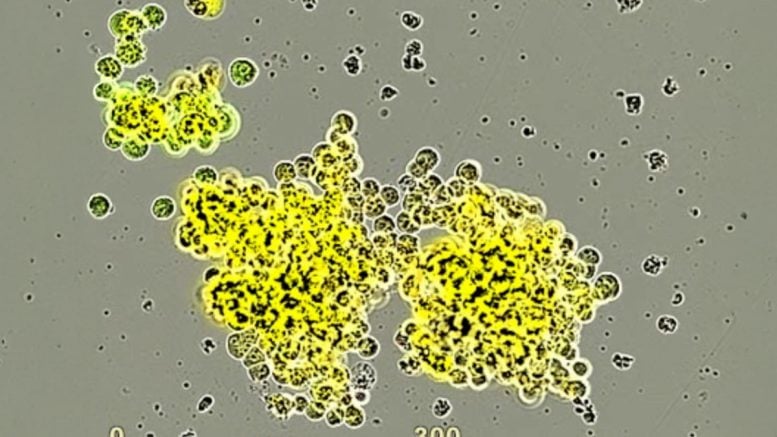
Further experiments showed that reducing E2F3 levels in RB-deficient cancer cells stopped the cells from dividing, prevented them from forming clusters, and in some cases, caused them to die. The findings suggest that while tumors can tolerate RB loss alone, they become highly vulnerable when E2F3 is also suppressed.
“It’s not that the two genes do the same thing,” said Witte, who is also the founding director emeritus of the UCLA Broad Stem Cell Research Center and co-director of the Parker Institute of Cancer Immunotherapy Center at UCLA. “But the combination of what they do together becomes essential for the cancer cell. Losing one gene may not matter much, but losing both has a dramatic effect on tumor growth.”
“These new model systems allowed us to uncover a genetic vulnerability that would have been very difficult to find otherwise,” added first author Dr. Evan Abt, an assistant professor of Molecular and Medical Pharmacology at the David Geffen School of Medicine at UCLA.
Repurposing Existing Drugs Against E2F3 Pathways
Because no medications currently target E2F3 directly, the researchers investigated another strategy. They found that blocking a metabolic pathway involved in producing DNA building blocks by inhibiting the enzyme DHODH reduced E2F3 levels and slowed tumor growth.
Importantly, DHODH inhibitors, including leflunomide and teriflunomide, are already approved by the FDA for treating autoimmune diseases. That existing approval could help speed their evaluation as potential cancer therapies.
“What’s exciting is that our findings open the door to applying existing drugs in a new way,” Abt said. “By understanding how these cancers depend on E2F3, we can start to think about strategies that might work much more quickly in patients.”
Although the research remains at an early stage, the study provides valuable new insight into the biology of these aggressive cancers and highlights a promising direction for future treatment development.
Reference: “Synthetic lethality between RB-loss and E2F3 inhibition in small cell cancers targeted by pyrimidine synthesis blockade” by Evan R. Abt, Liang Wang, Grigor Varuzhanyan, Jack Freeland, Tian He, Guadalupe M. Peña-Garcia, Lauryn Ruegg, Jami McLaughlin, Donghui Cheng, Nikolas G. Balanis, Chia-Chun Chen, Yang Xu, Yi Xing, Sanaz Memarzadeh, Caius G. Radu, Thomas G. Graeber and Owen N. Witte, 20 March 2026, Proceedings of the National Academy of Sciences.
DOI: 10.1073/pnas.2532814123
Never miss a breakthrough: Join the SciTechDaily newsletter.
Follow us on Google and Google News.
2 Comments
Neuroendocrine malignancies can develop anywhere. Skin, gut, appendix, pancreas. They know no bounds
Thanks to the researchers. I hope this study can result in an improvement of the treatment of these dreadful cancers, especially considering that there has been any progress in many decades.