
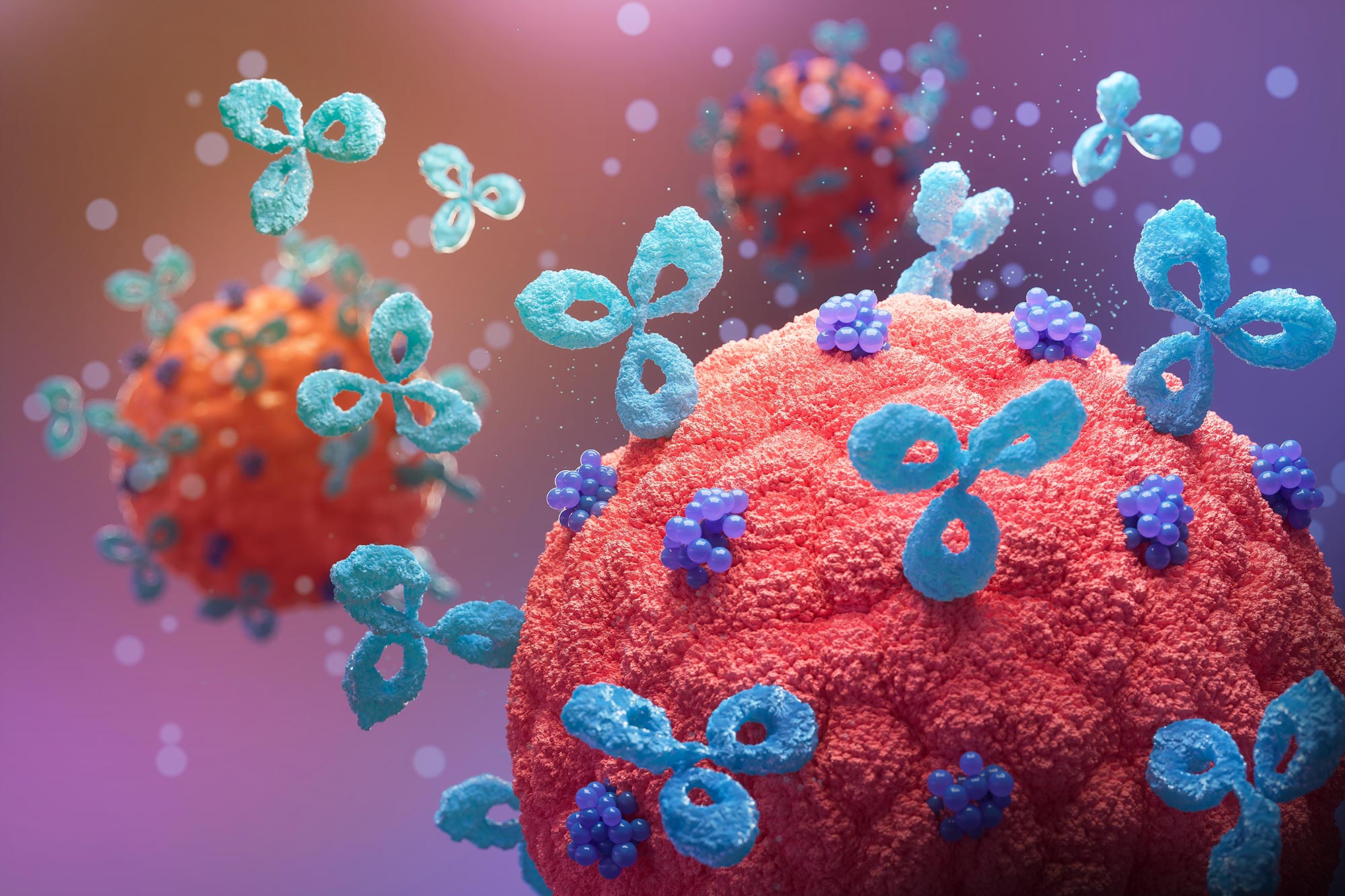
Laboratory experiments show that antibodies associated with childhood cancer can enter cells and bind DNA repair proteins, suggesting a possible route by which the immune system could weaken genetic safeguards.
Years before some children were diagnosed with cancer, their blood already contained antibodies directed against proteins that normally repair damaged DNA. Researchers in Norway have found that these antibodies were much more common among children who later developed cancer than among those who did not, raising the possibility that the immune system itself may interfere with a cell’s ability to protect its genetic material.
Childhood cancers, including leukemia, myeloma, neuroblastoma, and osteosarcoma, differ from adult cancers in their causes, locations, and responses to treatment. Children have had far less time to accumulate DNA damage from environmental exposures, lifestyle factors, and aging. Their tumors therefore tend to contain fewer mutations and often arise from immature cells, such as stem cells or progenitor cells that can develop into more specialized cell types.
Cells rely on hundreds of proteins to identify and repair damage or errors in their DNA. The Norwegian researchers suspect that this protective machinery may sometimes be disrupted by auto-antibodies, antibodies that mistakenly target the body’s own proteins rather than foreign threats. If these antibodies interfere with DNA repair, genetic damage could accumulate even without inherited defects in the genes responsible for maintaining the genome.
Antibodies target six DNA repair proteins
To investigate this possibility, Serguienko, Dr Ola Myklebost, and their colleagues analyzed the proteome, or collection of expressed proteins, in tumor and blood samples from 175 adults and children with sarcoma or acute lymphoblastic leukemia. The samples were collected between 2014 and 2017 through the NoSarC Norwegian Sarcoma Study, the Norwegian Childhood Cancer Biobank, and the Oslo University Hospital Cancer Research Biobank. The team compared them with samples from anonymized healthy individuals, including blood donors, children participating in the Bergen Growth Study, and children visiting a clinic in Bergen.
Children with cancer between the ages of two and 19 had substantially more circulating IgG antibodies targeting DNA repair proteins than young adults or older individuals. These antibodies primarily recognized proteins associated with six genes: RAD52, NUMA1, ALKBH7, APBB1, UNG, and MGMT. Although these genes are closely involved in DNA repair, they were not significantly mutated in the cancers studied. This raised the possibility that the proteins could be disrupted by the immune system even when the genes encoding them remained largely intact.
Antibodies found years before diagnosis
Finding these antibodies in children who already had cancer, however, could not establish whether they appeared before the disease or developed in response to it. The researchers therefore examined blood samples collected years earlier from 59 school-age children who participated in two long-term British studies, the Avon Longitudinal Study of Parents and Children and Born in Bradford.
Roughly half of these children subsequently developed cancer before turning 30, while the others did not. Comparing the two groups allowed the researchers to investigate whether antibodies targeting DNA repair proteins were present before cancer was diagnosed.
“Although this cohort is small, it was the best we could find internationally,” said Myklebost, an emeritus professor of molecular oncology at the University of Bergen. “Even so, we were able to show that indeed, children who later got cancer (on average six years after blood sampling) were about eight times more likely than their healthy peers to have antibodies to at least one core antigen involved in DNA repair.”
The findings, published in Frontiers in Immunology, suggest that these antibodies can appear well before cancer develops. Their presence alone does not establish that they cause the disease, however. To explore whether they might actually interfere with DNA repair, the scientists conducted additional experiments using living cells.
How antibodies may disrupt DNA repair
Those experiments showed that the auto-antibodies could enter cells, particularly during the stage when cells finish growing and prepare to divide. Once inside, the antibodies appeared to concentrate around a cellular structure called the TIGER organelle, where transcription factors and other short-lived but essential proteins are produced and modified.
“We showed that many children with various types of cancer have antibodies against some of their own DNA repair proteins. We also demonstrated that such ‘auto-antibodies’ can enter live cells and bind to – and probably inhibit – the activity of these essential proteins,” said corresponding author Myklebost.
The researchers propose that antibodies entering a cell or its nucleus could attach to DNA repair proteins and prevent them from working normally. By binding to these proteins, the antibodies might immobilize them or directly interfere with their activity, leaving the cell less capable of correcting genetic damage.
Such interference could produce effects resembling those caused by inherited defects in DNA repair genes that increase cancer susceptibility. The difference is that the repair machinery would be impaired by antibodies rather than by mutations in the genes encoding its components.
“[These results] together provide a plausible mechanism for increased cellular damage that could lead to cancer development,” concluded the authors.
An important question remains unanswered: Why would a child’s immune system begin producing antibodies against proteins needed for DNA repair?
“They could be triggered by infections, by crossreacting to some microbial proteins or overstimulation of the immune response, or by some imbalance in immune tolerance,” hypothesized Myklebost.
Antibody screening needs stronger evidence
These possibilities remain unconfirmed, but the findings suggest a potential approach to identifying children who may face an increased risk of cancer. If further research establishes that the antibodies contribute to cancer development, screening for them could eventually help identify susceptible children years before diagnosis, potentially allowing earlier detection or even preventive interventions.
For now, the researchers are working to determine whether the antibodies directly impair DNA repair and whether that interference can cause cancer. Demonstrating those effects would provide much stronger evidence for the proposed mechanism.
“At present we are investigating the effect of patient antibodies on the repair of induced mutations in cultured cells. Ultimately, we hope to clone white blood cells that secrete such auto-antibodies, and test for any cancer-causing effects in mice to definitively prove our hypothesis,” said Myklebost.
Reference: “Pathogenic autoantibodies targeting DNA repair proteins are shared by cancer patients and healthy children later diagnosed with cancer” by Anastassia Serguienko, Jeetesh Sharma, Ronas Shakya, Monica Cheng Munthe-Kaas, Kjetil Boye and Ola Myklebost, 25 August 2026, Frontiers in Immunology.
DOI: 10.3389/fimmu.2026.1911932
This project was supported by grants from the Radium Hospital Foundation (#172011), the Norwegian Cancer Society (#228870), the Norwegian Childhood Cancer Society (#220001), and the Trond Mohn Foundation (#TMS2023TMT07). The UK Medical Research Council and Wellcome (#MR/Z505924/1) and the University of Bristol provide core support for ALSPAC. The Born in Bradford study is supported by Grants for Applied Research funding scheme (RP-PG-0407-10044). BiB receives core infrastructure funding from the Wellcome Trust (WT101597MA)
Never miss a breakthrough: Join the SciTechDaily newsletter.
Follow us on Google and Google News.