
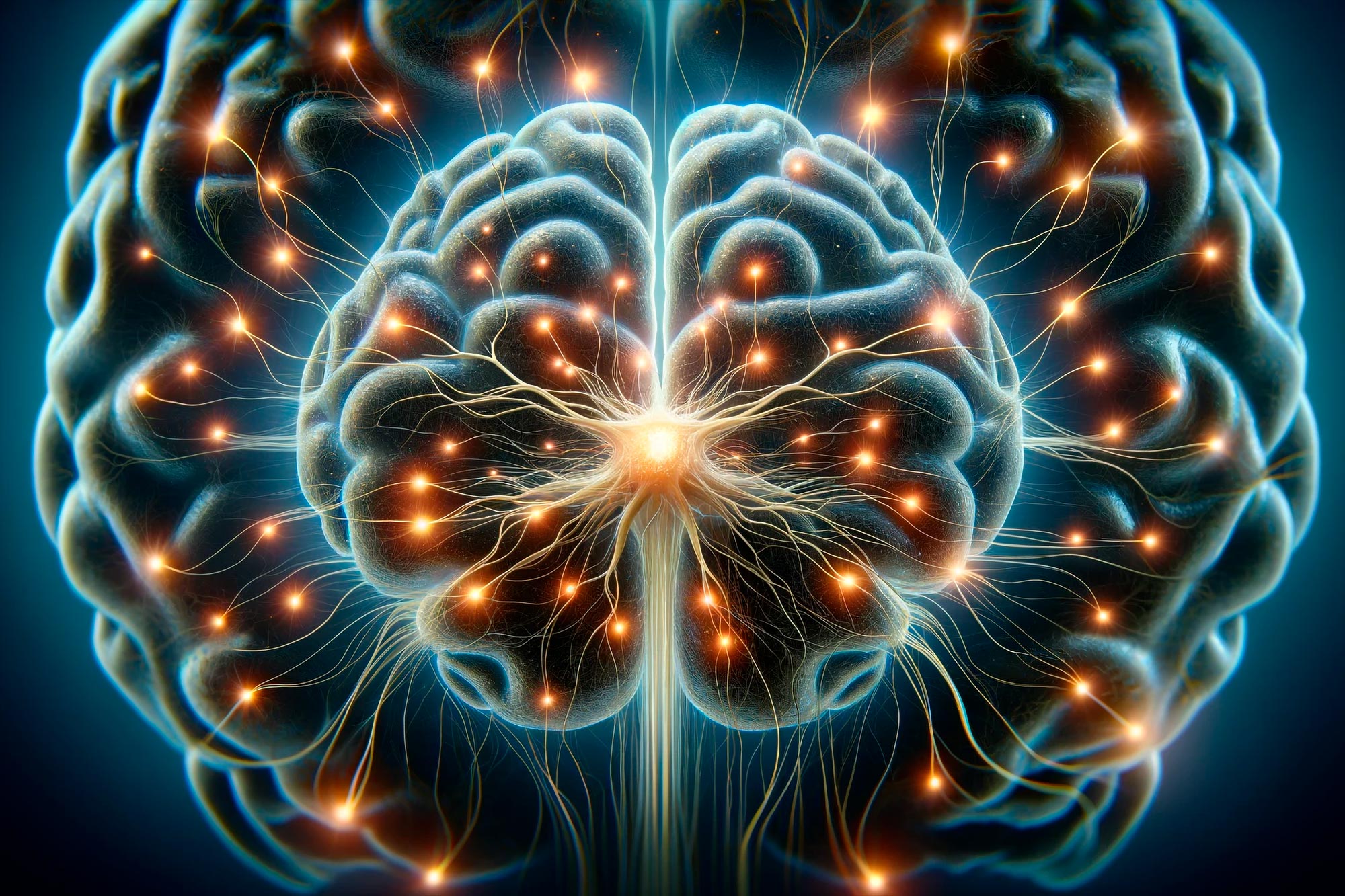
Neuroscientists demonstrate how the brain improves its ability to distinguish between similar experiences, findings that could lead to treatments for Alzheimer’s disease and other memory disorders.
Think of a time when you had two different but similar experiences in a short period. Maybe you attended two holiday parties in the same week or gave two presentations at work. Shortly afterward, you may find yourself confusing the two, but as time goes on that confusion recedes and you are better able to differentiate between these different experiences.
New research published today (January 19) in Nature Neuroscience reveals that this process occurs on a cellular level, findings that are critical to the understanding and treatment of memory disorders, such as Alzheimer’s disease.
Dynamic Engrams Store Memories
The research focuses on engrams, which are neuronal cells in the brain that store memory information. “Engrams are the neurons that are reactivated to support memory recall,” says Dheeraj S. Roy, PhD, one of the paper’s senior authors and an assistant professor in the Department of Physiology and Biophysics in the Jacobs School of Medicine and Biomedical Sciences at the University at Buffalo. “When engrams are disrupted, you get amnesia.”
In the minutes and hours that immediately follow an experience, he explains, the brain needs to consolidate the engram to store it. “We wanted to know: What is happening during this consolidation process? What happens between the time that an engram is formed and when you need to recall that memory later?”
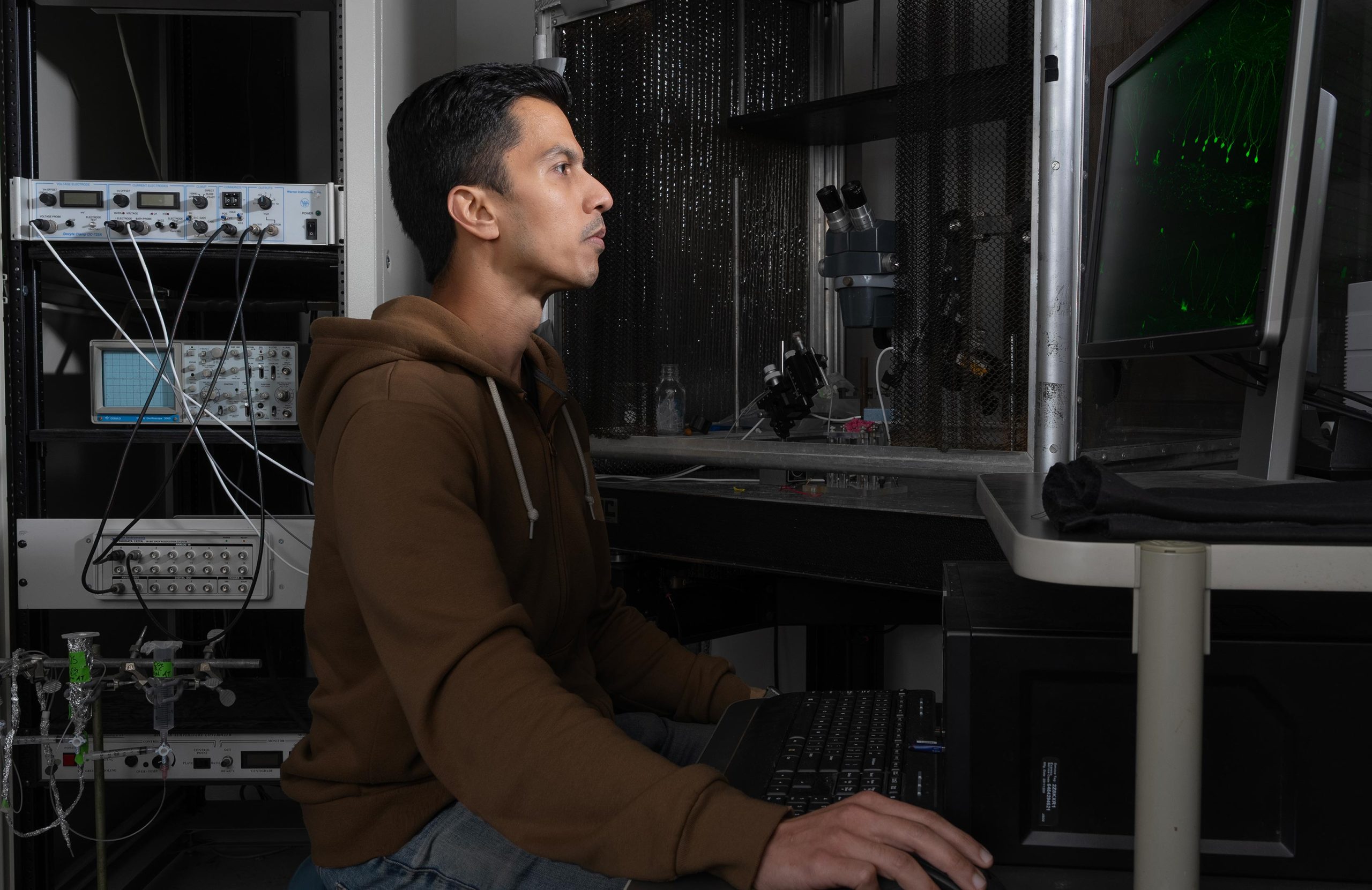
The researchers developed a computational model for learning and memory formation that starts with sensory information, which is the stimulus. Once that information gets to the hippocampus, the part of the brain where memories form, different neurons are activated, some of which are excitatory and others that are inhibitory.
When neurons are activated in the hippocampus, not all are going to be firing at once. As memories form, neurons that happen to be activated closely in time become a part of the engram and strengthen their connectivity to support future recall.
“Activation of engram cells during memory recall is not an all or none process but rather typically needs to reach a threshold (i.e., a percentage of the original engram) for efficient recall,” Roy explains. “Our model is the first to demonstrate that the engram population is not stable: The number of engram cells that are activated during recall decreases with time, meaning they are dynamic in nature, and so the next critical question was whether this had a behavioral consequence.”
Dynamic Engrams Are Needed for Memory Discrimination
“Over the consolidation period after learning, the brain is actively working to separate the two experiences and that’s possibly one reason why the numbers of activated engram cells decrease over time for a single memory,” he says. “If true, this would explain why memory discrimination gets better as time goes on. It’s like your memory of the experience was one big highway initially but over time, over the course of the consolidation period on the order of minutes to hours, your brain divides them into two lanes so you can discriminate between the two.”
Roy and the experimentalists on the team now had a testable hypothesis, which they carried out using a well-established behavioral experiment with mice. Mice were briefly exposed to two different boxes that had unique odors and lighting conditions; one was a neutral environment but in the second box, they received a mild foot shock.
A few hours after that experience, the mice, who typically are constantly moving, exhibited fear memory recall by freezing when exposed to either box. “That demonstrated that they couldn’t discriminate between the two,” Roy says. “But by hour twelve, all of a sudden, they exhibited fear only when they were exposed to the box where they were uncomfortable during their very first experience. They were able to discriminate between the two. The animal is telling us that they know this box is the scary one but five hours earlier they couldn’t do that.”
Using a light-sensitive technique, the team was able to detect active neurons in the mouse hippocampus as the animal was exploring the boxes. The researchers used this technique to tag active neurons and later measure how many were reactivated by the brain for recall. They also conducted experiments that allowed a single engram cell to be tracked across experiences and time. “So I can tell you literally how one engram cell or a subset of them responded to each environment across time and correlate this to their memory discrimination,” explains Roy.”
The team’s initial computational studies had predicted that the number of engram cells involved in a single memory would decrease over time, and the animal experiments bore that out.
“When the brain learns something for the first time, it doesn’t know how many neurons are needed and so on purpose a larger subset of neurons is recruited,” he explains. “As the brain stabilizes neurons, consolidating the memory, it cuts away the unnecessary neurons, so fewer are required and in doing so helps separate engrams for different memories.”
What Is Happening With Memory Disorders?
The findings have direct relevance to understanding what is going wrong in memory disorders, such as Alzheimer’s disease. Roy explains that to develop treatments for such disorders, it is critical to know what is happening during the initial memory formation, consolidation and activation of engrams for recall.
“This research tells us that a very likely candidate for why memory dysfunction occurs is that there is something wrong with the early window after memory formation where engrams must be changing,” says Roy.
He is currently studying mouse models of early Alzheimer’s disease to find out if engrams are forming but not being correctly stabilized. Now that more is known about how engrams work to form and stabilize memories, researchers can examine which genes are changing in the animal model when the engram population decreases.
“We can look at mouse models and ask, are there specific genes that are altered? And if so, then we finally have something to test, we can modulate the gene for these ‘refinement’ or ‘consolidation’ processes of engrams to see if that has a role in improving memory performance,” he says.
Reference: “Dynamic and selective engrams emerge with memory consolidation” by Douglas Feitosa Tomé, Ying Zhang, Tomomi Aida, Olivia Mosto, Yifeng Lu, Mandy Chen, Sadra Sadeh, Dheeraj S. Roy and Claudia Clopath, 19 January 2024, Nature Neuroscience.
DOI: 10.1038/s41593-023-01551-w
Now at the Jacobs School, Roy conducted the research while a McGovern Fellow at the Broad Institute of Massachusetts Institute of Technology (MIT) and Harvard University. Roy is one of three neuroscientists recruited to the Jacobs School this year to launch a new focus on systems neuroscience in the school’s Department of Physiology and Biophysics.
Co-authors on the paper are from Imperial College in London; the Institute of Science and Technology in Austria; the McGovern Institute for Brain Research at MIT; and the Center for Life Sciences & IDG/McGovern Institute for Brain Research at Tsinghua University in China.
The work was funded by the President’s PhD Scholarship from Imperial College London; Wellcome Trust; the Biotechnology and Biological Sciences Research Council; the Simons Foundation; the Engineering and Physical Sciences Research Council; the School of Life Sciences and the IDG/McGovern Institute for Brain Research. Roy was supported by the Warren Alpert Distinguished Scholar Award and the National Institutes of Health.
Never miss a breakthrough: Join the SciTechDaily newsletter.
Follow us on Google and Google News.