
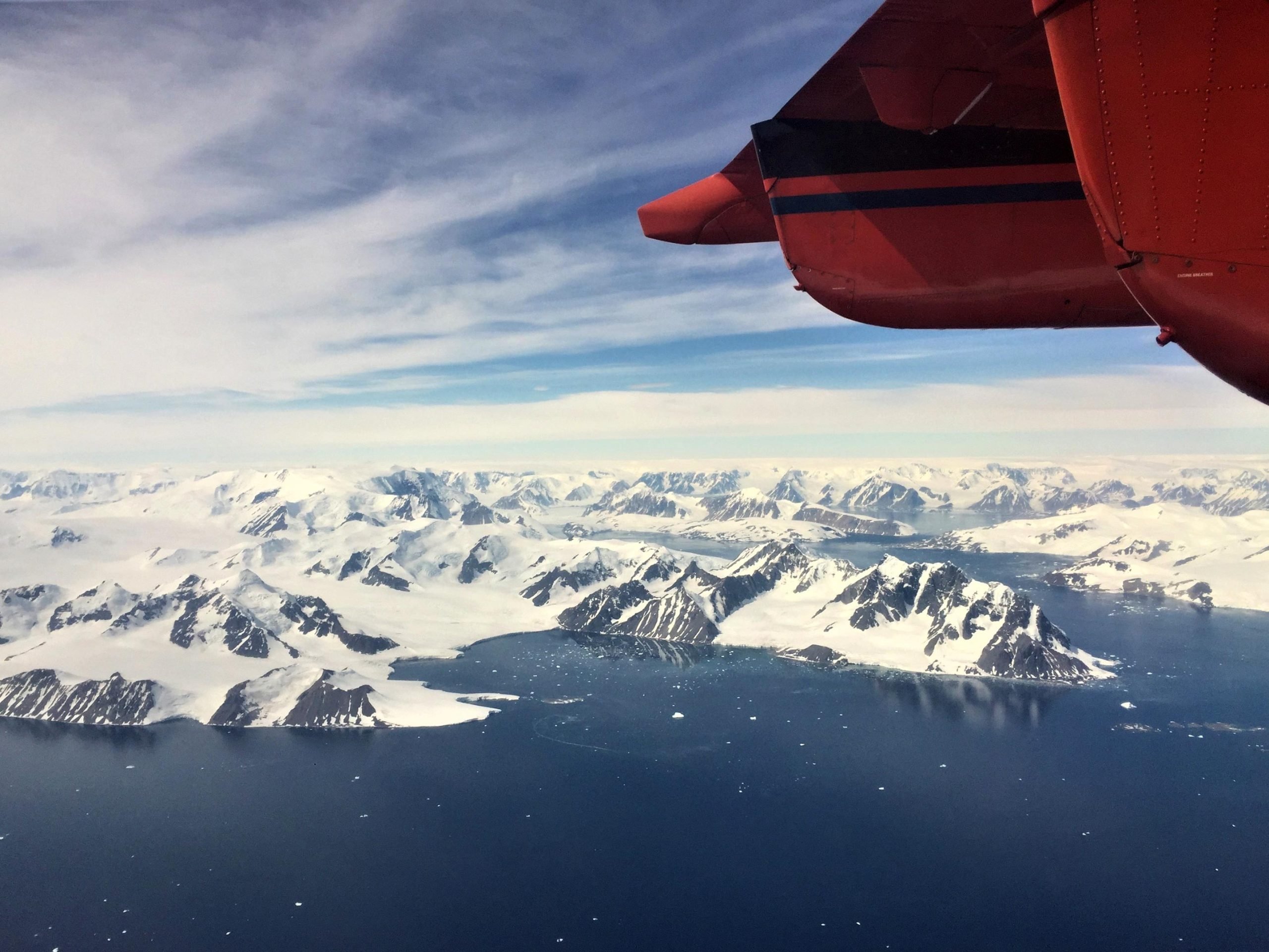
Seasonal acceleration of Antarctic glaciers due to snowmelt and warmer oceans underscores the region’s sensitivity to climate change.
According to researchers, glaciers – massive blocks of moving ice – located along the coast of Antarctica are flowing faster during the summer due to a combination of melting snow and warmer ocean temperatures.
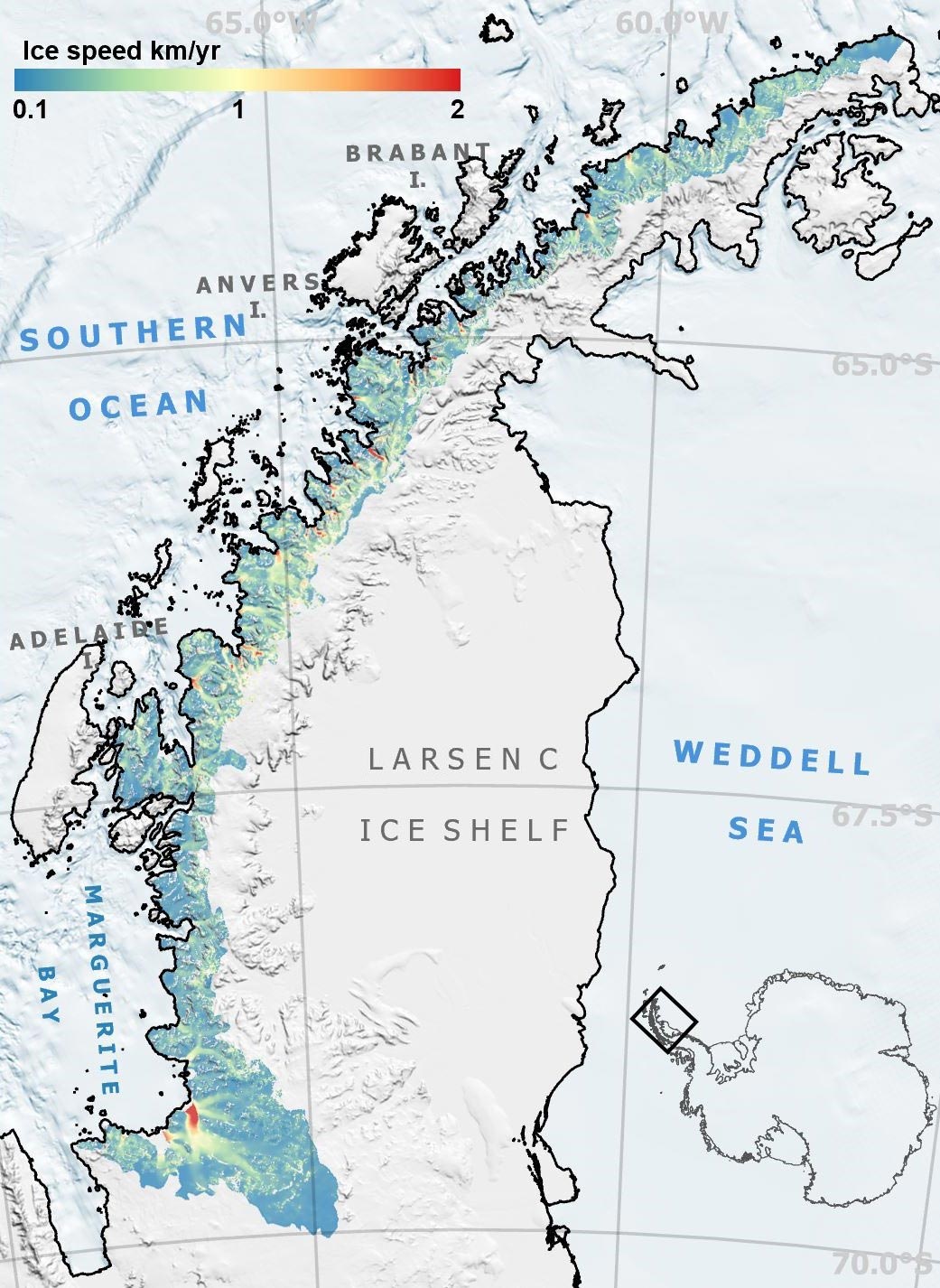
On average, the glaciers travel at around one kilometer (0.6 miles) a year. But a new study has found a seasonal variation in the speed of the ice flow, which speeded up by up to 22% in summer when temperatures are warmer. This gives an insight into the way climate change could affect the behavior of glaciers and the role they could play in raising sea levels.
Up until now, the study of the rugged Antarctic peninsula has been limited because of the difficulties scientists face getting onto the glaciers to conduct fieldwork. But from space, advances in satellite technology are revealing new insights into the speed at which the glaciers are moving and draining water into the surrounding ocean.
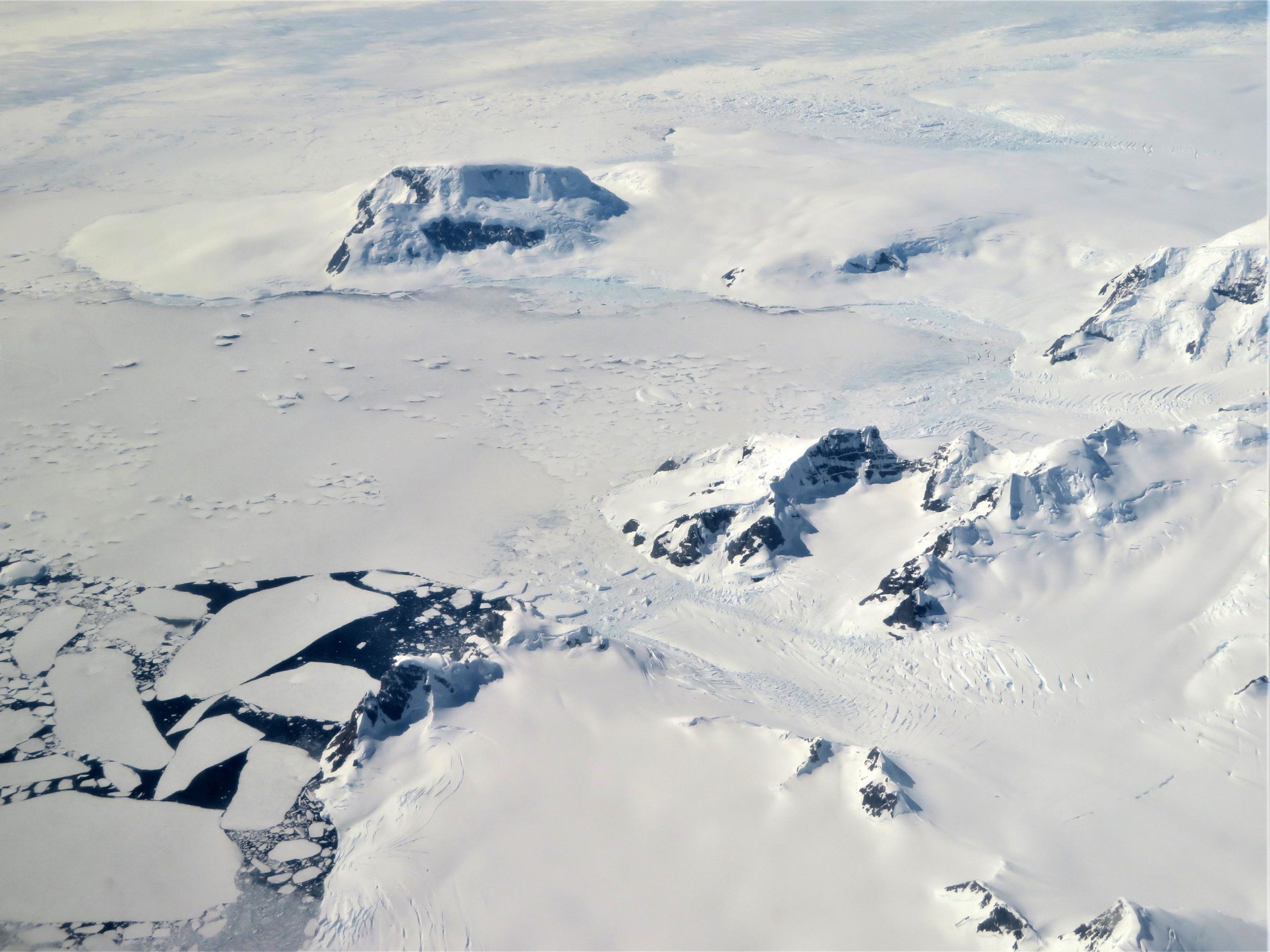
Antarctic Peninsula – and Global Sea Levels
The Antarctic Peninsula is the largest reservoir of frozen water on Earth. It is estimated that between 1992 and 2017, meltwater from the glaciers increased global sea levels by around 7.6 mm. How that may change in the future is one of the big uncertainties in modeling climate change.
A team of researchers, led by scientists at the University of Leeds, has used more than 10,000 satellite images, taken above the Antarctic Peninsula between 2014 and 2021, to understand how the flow of glaciers into the waters around the Antarctic alters during colder and warmer periods.
Ben Wallis, a doctoral researcher and first author of the study, said: “One of the important findings of this study is that it reveals how sensitive glaciers in Antarctica are to the environment. We have known for a long time that glaciers in Greenland have a seasonal behavior, but it is only now that satellite data has shown similar behavior in Antarctica.”
The paper will be published today (February 27, 2023) in the journal Nature Geosciences.
Antarctic Peninsula
The Antarctic Peninsula is the most northern and warmest region of Antarctica. It has a 1,000 km long mountainous spine, similar to the length of the east coast of Great Britain, and home to a rich marine ecosystem of seals, penguins, and whales.
Along the west coast of the peninsula, the glaciers drain ice from the ice sheet directly into the Southern Ocean.
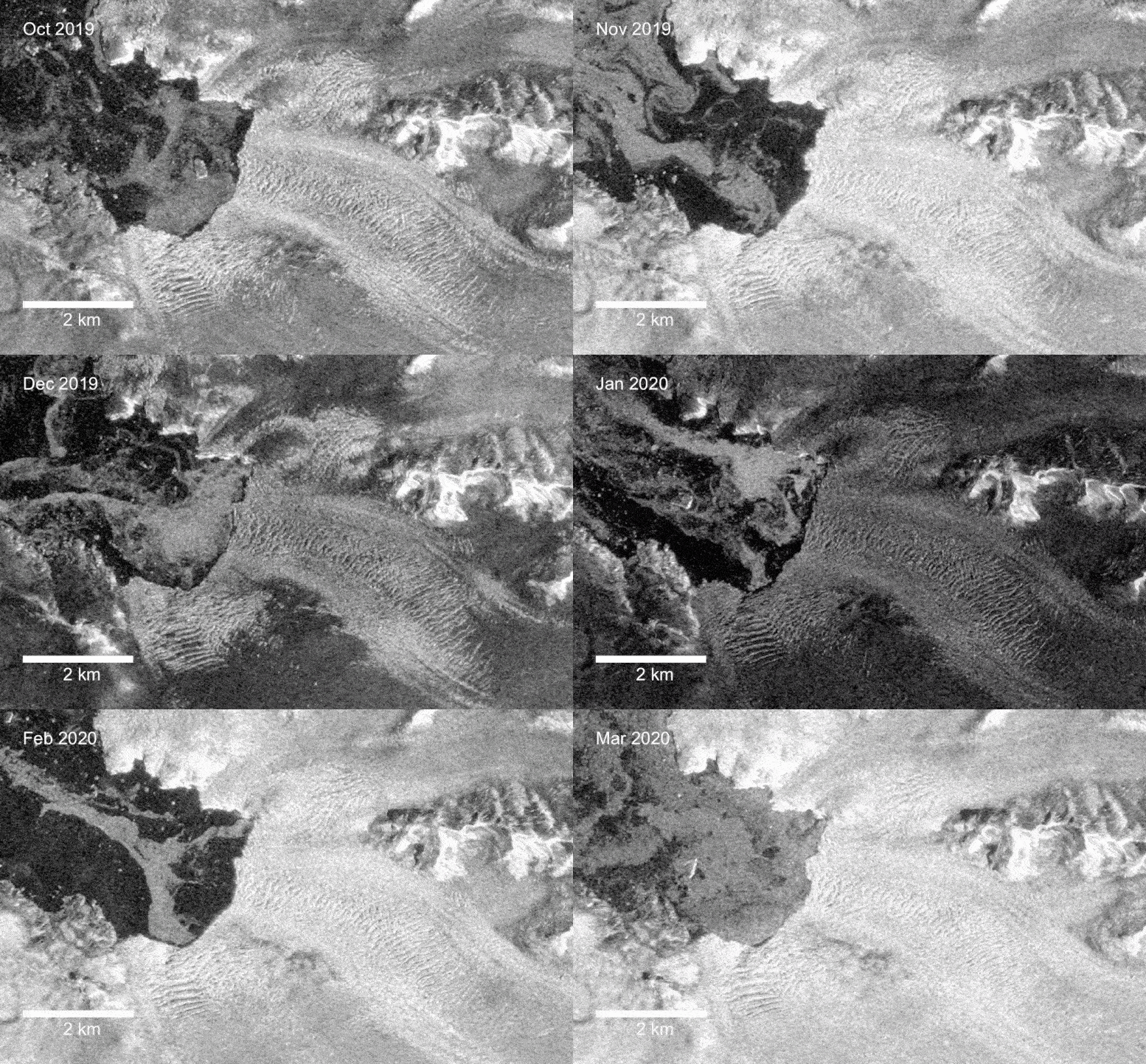
Analysis of the satellite data showed that the glacier speed-up occurs in summer as snow melts and the temperature of the waters in the Southern Ocean rise. It is thought that water from the melting snow acts as a lubricant between the ice sheet and the underlying rock. As a result, friction is reduced and the speed at which the glaciers slide increases.
In addition, the warmer waters of the Southern Ocean erode the front of the moving ice, which reduces the buttressing forces it exerts to resist the ice flow.
Dr. Anna Hogg, Associate Professor in the Institute for Climate and Atmospheric Science at Leeds and an author of the paper, said: “The Antarctic Peninsula has seen some of the most rapid warming of any region on Earth. Continuing work like this will help glaciologists monitor how quickly change is occurring, enabling accurate assessments of how Earth’s ice will respond to climate change.”
Earth Observation From Space
The European Space Agency and European Commission Copernicus Sentinel-1 satellite, whose data was used in this study, provides weekly monitoring around the whole coastline of Antarctica.
The satellite is fitted with synthetic aperture radar which can “see” through clouds, enabling measurements of the glaciers to be taken both day and night.
Craig Donlon of the European Space Agency said: “This study highlights how high-resolution satellite images can help us monitor how the environment is changing in remote regions. Future satellites, such as the family of Copernicus Sentinel expansion missions, promise to bring enhanced continuity and capabilities that will spearhead further insight into the characteristics and processes governing ice mass balance and sea-level rise.”
Reference: “Widespread seasonal speed-up of west Antarctic Peninsula glaciers from 2014 to 2021” by Benjamin J. Wallis, Anna E. Hogg, J. Melchior van Wessem, Benjamin J. Davison and Michiel R. van den Broeke, 27 February 2023, Nature Geoscience.
DOI: 10.1038/s41561-023-01131-4
The authors of the paper – Widespread seasonal speed-up of west Antarctic Peninsula glaciers from 2014-2021 – are Ben Wallis, Anna Hogg, and Ben Davison, all from the University of Leeds; and Jan Melchior van Wessem and Michiel van den Broeke, from the Institute for Marine and Atmospheric Research, Utrecht.
Funding: Natural Environment Research Council, European Space Agency, Nederlandse Organisatie voor Wetenschappelijk Onderzoek, Netherlands Earth System Science Centre
Never miss a breakthrough: Join the SciTechDaily newsletter.
Follow us on Google and Google News.
4 Comments
“This gives an insight into the way climate change COULD affect the behavior of glaciers and the role they COULD play in raising sea levels.”
At least while they are terminating in the ocean. If they retreat above that level, they will no longer be affected by the warming water. Additionally, the lapse rate will guarantee the air temperatures will be higher than at sea level. In other words, it would be reasonable to expect a slowdown if they no longer terminate in the ocean.
“The Antarctic PENINSULA is the largest reservoir of frozen water on Earth.”
No! Antarctica is the largest reservoir of frozen water on Earth; the peninsula is a small fraction of the total.
“…, meltwater from the glaciers increased global sea levels by around 7.6 mm” (over 25 years). To put that in perspective, the lateral speed of tectonic crustal plates is in the range of 25-50 mm/yr, or 630-1300 mm over 25 years. The contribution to annual sea level change is lost in the round-off.
“…, the warmer waters of the Southern Ocean erode the front of the moving ice, which reduces the buttressing forces it exerts to resist the ice flow.”
Judging from the Antarctic-Summer animation, there is little to no shelf ice to act as a buttress. It would have been interesting to see a full year instead of just Summer activity. In any event, I think that the claimed buttressing effect is overstated unless the shelf ice is grounded on a bedrock ridge or terminal moraine. Moreover, I would expect to see pressure ridges if there were significant resistance to the forward motion. Instead, what is almost always seen is tension cracks. I think that the whole ‘buttressing’ paradigm is problematic.
Why is there no mention of the high geothermal gradient in West Antarctica?
EARTHS MAGNETIC FIELD,S SLOWLY WEAKENING DOSE NOT HELP.HOW TO RESTABLE THE CORE.?
Are you some kind of ‘bot, or is English a second language for you?
What absolute rubbish. There is more calving ( icebergs from glaciers ) because there is more ice behind it pushing the front of the glacier. There is less money in recognising this FACT.