

Close Menu
    Facebook X (Twitter) Instagram
    SciTechDaily
    • Biology
    • Chemistry
    • Earth
    • Health
    • Physics
    • Science
    • Space
    • Technology
    Facebook X (Twitter) Pinterest YouTube RSS
    SciTechDaily
    Home»Biology»Scientists Successfully Sequenced the Genome of Previously Extinct Date Palms
    Biology

    Scientists Successfully Sequenced the Genome of Previously Extinct Date Palms

    By New York UniversityMay 3, 20211 Comment3 Mins Read
    Facebook Twitter Pinterest Telegram LinkedIn WhatsApp Email Reddit
    Share
    Facebook Twitter LinkedIn Pinterest Telegram Email Reddit
    DNA Structure
    Researchers have successfully sequenced the genomes of date palm varieties that were previously extinct and date back more than 2,000 years.

    This study marks the first time researchers have sequenced the genomes of plants from ancient germinated seeds.

    Researchers from NYU Abu Dhabi’s Center for Genomics and Systems Biology have successfully sequenced the genome of previously extinct date palm varieties that lived more than 2,000 years ago. They did so using date palm seeds that were recovered from archaeological sites in the southern Levant region and radiocarbon-dated from the 4th century BCE to the 2nd century CE. The seeds were germinated to yield viable, new plants. The researchers conducted whole genome sequencing of these germinated ancient samples and used this genome data to examine the genetics of these previously extinct Judean date palms. This study marks the first time researchers have sequenced the genomes of plants from ancient germinated seeds.

    By examining the genome of a species (Phoenix dactylifera L.) that thrived centuries ago, Professor of Biology Michael D. Purugganan and his NYUAD colleagues, along with research partners in Israel, and France, were able to see how these plants evolved over a period of time. In this case, they observed that between the 4th century BCE and 2nd century CE, date palms in the eastern Mediterranean started to show increasing levels of genes from another species, Phoenix theophrasti, which today grows in Crete and some other Greek islands, as well as southwestern Turkey, as a result of hybridization between species. They conclude that the increasing level of genes from P. theophrasti over this period shows the increasing influence of the Roman Empire in the eastern Mediterranean.
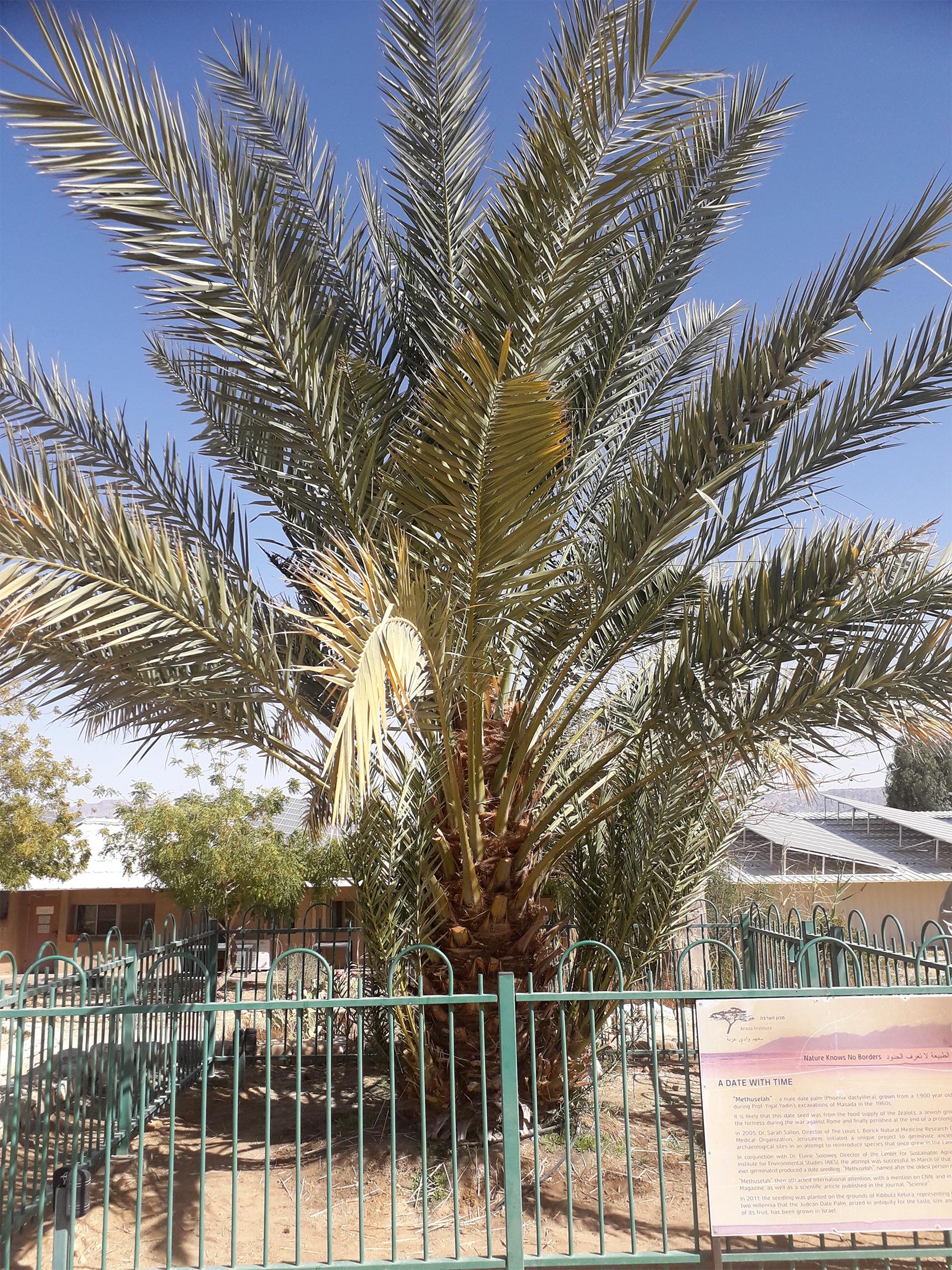
    Methuselah
    One of the date palms that was germinated from a 2,200-year-old seed, now growing in Israel. Credit: Sarah Sallon

    Their findings are reported in “The genomes of ancient date palms germinated from 2,000-year-old seeds” published in the journal Proceedings of the National Academy of Science USA.

    “We are fortunate that date palm seeds can live a long time — in this case, more than 2,000 years — and germinate with minimal DNA damage, in the dry environment of the region,” said Purugganan. “This ‘resurrection genomics’ approach is a remarkably effective way to study the genetics and evolution of past and possibly extinct species like Judean date palms. By reviving biological material such as germinating ancient seeds from archaeological, paleontological sites, or historical collections, we can not only study the genomes of lost populations but also, in some instances, rediscover genes that may have gone extinct in modern varieties.”

    Reference: “The genomes of ancient date palms germinated from 2,000-year-old seeds” by Muriel Gros-Balthazard, Jonathan M. Flowers, Khaled M. Hazzouri, Sylvie Ferrand, Frédérique Aberlenc, Sarah Sallon and Michael D. Purugganan, 3 May 2021, Proceedings of the National Academy of Science.
    DOI: 10.1073/pnas.2025337118

    Never miss a breakthrough: Join the SciTechDaily newsletter.
    Follow us on Google and Google News.

    Evolution Genetics New York University Plant Science
    Share. Facebook Twitter Pinterest LinkedIn Email Reddit

    Related Articles

    Citrus Mystery: Juicy Past of Favorite Okinawan Fruit Revealed

    Terpen-Tales: The Genetics Mystery Behind the Unique Fragrance of the Lovely Lavender

    Naturally GM: Crops Steal Genes From Other Species to Accelerate Evolution

    Genomes Offer New Insights Into Fascinating Fig-Wasp Symbiotic System

    Plant Used in Traditional Chinese Medicine Evolves to Become Less Visible to Humans

    DNA Shows Plants Are Extraordinary Chemists – Making Love and War

    Intriguing Genetics That Flipped the Food Chain to Allow Carnivorous Plants to Hunt Animals

    How to Boost Plant Biomass: Genetic Biologists Uncover Molecular Link to Growth

    1 Billion Years of Evolution Illuminated by Genetic Sequencing of 1,100 Plants

    1 Comment

    1. BibhutibhusanPatel on May 4, 2021 6:44 pm

      Genome Coďe conþains all the informations òf one’s previòus generationß oŕďered seqùencè to present.So inert fraction of gène whìchcòmes from extìnt generation sìmply gùides to balance prèseñt.

      Reply
    Leave A Reply Cancel Reply

    • Facebook
    • Twitter
    • Pinterest
    • YouTube

    Don't Miss a Discovery

    Subscribe for the Latest in Science & Tech!

    Trending News

    Bats May Hold the Secret to Fighting Aging, Cancer, and Infection

    Scientists Develop a Fruit Wash That Removes Pesticide Residues and Keeps Produce Fresh Longer

    Pomegranates Could Unlock a New Treatment for Heart Failure

    This Utah Mountain Is Hiding Enough Ice To Fill 600 Olympic Pools

    A Hidden Hormone Disorder May Be Driving Millions of High Blood Pressure Cases

    Ancient Human Teeth Uncover a Genetic Connection Hidden for 400,000 Years

    How Often You Exercise May Matter More Than How Hard You Work Out for Mental Health

    Mercury Isn’t What Scientists Thought: New Study Reveals a Surprisingly Different Surface

    Follow SciTechDaily
    • Facebook
    • Twitter
    • YouTube
    • Pinterest
    • Newsletter
    • RSS
    SciTech News
    • Biology News
    • Chemistry News
    • Earth News
    • Health News
    • Physics News
    • Science News
    • Space News
    • Technology News
    Recent Posts
    • The Worst Fires in Indonesia May Be the Ones You Can’t See
    • Scientists Buried 2,000 Pairs of Underwear. What Happened Next Revealed a Hidden World
    • One of Earth’s Driest Deserts Just Turned White
    • Puerto Rico Went From No Drought to Extreme Drought in Just Months
    • Scientists Just Overturned a 100-Year-Old Belief About Bacteria in the Lungs
    Copyright © 1998 - 2026 SciTechDaily. All Rights Reserved.
    • Science News
    • About
    • Contact
    • Editorial Board
    • Privacy Policy
    • Terms of Use

    Type above and press Enter to search. Press Esc to cancel.