
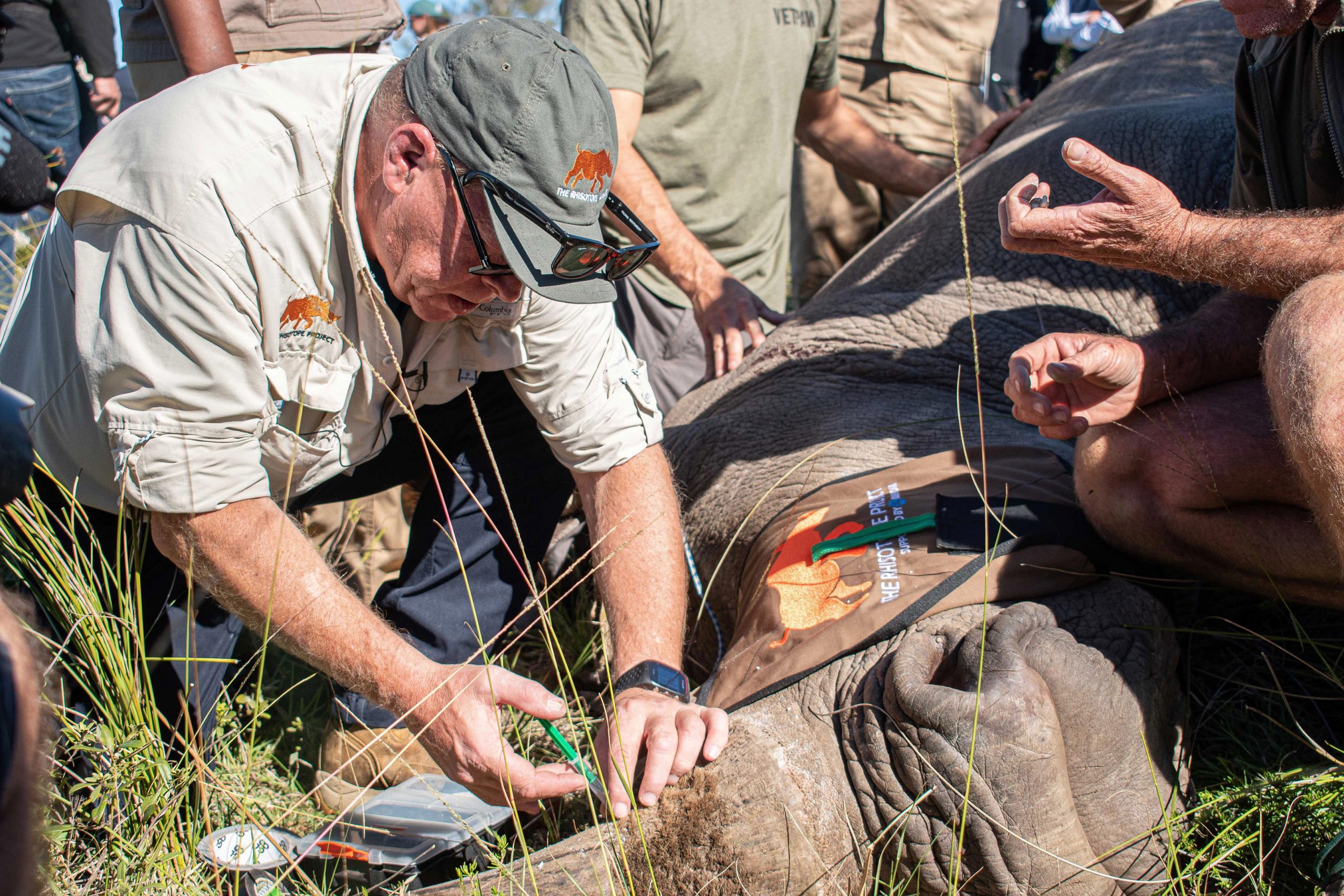
The innovative anti-poaching Rhisotope Project aims to significantly reduce demand for rhino horns through the safe application of radioisotopes and radiation research.
From 2010 to 2019 over 9 600 rhinos were killed in poaching attacks. On this current trajectory, South Africa’s rhino will be nearing extinction in nine years.
Trafficked rhino horn is also not an industry on its own. It has become a lucrative “commodity” for the biggest crime syndicates, those dealing in weapons, drugs, the illicit wildlife trade, and human trafficking. So lucrative that it is worth more than gold and platinum.
A Radioactive Deterrent
Now researchers from the University of the Witwatersrand in Johannesburg, South Africa, and its partners hope a pioneering research project using radioactive isotopes injected in a rhino’s horn will deliver a big blow to poaching and associated organized crime.
Headed by Professor James Larkin, Director at the Radiation and Health Physics Unit at the University of Witwatersrand, the innovative anti-poaching Rhisotope Project aims to significantly reduce demand for rhino horns through the safe application of radioisotopes and radiation research.
Larkin explains that small quantities of radioactive material will be inserted into the rhino horn to make it more detectable. “Over the years some 11,000 monitors that can detect radiation and radioactive material have been installed globally at airports, ports, harbors, and border crossings to help prevent terrorists from requiring radioactive nuclear material.
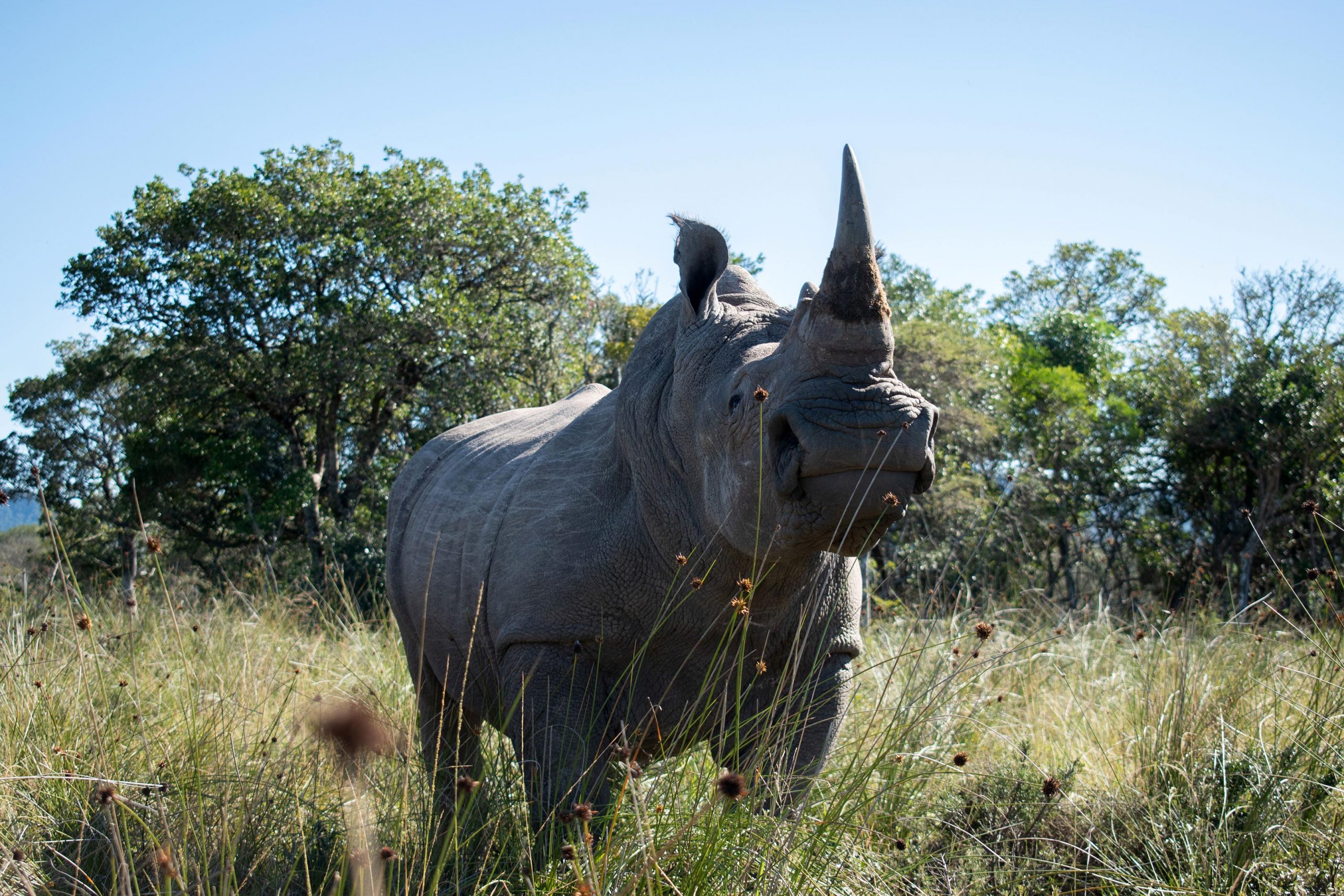
“If we put the radioactive material into the horn of a rhino which is then taken by a poacher, an ‘army of experts’ who have been employed to protect and monitor these borders can be utilized to help prevent the illicit movement of the poached rhino horn. This devalues the horn in the eye of the end user. It also introduces along the entire supply chain from poacher to end user, a number of different points where it might be possible to intercept the rhino horn and perhaps other illicit goods being smuggled,” Larkin says.
A Worldwide Collaboration for Conservation Innovation
The project was initiated by the Wits University and is being implemented under a global collaboration with the Australian Nuclear Science and Technology Organisation (ANSTO), Colorado State University (USA), ROSATOM (Russian Federation) and the Nuclear Energy Corporation of South Africa (Necsa) as well as global scientists, researchers, South African rhino owners and veterinary surgeon Dr. William Fowlds.
Launched in May, the first phase of the research project is to make sure that whatever is put into the rhino is going to be safe. By carefully introducing a trace amount of completely harmless stable isotopes into the horns of two rhinos, Igor and Denver, scientists will over the next three months be able to monitor how these non-radioactive isotopes interact with the horns and the animal.
“We’ve taken a compound called proline, an amino acid, that has these tracking atoms and put that into the horn. This will allow us to monitor if there is movement from the horn into the animal’s body. This is one of the most important aspects of the research to make sure that whatever we put into the horn stays in the horn and does not get into the body and cause harm,” Larkin says.
Researchers will then CT scan and 3D print an entire rhino’s head which will have similar shielding properties to animal flesh. They will put radioactive material into the horn, and by putting detectors in various other parts of the head, the researchers will be able to measure what will be the dosage that those parts of the head will receive from the radioactive material in the horn. “That will allow us then to control and limit the quantity of radioactive material that needs to be put into a rhino’s horn,” Larkin explains.
He adds that once the science has yielded a provable technique, it will then be shared with state and rhino owners across the world where populations are at risk. The intellectual property as well as training and assistance will be made freely available to conservation organizations who may wish to utilize this process to further protect their animals from poaching. “This is something you want to share for the greater good,” Larkin says.
Never miss a breakthrough: Join the SciTechDaily newsletter.
Follow us on Google and Google News.
1 Comment
why not get the chinese to stop buying the horns and tiger parts and god knows what else?