
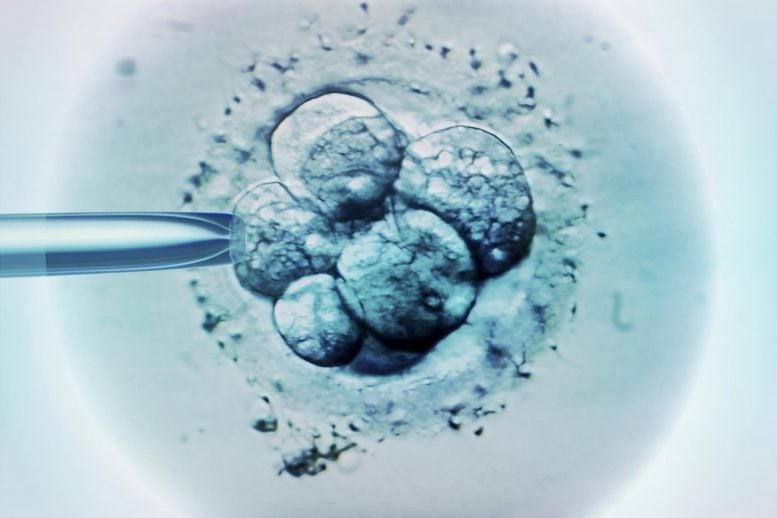
IVF pregnancies using hormone-prepared frozen embryos show higher pre-eclampsia risk than those using fresh or natural-cycle embryos.
A large cohort study drawn from the national IVF registry of France, which included almost 70,000 pregnancies delivered after 22 weeks gestation between 2013 and 2018, has found a higher risk of pre-eclampsia and hypertension in pregnancies derived from frozen-thawed embryos. This risk was found significantly greater in those treatments in which the uterus was prepared for implantation with hormone replacement therapies. The results confirm with real-life data what has been observed in sub-groups of patients in other studies.
The results are presented today (June 30, 2021) by Dr. Sylvie Epelboin from the Hôpital Bichat-Claude Bernard, Paris, at the online annual meeting of ESHRE. The study was performed on behalf of the Mother & Child Health After ART network, of the French Biomedecine Agency. She said that the results highlight two important considerations in IVF: the potentially harmful effects on vascular pathologies of high and prolonged doses of hormone replacement therapies used to prepare the uterus for the implantation of frozen-thawed embryos; and the protective effect of a corpus luteum (1), which is present in natural or stimulated cycles for embryo transfer. The hormone replacement therapy given to prepare the uterus for embryo transfer, explained Dr. Epelboin, suppresses ovulation and therefore the formation of the corpus luteum.
The risk of pre-eclampsia and other pregnancy-related disorders of pregnancy has been raised in a growing number of studies of freezing in IVF.(2) However, the overall risks of maternal morbidity are known to be generally lower in pregnancies resulting from frozen embryo transfer than in those from fresh transfers — except in relation to the risk of pre-eclampsia. While some studies have observed such risks in frozen embryo transfers, few studies, said Dr. Epelboin, have compared these “maternal vascular morbidities with the two hormonal environments that preside over the early stages of embryonic development.”
This study divided the cohort of pregnancies from IVF and ICSI in the French national database into three groups of singletons for comparison: those derived from frozen embryo transfer in a natural “ovulatory” cycle (whether stimulated or not) (n = 9,500); those from frozen embryo transfer with hormone replacement therapy (n = 10,373); and conventional fresh transfers (n = 48,152).
Clear Increase in Vascular Risks in Hormone-Treated Cycles
Results showed a higher rate of pre-eclampsia with frozen embryos transferred in the artificial (ie, prepared with hormone therapy) frozen cycle (5.3%) than in an ovulatory cycle (2.3%) or in fresh cycles (2.4%). The rates were found similarly distinct in pregnancy-induced hypertension (4.7% vs 3.4% vs 3.3%). These differences were statistically significant, even after adjusting for maternal characteristics (age, parity, tobacco, obesity, history of diabetes, hypertension, endometriosis, polycystic ovaries, premature ovarian failure) to avoid bias.
Dr. Epelboin and colleagues concluded that the study demonstrates that preparation of the uterus with hormones in an artificial cycle is significantly associated with a higher risk of vascular disorders than from cycles with preserved ovulation and fresh embryo transfers.
Balancing Benefits and Risks in Frozen Embryo Transfer
The use of frozen embryos has increased in IVF in recent years. Success rates in frozen-thawed embryo transfers are reported to be as or more successful than with fresh embryos and, because frozen transfers appear to reduce the risk of hyperstimulation, it also has safety advantages; the blood pressure risks observed in this study and others do not appear to outweigh these benefits, said Dr. Epelboin.
Moreover, because results obtained in an ovulatory cycle appear not to affect the chance of pregnancy, preservation of the ovulatory cycle could be advocated as first-line preparation in frozen embryo transfers whenever the choice is possible.
Presentation 0-182 Wednesday 30 June
Higher risk of preeclampsia and pregnancy-induced hypertension with artificial cycle for Frozen-thawed Embryo Transfer compared to ovulatory cycle or fresh transfer following In Vitro Fertilization
- The corpus luteum in pregnancy
The corpus luteum is a naturally developing cluster of cells which form in the ovary during early pregnancy and pump out a pulse of progesterone, a fertility hormone. Progesterone supports the lining of the uterus (endometrium) during pregnancy and improves blood flow. - Embryo freezing and the risk of pre-eclampsia in pregnancy
This is the first large-scale study to identify an association between a hormonally prepared uterus (artificial cycle) and a significantly raised risk of pre-eclampsia in pregnancies following the transfer of a frozen-thawed embryo. Several (but not all) randomized trials of freezing embryos generated from an initial egg collection (“freeze-all”) have observed such trends as a secondary endpoint. A substantial review of the literature published in 2018 (Maheshewari et al, Hum Reprod Update 2018) concluded that the evidence in favor of embryo freezing was “reassuring” while adding “a need for caution” from the increased risk of hypertension in pregnancy. Generally, embryo freezing allows several transfers from an initial egg collection treatment (and thereby encourages single embryo transfer and the avoidance of multiple pregnancies) and in freeze-all protocols avoids transfer in the same cycle in which the ovaries were stimulated.
This article is in support of a study report by Dr Sylvie Epelboin presented online at the 37th Annual Meeting of ESHRE.
Never miss a breakthrough: Join the SciTechDaily newsletter.
Follow us on Google and Google News.