
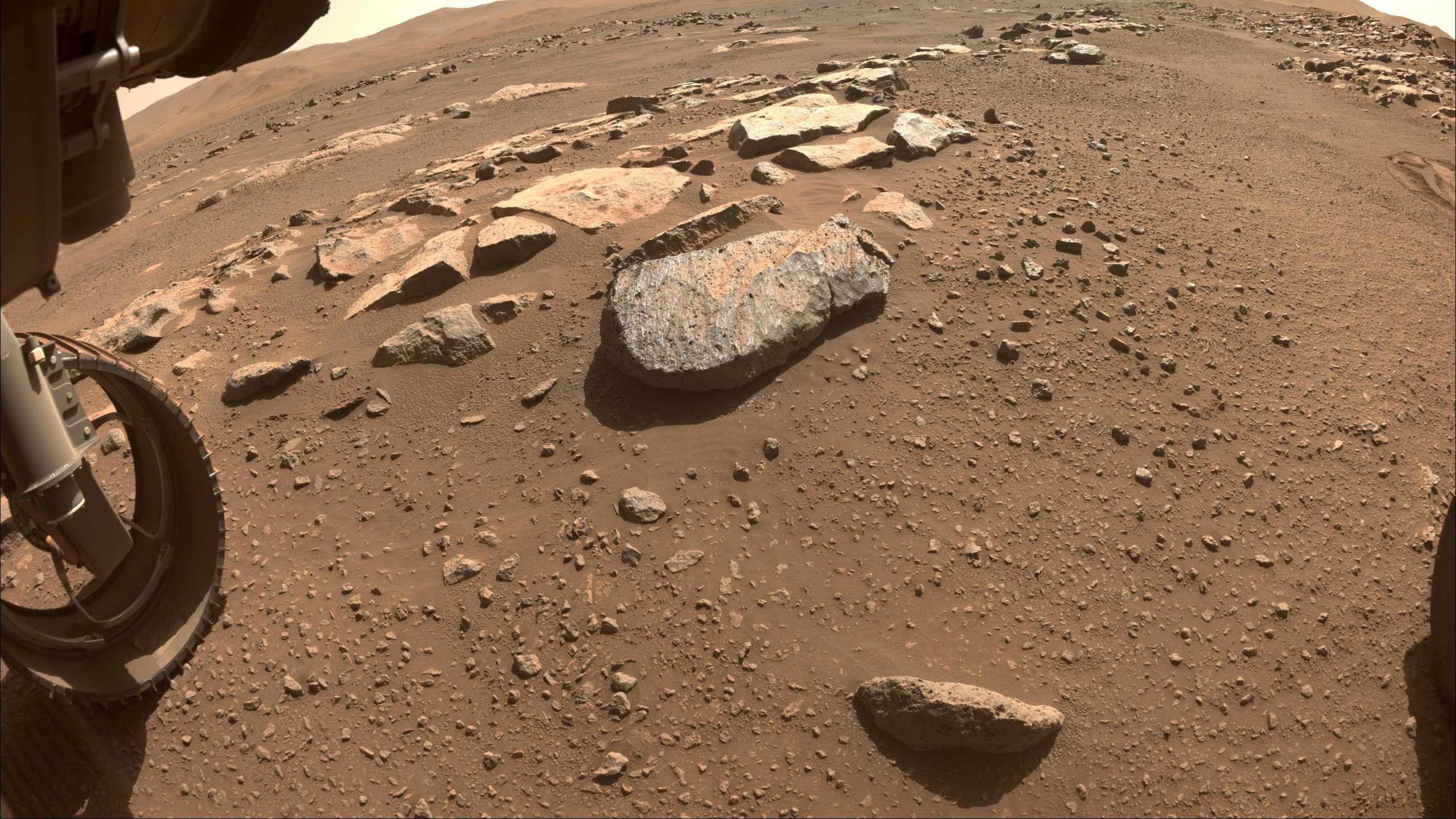
NASA’s Perseverance rover is retrying its mission-critical task of collecting Martian rock after its first attempt crumbled—literally.
In the last two decades, we have all grown accustomed to rovers exploring Mars. At least one rover has been active on the planet every day since January 4, 2004, when NASA’s Spirit rover landed in Gusev crater. Opportunity (2004) and Curiosity (2012) followed, each making unique journeys of discovery of their own. Perseverance (2021) is the latest and greatest of these robotic explorers, boasting a state-of-the-art in-situ resource utilization experiment to extract oxygen from the atmosphere, an accompanying helicopter to scout the path ahead, and a suite of unparalleled geology instruments. But what really sets Perseverance’s mission apart is that, for the first time, it is collecting samples of Martian rock to bring back to Earth.
As advanced as Perseverance’s science instruments are, nothing beats the ability to study samples up close in a laboratory here on Earth. So Perseverance is making a rock collection. It is taking samples as its journeys across Jezero Crater, and leaving caches of the samples for a future mission to pick up and return to Earth (sometime in the mid-2020s).

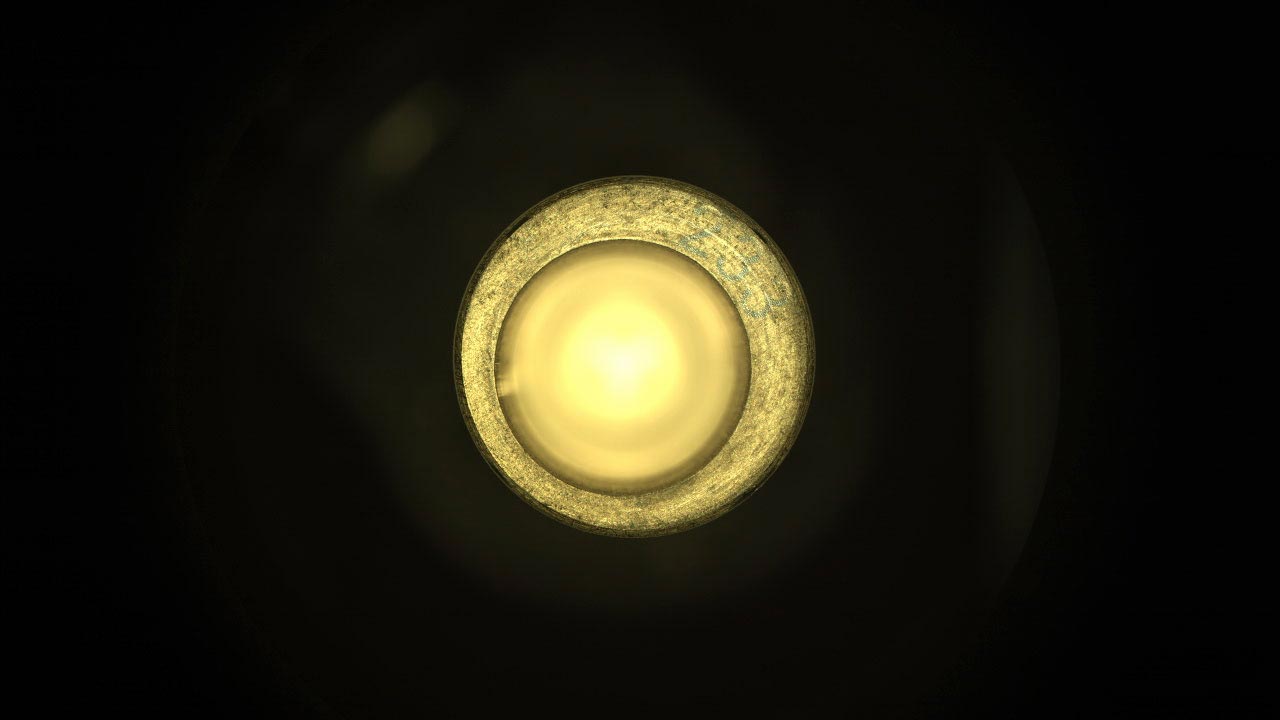
At least, that’s the plan. But space exploration is never simple. As routine as rover activity on Mars has become in recent years, the red planet never ceases to surprise mission planners. Earlier this month, Perseverance made its first attempt at collecting a sample in one of its 43 titanium sampling tubes. After drilling the sample core, the team was shocked to discover that the sample tube remained empty, and was nowhere to be found on the ground around the rover, nor in the drill hole.
It turns out the rock into which Perseverance had drill was far softer than previously imagined, and the rock merely crumbled into powder beneath the drill. Thomas Zurbuchen, associate administrator of NASA’s Science Mission Directorate told reporters “While this is not the ‘hole-in-one’ we hoped for, there is always risk with breaking new ground…I’m confident we have the right team working this, and we will persevere toward a solution to ensure future success.”
This week, that team is ready for a second attempt. Perseverance has positioned itself next to a new rock outcrop, nicknamed “Rochette.” Rochette is about 455 meters from the first sample site, at the top of a ridge named Citadelle. This outcrop has survived millennia of wind erosion, suggesting that it should withstand Perseverance’s drill more easily.
“There are potentially older rocks in the ‘South Séítah’ region ahead of us, so having this younger sample can help us reconstruct the whole timeline of Jezero,” said Vivian Sun, a mission’s scientist at NASA’s Jet Propulsion Laboratory.
New Techniques for Better Results
The team is also making some changes to their sampling procedure this time around. Before attempting to take a sample of Rochette, Perseverance will use its robotic arm to ‘abrade’ the surface of the rock, and examine how it reacts. Then, during the sampling process, the rover’s Mastcam-Z camera will look inside the canister to make sure it is full before sealing it shut.

As for the ‘empty’ canister from the first sample attempt – Perseverance is going to hold onto it too for return to Earth – its has no rocks in it, but it does have a sample of the Martian atmosphere, which might be equally interesting to study.
This isn’t the first time Martian rock and soil has caused trouble for NASA’s robotic missions. Curiosity had to operate for a long time with a broken drill. The Phoenix lander found Martian soil “sticky” and challenging to work with back in 2008, and more recently, the InSight lander’s “mole,” which was supposed to drill two meters below ground to study the planet’s interior, was unable to dig more than a few dozen centimeters because the soil didn’t provide the expected friction.
These challenges are a frequent reminder that Mars truly is an entirely different planet, and the geology does not always act as we Earthlings expect. But with a little luck and some careful planning, Perseverance has a good chance at succeeding in taking a sample this week. In doing so, it will make the dream of a Mars sample return mission one step closer to reality.
Adapted from an article originally published on Universe Today.
For more on this story, see NASA’s Perseverance Rover Plans Next Mars Rock Sample Attempt, After First One Crumbled.
Never miss a breakthrough: Join the SciTechDaily newsletter.
Follow us on Google and Google News.
1 Comment
Keep milking that cow NASA.