
Close Menu
    Facebook X (Twitter) Instagram
    SciTechDaily
    • Biology
    • Chemistry
    • Earth
    • Health
    • Physics
    • Science
    • Space
    • Technology
    Facebook X (Twitter) Pinterest YouTube RSS
    SciTechDaily
    Home»Space»NASA’s Perseverance Rover Plans Next Mars Rock Sample Attempt, After First One Crumbled
    Space

    NASA’s Perseverance Rover Plans Next Mars Rock Sample Attempt, After First One Crumbled

    By Jet Propulsion LaboratoryAugust 28, 20211 Comment4 Mins Read
    Facebook Twitter Pinterest Telegram LinkedIn WhatsApp Email Reddit
    Share
    Facebook Twitter LinkedIn Pinterest Telegram Email Reddit
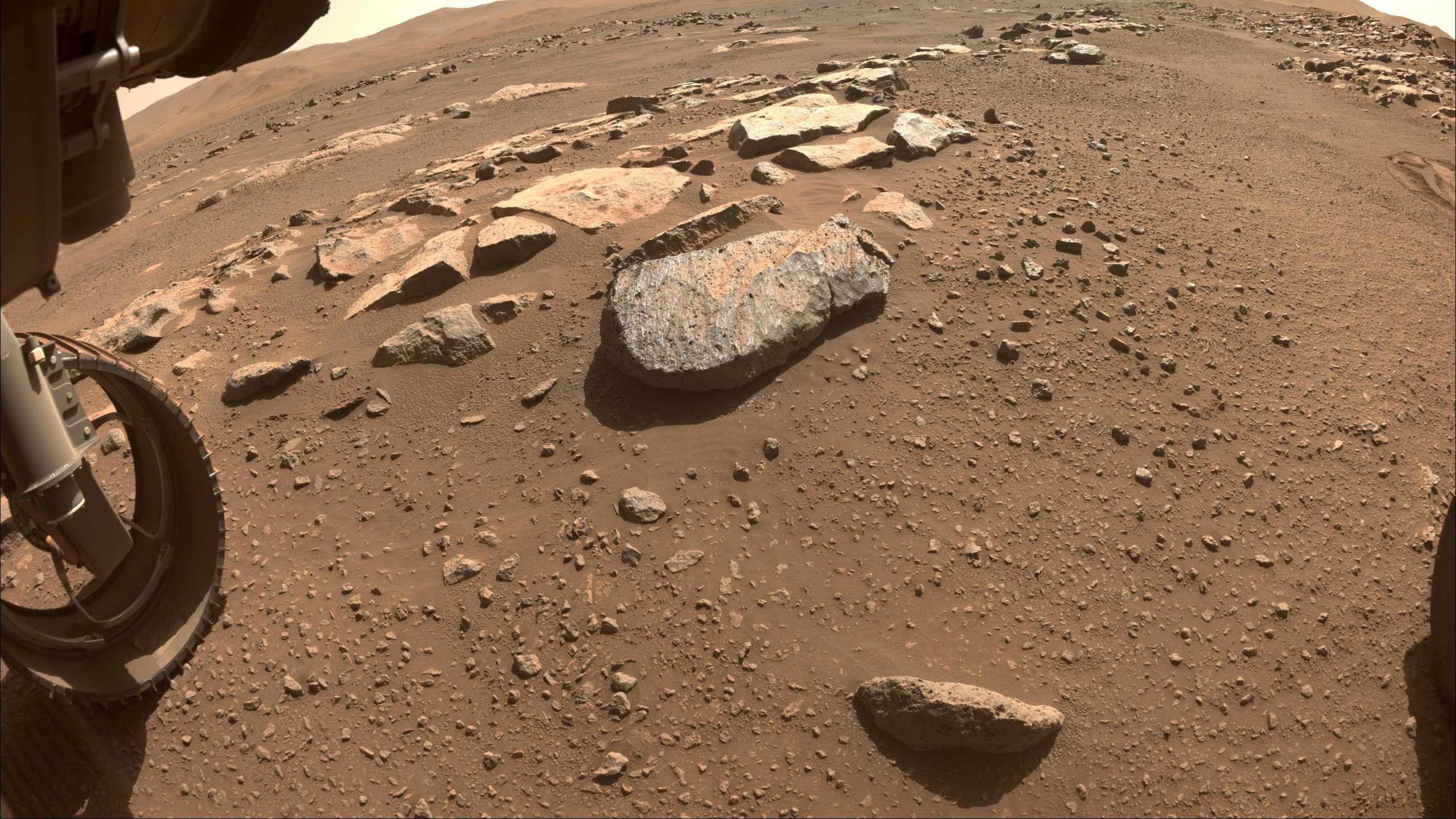
    Perseverance Team Selects a New Rock to Abrade
    NASA’s Perseverance Mars rover will abrade the rock at the center of this image, allowing scientists and engineers to assess whether it would hold up to the rover’s more powerful sampling drill. Credit: NASA/JPL-Caltech

    The rover will abrade a rock this week, allowing scientists and engineers to decide whether that target would withstand its powerful drill.

    In its search for signs of ancient microbial life on Mars, NASA’s Perseverance rover is once again preparing to collect the first of many rock core samples that could eventually be brought to Earth for further study.

    This week, a tool on the rover’s 7-foot-long (2-meter-long) robotic arm will abrade the surface of a rock nicknamed “Rochette,” allowing scientists to look inside and determine whether they want to capture a sample with the rover’s coring bit. Slightly thicker than a pencil, the sample would be sealed in one of the 42 remaining titanium tubes aboard the rover.

    Should the team decide to acquire a core from this rock, the sampling process would be initiated next week.

    Rochette Mars Rock
    A close-up of the rock, nicknamed “Rochette,” that the Perseverance science team will examine in order to determine whether to take a rock core sample from it. Credit: NASA/JPL-Caltech

    The mission attempted to capture their first record of the crater floor on August 6 from a rock that ultimately proved too crumbly, breaking into powder and fragments of material too small to be retained in the sample tube before it was sealed and stored within the rover.

    Perseverance has since trucked 1,493 feet (455 meters) to a ridge nicknamed “Citadelle” – French for “castle,” a reference to how this craggy spot overlooks Jezero Crater’s floor. The ridge is capped with a layer of rock that appears to resist wind erosion, a sign that it’s more likely to hold up during drilling.

    “There are potentially older rocks in the ‘South Séítah’ region ahead of us, so having this younger sample can help us reconstruct the whole timeline of Jezero,” said Vivian Sun, one of the mission’s scientists at NASA’s Jet Propulsion Laboratory in Southern California.
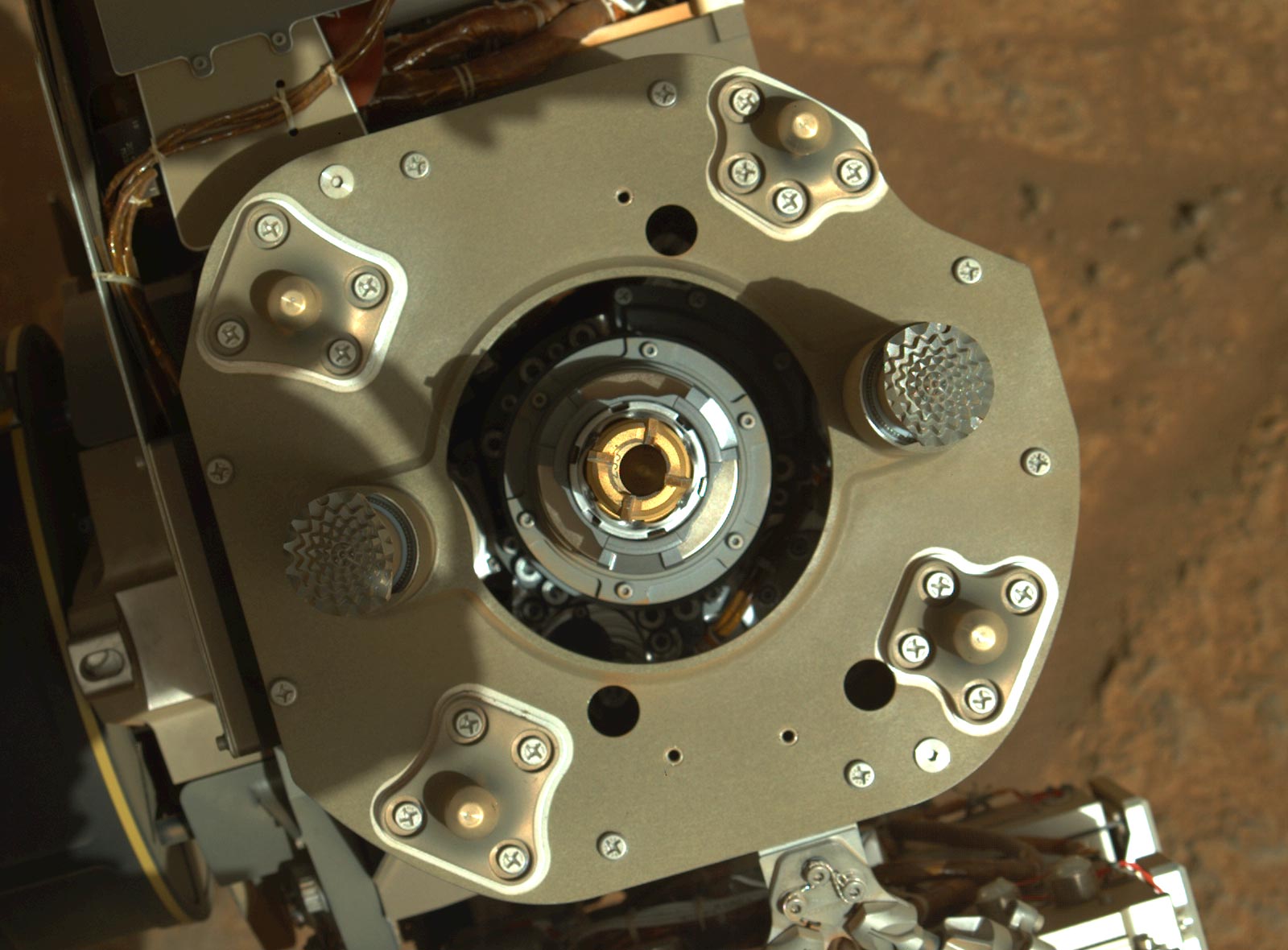
    Sample Tube in Perseverance's Coring Drill
    This enhanced-color image from the Mastcam-Z instrument aboard NASA’s Perseverance rover shows sample tube inside the coring bit after the August 6 coring activity was completed. Credit: NASA/JPL-Caltech

    The team has added a step to the sampling process for this coming attempt: After using its Mastcam-Z camera system to peer inside the sample tube, the rover will pause the sampling sequence so the team can review the image to ensure a rock core is present. Once a sample is confirmed, they will command Perseverance to seal the tube.

    Although the pulverized rock eluded capture in the initial sample-acquisition effort, the first sample tube still contains a sample of Martian atmosphere, which the mission had originally planned to acquire at a later time.

    “By returning samples to Earth, we hope to answer a number of scientific questions, including the composition of Mars’ atmosphere,” said Ken Farley, Perseverance’s project scientist at Caltech in Pasadena, California. “That’s why we’re interested in an atmospheric sample along with rock samples.”

    While atop Citadelle, Perseverance will use its subsurface radar, called RIMFAX – short for Radar Imager for Mars’ Subsurface Experiment – to peer at rock layers below it. The top of the ridge will also provide a great vantage point for Mastcam-Z to look for other potential rock targets in the area.
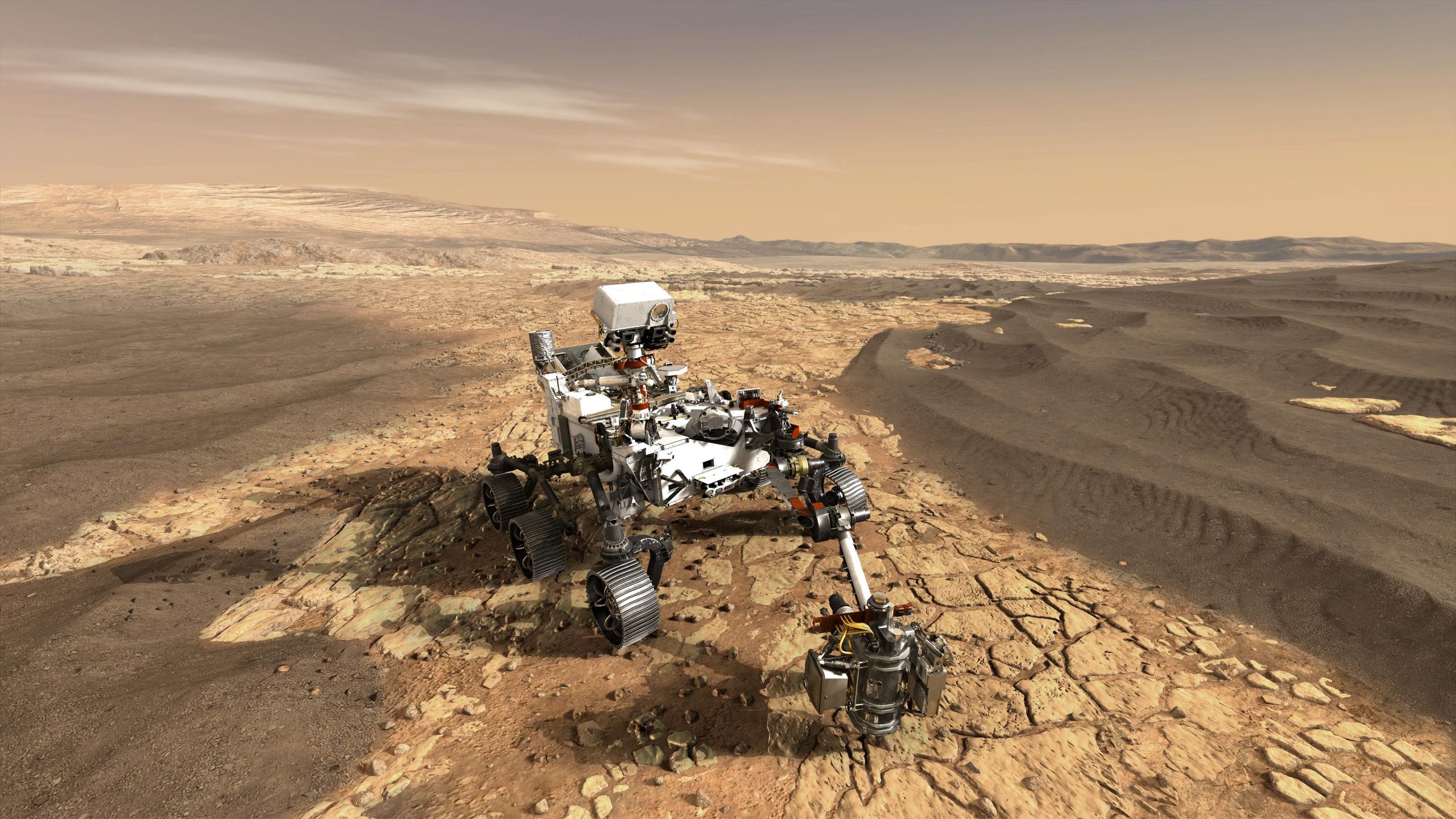
    NASA Perseverance Rover Artistic Rendering
    NASA’s Perseverance rover, shown in this artistic rendering, drilling for a sample on Mars. Credit: NASA/JPL-Caltech

    More About the Mission

    A key objective for Perseverance’s mission on Mars is astrobiology, including the search for signs of ancient microbial life. The rover will characterize the planet’s geology and past climate, pave the way for human exploration of the Red Planet, and be the first mission to collect and cache Martian rock and regolith (broken rock and dust).

    Subsequent NASA missions, in cooperation with ESA (European Space Agency), would send spacecraft to Mars to collect these sealed samples from the surface and return them to Earth for in-depth analysis.

    The Mars 2020 Perseverance mission is part of NASA’s Moon to Mars exploration approach, which includes Artemis missions to the Moon that will help prepare for human exploration of the Red Planet.

    JPL, which is managed for NASA by Caltech, built and manages operations of the Perseverance rover.

    Never miss a breakthrough: Join the SciTechDaily newsletter.
    Follow us on Google and Google News.

    JPL Mars Mars 2020 Perseverance Rover NASA Popular
    Share. Facebook Twitter Pinterest LinkedIn Email Reddit

    Related Articles

    NASA’s Mars Perseverance Rover Now Selects Its Own Targets To Zap With Its Laser

    NASA’s Ingenuity Mars Helicopter in Contact With Perseverance Rover After Communications Dropout

    NASA’s Ingenuity Mars Helicopter Scouts Ridgeline for Perseverance Science Team

    NASA Ingenuity Helicopter Spots Spacecraft Wreckage on Mars – Perseverance’s Cone-Shaped Backshell

    We’ve Arrived! NASA’s Mars Perseverance Rover Starts the Delta Front Campaign

    Incredible Video of Solar Eclipse on Mars – Captured by NASA’s Perseverance Rover

    NASA’s Mars Perseverance Rover Arrives at Ancient Delta for New Science Campaign

    NASA Perseverance Rover’s Self-Driving Capabilities Put to the Test in Rush to Martian Delta

    NASA’s Mars Perseverance Rover Picks Up an Unwanted Hitchhiker

    1 Comment

    1. Ken Towe on August 28, 2021 5:53 pm

      They should have captured and stored the crumbly rock. Why? Because it will have to be crushed and size fractionated for powder-ray diffraction analysis anyhow. Even a solid piece would have to be crushed that way. Making thin-sections for optical study is different.

      Reply
    Leave A Reply Cancel Reply

    • Facebook
    • Twitter
    • Pinterest
    • YouTube

    Don't Miss a Discovery

    Subscribe for the Latest in Science & Tech!

    Trending News

    Bone-Strengthening Discovery Could Reverse Osteoporosis

    Scientists Uncover Hidden Trigger Behind Stem Cell Aging

    Scientists Find Way to Reverse Fatty Liver Disease Without Changing Diet

    Could Humans Regrow Limbs? New Study Reveals Promising Genetic Pathway

    Scientists Reveal Eating Fruits and Vegetables May Increase Your Risk of Lung Cancer

    Scientists Reverse Brain Aging With Simple Nasal Spray

    Scientists Uncover Potential Brain Risks of Popular Fish Oil Supplements

    Scientists Discover a Surprising Way To Make Bread Healthier and More Nutritious

    Follow SciTechDaily
    • Facebook
    • Twitter
    • YouTube
    • Pinterest
    • Newsletter
    • RSS
    SciTech News
    • Biology News
    • Chemistry News
    • Earth News
    • Health News
    • Physics News
    • Science News
    • Space News
    • Technology News
    Recent Posts
    • Europe’s Most Active Volcano Just Got Stranger – Here’s Why Scientists Are Rethinking It
    • Why Are Giant Ants Letting Tiny Ants Crawl All Over Them?
    • Revolutionary Technique Sends Healthy Mitochondria Exactly Where They’re Needed
    • This Student Recreated the Universe in a Bottle. What She Discovered Could Help Reveal How Life Started on Earth
    • Alzheimer’s Symptoms May Start Outside the Brain, Study Finds
    Copyright © 1998 - 2026 SciTechDaily. All Rights Reserved.
    • Science News
    • About
    • Contact
    • Editorial Board
    • Privacy Policy
    • Terms of Use

    Type above and press Enter to search. Press Esc to cancel.