
Close Menu
    Facebook X (Twitter) Instagram
    SciTechDaily
    • Biology
    • Chemistry
    • Earth
    • Health
    • Physics
    • Science
    • Space
    • Technology
    Facebook X (Twitter) Pinterest YouTube RSS
    SciTechDaily
    Home»Space»We’ve Arrived! NASA’s Mars Perseverance Rover Starts the Delta Front Campaign
    Space

    We’ve Arrived! NASA’s Mars Perseverance Rover Starts the Delta Front Campaign

    By Eleni Ravanis, University of Hawaiʻi at MānoaApril 25, 20222 Comments3 Mins Read
    Facebook Twitter Pinterest Telegram LinkedIn WhatsApp Email Reddit
    Share
    Facebook Twitter LinkedIn Pinterest Telegram Email Reddit
    NASA’s Perseverance Rover Operating on the Surface of Mars
    This illustration depicts NASA’s Perseverance rover operating on the surface of Mars. Credit: NASA

    We made it! Perseverance is at the delta, and showering us with incredible images to pore over.

    Mars 2020 is officially out of “Rapid Traverse” mode, where we put the pedal to the metal and focused on driving quickly. We are back to standard operations now, and the team is beginning our Delta Front Campaign. For more on why exploring the delta is so thrilling, check out last week’s article. We haven’t left the Crater Floor Campaign totally behind us though, as we’ll investigate the contact between the rocks of the crater floor and those that make up the delta, as well as between different types of crater floor rocks named ‘Máaz’ and ‘Séítah.’

    Geologists can learn a lot about the course of events by looking at contacts, which are the boundaries between different types of rocks. Was the transition from one type of rock to another gradual or abrupt? Is the contact indicative of a change in the environment or how the rocks were deposited? Was there a long period of time between the different kinds of rocks? All of these are questions that we can look into at contacts, and they will help us better understand the history of Jezero crater.
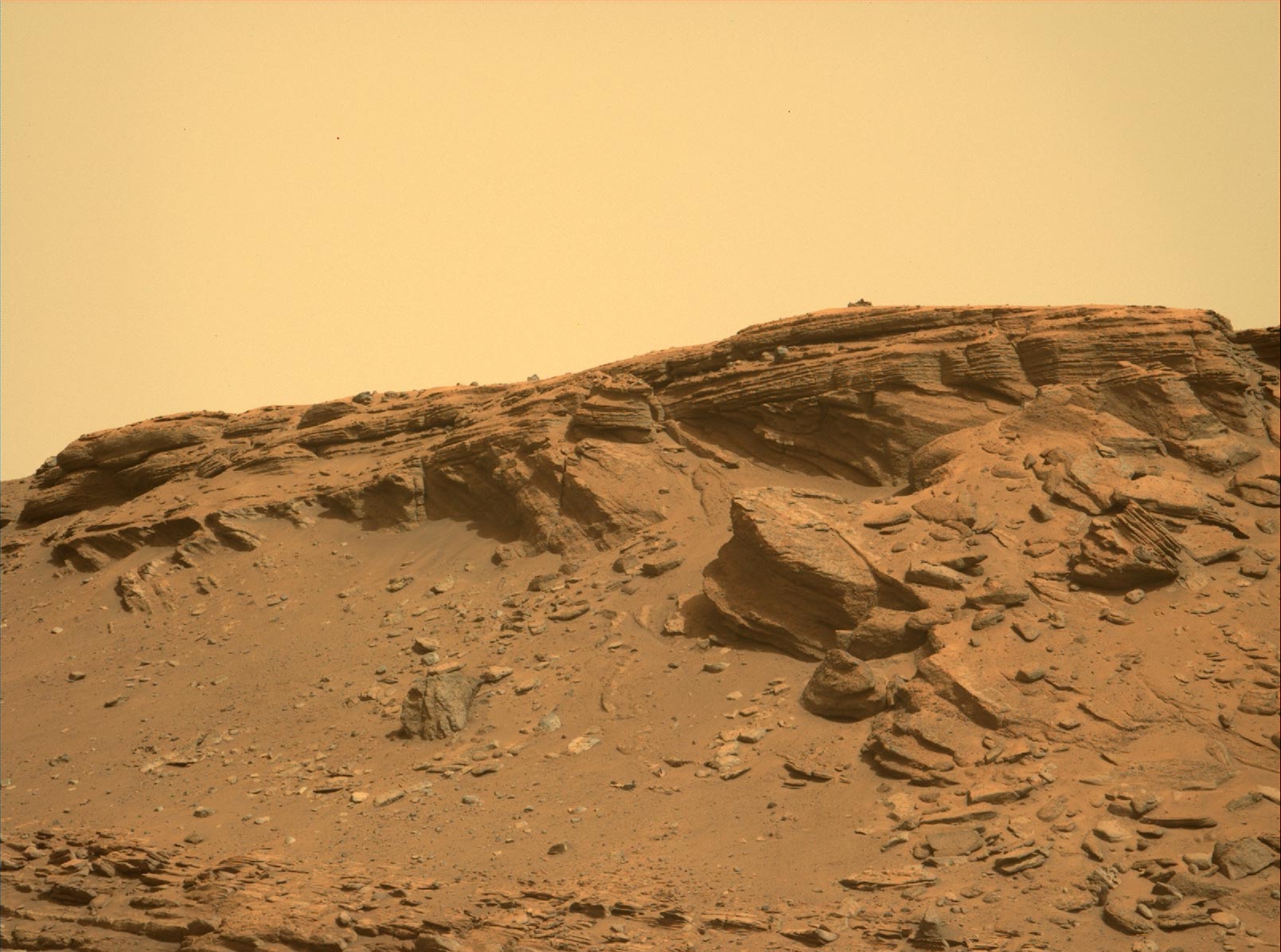
    Mars Delta Front Mosaic
    Mars Perseverance Sol 411 – Left Mastcam-Z Camera: This image, captured by the Mastcam-Z instrument, is part of a mosaic acquired of the delta front. The geometry of the layers and size of the grains that make up these rocks can tell us about the history of the delta. This image was acquired on April 16, 2022 (Sol 411) at the local mean solar time of 09:39:36. Credit: NASA/JPL-Caltech/ASU

    Analyzing rover data is one way we learn about Mars’ geologic past, but planetary geologists can also study “terrestrial analogs.” These are locations on Earth where we can make valuable comparisons to what we see on other planetary bodies, such as Mars, to help us understand their landscapes. I’ve enjoyed hearing comparisons between Jezero and Earth from members of our Science Team; most recently we discussed how the Jezero delta sediments might be similar to those in Greece. As a British-Greek member of the team, I used to drive through the Gulf of Corinth each summer to visit family in Ακράτα (Akrata). Little did I know that I was gazing out the window at a wonderful analog for some of the deltaic features we’re seeing in Jezero today!
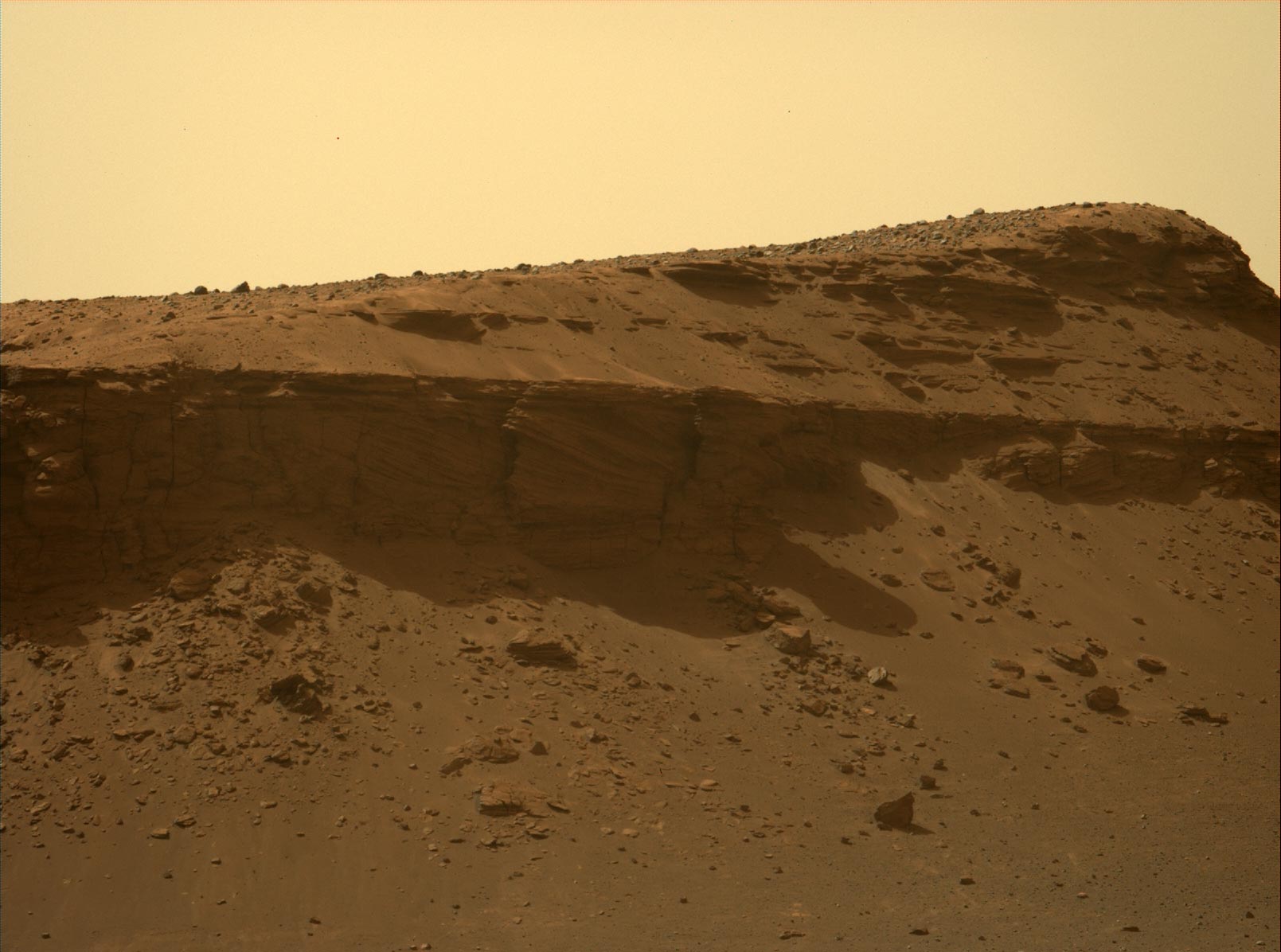
    Mars Kodiak Close Up
    Mars Perseverance Sol 409 – Left Mastcam-Z Camera: The Mastcam-Z instrument snapped this close up of ‘Kodiak’, a remnant from when the delta was more extensive. The Mars 2020 team has had eyes on Kodiak since last year, but now we can see details that weren’t previously visible. This raw image has been stretched to better highlight features in the middle of the image. This image was acquired on April 14, 2022 (Sol 409) at the local mean solar time of 10:06:40. Credit: NASA/JPL-Caltech/ASU

    Over the next few months, we’ll use the entire suite of Perseverance instruments to explore the delta. We expect to find rocks that will be rather different from the igneous rocks (meaning they formed from magma or lava) of the crater floor. During that exploration, we will also take samples of some of the most interesting and astrobiologically promising rocks. I can’t wait to see what Perseverance will find!

    Written by Eleni Ravanis, Student Collaborator at University of Hawaiʻi at Manoa.

    Never miss a breakthrough: Join the SciTechDaily newsletter.
    Follow us on Google and Google News.

    JPL Mars Mars 2020 Perseverance Rover NASA Popular University of Hawaii at Manoa
    Share. Facebook Twitter Pinterest LinkedIn Email Reddit

    Related Articles

    NASA’s Mars Perseverance Rover Has a Pet Rock!

    NASA’s Mars Perseverance Rover Now Selects Its Own Targets To Zap With Its Laser

    NASA’s Ingenuity Mars Helicopter in Contact With Perseverance Rover After Communications Dropout

    NASA’s Ingenuity Mars Helicopter Scouts Ridgeline for Perseverance Science Team

    NASA Ingenuity Helicopter Spots Spacecraft Wreckage on Mars – Perseverance’s Cone-Shaped Backshell

    Incredible Video of Solar Eclipse on Mars – Captured by NASA’s Perseverance Rover

    NASA’s Mars Perseverance Rover Arrives at Ancient Delta for New Science Campaign

    NASA Perseverance Rover’s Self-Driving Capabilities Put to the Test in Rush to Martian Delta

    NASA’s Mars Perseverance Rover Picks Up an Unwanted Hitchhiker

    2 Comments

    1. The 10th Man on April 25, 2022 7:18 am

      Not sure what your crowing about. Not a single scientific paper has come out in 2 years. How about some science NASA. Or are you just gonna milk the Mars cow forever?

      Reply
      • NB on April 25, 2022 4:11 pm

        I’m sure your resume is impressive.

        Reply
    Leave A Reply Cancel Reply

    • Facebook
    • Twitter
    • Pinterest
    • YouTube

    Don't Miss a Discovery

    Subscribe for the Latest in Science & Tech!

    Trending News

    AI Could Detect Early Signs of Alzheimer’s in Under a Minute – Far Before Traditional Tests

    What if Dark Matter Has Two Forms? Bold New Hypothesis Could Explain a Cosmic Mystery

    This Metal Melts in Your Hand – and Scientists Just Discovered Something Strange

    Beef vs. Chicken: Surprising Results From New Prediabetes Study

    Alzheimer’s Breakthrough: Scientists Discover Key Protein May Prevent Toxic Protein Clumps in the Brain

    Quantum Reality Gets Stranger: Physicists Put a Lump of Metal in Two Places at Once

    Scientists May Have Found the Key to Jupiter and Saturn’s Moon Mystery

    Scientists Uncover Brain Changes That Link Pain to Depression

    Follow SciTechDaily
    • Facebook
    • Twitter
    • YouTube
    • Pinterest
    • Newsletter
    • RSS
    SciTech News
    • Biology News
    • Chemistry News
    • Earth News
    • Health News
    • Physics News
    • Science News
    • Space News
    • Technology News
    Recent Posts
    • 250-Million-Year-Old Egg Solves One of Evolution’s Biggest Mysteries
    • Living With Roommates Might Be Changing Your Gut Microbiome Without You Knowing
    • Simple and Cheap Blood Test Could Detect Cancer and Other Diseases Before Symptoms Appear
    • Century-Old Cleaning Chemical Linked to 500% Increased Risk of Parkinson’s Disease
    • What if Your Memories Never Happened? Physicists Take a New Look at the Boltzmann Brain Paradox
    Copyright © 1998 - 2026 SciTechDaily. All Rights Reserved.
    • Science News
    • About
    • Contact
    • Editorial Board
    • Privacy Policy
    • Terms of Use

    Type above and press Enter to search. Press Esc to cancel.