
Close Menu
    Facebook X (Twitter) Instagram
    SciTechDaily
    • Biology
    • Chemistry
    • Earth
    • Health
    • Physics
    • Science
    • Space
    • Technology
    Facebook X (Twitter) Pinterest YouTube RSS
    SciTechDaily
    Home»Space»NASA’s Mars Perseverance Rover Now Selects Its Own Targets To Zap With Its Laser
    Space

    NASA’s Mars Perseverance Rover Now Selects Its Own Targets To Zap With Its Laser

    By Roger Wiens, Purdue UniversityJune 6, 2022No Comments3 Mins Read
    Facebook Twitter Pinterest Telegram LinkedIn WhatsApp Email Reddit
    Share
    Facebook Twitter LinkedIn Pinterest Telegram Email Reddit
    Mars 2020 SuperCam Laser Zapping
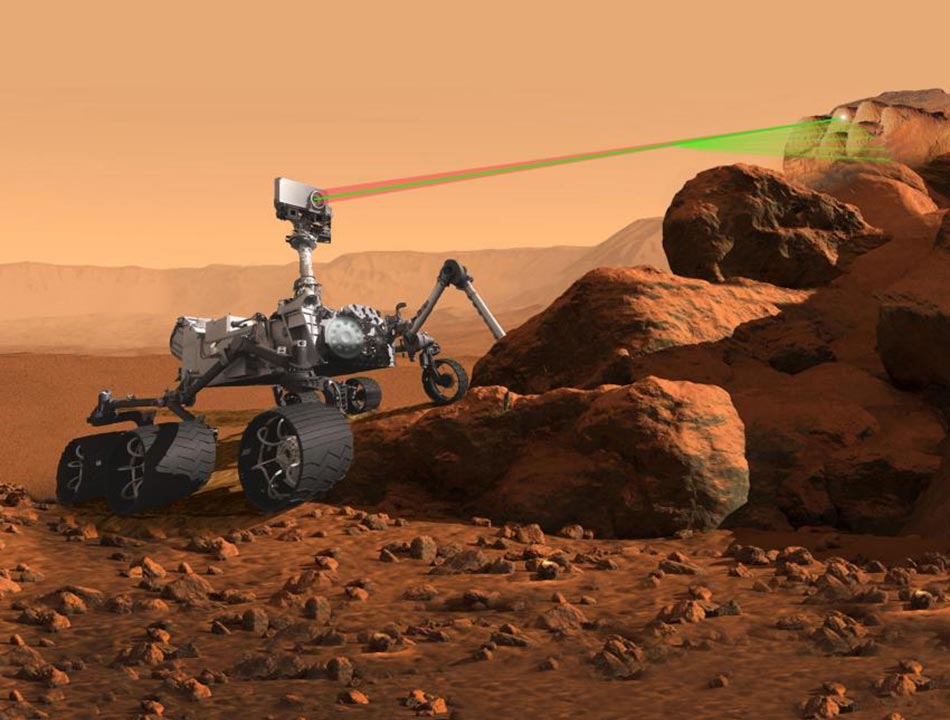
    Illustration of the Mars Perseverance Rover using its SuperCam instrument to laser zap a rock in order to test what it’s made of. Credit: NASA

    NASA’s Mars Perseverance Rover features an impressive SuperCam that can examine rocks and soils with a camera, laser, and spectrometers to seek organic compounds that could be related to past life on Mars. It first used the laser to zap rocks on Mars last year, not too long after its February 18 touchdown. Previously the operations team selected the targets, but now Perseverance has selected its own targets and shot them with the SuperCam laser to determine their elemental compositions.

    Perseverance has continued into Hawksbill Gap, making remote sensing observations of small portions of outcropping rock layers in search of a good place to collect a sample. Since Perseverance is in the Shenandoah quadrangle, we are using target names from Shenandoah National Park. Some of the names this past week included “Bald_Face_Mountain,” “Little_Devil_Stairs,” “Sunset_Hill,” “Luck_Hollow,” and “Moody_Creek.” Perseverance logged nearly 400 meters (1,300 feet) of driving progress for the week of May 15-21, accumulating a total distance since landing of over 11.8 km (7.3 miles) as of Sol 446.
    Perseverance's SuperCam Uses AEGIS For the First Time
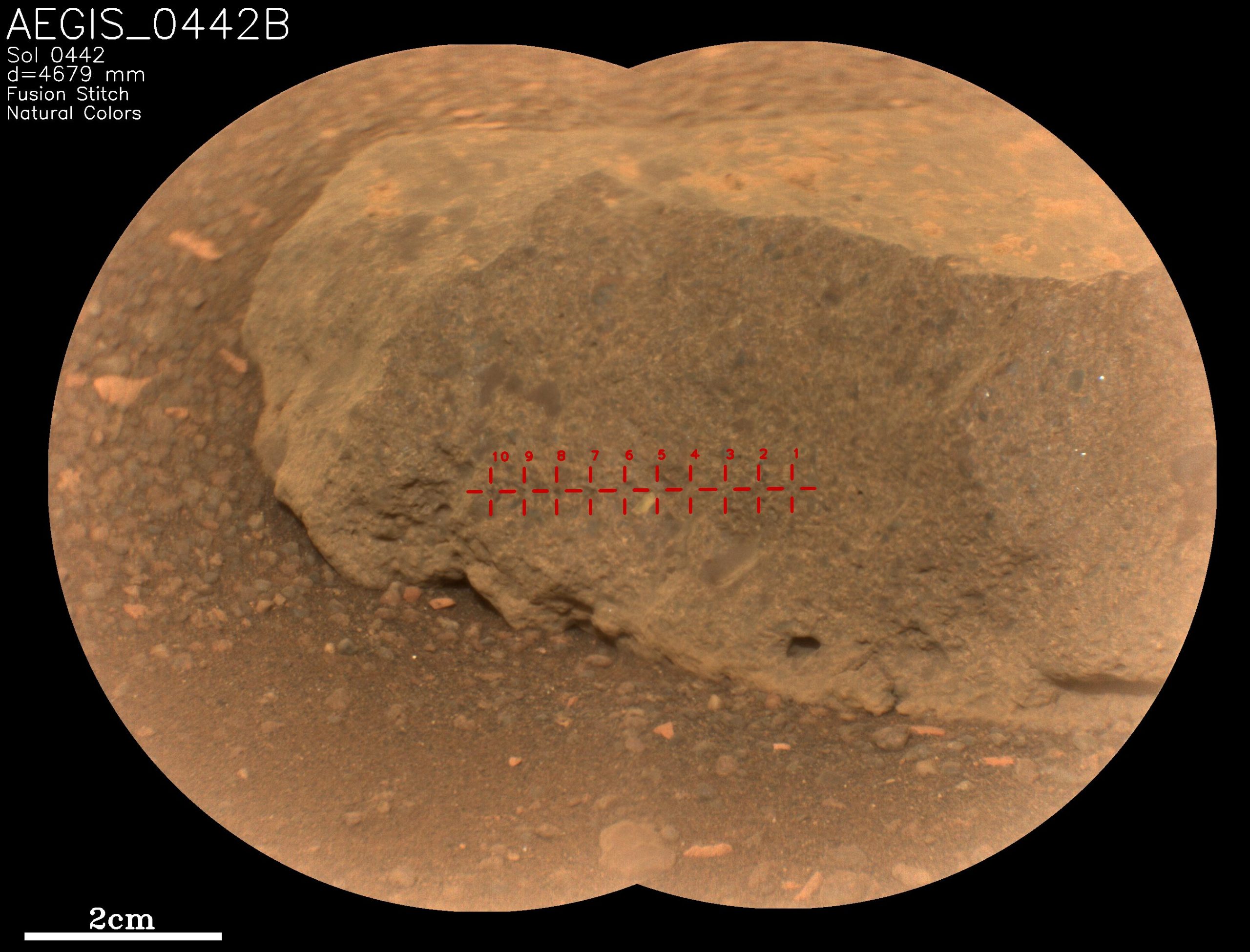
    Perseverance’s SuperCam Uses AEGIS For the First Time: SuperCam Remote Micro-Image of one of the two targets selected by the AEGIS software for chemical analysis. The laser targeted a line of ten points indicated by the red crosshairs. Credit: NASA/JPL-Caltech/LANL/CNES/IRAP

    In another first, Perseverance selected two targets on Sol 442 and shot them with the SuperCam laser to determine their elemental compositions. Note that it was the rover itself that picked the targets, not the operations team. Normally, when the rover team picks the targets, the observations are not made until the following day. If Perseverance picks its own targets, it can shoot them right after a drive, many hours before the rover team back on Earth has time to receive and analyze the Navcam images from the rover’s new location and select targets.

    Having the SuperCam results right away can alert the team to unusual compositions in time to make decisions about further analyses before the rover moves on. The software package that enables this target selection is called Autonomous Exploration for Gathering Increased Science, or AEGIS, and was developed at JPL for previous rover missions and adapted for SuperCam on Perseverance.

    Two Rocks Targeted by AEGIS
    Perseverance’s SuperCam Uses AEGIS For the First Time: Navcam image of the scene used by the onboard AEGIS software to select two rock targets to be shot by the SuperCam laser for chemical analysis. Credit: NASA/JPL-Caltech

    AEGIS requests Navcam images to be taken, and it then analyzes the images to find rocks and prioritize them for analysis based on size, brightness, and several other features. It subsequently initiates a sequence in which SuperCam fires its laser to determine the chemical makeup of one or two top priority targets selected from the Navcam images.

    AEGIS testing on Perseverance started in March by collecting SuperCam Remote Micro-Imager (RMI) images but not firing the laser. After tweaking several parameters on successive tests, the laser was used by AEGIS for the first time last week. The accompanying images show the rocks that were selected and shot. RMI images were taken after the laser shots to indicate where the laser fired. The Perseverance team plans to use AEGIS frequently from now on to provide more rapid data on the composition of rocks around the rover’s path.

    Written by Roger Wiens, Principal Investigator, SuperCam / Co-Investigator, SHERLOC instrument at Purdue University

    Never miss a breakthrough: Join the SciTechDaily newsletter.
    Follow us on Google and Google News.

    JPL Mars Mars 2020 Perseverance Rover NASA Popular
    Share. Facebook Twitter Pinterest LinkedIn Email Reddit

    Related Articles

    NASA’s Mars Perseverance Rover Has a Pet Rock!

    NASA’s Ingenuity Mars Helicopter in Contact With Perseverance Rover After Communications Dropout

    NASA’s Ingenuity Mars Helicopter Scouts Ridgeline for Perseverance Science Team

    NASA Ingenuity Helicopter Spots Spacecraft Wreckage on Mars – Perseverance’s Cone-Shaped Backshell

    We’ve Arrived! NASA’s Mars Perseverance Rover Starts the Delta Front Campaign

    Incredible Video of Solar Eclipse on Mars – Captured by NASA’s Perseverance Rover

    NASA’s Mars Perseverance Rover Arrives at Ancient Delta for New Science Campaign

    NASA Perseverance Rover’s Self-Driving Capabilities Put to the Test in Rush to Martian Delta

    NASA’s Mars Perseverance Rover Picks Up an Unwanted Hitchhiker

    Leave A Reply Cancel Reply

    • Facebook
    • Twitter
    • Pinterest
    • YouTube

    Don't Miss a Discovery

    Subscribe for the Latest in Science & Tech!

    Trending News

    Scientists Warn That This Common Pet Fish Can Wreck Entire Ecosystems

    Scientists Make Breakthrough in Turning Plastic Trash Into Clean Fuel Using Sunlight

    This Popular Supplement May Interfere With Cancer Treatment, Scientists Warn

    Scientists Finally Solved One of Water’s Biggest Mysteries

    Could This New Weight-Loss Pill Disrupt the Entire Market? Here’s What You Should Know About Orforglipron

    Earth’s Crust Is Tearing Open in Africa, and It Could Form a New Ocean

    Breakthrough Bowel Cancer Trial Leaves Patients Cancer-Free for Nearly 3 Years

    Natural Compound Shows Powerful Potential Against Rheumatoid Arthritis

    Follow SciTechDaily
    • Facebook
    • Twitter
    • YouTube
    • Pinterest
    • Newsletter
    • RSS
    SciTech News
    • Biology News
    • Chemistry News
    • Earth News
    • Health News
    • Physics News
    • Science News
    • Space News
    • Technology News
    Recent Posts
    • Kratom Use Explodes in the US, With Life-Changing Consequences
    • Scientists Uncover Fatal Weakness in “Zombie Cells” Linked to Cancer
    • World-First Study Reveals Human Hearts Can Regenerate After a Heart Attack
    • Why Your Dreams Feel So Real Sometimes and So Strange Other Times
    • Scientists Debunk 100-Year-Old Belief About Brain Cells, Rewriting Textbooks
    Copyright © 1998 - 2026 SciTechDaily. All Rights Reserved.
    • Science News
    • About
    • Contact
    • Editorial Board
    • Privacy Policy
    • Terms of Use

    Type above and press Enter to search. Press Esc to cancel.