
Close Menu
    Facebook X (Twitter) Instagram
    SciTechDaily
    • Biology
    • Chemistry
    • Earth
    • Health
    • Physics
    • Science
    • Space
    • Technology
    Facebook X (Twitter) Pinterest YouTube RSS
    SciTechDaily
    Home»Science»Bacteria Replicate Closely to the Actual Thermodynamic Limit
    Science

    Bacteria Replicate Closely to the Actual Thermodynamic Limit

    By SciTechDailySeptember 21, 2012No Comments2 Mins Read
    Facebook Twitter Pinterest Telegram LinkedIn WhatsApp Email Reddit
    Share
    Facebook Twitter LinkedIn Pinterest Telegram Email Reddit
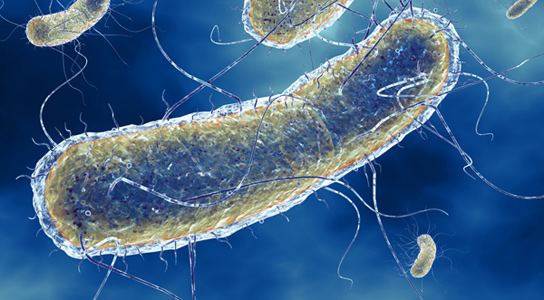
    escherichia-coli-blue
    Escherichia coli bacteria

    The bacterium Escherichia coli takes about 20 minutes to duplicate in optimal conditions. Biological physicists state that the bacteria are impressively close to the limit established by the laws of physics.

    The scientists published their findings in a preprint arXiv. Jeremy England, a biological physicist at MIT in Cambridge wanted to examine how living systems seemed to defy the Second Law of Thermodynamics.
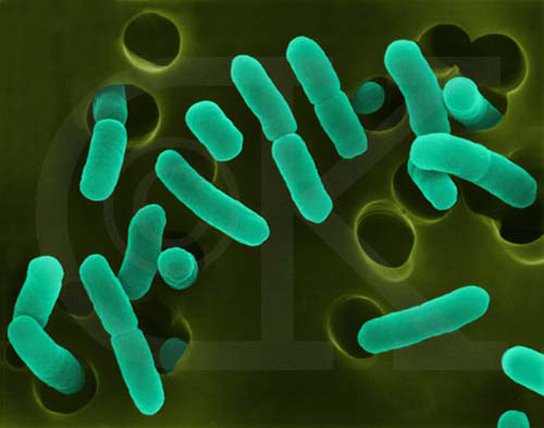
    escherichia-coli-green

    Life doesn’t defy the second law of thermodynamics because it produces entropy in the form of heat to compensate for its state of orderliness. England tried to rigorously estimate the amount of heat that must be produced when living organisms replicate. He wondered, while still respecting the second law, how efficient replication could be.

    England used statistical mechanics to model this behavior. In terms of energy, he needed to find out what the cheapest way involved was. The minimum amount of heat that would pay for the order needed in the raw ingredients of the second cell was estimated by the likelihood that it could fall apart.

    The challenge involved figuring out what class of paths should dominate this process. England considered the most general reversal routes, which was if by chance all of the molecules in the replicated bacteria disintegrated. This is very unlikely, but figuring out exactly how unlikely allowed him to place a rough limit on how reversible replication is and the minimum energy cost.

    This also allowed him to estimate the minimum amount of heat that needed to be generated for replication. The minimum energy is a little more than a third of the real amount E. coli generates. If the cells were only twice more efficient, they would be approaching maximum efficiency.

    If scientists want to engineer a bacterium for a highly specialized task using synthetic biology, there is room for improvement. Modified E. coli could be at least twice as efficient at replicating, resulting in faster colony growth that could be useful in biotechnology.

    Reference: “Statistical physics of self-replication” by Jeremy L. England, 21 August 2013, The Journal of Chemical Physics.
    DOI: 10.1063/1.4818538

    Never miss a breakthrough: Join the SciTechDaily newsletter.
    Follow us on Google and Google News.

    Bacteria
    Share. Facebook Twitter Pinterest LinkedIn Email Reddit

    Related Articles

    Ancient Epidemics: Scientists Uncover Lethal Stone Age Threat

    Warning – Scientists Uncover Hidden Dangers of Feeding Dogs Raw Meat

    Ancient Cycads: The Dinosaur-Era Plants That “Breathed” Nitrogen To Survive Extinction

    Bathing in Bacteria: The Unexpected Dangers in Your Daily Shower

    Awakening Ancient Dangers: Catastrophic Risks of “Time-Traveling” Pathogens From Melting Permafrost

    Ancestral Origins Unveiled: Caterpillar Venom Traces Back to Bacteria

    The Silent Whisper of Death: 4,000-Year-Old Plague DNA Found in Britain

    Stone Age Molecules Resurrected From Ancient Dental Plaque

    The Great Chocolate Crisis: How Swift Action Halted a Salmonella Epidemic

    Leave A Reply Cancel Reply

    • Facebook
    • Twitter
    • Pinterest
    • YouTube

    Don't Miss a Discovery

    Subscribe for the Latest in Science & Tech!

    Trending News

    This Copper Drug Clears Alzheimer’s Brain Toxins and Boosts Memory

    Adults Over 65 Lost Massive Amounts of Weight With Ozempic

    How Flocking Birds “Defy” One of Physics’ Most Fundamental Laws

    Physicists Create a New Kind of Schrödinger’s Cat State From Exotic Quantum Building Blocks

    Your Diet Could Be Missing the Key Ingredient for Heart Protection

    Researchers Warn Widely Prescribed Blood Pressure Drugs Could Be Harming Diabetic Kidneys

    James Webb Spots Something Strange Between Day and Night on an Alien Planet

    How Ancient People Moved a 6-Ton Stone 700 Kilometers to Stonehenge

    Follow SciTechDaily
    • Facebook
    • Twitter
    • YouTube
    • Pinterest
    • Newsletter
    • RSS
    SciTech News
    • Biology News
    • Chemistry News
    • Earth News
    • Health News
    • Physics News
    • Science News
    • Space News
    • Technology News
    Recent Posts
    • Scientists Just Found Something Weird Inside Moss
    • Scientists Just Repeated a Nobel Prize-Winning Experiment in a Creature Older Than Jellyfish
    • Scientists Finally Uncover Why Solid-State Batteries Short-Circuit
    • Scientists Discover the “Achilles’ Heel” of Two of the World’s Deadliest Diarrhea Bacteria
    • Why Older Adults Need To Pay Closer Attention to Vitamin B12
    Copyright © 1998 - 2026 SciTechDaily. All Rights Reserved.
    • Science News
    • About
    • Contact
    • Editorial Board
    • Privacy Policy
    • Terms of Use

    Type above and press Enter to search. Press Esc to cancel.