
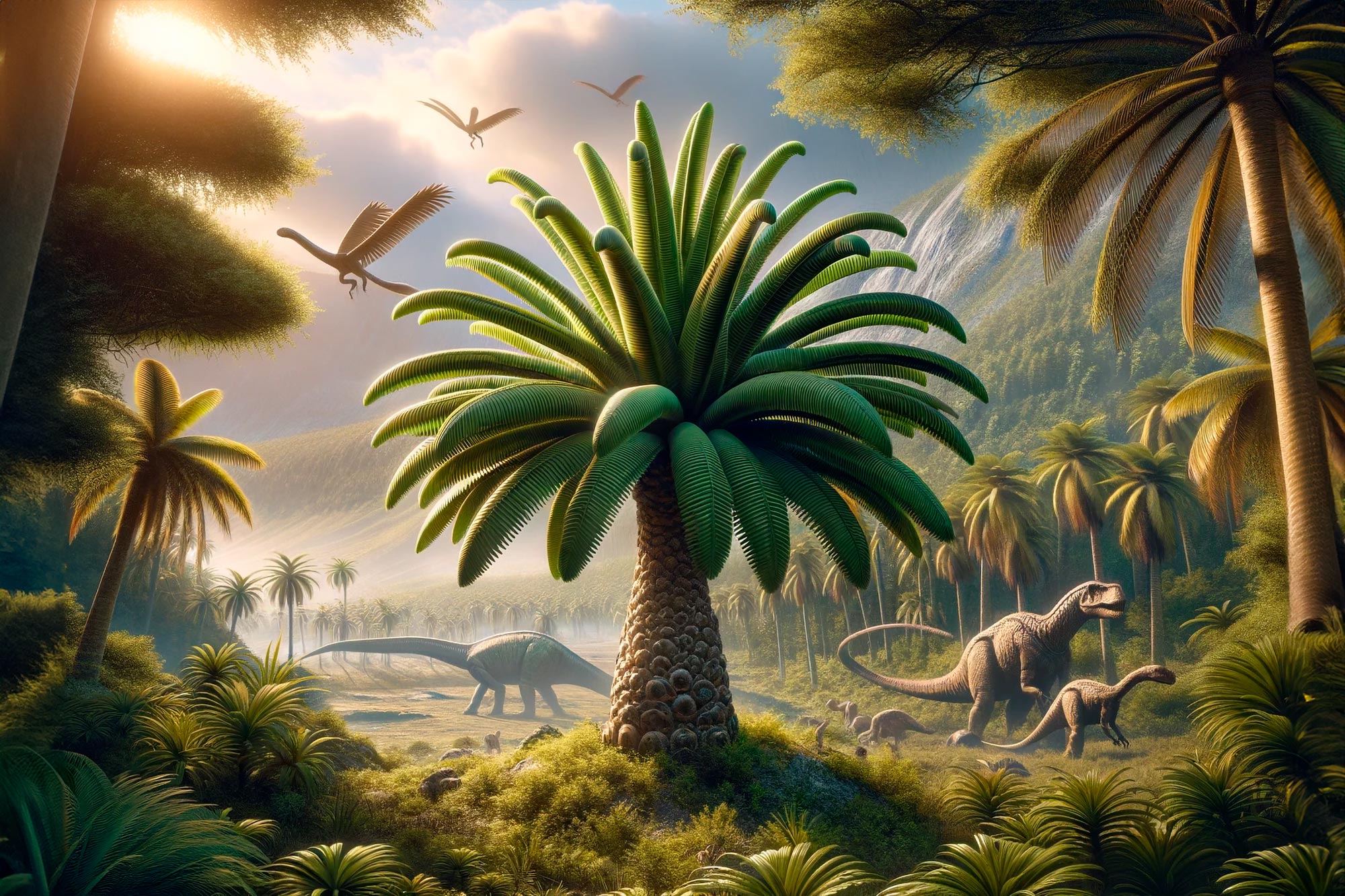
Cycads, ancient plants once prevalent during the Mesozoic Era, have mostly gone extinct, with a few species surviving in tropical and subtropical areas. Researchers have discovered that these surviving cycads relied on symbiotic bacteria for nitrogen fixation, a trait not found in their extinct counterparts.
Once a favored food of grazing dinosaurs, an ancient lineage of plants called cycads helped sustain these and other prehistoric animals during the Mesozoic Era, starting 252 million years ago, by being plentiful in the forest understory. Today, just a few species of the palm-like plants survive in tropical and subtropical habitats.
Extinction and Survival of Cycads
Like their lumbering grazers, most cycads have gone extinct. Their disappearance from their prior habitats began during the late Mesozoic and continued into the early Cenozoic Era, punctuated by the cataclysmic asteroid impact and volcanic activity that mark the K-Pg boundary 66 million years ago. However, unlike the dinosaurs, somehow a few groups of cycads survived to the present.
New Study Findings on Cycad Survival
A new study appearing today (November 16) in the journal Nature Ecology & Evolution has concluded that the cycad species that survived relied on symbiotic bacteria in their roots, which provide them with nitrogen to grow. Just like modern legumes and other plants that use nitrogen fixation, these cycads trade their sugars with bacteria in their roots in exchange for nitrogen plucked from the atmosphere.
What originally interested lead author Michael Kipp is that the tissues of nitrogen-fixing plants can provide a record of the composition of the atmosphere they grew up in. He combines geochemistry with the fossil record to try to understand the Earth’s climate history.
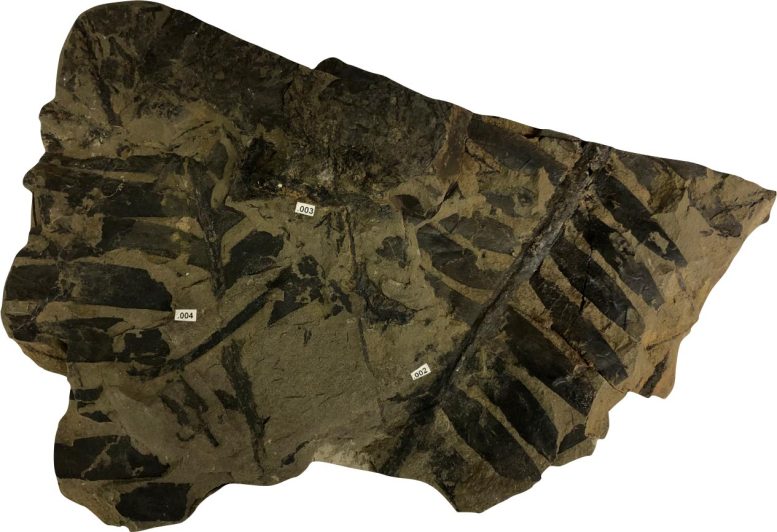
Knowing already that modern cycads are nitrogen-fixers, Kipp began analyzing some very old plant fossils during his Ph.D. work at the University of Washington to see if he could get a different look at ancient atmospheres. Most of the old cycads revealed that they weren’t nitrogen-fixers, but these also turned out to be the extinct lineages.
“Instead of being a story about the atmosphere, we realized this was a story about the ecology of these plants that changed through time,” said Kipp, who spent nearly a decade on this finding, first at the University of Washington and then as a postdoctoral researcher at the California Institute of Technology (Caltech).
Kipp is joining the Duke faculty this year as an assistant professor of Earth and Climate Sciences in the Nicholas School of the Environment to continue using the fossil record to understand Earth’s climate history so that we can understand its possible future.
Methods and Discoveries
Much of what we know about ancient atmospheres comes from chemical studies of ancient sea life and sediments, Kipp said. Applying some of those methods to terrestrial plants is a new wrinkle.
“Going into the project, there were no published nitrogen isotope data from fossilized plant foliage,” Kipp said. It took a while for him to fine-tune the method and to secure samples of precious plant fossils that museum curators were reluctant to see vaporized to get the data.
“In the few fossil samples that are of surviving (cycad) lineages, and that are not so old — 20, 30 million years — we see the same nitrogen signature as we see today,” Kipp said. That means their nitrogen came from symbiotic bacteria. But in the older and extinct cycad fossils, that nitrogen signature was absent.
Implications and Future Research
What is less clear is how nitrogen fixation helped the surviving cycads. It may have helped them weather the dramatic shift in climate or it may have allowed them to compete better with the faster-growing angiosperm plants that flourished after the extinction, “or it could be both.”
“This is a new technique that we can do a lot more with,” Kipp said.
Reference: “Nitrogen Isotopes Reveal Independent Origins of N2-Fixing Symbiosis in Extant Cycad Lineages,” Michael A. Kipp, Eva E. Stüeken, Caroline A. E. Strömberg, William H. Brightly, Victoria M. Arbour, Boglárka Erdei, Robert S. Hill, Kirk R. Johnson, Jiří Kvaček, Jennifer C. McElwain, Ian M. Miller, Miriam Slodownik, Vivi Vajda and Roger Buick, 16 November 2023, Nature Ecology & Evolution.
DOI: 10.1038/s41559-023-02251-1
Funding for this study came from: The Paleontological Society, the University of Washington Royalty Research Fund, and NASA Exobiology grant NNX16AI37G.
Never miss a breakthrough: Join the SciTechDaily newsletter.
Follow us on Google and Google News.
1 Comment
Main picture is AI generated