
Close Menu
    Facebook X (Twitter) Instagram
    SciTechDaily
    • Biology
    • Chemistry
    • Earth
    • Health
    • Physics
    • Science
    • Space
    • Technology
    Facebook X (Twitter) Pinterest YouTube RSS
    SciTechDaily
    Home»Space»Cosmic Rays Help Supernovae Explosions Pack a Dramatically More Massive Punch
    Space

    Cosmic Rays Help Supernovae Explosions Pack a Dramatically More Massive Punch

    By Royal Astronomical SocietyJuly 28, 20211 Comment3 Mins Read
    Facebook Twitter Pinterest Telegram LinkedIn WhatsApp Email Reddit
    Share
    Facebook Twitter LinkedIn Pinterest Telegram Email Reddit
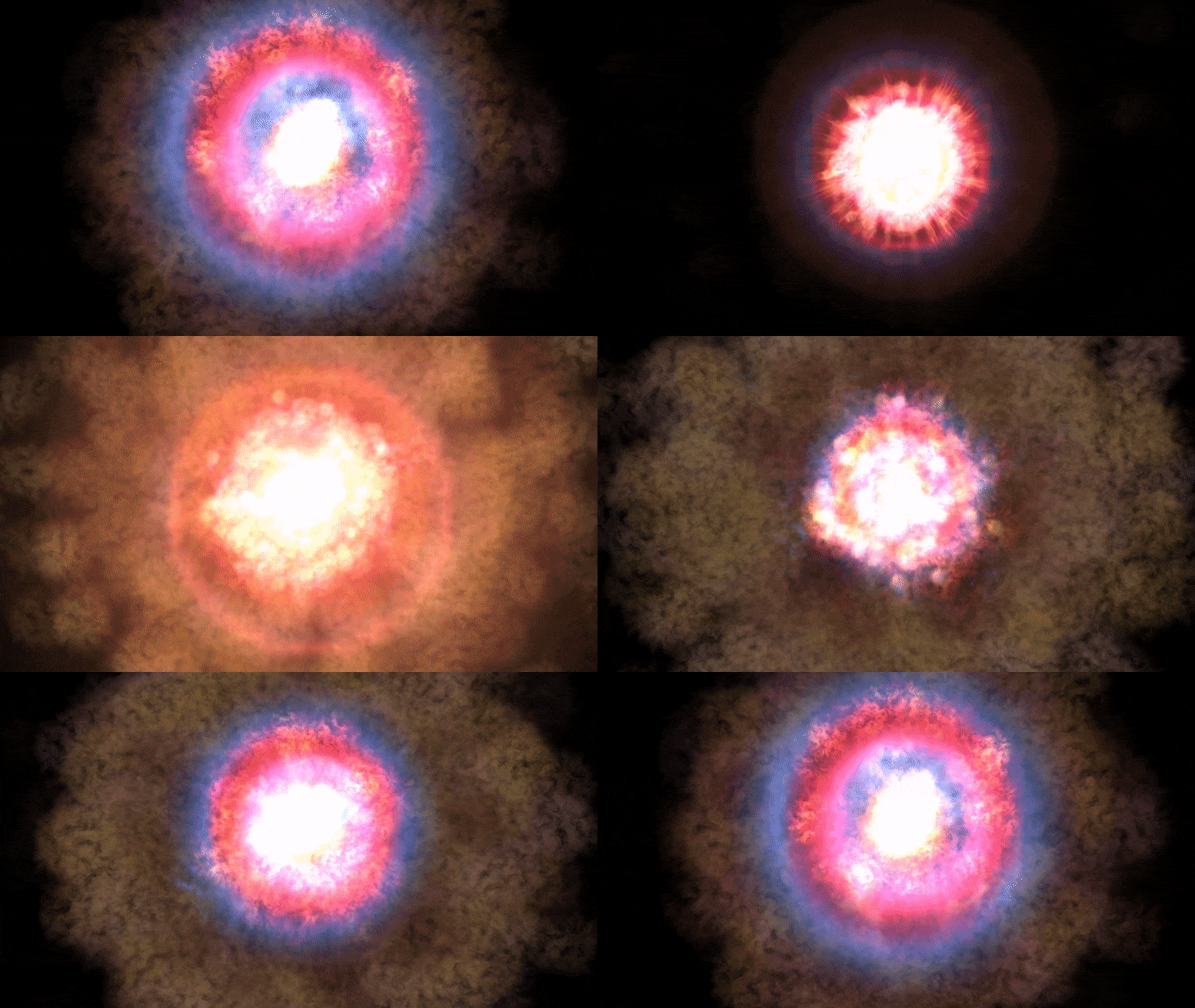
    Supernova Explosion Animation
    Supernova Explosion Animation

    Cosmic rays supercharge supernovae, massively amplifying their impact on galaxy formation.

    The final stage of cataclysmic explosions of dying massive stars, called supernovae, could pack an up to six times bigger punch on the surrounding interstellar gas with the help of cosmic rays, according to a new study led by researchers at the University of Oxford. The work was presented by PhD student Francisco Rodríguez Montero on July 19, 2021, at the virtual National Astronomy Meeting (NAM 2021).

    When supernovae explode, they emit light and billions of particles into space. While the light can freely reach us, particles become trapped in spiral loops by magnetic shockwaves generated during the explosions. Crossing back and forth through shock fronts, these particles are accelerated almost to the speed of light and, on escaping the supernovae, are thought to be the source of the mysterious form of radiation known as cosmic rays.
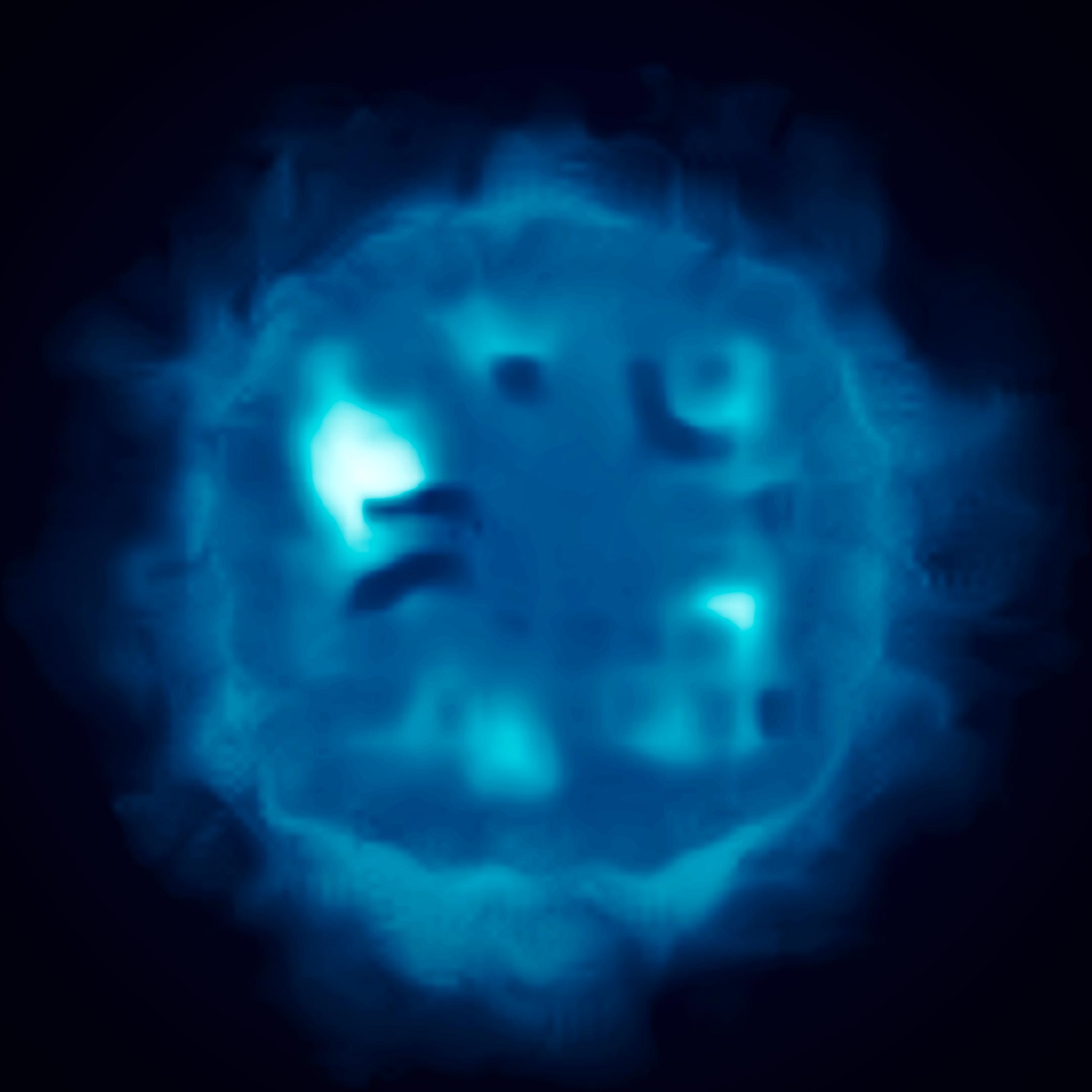
    False Color Image Supernova Simulation
    False color image of one of the supernova simulations showing hot and cold patches of gas (white/green) in the bubble and the filamentary structure of cosmic rays (blue) around the shell of the supernova remnant. Credit: F. Rodríguez Montero.

    Due to their immense speed, cosmic rays experience strong relativistic effects, effectively losing less energy than regular matter and allowing them to travel great distances through a galaxy. Along the way, they affect the energy and structure of interstellar gas in their path and may play a crucial role in shutting down the formation of new stars in dense pockets of gas. However, to date, the influence of cosmic rays in galaxy evolution has not been well understood.

    In the first high-resolution numerical study of its kind, the team ran simulations of the evolution of the shockwaves emanating from supernovae explosions over several million years. They found that cosmic rays can play a critical role in the final stages of a supernova’s evolution and its ability to inject energy into the galactic gas that surrounds it.

    Cosmic Rays Deliver an Extra Push

    Rodríguez Montero explains: “Initially, the addition of cosmic rays does not appear to change how the explosion evolves. Nevertheless, when the supernova reaches the stage in which it cannot gain more momentum from the conversion of the supernova’s thermal energy to kinetic energy, we found that cosmic rays can give an extra push to the gas, allowing for the final momentum imparted to be up to 4-6 times higher than previously predicted.”
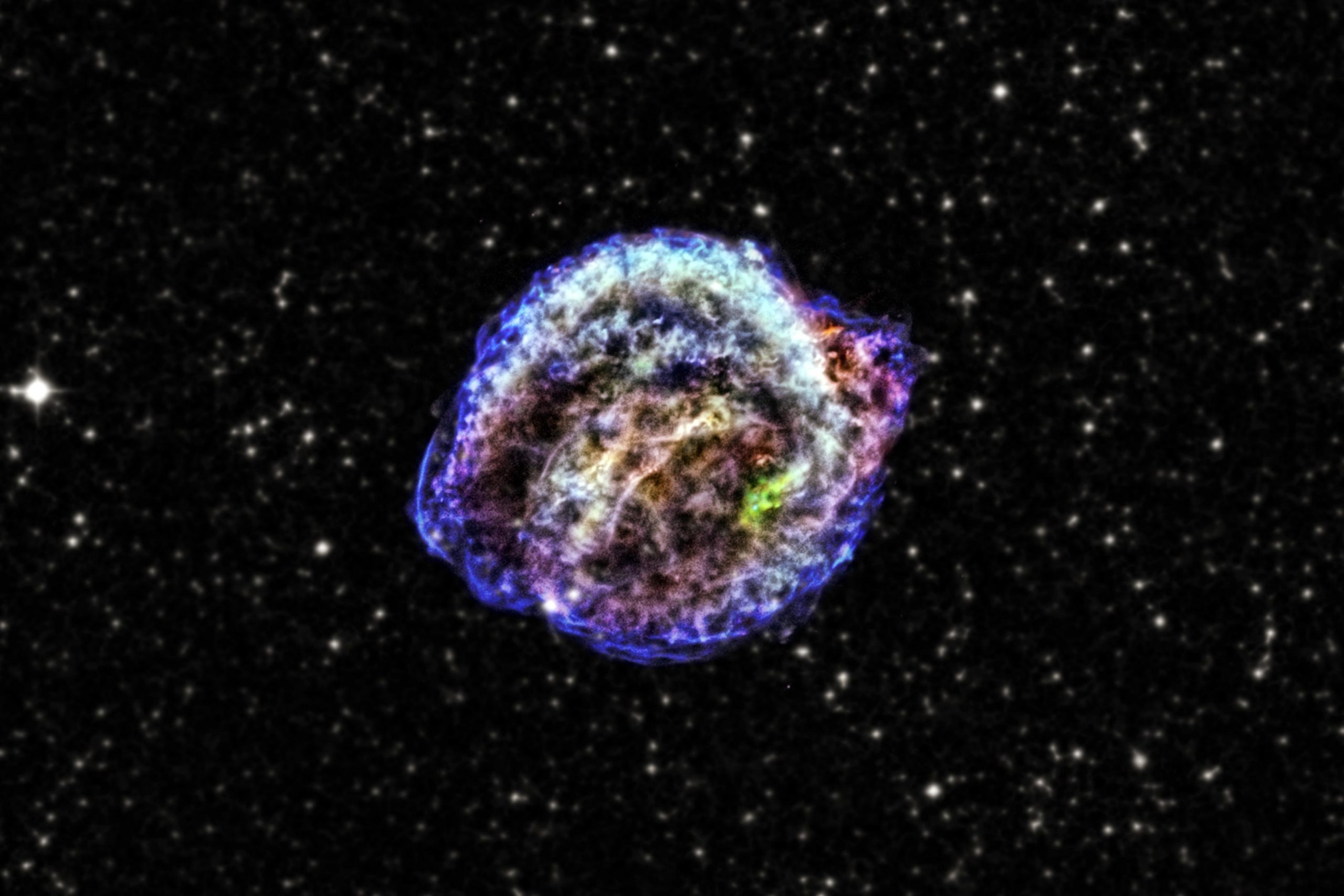
    Kepler's Supernova Remnant
    The red, green, and blue colors show low, intermediate and high energy X-rays observed with NASA’s Chandra X-ray Observatory, and the star field is from the Digitized Sky Survey. Credit: NASA / CXC / NCSU / JPL-Caltech / M. Burkey et al.

    The results suggest that gas outflows driven from the interstellar medium into the surrounding tenuous gas, or circumgalactic medium, will be dramatically more massive than previously estimated.

    Contrary to state-of-the-art theoretical arguments, the simulations also suggest that the extra push provided by cosmic rays is more significant when massive stars explode in low-density environments. This could facilitate the creation of super-bubbles powered by successive generations of supernovae, sweeping gas from the interstellar medium and venting it out of galactic discs.

    Rodríguez Montero adds: “Our results are a first look at the extraordinary new insights that cosmic rays will provide to our understanding of the complex nature of galaxy formation.”

    Meeting: Royal Astronomical Society National Astronomy Meeting

    Never miss a breakthrough: Join the SciTechDaily newsletter.
    Follow us on Google and Google News.

    Astronomy Astrophysics Royal Astronomical Society Supernova
    Share. Facebook Twitter Pinterest LinkedIn Email Reddit

    Related Articles

    Supernova Death Blasts May Have Wiped Out Life on Earth – Twice

    Explosion Imminent: Massive Stars Sound Warning They Are About To Go Supernova

    Mysterious Hydrogen-Free Supernova Sheds Light on Massive Stars’ Violent Death Throes

    Dark Energy Survey Reveals a Rare Superluminous Supernova

    Scientists Discover Surprising Amount of Dust and Gas in the Remnant of Supernova 1987A

    Possible Evidence of Hadron Acceleration in Tycho Supernova Remnant

    Links Between Core Collapse Supernovae and Star Formation Established

    Lasers Mimic Supernova to Explain Cosmic Magnetic Fields

    SN Primo Is Farthest Type Ia Supernova Discovered

    1 Comment

    1. BibhutibhusanPatel on July 31, 2021 10:01 pm

      The emission of cosmic ray is true.

      Reply
    Leave A Reply Cancel Reply

    • Facebook
    • Twitter
    • Pinterest
    • YouTube

    Don't Miss a Discovery

    Subscribe for the Latest in Science & Tech!

    Trending News

    Bone-Strengthening Discovery Could Reverse Osteoporosis

    Scientists Uncover Hidden Trigger Behind Stem Cell Aging

    Scientists Find Way to Reverse Fatty Liver Disease Without Changing Diet

    Could Humans Regrow Limbs? New Study Reveals Promising Genetic Pathway

    Scientists Reveal Eating Fruits and Vegetables May Increase Your Risk of Lung Cancer

    Scientists Reverse Brain Aging With Simple Nasal Spray

    Scientists Uncover Potential Brain Risks of Popular Fish Oil Supplements

    Scientists Discover a Surprising Way To Make Bread Healthier and More Nutritious

    Follow SciTechDaily
    • Facebook
    • Twitter
    • YouTube
    • Pinterest
    • Newsletter
    • RSS
    SciTech News
    • Biology News
    • Chemistry News
    • Earth News
    • Health News
    • Physics News
    • Science News
    • Space News
    • Technology News
    Recent Posts
    • Europe’s Most Active Volcano Just Got Stranger – Here’s Why Scientists Are Rethinking It
    • Why Are Giant Ants Letting Tiny Ants Crawl All Over Them?
    • Revolutionary Technique Sends Healthy Mitochondria Exactly Where They’re Needed
    • This Student Recreated the Universe in a Bottle. What She Discovered Could Help Reveal How Life Started on Earth
    • Alzheimer’s Symptoms May Start Outside the Brain, Study Finds
    Copyright © 1998 - 2026 SciTechDaily. All Rights Reserved.
    • Science News
    • About
    • Contact
    • Editorial Board
    • Privacy Policy
    • Terms of Use

    Type above and press Enter to search. Press Esc to cancel.