
Diverse Life Forms May Have Evolved Earlier Than Previously Thought
Diverse microbial life existed on Earth at least 3.75 billion years ago, suggests a new study led by University College London (UCL) researchers that challenges the conventional view of when life began.
Diverse microbial life existed on Earth at least 3.75 billion years ago, suggests a new study led by UCL researchers that challenges the conventional view of when life began.
For the study, published in Science Advances, the research team analyzed a fist-sized rock from Quebec, Canada, estimated to be between 3.75 and 4.28 billion years old. In an earlier Nature paper, the team found tiny filaments, knobs, and tubes in the rock which appeared to have been made by bacteria.
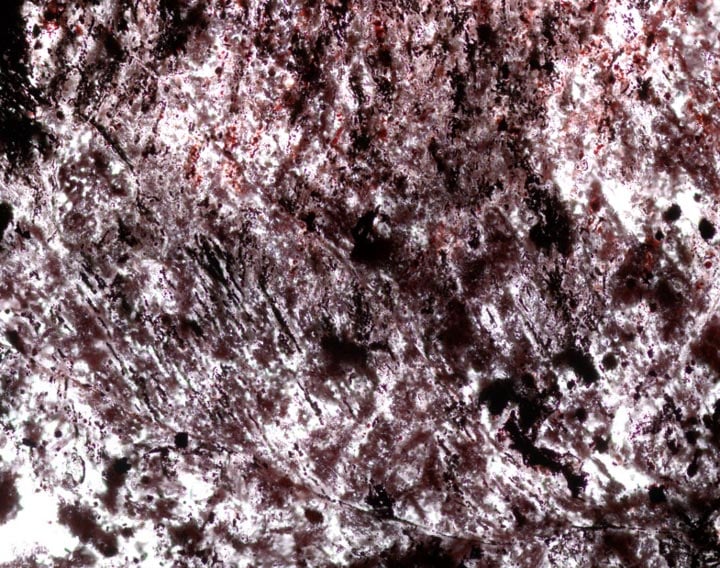
However, not all scientists agreed that these structures – dating about 300 million years earlier than what is more commonly accepted as the first sign of ancient life – were of biological origin.
Now, after extensive further analysis of the rock, the team has discovered a much larger and more complex structure – a stem with parallel branches on one side that is nearly a centimeter long – as well as hundreds of distorted spheres, or ellipsoids, alongside the tubes and filaments.
The researchers say that, while some of the structures could conceivably have been created through chance chemical reactions, the “tree-like” stem with parallel branches was most likely biological in origin, as no structure created via chemistry alone has been found like it.
The team also provided evidence of how the bacteria got their energy in different ways. They found mineralized chemical by-products in the rock that are consistent with ancient microbes living off iron, sulfur, and possibly also carbon dioxide and light through a form of photosynthesis not involving oxygen.
These new findings, according to the researchers, suggest that a variety of microbial life may have existed on primordial Earth, potentially as little as 300 million years after the planet formed.
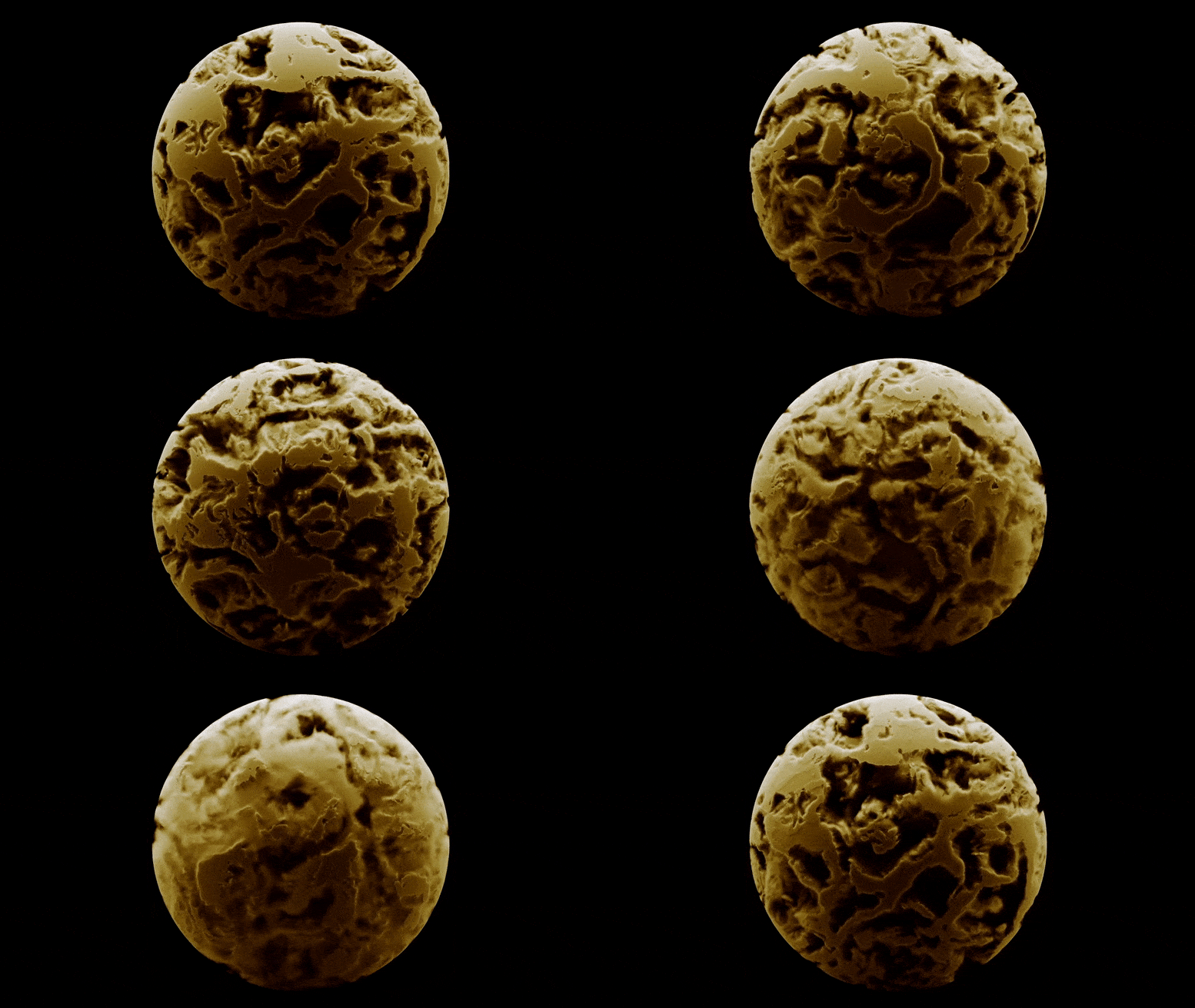
Three-dimensional micro-CT reconstruction of two parallel-aligned twisted filaments made of hematite. (The red and green colors represent hematite at different concentrations.) This comes from a pillar fabricated from the jasper nodule in the Nuvvuagittuq banded iron formation. Credit: Francesco Iacoviello
Lead author Dr. Dominic Papineau (UCL Earth Sciences, UCL London Centre for Nanotechnology, Centre for Planetary Sciences, and China University of Geosciences) said: “Using many different lines of evidence, our study strongly suggests a number of different types of bacteria existed on Earth between 3.75 and 4.28 billion years ago.”
“This means life could have begun as little as 300 million years after Earth formed. In geological terms, this is quick – about one spin of the Sun around the galaxy.”
“These findings have implications for the possibility of extraterrestrial life. If life is relatively quick to emerge, given the right conditions, this increases the chance that life exists on other planets.”
Advanced Imaging Techniques Reveal Fossil-like Structures
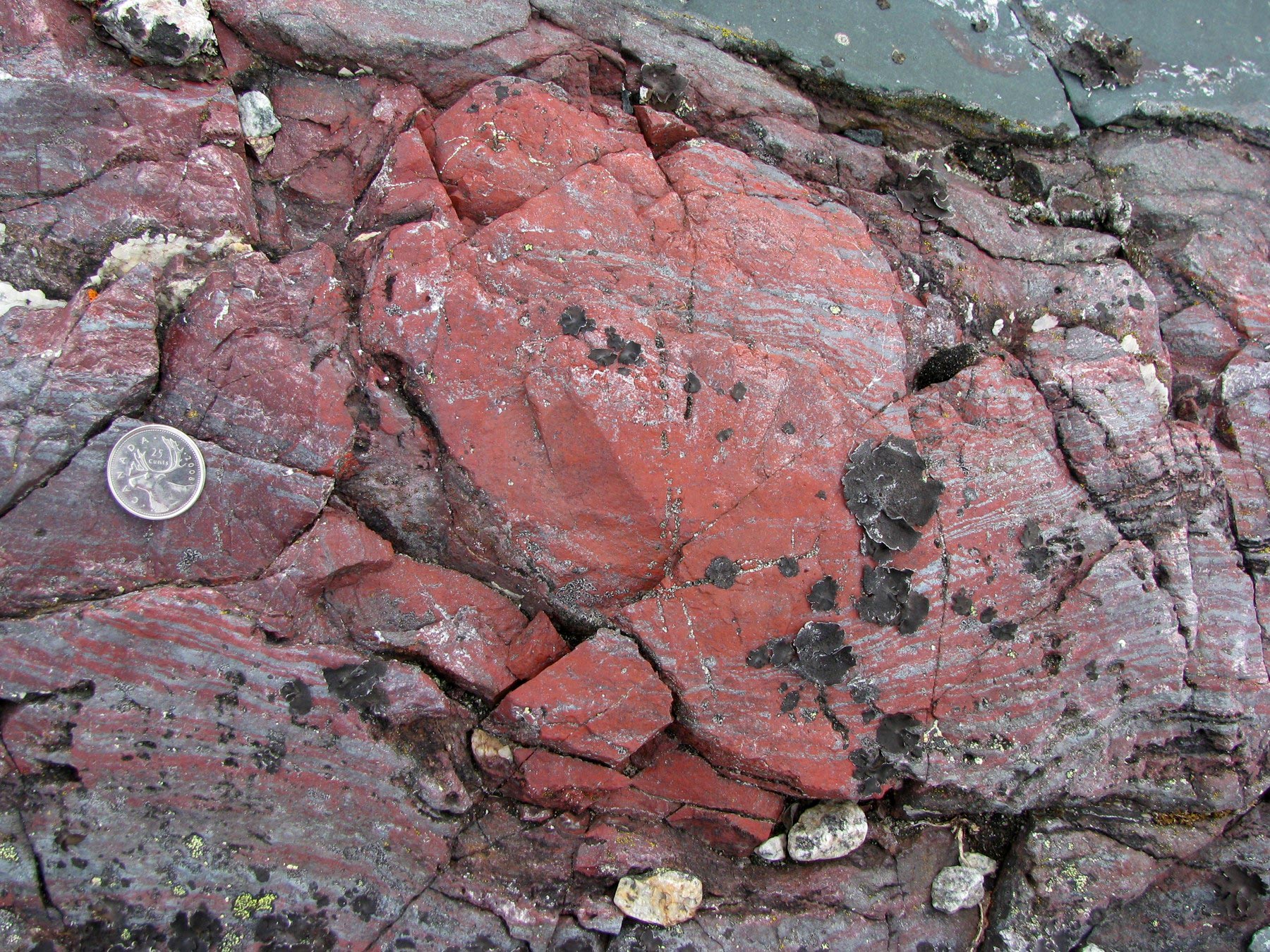
For the study, the researchers examined rocks from Quebec’s Nuvvuagittuq Supracrustal Belt (NSB) that Dr. Papineau collected in 2008. The NSB, once a chunk of seafloor, contains some of the oldest sedimentary rocks known on Earth, thought to have been laid down near a system of hydrothermal vents, where cracks on the seafloor let through iron-rich waters heated by magma.

The research team sliced the rock into sections about as thick as paper (100 microns) in order to closely observe the tiny fossil-like structures, which are made of haematite, a form of iron oxide or rust, and encased in quartz. These slices of rock, cut with a diamond-encrusted saw, were more than twice as thick as earlier sections the researchers had cut, allowing the team to see larger haematite structures in them.
They compared the structures and compositions to more recent fossils as well as to iron-oxidizing bacteria located near hydrothermal vent systems today. They found modern-day equivalents to the twisting filaments, parallel branching structures, and distorted spheres (irregular ellipsoids), for instance, close to the Loihi undersea volcano near Hawaii, as well as other vent systems in the Arctic and Indian oceans.
As well as analyzing the rock specimens under various optical and Raman microscopes (which measure the scattering of light), the research team also digitally recreated sections of the rock using a supercomputer that processed thousands of images from two high-resolution imaging techniques. The first technique was micro-CT, or microtomography, which uses X-rays to look at the haematite inside the rocks. The second was a focused ion beam, which shaves away minuscule – 200 nanometer-thick – slices of rock, with an integrated electron microscope taking an image in-between each slice.
Both techniques produced stacks of images used to create 3D models of different targets. The 3D models then allowed the researchers to confirm the haematite filaments were wavy and twisted, and contained organic carbon, which are characteristics shared with modern-day iron-eating microbes.
In their analysis, the team concluded that the haematite structures could not have been created through the squeezing and heating of the rock (metamorphism) over billions of years, pointing out that the structures appeared to be better preserved in finer quartz (less affected by metamorphism) than in the coarser quartz (which has undergone more metamorphism).
Rare Earth Element Analysis and Confirmation of Fossil Age
The researchers also looked at the levels of rare earth elements in the fossil-laden rock, finding that they had the same levels as other ancient rock specimens. This confirmed that the seafloor deposits were as old as the surrounding volcanic rocks, and not younger imposter infiltrations as some have proposed.
Prior to this discovery, the oldest fossils previously reported were found in Western Australia and dated at 3.46 billion years old, although some scientists have also contested their status as fossils, arguing they are non-biological in origin.
Reference: “Metabolically diverse primordial microbial communities in Earth’s oldest seafloor-hydrothermal jasper” by Dominic Papineau, Zhenbing She, Matthew S. Dodd, Francesco Iacoviello, John F. SlackErik Hauri, Paul Shearing and Crispin T. S. Little, 13 April 2022, Science Advances.
DOI: 10.1126/sciadv.abm2296
The new study involved researchers from UCL Earth Sciences, UCL Chemical Engineering UCL London Centre for Nanotechnology, and the Centre for Planetary Sciences at UCL and Birkbeck College London, as well as from the U.S. Geological Survey, the Memorial University of Newfoundland in Canada, the Carnegie Institution for Science, the University of Leeds, and the China University of Geoscience in Wuhan.
The research received support from UCL, Carnegie of Canada, Carnegie Institution for Science, the China University of Geoscience in Wuhan, the National Science Foundation of China, the Chinese Academy of Sciences, and the 111 project of China.
Never miss a breakthrough: Join the SciTechDaily newsletter.
Follow us on Google and Google News.
4 Comments
While it looks like life evolved early so easily, there is controversy around the claims here. The rocks are AFAIK not considered to be 4.38 bn old by other geologists, and the size and orientation of these possibly abiotic confounds are problematic.
However, not everyone is convinced that the structures are biological in origin. While they bear some resemblance to other ancient and modern examples of bacteria, “these comparisons are in rocks or environments that have not been subjected to the very high degree of metamorphism [a process involving extreme temperature and pressure] of the Nuvvuagittuq rock”, said Prof Frances Westall, an expert on ancient fossil bacteria at the French National Centre for Scientific Research.
She said: “I am particularly concerned about the parallelism of the filaments – it looks as if they are following the crystal lattices of the host mineral. This is not a microbial feature, so the filaments could be a metamorphic artefact.”
On the other hand, the sulphur signature the team identified may have a biological origin. Westall said: “If their sulphur isotope data are correct, then it is possible that the chemical sediments represented by the Nuvvuagittuq jasperite did host traces of life associated with hydrothermal vents.”
[The Guardian, 13 Apr]
First comment. Excellent fossil find, life e door 🚪 👏 ♻️♾👽👾🎆♨️or scientific research found time to examine a sample…..entirely a new job field. I think so…rocks🌐🔥💧💲💰⛏⚒💲💰
Great
“If life is relatively quick to emerge, given the right conditions, this increases the chance that life exists on other planets.”
With all respect, “to emerge”? (so many hidden/flawed premises and assumptions)
Here’s why I wouldn’t buy this argument:
There’s no scientific evidence (scientific justification) to the claim that life “emerges” by itself (from nonlife).
So, the premise (adding “quick” to what needs yet to be proved – leaving aside questions about ages and chronology) is flawed at first place.
The leap to the false conclusion (another assumption – applying the same unproved/untestable “process” for extraterrestrial life) is so large and wrong, that I can’t believe this kind of idea/silogysm (“just add water”) is yet even mentioned in serious scientific enterprise. If scientists and non scientists are not careful to mantain their logical skills what will happen to science and to the credibility of its studies?