
Close Menu
    Facebook X (Twitter) Instagram
    SciTechDaily
    • Biology
    • Chemistry
    • Earth
    • Health
    • Physics
    • Science
    • Space
    • Technology
    Facebook X (Twitter) Pinterest YouTube RSS
    SciTechDaily
    Home»Science»Genetic Evidence Tracks Missing Otomí During Aztecs Conquest
    Science

    Genetic Evidence Tracks Missing Otomí During Aztecs Conquest

    By SciTechDailyOctober 25, 2012No Comments3 Mins Read
    Facebook Twitter Pinterest Telegram LinkedIn WhatsApp Email Reddit
    Share
    Facebook Twitter LinkedIn Pinterest Telegram Email Reddit
    missing-otomi
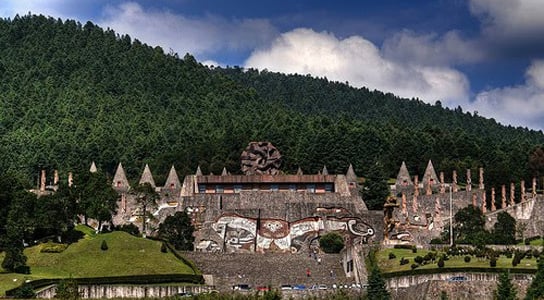
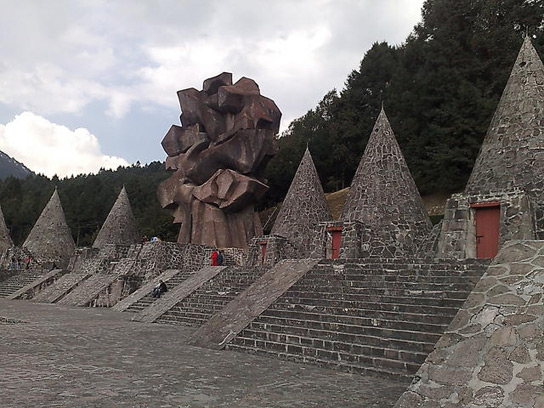
    The Centro Ceremonial Otomi.

    In the 15th century, the population of the city-state Xaltocan, part of the Otomí, vanished and was replaced by the growing Aztec culture. The fate of the Otomí in the region is known only through conflicting historical accounts and archaeological evidence. A new genetic study has recorded the comings and goings of the Otomí and further deepens the mystery.

    The scientists published their findings in the American Journal of Physical Anthropology. In the 15th century, Mexico was made up of warring city-states with different cultural identities. In 1428, several of these city-states joined together to form the Triple Alliance, which eventually became the Aztec Empire. Xaltocan was located in central Mexico and was among the cities assimilated, but the exact details of what happened are unknown.
    centro-cer-otomi

    Documents hint that the city was abandoned by the Otomí in 1395 following a military clash and was repopulated by the Aztecs in 1435. Archaeological evidence indicates that the Otomí remained in the area after it was abandoned and stayed there until the Aztec takeover.

    Jaima Mata-Míguez, an anthropologist at the University of Texas at Austin, decided to track the pattern of the overthrow using genetic sampling. The scientists sampled mitochondrial DNA from 25 bodies recovered outside excavated Xaltocan houses. The remains had been dated from 1240 to 1521, and could act as markers of the population before and after the occupation. The DNA in the pre-conquest samples didn’t match the post-conquest ones, indicating that a new biological influence came with the cultural overthrow.

    The sample size is small and might not be entirely representative of the historical conquest. There are three likely scenarios that fit the genetic data. One, the Aztecs might have entirely replaced the Otomí at Xaltocan, though the researchers consider this unlikely. Second, there may have been a cultural cascade after the elite Otomí fled. New members of the original community might have moved into the space and there could have been an influx of migrants.

    Finally, there could have been a switch in how households were inherited. Mitochondrial DNA is passed down through mothers, so it can record a change in the female aspect of families, but lacks continuity among the male members. It’s possible that there was a maternally-inheriting community before the conquest and it became paternally-inhering afterward.

    The results show that the Otomí inhabitants weren’t maternally related to the Aztec-era inhabitants, but it’s not possible to say which of the hypotheses is true.

    Reference: “The genetic impact of aztec imperialism: Ancient mitochondrial DNA evidence from Xaltocan, Mexico” by Jaime Mata-Míguez, Lisa Overholtzer, Enrique Rodríguez-Alegría, Brian M. Kemp and Deborah A. Bolnick, 17 October 2012, American Journal of Physical Anthropology.
    DOI: 10.1002/ajpa.22152

    Never miss a breakthrough: Join the SciTechDaily newsletter.
    Follow us on Google and Google News.

    Anthropology Aztec Genetics
    Share. Facebook Twitter Pinterest LinkedIn Email Reddit

    Related Articles

    DNA Analysis of Victims of 6,200-Year-Old Massacre Reveals Oldest Documented Site of Indiscriminate Mass Killing

    Indiscriminate Killing Revealed in Genetic Analysis of Ancient Massacre

    On the Origin of Our Species: Untangling Ancestry in the Evolution of Homo sapiens

    Using 23andMe African Ancestry Data to Reexamine the History of Slavery

    DNA Increases Our Understanding of Stone Age Cultures and Battle Axe Cultural Influences

    DNA of Bones Found in Cave Reveals Major Cultural Transition in Europe Took Place Earlier Than Thought

    Scientists Reveal the Complex Story Behind the Beaker Phenomenon

    Geographically Close Neighbors Have Been Genetically Isolated for Thousands of Years

    Examining the Genes of Stone Age Farmers

    Leave A Reply Cancel Reply

    • Facebook
    • Twitter
    • Pinterest
    • YouTube

    Don't Miss a Discovery

    Subscribe for the Latest in Science & Tech!

    Trending News

    Scientists Built a Programmable Chip That Can Slow Light on Command

    The Backyard “Silly Sprinkler” That Cracked One of Physics’ Biggest Puzzles

    This Common Sleep Habit Could Be Making You Gain Weight

    Mathematician Offers New Solution to a Fundamental Cosmic Paradox

    Scientists Turn Plastic Waste Into Clean Hydrogen Fuel

    Long COVID Brain Scans Reveal Damage to Dopamine Neurons

    Scientists Warn a Silent Oxygen Crisis Is Spreading Through Earth’s Waters

    James Webb Telescope Discovers Hidden Giant Planet in Famous Star System

    Follow SciTechDaily
    • Facebook
    • Twitter
    • YouTube
    • Pinterest
    • Newsletter
    • RSS
    SciTech News
    • Biology News
    • Chemistry News
    • Earth News
    • Health News
    • Physics News
    • Science News
    • Space News
    • Technology News
    Recent Posts
    • Plant Compounds in Berries, Tea, and Cocoa May Support Healthy Brain Aging
    • Scientists Find a Way To Keep Cancer-Fighting T Cells From Burning Out
    • Scientists Turn an Old Antibiotic Back Into a Superbug Killer
    • Scientists Discover Two Competing Memories in Matter
    • Quantum Heat Waves Spotted at Room Temperature for the First Time
    Copyright © 1998 - 2026 SciTechDaily. All Rights Reserved.
    • Science News
    • About
    • Contact
    • Editorial Board
    • Privacy Policy
    • Terms of Use

    Type above and press Enter to search. Press Esc to cancel.