
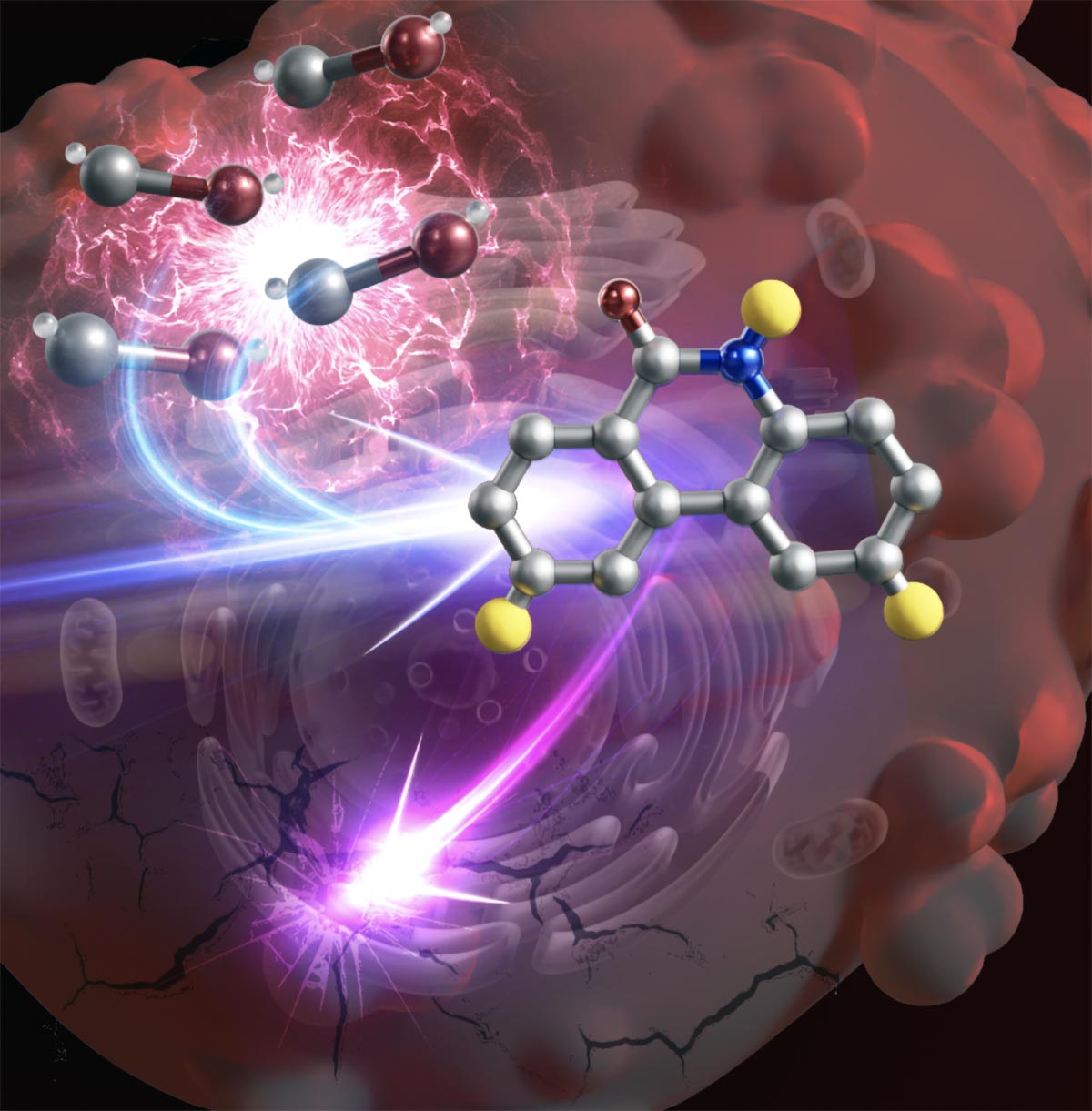
Scientists have developed an experimental strategy that exploits a chemical byproduct of cancer cells to produce anticancer drugs directly inside them.
Scientists in Japan have developed an experimental method that uses a chemical produced by cancer cells to manufacture anticancer drugs directly inside them. The approach relies on carbon monoxide, a toxic gas that certain tumors produce in unusually high amounts, to activate a chemical reaction designed to destroy cancer cells while limiting damage to healthy tissue.
In a proof-of-concept study published in Nature Communications, researchers at the RIKEN Pioneering Research Institute (PRI) demonstrated that their system could generate drug compounds selectively in cultured cancer cells. The findings suggest a possible alternative to conventional chemotherapy, although the technique has not yet been tested in animals or humans.
Turning a Cancer Byproduct Into a Treatment
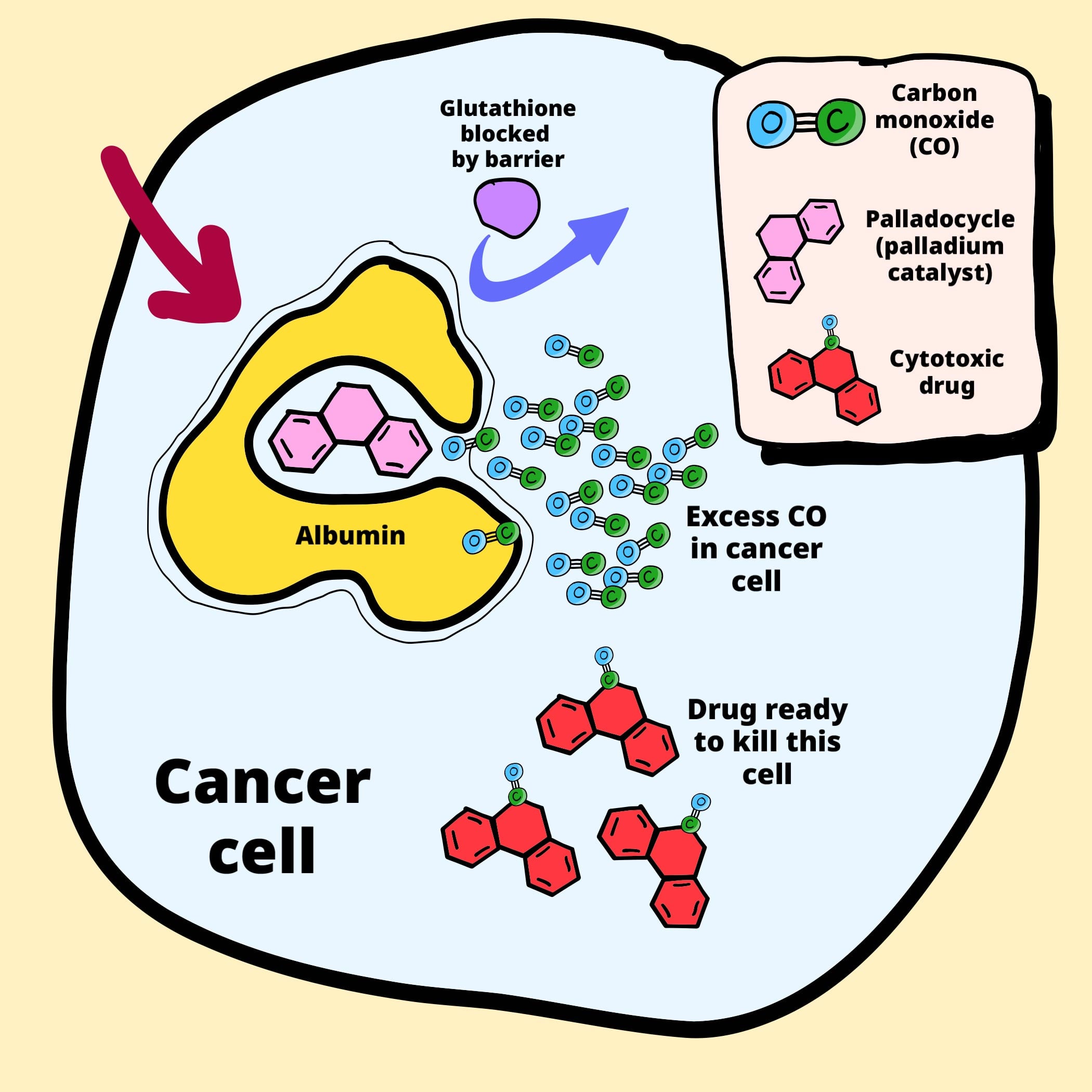
Carbon monoxide is best known as a poisonous gas released during incomplete combustion, including in vehicle exhaust. However, the human body also produces small amounts of it naturally. Research has shown that many types of cancer cells generate elevated levels, creating a chemical difference that could potentially be exploited for targeted treatment.
A team led by Katsunori Tanaka investigated whether this excess carbon monoxide could serve as a raw material for producing anticancer compounds inside tumors. Their strategy uses palladacycles, organometallic compounds containing palladium, to convert carbon monoxide into a molecule called phenanthridinone. Certain phenanthridinone derivatives are toxic to cells and have been used in anticancer drugs.
Protecting a Delicate Chemical Reaction
The researchers faced a significant obstacle: palladium catalysts are rapidly deactivated by substances naturally present inside cells, including glutathione. Without protection, the catalyst would lose its ability to carry out the drug-producing reaction.
To solve this problem, the team enclosed a palladacycle within albumin, an abundant protein found in blood. Albumin acts as a protective carrier, shielding the palladium catalyst from molecules that would otherwise disable it. The resulting albumin complex can circulate through the bloodstream and remain chemically active after entering cells.
After screening several palladacycles to identify the most effective candidate, the researchers tested the protected complex against human liver, cervical, breast, and lung cancer cell lines, along with a noncancerous cell line.
Cancer Cells Produce the Drug Compounds
Following 48 hours of incubation, the researchers detected the intended phenanthridinone product in all four cancer cell lines but not in the noncancerous cells. The results indicated that the protected catalyst remained functional and that the reaction depended on chemical conditions associated with the cancer cells.
The team then refined the system to allow the newly synthesized compound to separate from its carrier and move freely within the cell. Further modifications enabled the production of a highly toxic phenanthridinone derivative used in anticancer drugs. When tested in liver cancer cells, the modified system generated the toxic compound internally, causing harmful effects in those cells.
Another concern was whether carbon monoxide already present in blood might activate drug production before the complex reached a tumor. Blood tests showed no detectable formation of the toxic compound. The researchers suggested that carbon monoxide bound to hemoglobin, the oxygen-carrying protein in red blood cells, was unavailable to participate in the reaction.
The Next Step Toward Targeted Cancer Therapy
Rather than administering a finished anticancer drug, Tanaka’s approach aims to deliver relatively harmless chemical components that become toxic only after encountering suitable conditions inside diseased cells.
“This work represents an important advance in therapeutic in vivo synthetic chemistry,” says Tanaka. “In our therapeutic strategy, molecules naturally present or generated within the body—including disease-associated metabolites—are used as endogenous chemical feedstocks to synthesize therapeutic molecules directly at the site of disease.”
The researchers’ next step is to test the method in animal models, where they can investigate whether the catalyst reaches tumors, produces sufficient amounts of the drug, and avoids damaging healthy tissues.
Reference: “Harnessing endogenous carbon monoxide for cancer-selective drug synthesis” by Masayuki Kawai, Tsung-Che Chang, Ambara R. Pradipta and Katsunori Tanaka, 17 September 2026, Nature Communications.
DOI: 10.1038/s41467-026-77616-8
Never miss a breakthrough: Join the SciTechDaily newsletter.
Follow us on Google and Google News.