
Close Menu
    Facebook X (Twitter) Instagram
    SciTechDaily
    • Biology
    • Chemistry
    • Earth
    • Health
    • Physics
    • Science
    • Space
    • Technology
    Facebook X (Twitter) Pinterest YouTube RSS
    SciTechDaily
    Home»Space»Earth’s Magnetic Shield Is Rippling Unevenly – Scientists Have Uncovered the Cause
    Space

    Earth’s Magnetic Shield Is Rippling Unevenly – Scientists Have Uncovered the Cause

    By University of OuluOctober 25, 2026No Comments3 Mins Read
    Facebook Twitter Pinterest Telegram LinkedIn WhatsApp Email Reddit
    Share
    Facebook Twitter LinkedIn Pinterest Telegram Email Reddit
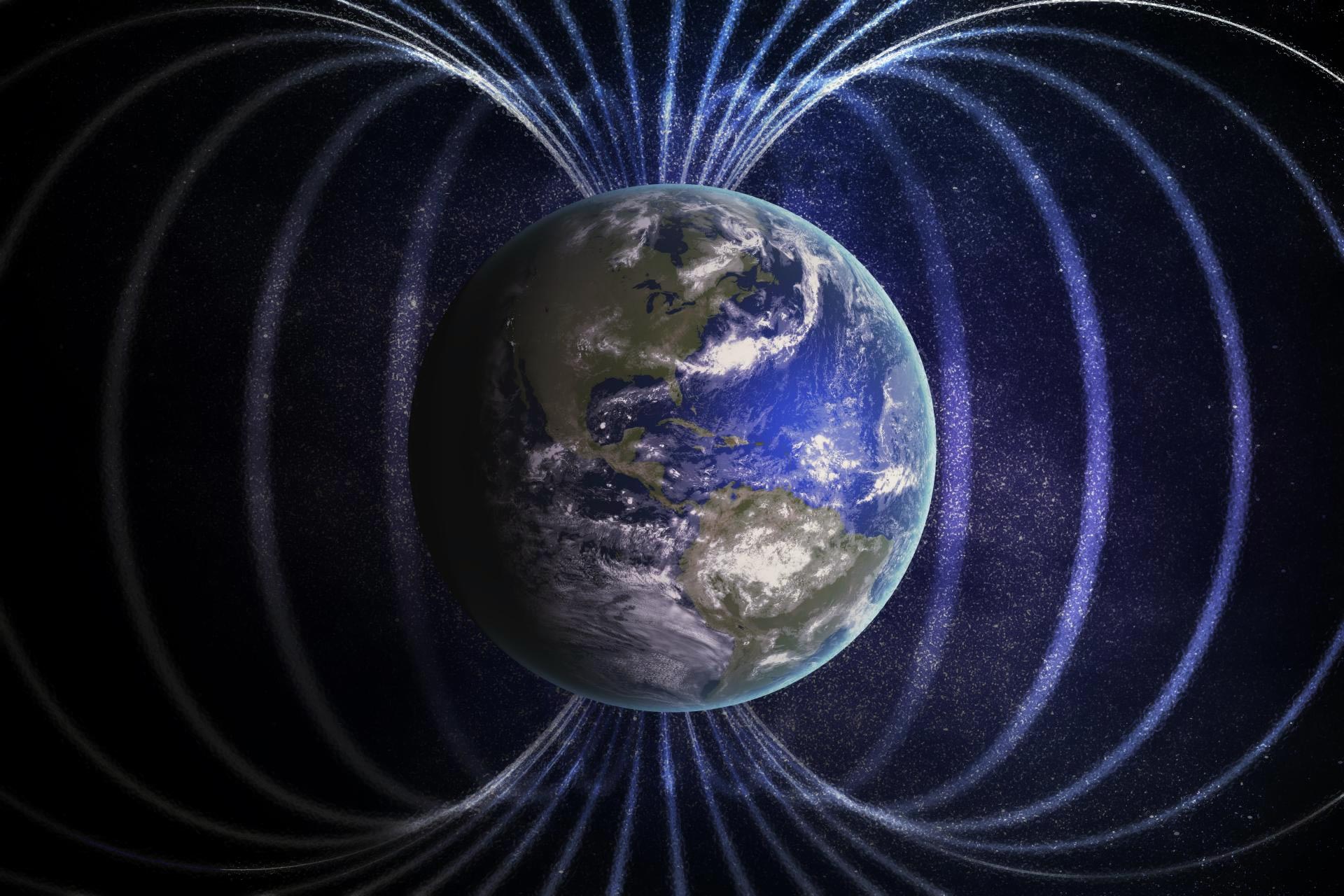
    Earth's Magnetic Field Illustration
    New computer simulations reveal an unexpected interaction between the solar wind and Earth’s magnetic shield. Credit: Stock

    The solar wind can weaken the very waves it creates along Earth’s magnetic shield, simulations show, helping explain why some regions are more active than others.

    Earth’s magnetic shield protects the planet, yet particles and energy from the Sun can still find their way through. Along its outer edge, a constant stream of solar material brushes past, stirring up waves where the two environments meet. A new study led by researchers at the University of Oulu explains why those waves grow stronger in some places than in others, revealing how uneven this boundary can be.

    The protective region created by Earth’s magnetic field is called the magnetosphere, while the stream arriving from the Sun is known as the solar wind. Their interactions help drive space weather. On Earth, the effects can appear as auroras, while strong solar storms can disrupt satellites, positioning systems, radio communications, and power grids.
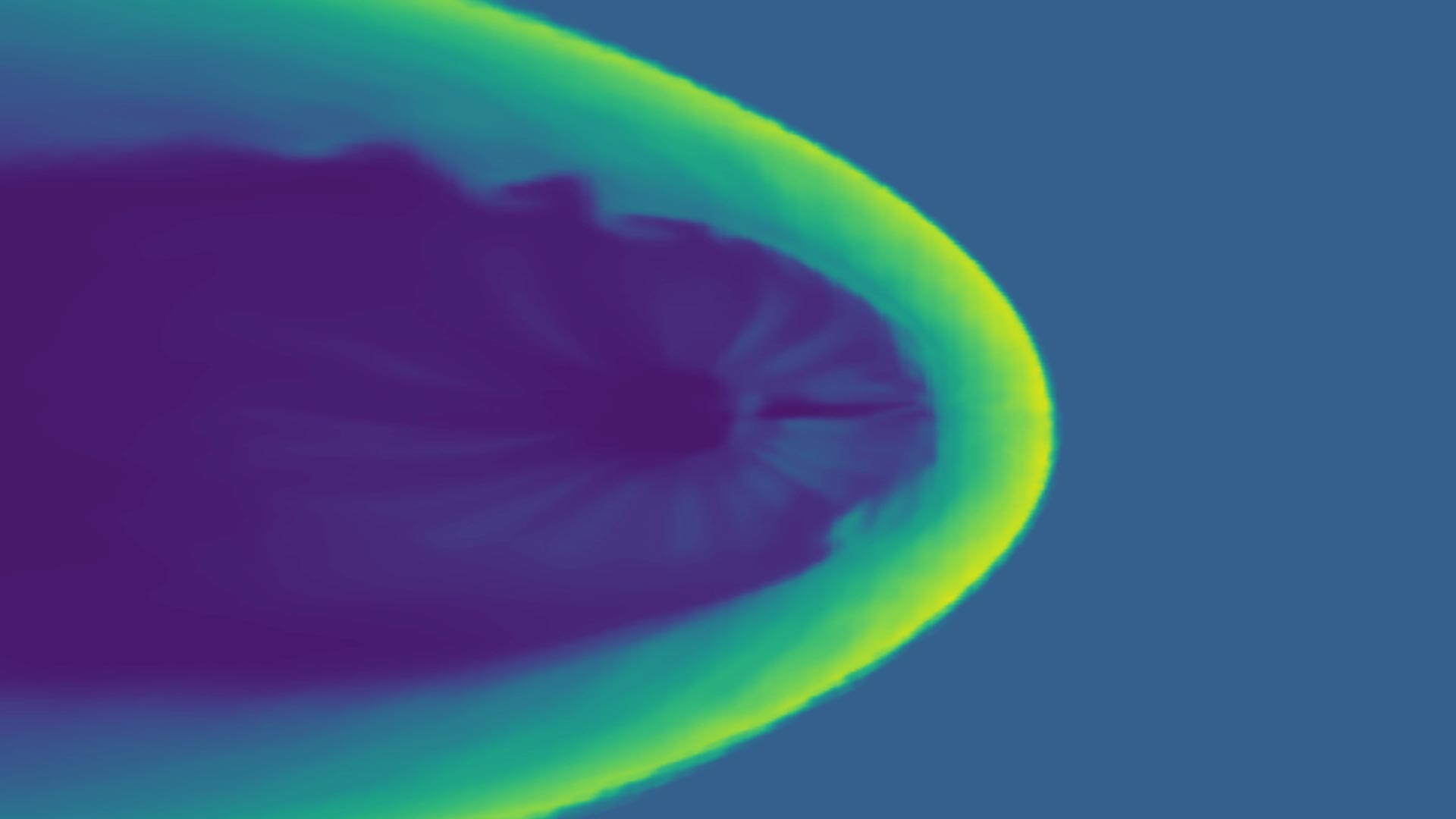
    Kelvin–Helmholtz Waves in Earth’s Magnetosphere
    In this simulation of the Earth’s magnetic field, the solar wind is coming from the right-hand side of the image and Kelvin–Helmholtz waves are visible at the top. The color indicates the density of the plasma. Credit: Lauri Holappa / University of Oulu

    Waves that satellites rarely see

    The boundary waves are known as Kelvin–Helmholtz waves. Similar patterns sometimes appear in clouds, and related phenomena occur in the Sun’s atmosphere, along the edges of other planets’ magnetic fields, and in interstellar space. Around Earth, however, satellites rarely pass through the most active regions.

    Those limited encounters have made it difficult to establish how the waves behave under different solar wind conditions, so the researchers used computer models of the entire magnetosphere to examine their formation.

    Kelvin–Helmholtz Waves in River Currents
    Kelvin–Helmholtz waves can also be seen in a river’s current. A counter-current meets the main current, causing eddies and Kelvin–Helmholtz waves. A similar encounter between opposing currents occurs at the edge of the magnetosphere. Credit: Katariina Nykyri

    “This finding grew out of a long process of thinking through what I was seeing. In 2020, when I was visiting NASA as a postdoctoral researcher, I noticed unusual simulation images of the magnetosphere. I later realized that they showed Kelvin–Helmholtz waves at the edge of the magnetosphere, and that the different behavior of the waves on different sides was part of the same phenomenon,” says Academy Research Fellow Lauri Holappa from the University of Oulu.

    Magnetic fields weaken waves unevenly

    The models traced the uneven wave activity to the way the solar wind’s magnetic field meets Earth’s field. Rather than wrapping evenly around the magnetosphere, the solar wind’s field drapes asymmetrically around it. This draped field can dampen the waves, but its damping effect varies from place to place, allowing stronger wave activity in some regions than in others.

    “Asymmetries in the wave motion at the edge of the magnetic field have been observed before, but now we were able to show how they arise,” Holappa says.

    The strongest activity appeared in the winter hemisphere, which faces away from the Sun. Within that hemisphere, the direction of the solar wind’s magnetic field determined whether the waves were concentrated on the dawn side or the dusk side.

    Reference: “IMF By-Controlled Dawn–Dusk and Hemispheric Asymmetries of Kelvin–Helmholtz Waves and Reconnection Geometry Under Negative Dipole Tilt” by L. Holappa, K. Nykyri, J. Laitinen and B. Burkholder, 16 September 2026, Geophysical Research Letters.
    DOI: 10.1029/2026GL124835

    Never miss a breakthrough: Join the SciTechDaily newsletter.
    Follow us on Google and Google News.

    Geophysics Magnetosphere Plasma Physics Solar Wind Space Weather
    Share. Facebook Twitter Pinterest LinkedIn Email Reddit

    Related Articles

    A Massive Geomagnetic Superstorm Crushed Earth’s Plasma Shield

    Shocking Discovery About Earth’s Magnetosphere Challenges Decades of Theory

    The Solar Wind Is Hiding Strange Particles That Could Rewrite Space Weather

    “Alien Aurora” – Scientists Spot Never-Before-Seen Plasma Waves in Jupiter’s Polar Lights

    Jupiter’s Defenses Collapse Under Massive Solar Storm, Scientists Shocked by 500°C Heat Surge

    NASA’s TRACERS Mission Hits Major Milestone With Twin Spacecraft Completion

    Switchbacks in Space: Scientists Uncover How Solar Wind Gets Energy

    Modeling Solar Winds: Simulations Reproduce Complex Fluctuations in Soft X-Ray Signal Detected by Satellites

    Scientists Discover New Physics Missing From Existing Models of Magnetic Reconnection

    Leave A Reply Cancel Reply

    • Facebook
    • Twitter
    • Pinterest
    • YouTube

    Don't Miss a Discovery

    Subscribe for the Latest in Science & Tech!

    Trending News

    Scientists Discover a Hidden Oxygen Source Deep Inside Earth That Could Rewrite Our Planet’s History

    What if Dark Energy Was Once Negative? Scientists Uncover a Surprising New Possibility

    Scientists Discover a $10 Flood Protection Trick That Works Better Than Sandbags

    Cannabis May Be Sabotaging Your Sleep Without You Even Knowing It, Study Finds

    Scientists Discover “D-Rex,” a Giant Fungus Unlike Anything Seen Before

    Scientists Discover That One Common Protein Source Makes Gut Inflammation Much Worse

    A Massive Volcanic Eruption Devastated Japan 7,300 Years Ago – but Survivors Found a Way To Thrive

    SpaceX Rocket Creates a Spectacular Glowing “Jellyfish” in the Sky

    Follow SciTechDaily
    • Facebook
    • Twitter
    • YouTube
    • Pinterest
    • Newsletter
    • RSS
    SciTech News
    • Biology News
    • Chemistry News
    • Earth News
    • Health News
    • Physics News
    • Science News
    • Space News
    • Technology News
    Recent Posts
    • Earth’s Magnetic Shield Is Rippling Unevenly – Scientists Have Uncovered the Cause
    • Earth’s Ice Ages May Have Started With a Planet-Wide Ocean Domino Effect
    • Antarctica’s “Doomsday Glacier” Could Raise Sea Levels Twice As Much as Scientists Feared
    • Mysterious Brain Signal Linked to Several Schizophrenia Symptoms
    • Scientists Discover That Ovaries May Be Doing Something Unexpected Decades After Menopause
    Copyright © 1998 - 2026 SciTechDaily. All Rights Reserved.
    • Science News
    • About
    • Contact
    • Editorial Board
    • Privacy Policy
    • Terms of Use

    Type above and press Enter to search. Press Esc to cancel.