
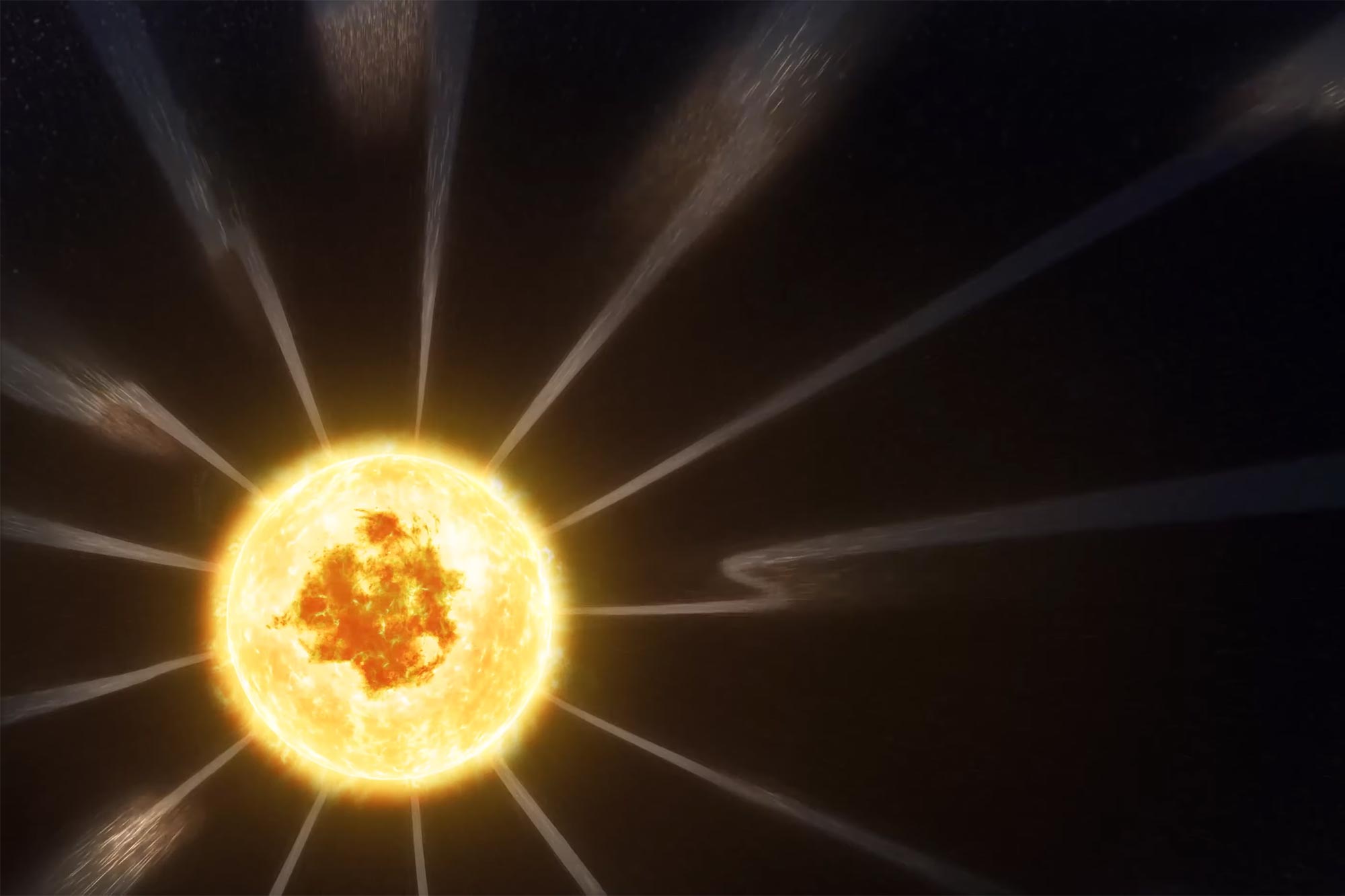
Researchers using NASA and ESA spacecraft have uncovered how magnetic switchbacks near the Sun energize the solar wind, impacting Earth and potentially influencing the habitability of exoplanets.
This breakthrough helps answer long-standing questions about solar wind dynamics and has broader implications for understanding stellar phenomena across the galaxy.
Solar Wind Mysteries
Since the 1960s, astronomers have puzzled over how the Sun’s supersonic “solar wind” — a stream of energetic particles flowing out into the solar system — continues to be energized after leaving the Sun. Now, a fortunate alignment of two spacecraft, one from NASA and the other a joint ESA (European Space Agency)/NASA mission, may have uncovered the answer. This discovery offers a crucial insight that could help scientists improve forecasts of solar activity affecting the space between the Sun and Earth.
Discovering the Power of Magnetic Switchbacks
In a paper published recently in the journal Science, researchers present compelling evidence that the fastest solar winds are powered by magnetic “switchbacks,” large kinks in the Sun’s magnetic field.
“Our study addresses a huge open question about how the solar wind is energized and helps us understand how the Sun affects its environment and, ultimately, the Earth,” said Yeimy Rivera, co-leader of the study and a postdoctoral fellow at the Smithsonian Astrophysical Observatory, part of Center for Astrophysics | Harvard & Smithsonian. “If this process happens in our local star, it’s highly likely that this powers winds from other stars across the Milky Way galaxy and beyond and could have implications for the habitability of exoplanets.”
The Significance of Solar Wind Energy Transfer
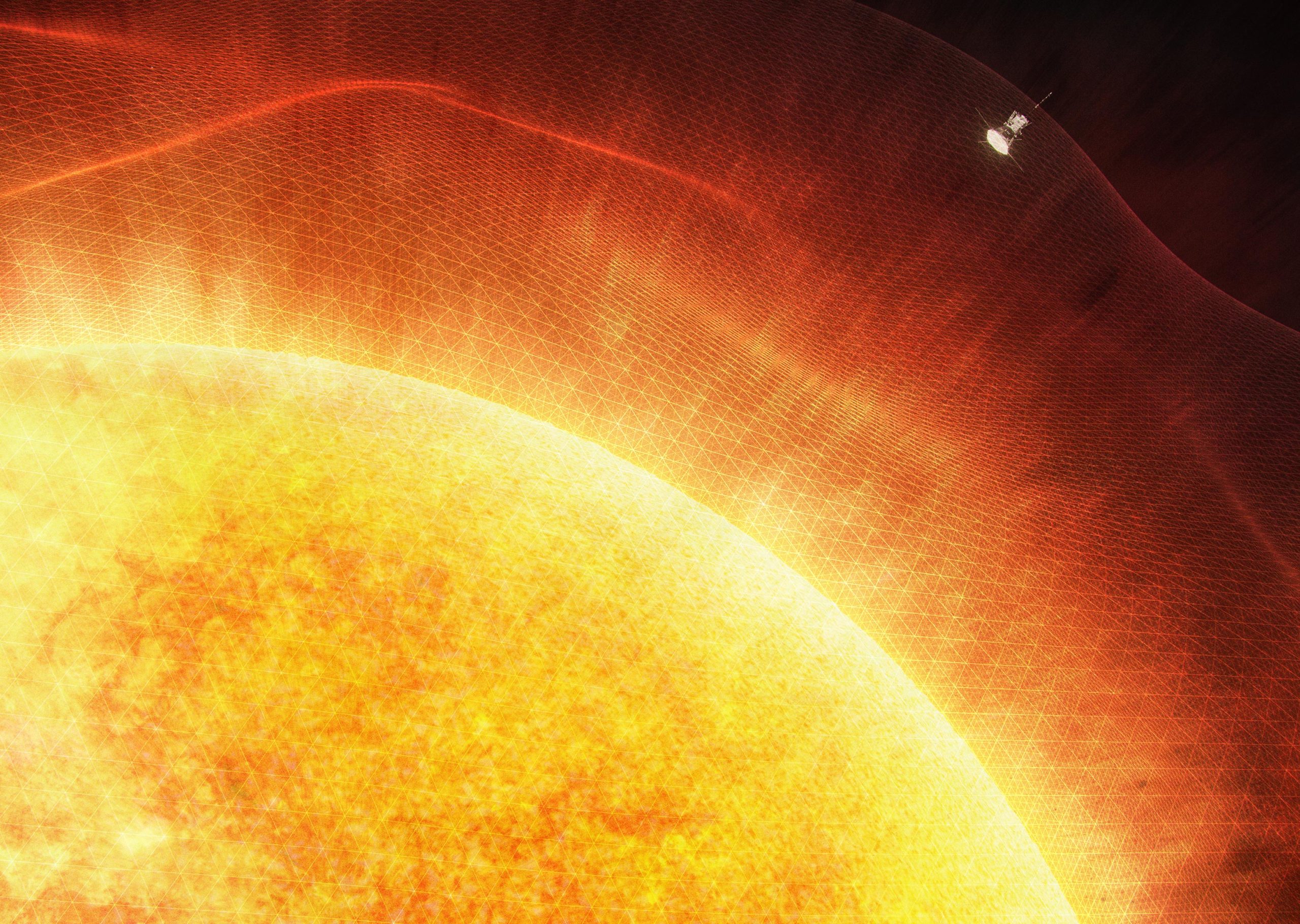
Previously, NASA’s Parker Solar Probe found that these switchbacks were common throughout the solar wind. Parker, which became the first craft to enter the Sun’s magnetic atmosphere in 2021, allowed scientists to determine that switchbacks become more distinct and more powerful close to the Sun. Up to now, however, scientists lacked experimental evidence that this interesting phenomenon actually deposits enough energy to be important in the solar wind.
“About three years ago, I was giving a talk about how fascinating these waves are,” said co-author Mike Stevens, astrophysicist at the Center for Astrophysics. “At the end, an astronomy professor stood up and said, ‘that’s neat, but do they actually matter?’”
Crucial Discoveries by Dual Spacecraft
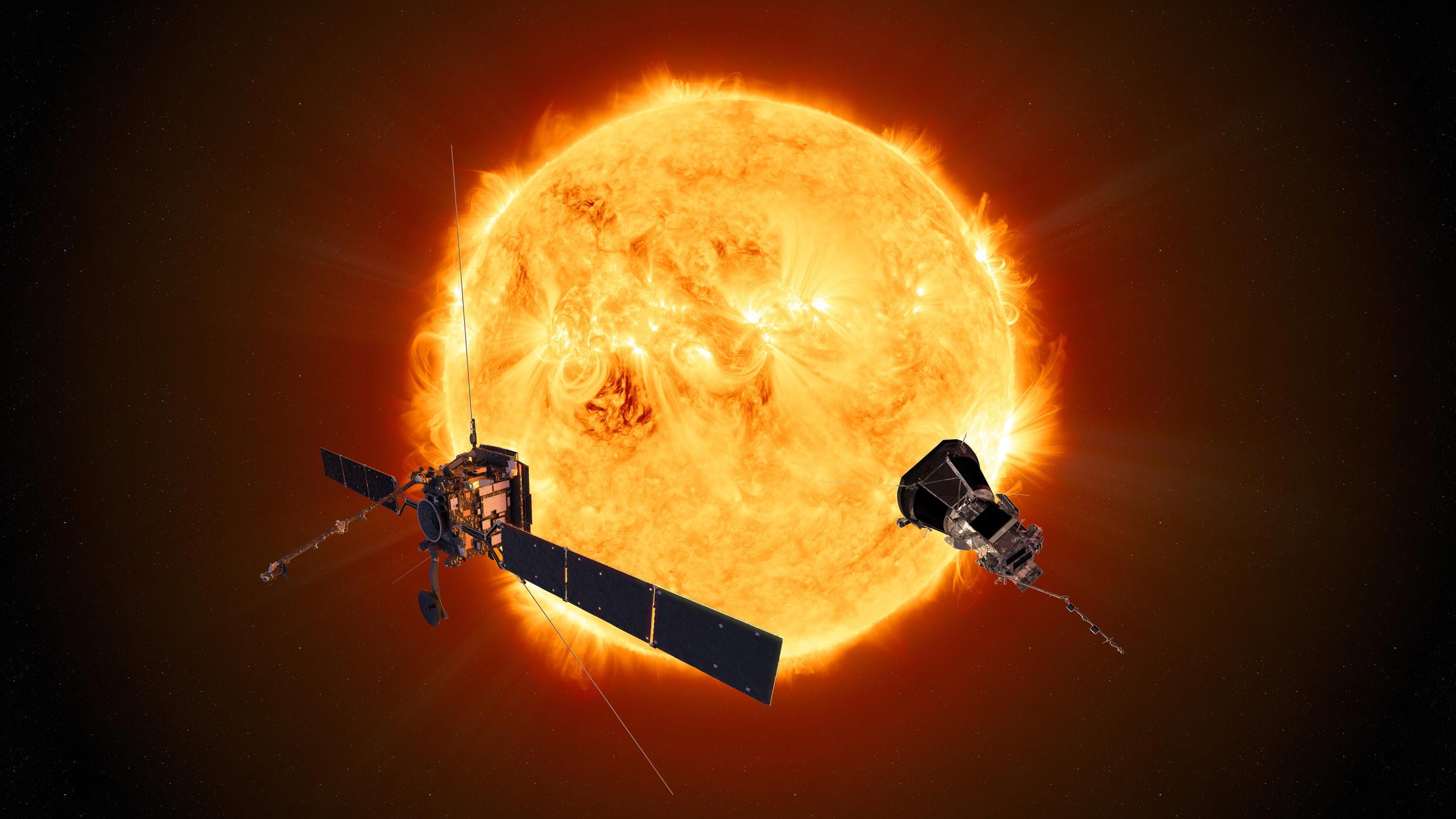
To answer this, the team of scientists had to use two different spacecraft. Parker is built to fly through the Sun’s atmosphere, or “corona.” ESA’s and NASA’s Solar Orbiter mission is also on an orbit that takes it relatively close to the Sun, and it measures solar wind at larger distances.
The discovery was made possible because of a coincidental alignment in February 2022 that allowed both Parker Solar Probe and Solar Orbiter to measure the same solar wind stream within two days of each other. Solar Orbiter was almost halfway to the Sun while Parker was skirting the edge of the Sun’s magnetic atmosphere.
“We didn’t initially realize that Parker and Solar Orbiter were measuring the same thing at all. Parker saw this slower plasma near the Sun that was full of switchback waves, and then Solar Orbiter recorded a fast stream which had received heat and with very little wave activity,” said Samuel Badman, astrophysicist at the Center for Astrophysics and the other co-lead of the study. “When we connected the two, that was a real eureka moment.”

Alfvén Waves and Solar Wind Interaction
Scientists have long known that energy is moved throughout the Sun‘s corona and the solar wind, at least in part, through what are known as “Alfvén waves.” These waves transport energy through a plasma, the superheated state of matter that makes up the solar wind.
However, how much the Alfvén waves evolve and interact with the solar wind between the Sun and Earth couldn’t be measured — until these two missions were sent closer to the Sun than ever before, at the same time. Now, scientists can directly determine how much energy is stored in the magnetic and velocity fluctuations of these waves near the corona, and how much less energy is carried by the waves farther from the Sun.
The new research shows that the Alfvén waves in the form of switchbacks provide enough energy to account for the heating and acceleration documented in the faster stream of the solar wind as it flows away from the Sun.
“It took over half a century to confirm that Alfvenic wave acceleration and heating are important processes, and they happen in approximately the way we think they do,” said John Belcher, emeritus professor from the Massachusetts Institute of Technology who co-discovered Alfvén waves in the solar wind but was not involved in this study.
Implications of New Solar Wind Research
In addition to helping scientists better forecast solar activity and space weather, such information helps us understand mysteries of the universe elsewhere and how Sun-like stars and stellar winds operate everywhere.
“This discovery is one of the key puzzle pieces to answer the 50-year-old question of how the solar wind is accelerated and heated in the innermost portions of the heliosphere, bringing us closer to closure to one of the main science objectives of the Parker Solar Probe mission,” said Adam Szabo, Parker Solar Probe mission science lead at NASA.
Never miss a breakthrough: Join the SciTechDaily newsletter.
Follow us on Google and Google News.