
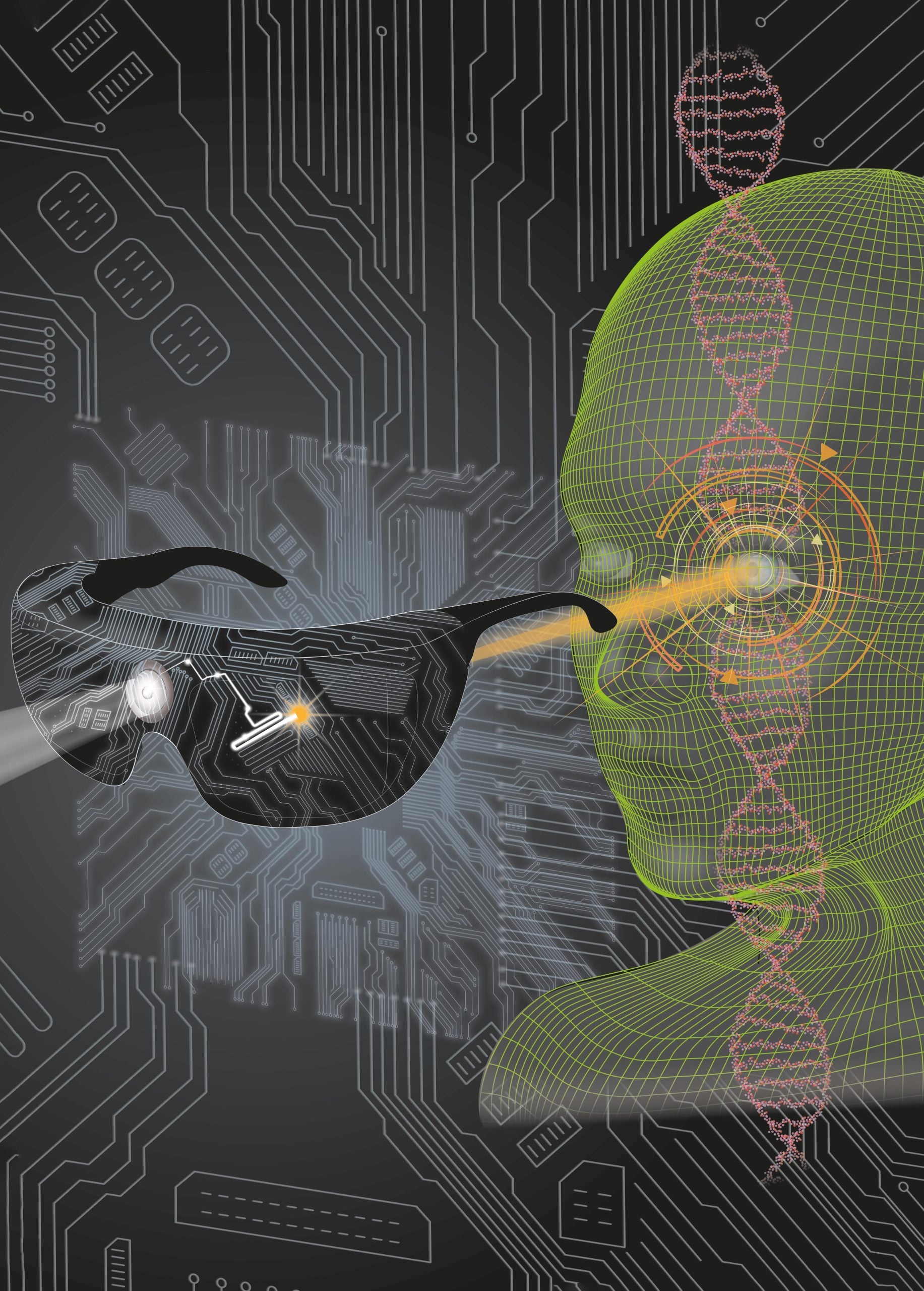
Scientists have demonstrated a promising new approach to restoring limited vision in people with advanced inherited blindness.
An experimental treatment combining gene therapy with specialized goggles has helped some people with advanced blindness detect objects and respond to visual cues. Instead of attempting to repair damaged light-sensing cells, the approach gives surviving retinal cells a new ability to respond to light, allowing visual information to reach the brain.
In an international clinical study involving ten people with advanced retinitis pigmentosa, seven became more sensitive to light, including six who achieved clinically meaningful improvements. Four of the eight participants who completed visual behavior testing also improved their ability to detect or locate objects. Although the treatment did not restore normal vision, some patients gained abilities that could help them navigate their surroundings.
Turning Surviving Retinal Cells Into Light Detectors
Retinitis pigmentosa is an inherited eye disease that progressively destroys the function of photoreceptors, the retinal cells responsible for detecting light. Mutations in more than 100 genes can cause the condition, making treatments targeting individual genetic defects difficult to develop for everyone. Optogenetic therapy takes a different approach by using retinal ganglion cells, which can survive even after photoreceptors have stopped functioning.
Each participant received a single injection into their worse-seeing eye containing genetic instructions for ChrimsonR, a protein sensitive to amber light. Special goggles equipped with a camera then converted changes in the surrounding scene into pulses of amber light. These pulses activated the modified retinal cells, enabling them to transmit signals through the visual system.
Improvements in Vision and Brain Activity
Beyond detecting and locating objects, patients demonstrated improvements in tasks such as identifying a doorway or following a line while wearing the goggles. Recordings of brain activity also revealed signals consistent with visual information reaching regions of the brain responsible for vision.
Learning to interpret these unfamiliar visual signals appeared to influence the results. Participants who spent more time training with the goggles tended to perform better in object-detection tests, suggesting that rehabilitation could play a significant role in future optogenetic treatments. However, patients remained unable to read or recognize faces, demonstrating how much visual function remains beyond the therapy’s current capabilities.
Safety Findings and Future Development
Safety was the study’s primary endpoint, and researchers concluded that the treatment was safe within the limits of the trial. Most adverse events affecting the eye were mild or moderate. One severe event occurred immediately after an injection but resolved within minutes following treatment.
The research was led by José-Alain Sahel of the University of Pittsburgh and Botond Roska of the Institute of Molecular and Clinical Ophthalmology Basel (IOB), with contributions from GenSight Biologics (Euronext: SIGHT) and an international team. The same collaboration conducted a 2021 proof-of-concept study demonstrating the approach in a single patient.
Stefan Futterknecht, the study’s second author, who played a major role in analyzing the data, said, “This study represents an important milestone for optogenetic vision restoration. It demonstrates that the effects first observed in a single patient can be reproduced across several patients and provides a foundation for developing more sensitive and effective future therapies.”
Reference: “Optogenetic Therapy for Restoring Aspects of Visual Function” by José-Alain Sahel, Stefan Futterknecht, Isabelle Audo, Joseph N. Martel, Shouyu Ling, Chloé Pagot, Angelo Arleo, Elise Boulanger-Scemama, Antonin Duret, Jean-Baptiste de Saint Aubert, Alexandre Delaux, Simona Degli Esposti, Cécilia Coen, Caroline de Montleau, Dana Aravich, William Smith, Cecile Hayem, Magali Taiel, Marlene Behrmann and Botond Roska, 7 October 2026, New England Journal of Medicine.
DOI: 10.1056/NEJMoa2602215
Funding: GenSight Biologics
Never miss a breakthrough: Join the SciTechDaily newsletter.
Follow us on Google and Google News.