
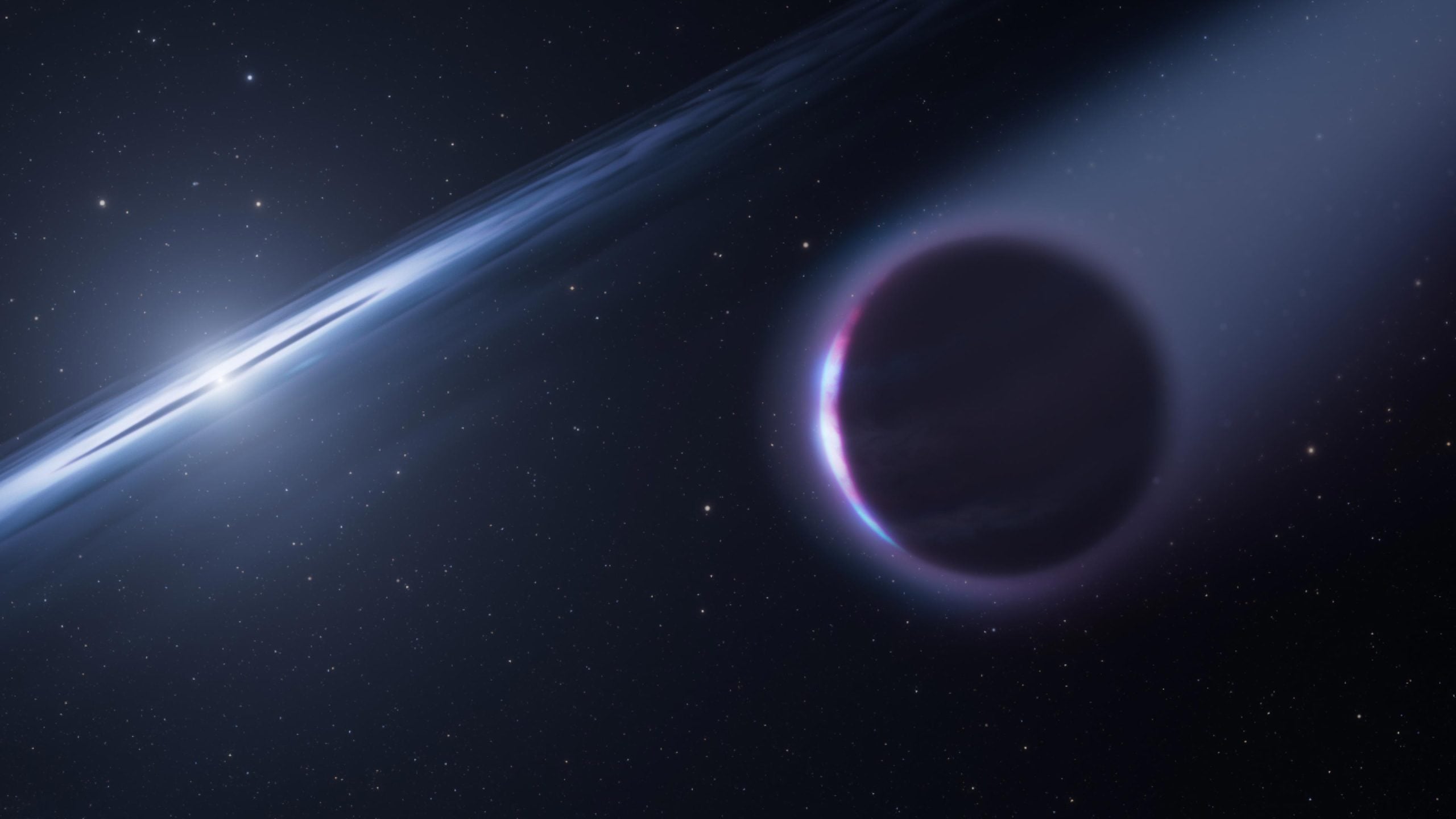
Astronomers revisiting old observations from NASA’s Hubble Space Telescope have uncovered a clue that may solve a decades-old cold case. A study published October 5 in Nature Astronomy reports evidence that the white dwarf HS 0209+0832 could be orbited by a second-generation planet.
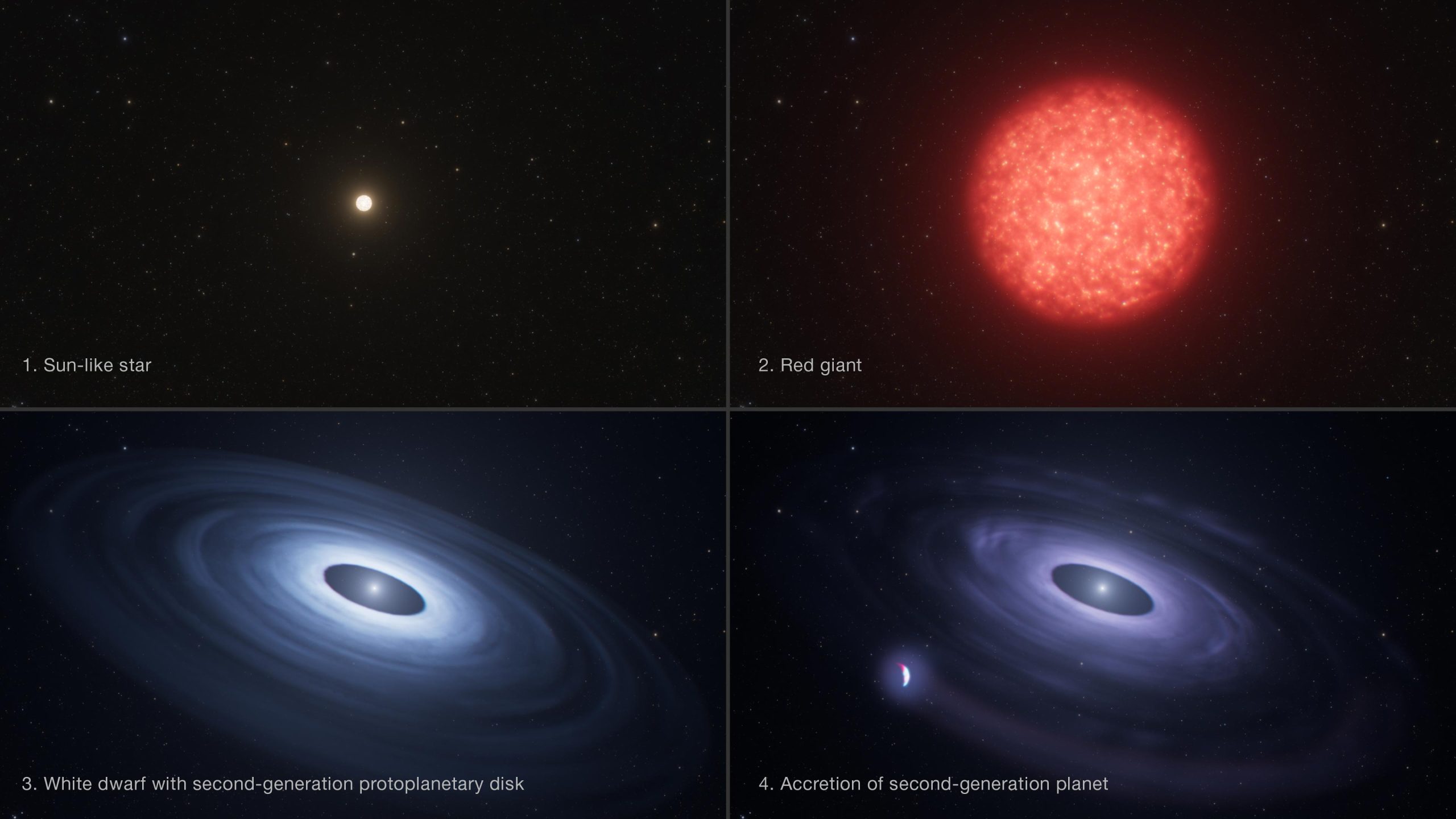
A white dwarf is the leftover core of a low-mass star that has exhausted its nuclear fuel and shed its outer layers of gas and dust into space. A second-generation planet is different from worlds like Earth because it forms later, using material expelled by a dying star.
“Rather than the white dwarf stage being a kind of epilogue to the story of a star and its planets, this research points to the systems we are familiar with only being the first chapter of a potentially much longer tale, with some new characters showing up. That’s a really exciting prospect to pursue,” said Jamie Williams, astronomer and lead author, a doctoral candidate at the University of Warwick in the United Kingdom.
Earth and the other planets in our solar system are considered first-generation planets because they formed from material left behind when the Sun was born.
A Strange Chemical Signature in Old Hubble Data
The breakthrough came from an unusual chemical fingerprint hidden in observations collected more than two decades ago.
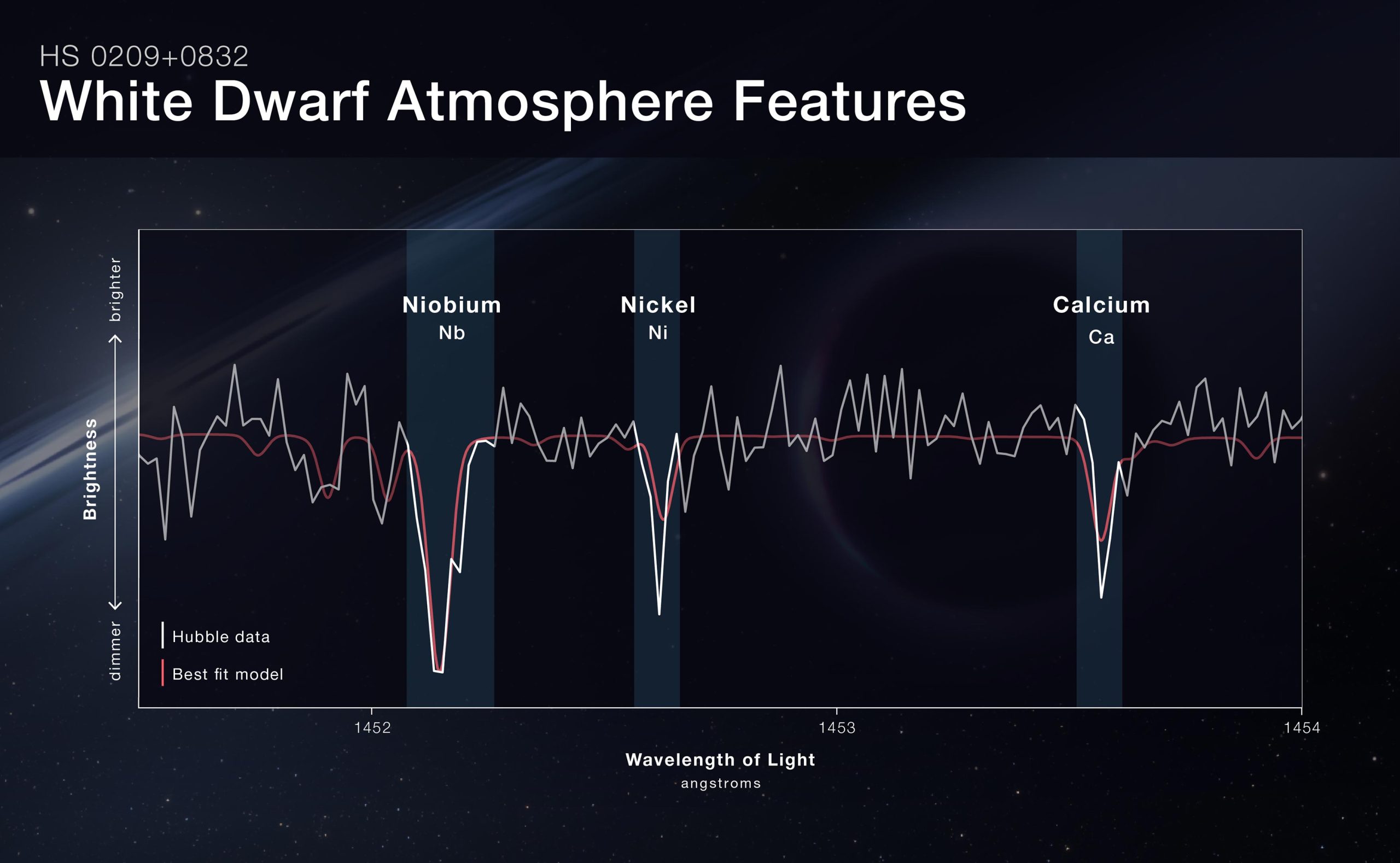
“What Hubble is showing us in this white dwarf system is something we haven’t seen before: a high abundance of the element niobium, the signature of which I was unfamiliar with when I first found it in the archival data,” Williams said.
When Hubble observed HS 0209+0832 in 1999, astronomers found roughly 100 chemical features in the data that they could not identify. Williams later returned to those observations and compared them with an updated chemical database. Many of the unexplained features matched niobium.
Niobium also exists in our solar system and is used on Earth in products including jewelry and medical imaging devices. However, Williams said the unusually large amount detected around HS 0209+0832 suggests a very different origin. The evidence points to material released during the death of the star rather than material that existed when the star originally formed.
“Niobium and other elements heavier than iron are astronomically special because, unlike many common elements, they are not formed in the cores of stars by thermonuclear fusion,” said Nicholas Stone, a theoretical astrophysicist at the University of Wisconsin – Madison and member of the research team. “Instead, these heavy elements can only be synthesized in the exotic conditions that briefly emerge inside dying stars. The presence of niobium is a signpost of these ‘death’ throes, and the expulsion of the dying star’s innards into space.”
A Planet Born From a Dying Star’s Remains
The researchers propose that after the star expelled this chemically enriched material, part of it eventually gathered together and formed a gas giant planet. Most of the remaining material has since dispersed into space, while the suspected planet may still be present.
“When Jamie asked me about niobium in relation to this study, I was truly gobsmacked, as that element had not been reported in any other white dwarf analyzed to date. Once we realized it was there, everything fell into place,” said astronomer and study co-author Boris Gaensicke, also at the University of Warwick.
The team found additional support in observations from NASA’s retired FUSE (Far Ultraviolet Spectroscopic Explorer) mission. Those data also revealed strong niobium signatures in the HS 0209+0832 system.
NASA’s TESS (Transiting Exoplanet Survey Satellite) provided another clue. TESS watched the white dwarf for four months and detected recurring changes in brightness. Those variations suggest that a planet may be orbiting only about 3.7 million miles (6 million kilometers) from the star, far closer than Mercury is to the Sun.
A Jupiter-Sized World Losing Its Atmosphere
The candidate planet is thought to be a gas giant roughly the size of Jupiter, but it may be losing its atmosphere at a rapid rate.
Because the white dwarf formed relatively recently, it remains extremely hot. Researchers think its intense energy could be stripping material from the nearby planet. That escaping gas may create a comet-like tail and eventually form a disk around the white dwarf.
Some of this material could then fall onto the surface of the star. That process may explain why Hubble detected niobium when examining the white dwarf.
Even with this ongoing atmospheric loss, Williams said the possible planet may survive for a very long time.
“If the second-generation planet is there, I think it is likely to survive. Eventually the white dwarf will cool and then maintain a consistent temperature, with the planet in its stable habitable zone for millions of years,” Williams said.
Searching for More Second-Generation Planets
Many questions remain about systems like HS 0209+0832. Astronomers still need to determine how second-generation planets form, whether they are common or exceptionally rare, and how they change while orbiting a “dead” star.
Williams plans to continue using Hubble over the next several years to investigate these questions. The goal is to gather enough observations to build a clearer picture of this potentially new population of planetary bodies.
“I think this research is an important example of the fact that scientific discovery is not a straight path,” Gaensicke said. “It often needs that magical moment when people discuss big questions on their minds and realize that together they can find unexpected answers.”
Reference: “Discovery of a second-generation planet candidate accreting onto a white dwarf” by Jamie T. Williams, Boris T. Gänsicke, Nicholas C. Stone, Detlev Koester, Benjamin D. R. Davies, Christopher Tong, David J. Wilson, Snehalata Sahu, Andrew Swan, Thomas G. Beatty, Sergio H. Ramírez, Tim Cunningham and Knox S. Long, 5 October 2026, Nature Astronomy.
DOI: 10.1038/s41550-026-02983-7
Never miss a breakthrough: Join the SciTechDaily newsletter.
Follow us on Google and Google News.