
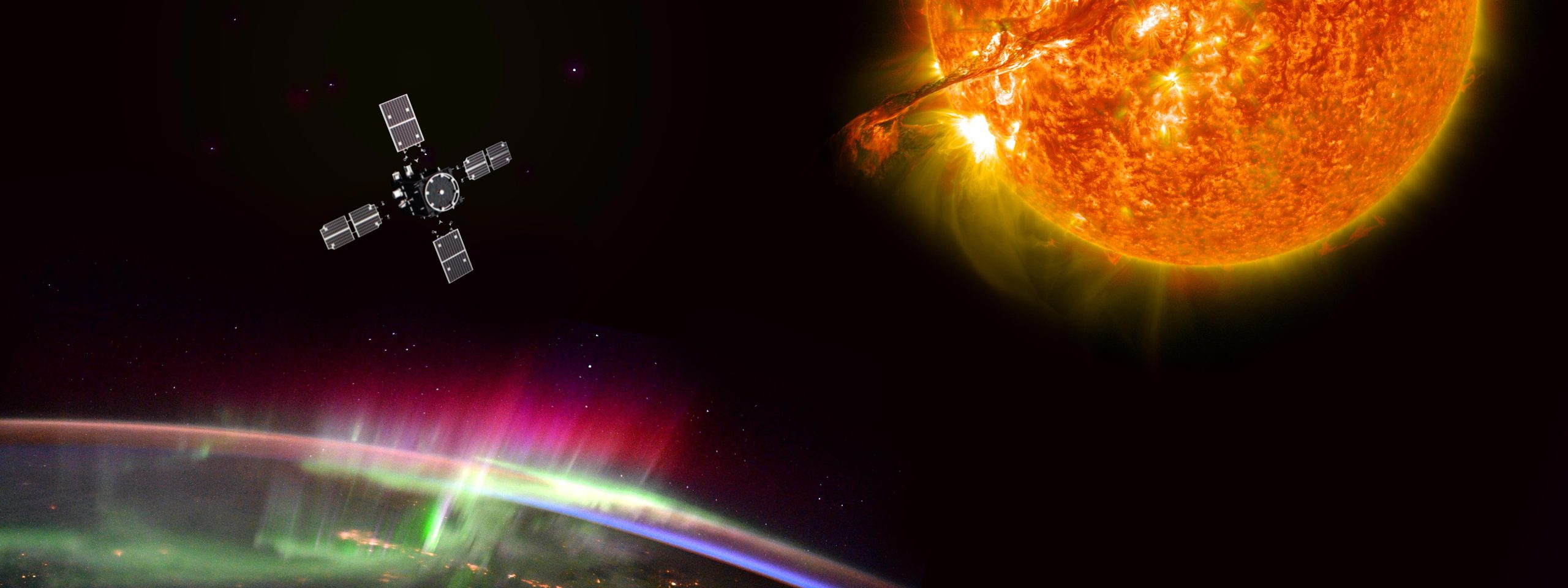
A massive geomagnetic superstorm in May 2024 gave scientists an unprecedented look at how Earth’s plasma shield collapses and slowly rebuilds under extreme solar pressure.
Using the perfectly positioned Arase satellite, researchers watched the plasmasphere shrink to a fraction of its usual size and take days to recover—far longer than expected. The storm’s effects stretched from breathtaking low-latitude auroras to disruptions in satellites, GPS, and communications.
Geomagnetic Superstorms and the 2024 Mother’s Day Event
A geomagnetic superstorm is one of the most powerful forms of space weather and happens when the Sun blasts Earth with huge bursts of energy and streams of charged particles. Events of this magnitude are uncommon, appearing only about once every 20-25 years. On May 10-11, 2024, Earth experienced its most intense superstorm in more than two decades, a blast known as the Gannon storm or Mother’s Day storm.
A research team led by Dr. Atsuki Shinbori of Nagoya University’s Institute for Space-Earth Environmental Research collected direct data from this rare event, offering the first clear, detailed look at how a superstorm compresses Earth’s plasmasphere (a region of charged particles that surrounds the planet). The study, published in Earth, Planets and Space, reveals how both the plasmasphere and ionosphere respond during extreme solar activity and provides new insight that may improve predictions for satellite disruptions, GPS problems, and communication outages during severe space weather.
Arase Satellite’s Front-Row View of a Historic Compression
The Arase satellite, launched by the Japan Aerospace Exploration Agency (JAXA) in 2016, travels through Earth’s plasmasphere and measures plasma waves and magnetic fields. Its location during the May 2024 event allowed it to record the dramatic squeezing of the plasmasphere and its slow return to normal, capturing details never observed before. This marked the first time scientists had continuous, direct readings of the plasmasphere collapsing to such a low altitude during a superstorm.
“We tracked changes in the plasmasphere using the Arase satellite and used ground-based GPS receivers to monitor the ionosphere—the source of charged particles that refill the plasmasphere. Monitoring both layers showed us how dramatically the plasmasphere contracted and why recovery took so long,” Dr. Shinbori explained.
Superstorm Forces Plasmasphere to Collapse to Record-Low Altitudes
The plasmasphere, which works with Earth’s magnetic field to shield the planet from harmful charged particles, usually stretches tens of thousands of kilometers into space. During the superstorm, however, its outer edge was forced inward from about 44,000 km above Earth to only 9,600 km.
The storm was fueled by a series of powerful solar eruptions that launched billions of tons of charged material toward Earth. In just nine hours, the plasmasphere was compressed to roughly one-fifth of its typical size. Its recovery was unusually slow, requiring more than four days to refill, the longest such recovery documented since Arase began monitoring the region in 2017.
“We found that the storm first caused intense heating near the poles, but later this led to a big drop in charged particles across the ionosphere, which slowed recovery. This prolonged disruption can affect GPS accuracy, interfere with satellite operations, and complicate space weather forecasting,” Dr. Shinbori noted.
Auroras Surging Toward the Equator During Magnetic Field Compression
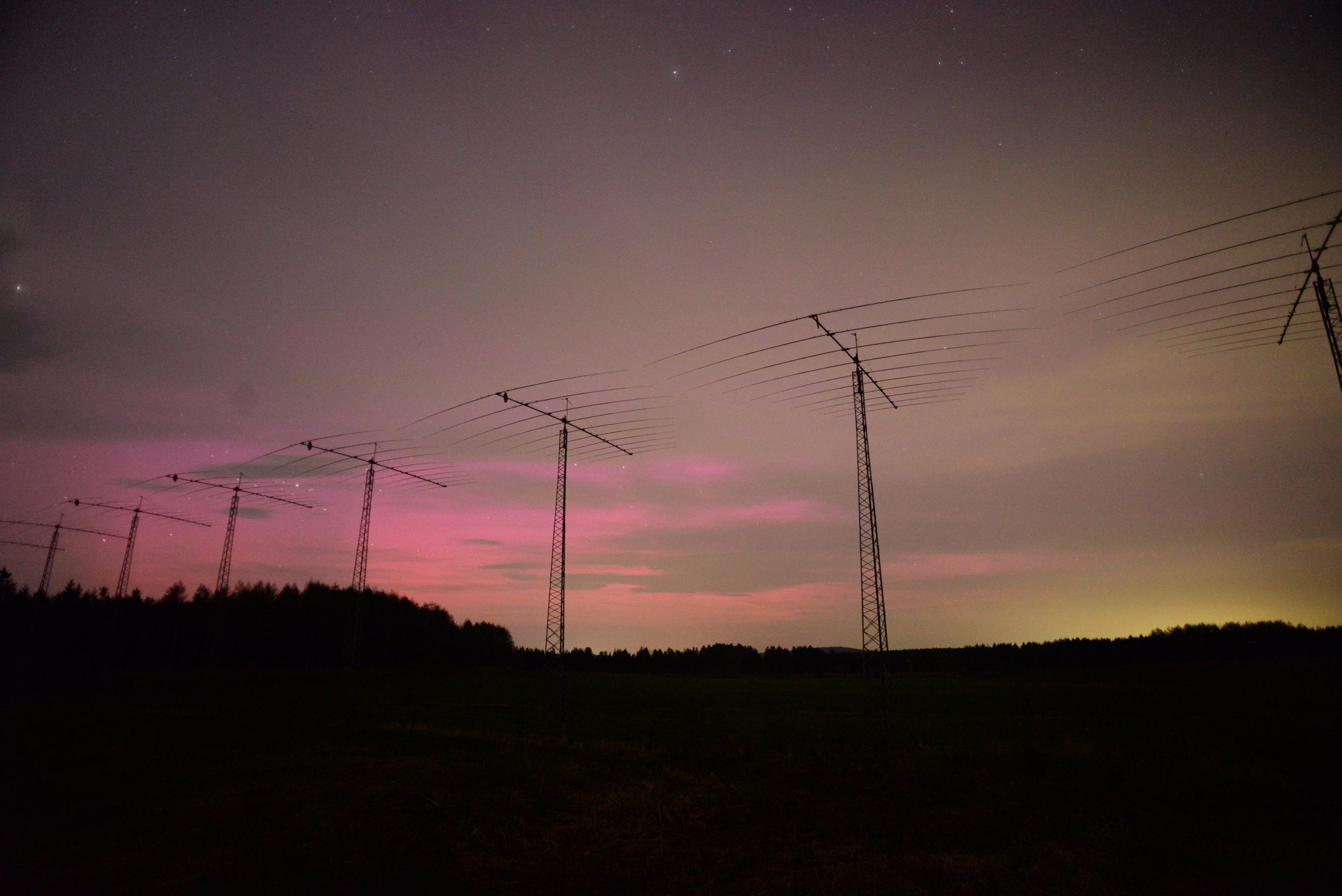
During the most intense phase of the superstorm, extreme solar activity compressed Earth’s magnetic field, allowing charged particles to travel much farther along magnetic field lines toward the equator. This produced impressive auroras at unusually low latitudes.
Auroras typically occur near the polar regions because Earth’s magnetic field guides solar particles into the atmosphere there, but the strength of this storm shifted the auroral zone from its usual position near the Arctic and Antarctic circles down to mid-latitude regions such as Japan, Mexico, and southern Europe—places where auroras are rarely seen. The stronger the geomagnetic storm, the farther toward the equator auroras can appear.
Negative Storms and the Chemistry Behind Delayed Plasmasphere Refilling
About an hour after the storm struck, charged particles in Earth’s upper atmosphere surged at high latitudes near the poles and streamed toward the polar cap. When the storm began to subside the plasmasphere started to refill with particles from the ionosphere.
Normally, this process takes a day or two, but in this case, recovery stretched over four days because of a phenomenon called a negative storm. During a negative storm, particle levels in the ionosphere drop sharply across wide areas when intense heating changes the atmosphere’s chemistry. This decreases oxygen ions that help produce hydrogen particles needed to refill the plasmasphere. These storms are invisible and detected only by satellites.
Implications for Satellites, GPS Accuracy, and Space Weather Forecasting
“The negative storm slowed recovery by altering atmospheric chemistry and cutting off the supply of particles to the plasmasphere. This link between negative storms and delayed recovery had never been clearly observed before,” Dr. Shinbori said.
The findings give us a clearer picture of how the plasmasphere changes and how energy moves through it. During the storm, several satellites experienced electrical issues or stopped transmitting data, GPS signals were disrupted, and radio communications were affected. Knowing how long Earth’s plasma layer takes to recover after such events is key to forecasting space weather and safeguarding space technology.
Reference: “Characteristics of temporal and spatial variation of the electron density in the plasmasphere and ionosphere during the May 2024 super geomagnetic storm” by Atsuki Shinbori, Naritoshi Kitamura, Kazuhiro Yamamoto, Atsushi Kumamoto, Fuminori Tsuchiya, Shoya Matsuda, Yoshiya Kasahara, Mariko Teramoto, Ayako Matsuoka, Takuya Sori, Yuichi Otsuka, Michi Nishioka, Septi Perwitasari, Yoshizumi Miyoshi and Iku Shinohara, 20 November 2025, Earth, Planets and Space.
DOI: 10.1186/s40623-025-02317-3
Never miss a breakthrough: Join the SciTechDaily newsletter.
Follow us on Google and Google News.
3 Comments
So you’re reporting an event from May 2024 in November of 2025? Make that make sense.
…….takes to recover after such events is key to forecasting space weather and safeguarding space technology……
And perhaps assisting wise military advise our idiot politicians not to launch nuclear missiles because radar does a strange bleep as a military satellite cooks.
Becareful! Or the dooms day nuts will lobby the government for some tax to save mankind.