
Close Menu
    Facebook X (Twitter) Instagram
    SciTechDaily
    • Biology
    • Chemistry
    • Earth
    • Health
    • Physics
    • Science
    • Space
    • Technology
    Facebook X (Twitter) Pinterest YouTube RSS
    SciTechDaily
    Home»Space»NASA’s TRACERS Mission Passes Critical Milestone, Advances Toward Launch
    Space

    NASA’s TRACERS Mission Passes Critical Milestone, Advances Toward Launch

    By NASAApril 5, 2022No Comments3 Mins Read
    Facebook Twitter Pinterest Telegram LinkedIn WhatsApp Email Reddit
    Share
    Facebook Twitter LinkedIn Pinterest Telegram Email Reddit
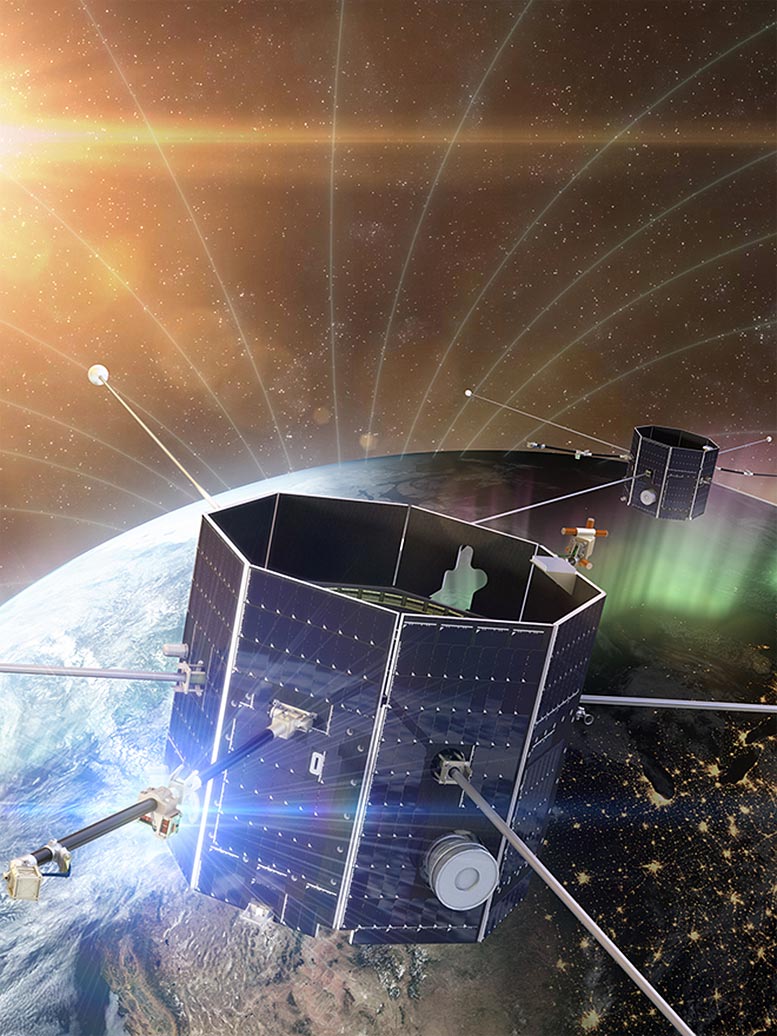
    TRACERS Satellites in Space
    Illustration of the TRACERS satellites in space. TRACERS will fly through the Earth’s magnetic cusp to study magnetic interactions between Earth and the solar wind. Credit: NASA

    NASA’s Tandem Reconnection and Cusp Electrodynamics Reconnaissance Satellites mission, or TRACERS mission, has passed a critical mission review on March 31, 2022. The mission now moves into its next phase, advancing towards its target launch readiness date of July 27, 2024.

    “We’re excited to pass this major milestone and get one step closer to launch,” said Prof. Craig Kletzing, space physicist at the University of Iowa in Iowa City and the mission’s principal investigator.

    The review, Key Decision Point C, evaluated the mission’s preliminary design and program plan to achieve launch by its target launch readiness. With the successful review, TRACERS now moves into Phase C, which includes the final design of the mission and building of the two satellites.

    “TRACERS will be an important addition to our heliophysics fleet,” said Washito Sasamoto, program executive for the mission at NASA Headquarters in Washington, D.C. “The mission is targeting long-standing questions critical to understanding the Sun-Earth system.”

    Understanding Solar Wind and Magnetosphere Interactions

    TRACERS is a pair of satellites that will study how the solar wind, the continuous stream of ionized particles escaping the Sun and pouring out the space, interacts with Earth’s magnetosphere, the region around Earth dominated by our planet’s magnetic field. The linchpin of that interaction is the phenomenon of magnetic reconnection, an explosive transfer of energy that can happen when two magnetic fields meet.

    Magnetic reconnection happens all throughout space but is of special relevance where the solar wind first meets Earth’s magnetosphere, a region known as the magnetopause. A reconnection event can shoot solar wind particles, normally diverted around our planet, directly into our atmosphere at high speeds. These particles ignite the beautiful northern and southern lights but also create potentially hazardous conditions for astronauts and sensitive satellites.

    To study magnetic reconnection at Earth’s magnetopause, TRACERS will fly through the polar cusp, a point where Earth’s magnetic field dips down toward the ground. There, particles funnel through the cusp into a concentrated part of our atmosphere.
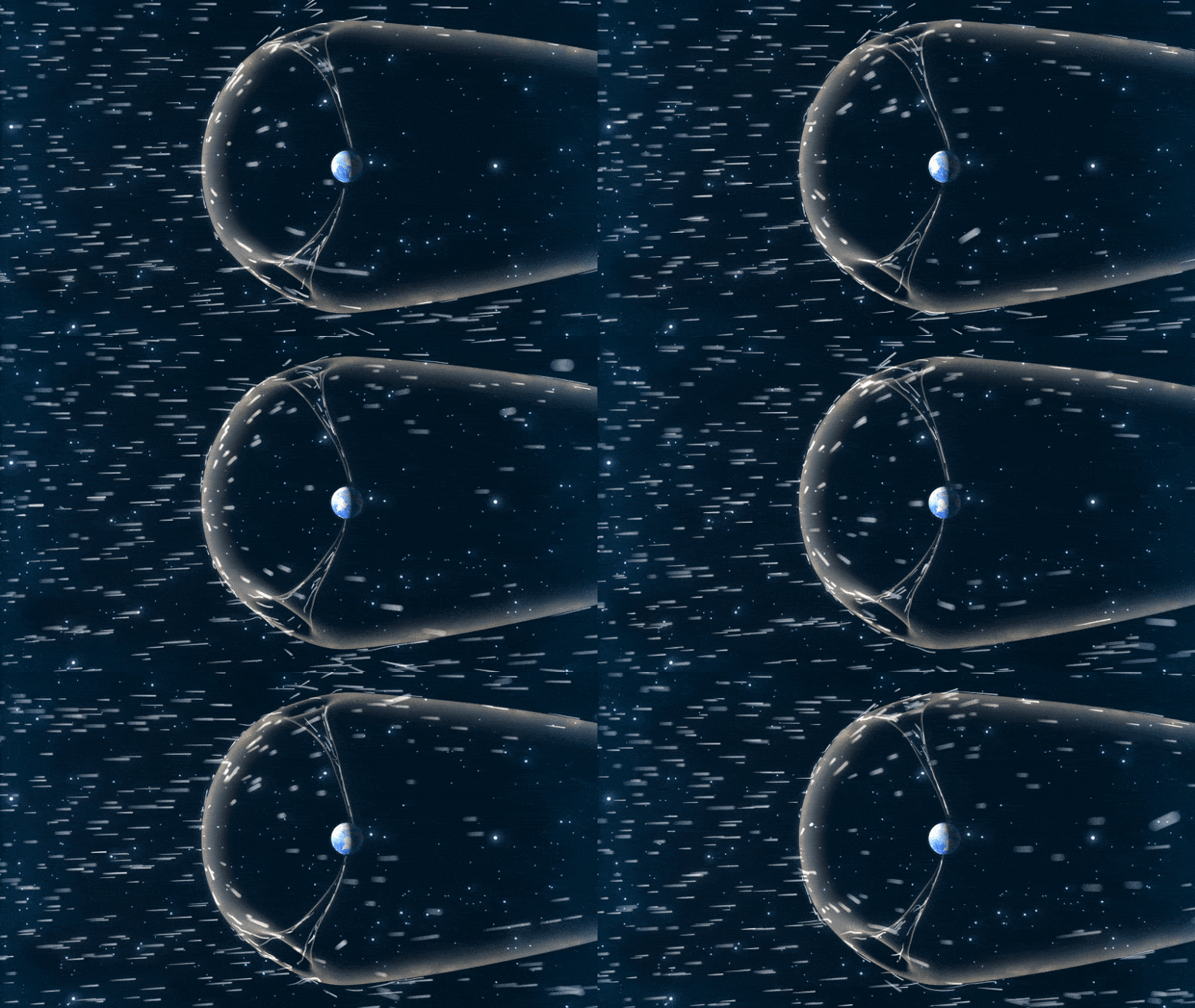
    Solar Wind Streaming Around Earth's Magnetosphere
    Earth is protected by a giant magnetic bubble known as our magnetosphere. However, the solar wind can still impinge on our planet’s atmosphere through the polar cusps, two funnels in that magnetic field that allow some particles through. The particles that pass through the cusp carry signatures of the magnetic interactions that happen where the solar wind meets our magnetosphere. Credit: ASA/CILab/Josh Masters

    “Magnetic reconnection can happen in lots of places in the magnetopause, but it’s hard to survey such a giant search space,” Kletzing said. “The cusp is one place where can study the signatures of reconnection that happen all over.”

    TRACERS will repeatedly fly through the northern polar cusp, one satellite behind the other, to study where and how often reconnection happens at the outer edges of Earth’s magnetic field. These measurements are critical for understanding and eventually predicting how energy from our Sun transfers into our planet.

    TRACERS is led by Craig Kletzing at the University of Iowa and managed by the Southwest Research Institute in San Antonio, Texas. NASA’s Heliophysics Explorers Program Office at NASA’s Goddard Space Flight Center in Greenbelt, Maryland provides mission oversight to the project for the agency’s Heliophysics Division at NASA Headquarters in Washington, D.C.

    Never miss a breakthrough: Join the SciTechDaily newsletter.
    Follow us on Google and Google News.

    Magnetosphere NASA Popular Space Weather
    Share. Facebook Twitter Pinterest LinkedIn Email Reddit

    Related Articles

    “Alien Aurora” – Scientists Spot Never-Before-Seen Plasma Waves in Jupiter’s Polar Lights

    NASA’s Parker Solar Probe Just Solved a 70-Year Solar Mystery

    NASA’s CODEX Unveils the Sun’s Fiery Secrets With Stunning New Solar Wind Images

    NASA’s TRACERS Mission Hits Major Milestone With Twin Spacecraft Completion

    The Sun Unleashed: How NASA Tracked the Most Intense Solar Storm in Decades

    NASA Captures Sun’s Fury: Strongest Solar Flare Since 2017

    Space’s Secret Symphony: Join NASA’s HARP To Uncover the Melodies of the Cosmos

    Auroras Unplugged: NASA’s EZIE To Unveil the Charged Link Between Earth and Space

    First of NASA’s SunRISE Satellites Complete – Will Track Hazardous Explosive Space Weather Events

    Leave A Reply Cancel Reply

    • Facebook
    • Twitter
    • Pinterest
    • YouTube

    Don't Miss a Discovery

    Subscribe for the Latest in Science & Tech!

    Trending News

    Monster Storms on Jupiter Unleash Lightning Beyond Anything on Earth

    Scientists Create “Liquid Gears” That Spin Without Touching

    The Simple Habit That Could Help Prevent Cancer

    Millions Take These IBS Drugs, But a New Study Finds Serious Risks

    Scientists Unlock Hidden Secrets of 2,300-Year-Old Mummies Using Cutting-Edge CT Scanner

    Bread Might Be Making You Gain Weight Even Without Eating More Calories

    Scientists Discover Massive Magma Reservoir Beneath Tuscany

    Europe’s Most Active Volcano Just Got Stranger – Here’s Why Scientists Are Rethinking It

    Follow SciTechDaily
    • Facebook
    • Twitter
    • YouTube
    • Pinterest
    • Newsletter
    • RSS
    SciTech News
    • Biology News
    • Chemistry News
    • Earth News
    • Health News
    • Physics News
    • Science News
    • Space News
    • Technology News
    Recent Posts
    • Webb Space Telescope Uncovers Unexpected Ice Clouds on a Jupiter-Like World
    • 289-Million-Year-Old Reptile Mummy Reveals Origin of Human Breathing System
    • New Brain Discovery Challenges Long-Held Theory of Teenage Brain Development
    • Sharks Are Overheating as Warming Oceans Push Them to the Edge
    • Scientists Discover Plants “Scream” – We Just Couldn’t Hear Them Until Now
    Copyright © 1998 - 2026 SciTechDaily. All Rights Reserved.
    • Science News
    • About
    • Contact
    • Editorial Board
    • Privacy Policy
    • Terms of Use

    Type above and press Enter to search. Press Esc to cancel.