
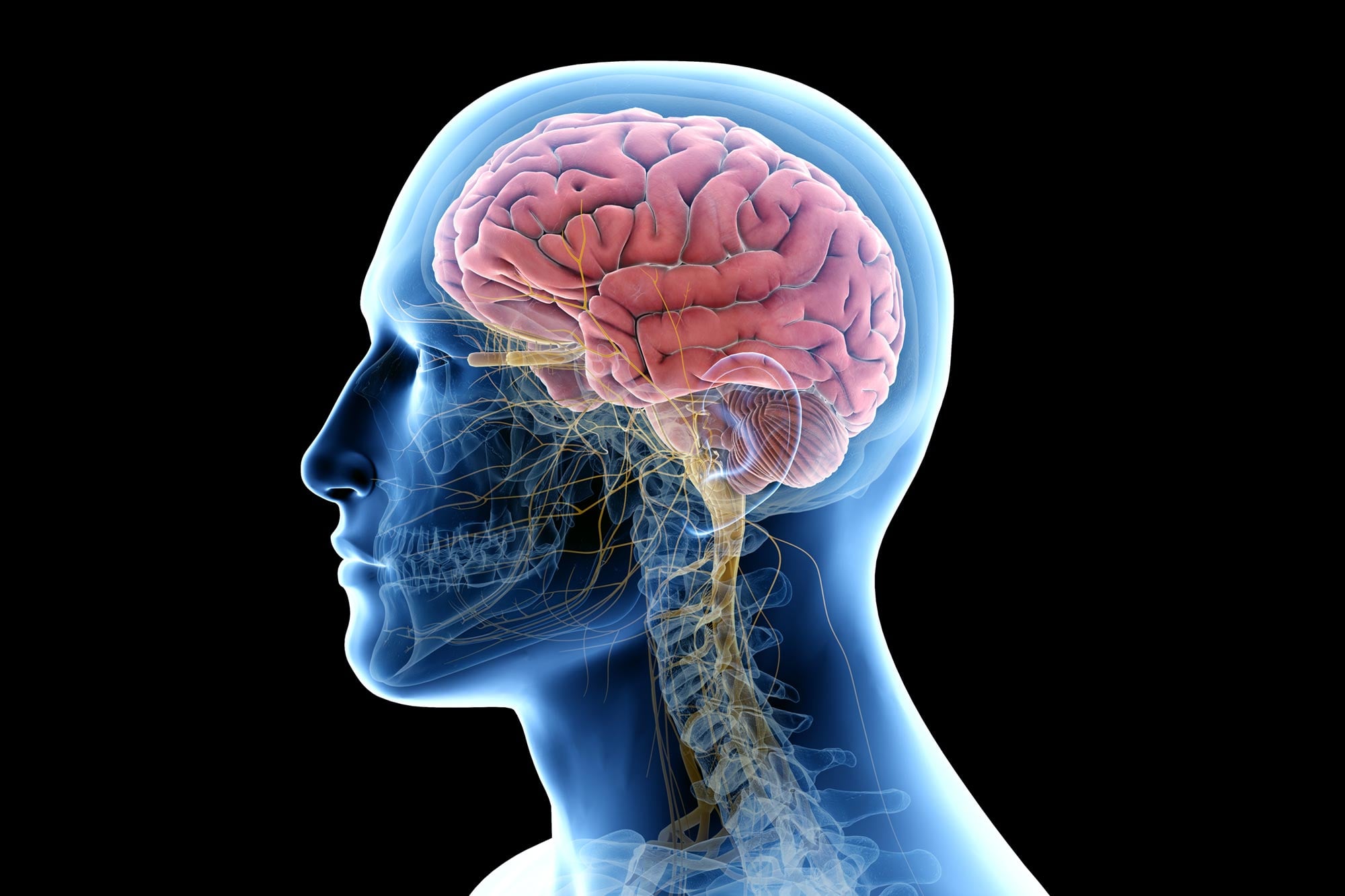
Blocking an enzyme’s production restored brain growth and healthy behaviors in mice engineered to develop Angelman syndrome, pointing to a possible treatment target.
Children with Angelman syndrome begin to show difficulties with thinking and movement at around 6 months of age. The rare condition occurs in approximately one in 20,000 births and is caused by the absence of a gene normally inherited from the mother. Researchers know which gene is missing, but they have struggled to explain why its absence causes these problems, making treatments elusive.
Research in mice now points to a chain of events that connects the missing gene to a stress response that interferes with brain growth. A team led by Jason Yi, PhD, an assistant professor of neuroscience at Washington University School of Medicine in St. Louis, traced that response to a buildup of a normally harmless enzyme. The study was published in Nature.
One missing gene, many excess proteins
The missing gene, UBE3A, produces an enzyme called ubiquitin ligase, which helps keep cells orderly by marking unneeded proteins for disposal. It is active throughout the brain and participates in 60 different cellular processes. Identifying which of those processes contribute to Angelman syndrome required narrowing that broad field of possibilities.
Yi and his colleagues developed modified cells in the laboratory with UBE3A deactivated, then looked for proteins that accumulated without it. They identified 23 candidate proteins whose levels increased. One stood out for its strong connection to ubiquitin ligase’s normal housekeeping function: asparagine synthetase, an enzyme that helps cells produce essential proteins.
A false alarm slows brain growth
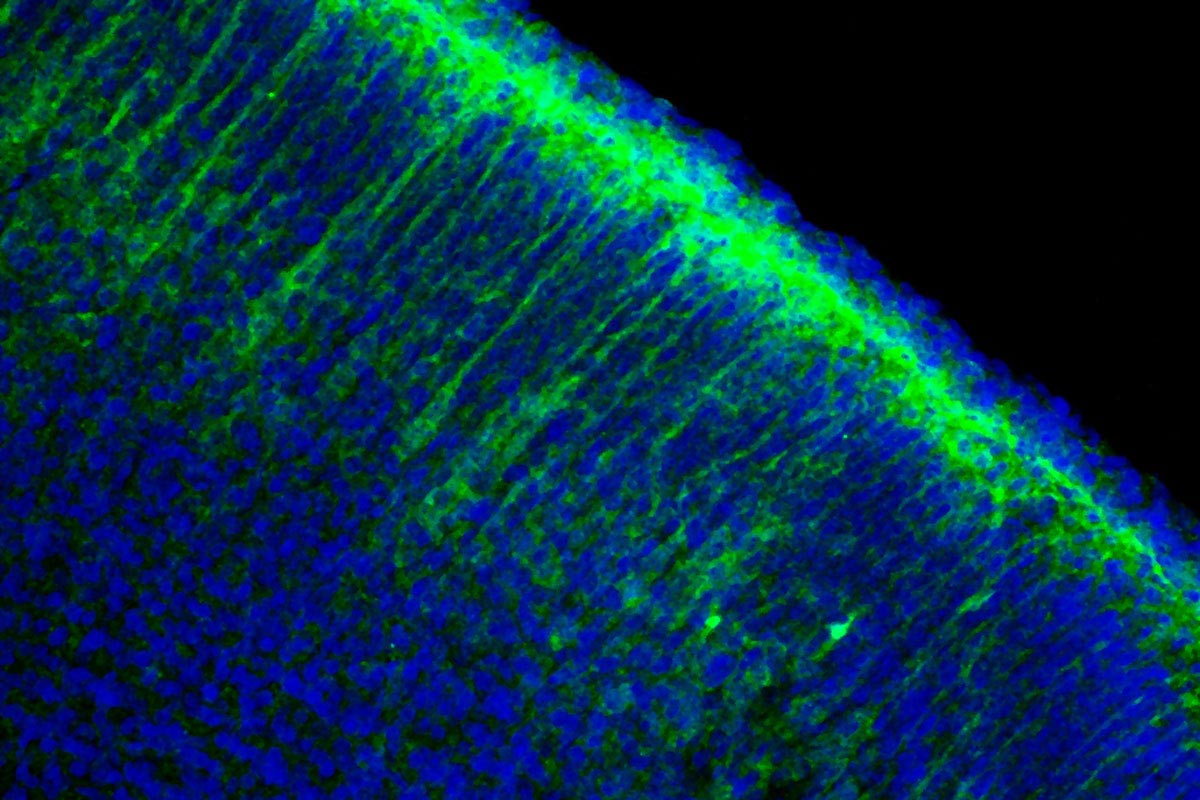
In mice genetically modified to develop Angelman syndrome, elevated levels of asparagine synthetase activated the brain’s stress response. Yet the enzyme does not interact with the usual triggers for that response, and its overabundance does not otherwise damage the cell. The consequences instead arise indirectly, as the stress response sharply reduces protein production and growth.
“The neurons are tricked into thinking that they’re in stress when they’re not — that’s bad because they will then not grow normally,” Yi said, noting that most children with Angelman syndrome have smaller brains than their peers of the same age. “It’s a reaction from the brain trying to conserve resources to protect itself. It does suggest that there is a dysregulation in the brain we might be able to correct.”
An enzyme offers a possible treatment target
Blocking the production of asparagine synthetase restored normal brain growth and healthy behaviors in the mice. The team had corrected a later step in the biological sequence set off by the missing gene, allowing healthy development to resume.
The study is the first to link an increase in asparagine synthetase to a neurological condition. It adds to evidence that an imbalance in proteins can contribute to neurodevelopmental disorders by triggering stress responses, even when the proteins themselves are not directly damaging cells.
Yi said medications could potentially target the stress response triggered by asparagine synthetase, but much remains to be learned before work on a possible treatment can begin. His team is investigating precisely why the enzyme activates that response, where in the brain the response is most active, and when during development medical interventions would be most effective.
“We still don’t know a whole lot about the disease,” said Yi. “We haven’t been able to identify all of the things that the missing gene is doing and rescue the things that it is not doing in Angelman’s syndrome. But I think our data are the most complete so far to begin answering those questions.”
Reference: “Persistent neuronal stress signalling underlies Angelman syndrome phenotypes” by Kwang-Soo Kim, Cory Gardner, Alissa Cullen, Jalin A. Stelzer, Kevin Cho, Ashish Sharma, Mati T. Nemera, Travis Law, Huma Naz, Guoyan Zhao, Harrison W. Gabel, Gary J. Patti, Erik S. Musiek, Tae-Hyuk Ahn and Jason J. Yi, 21 October 2026, Nature.
DOI: 10.1038/s41586-026-11165-4
Support for this work came from the Simons Foundation (Bridge to Independence award #387973), the Whitehall Foundation, the Hope Center for Neurological Disorders at Washington University (Pilot Award), and the National Institute of Mental Health (R01MH122786 and R01MH144153).
Never miss a breakthrough: Join the SciTechDaily newsletter.
Follow us on Google and Google News.