
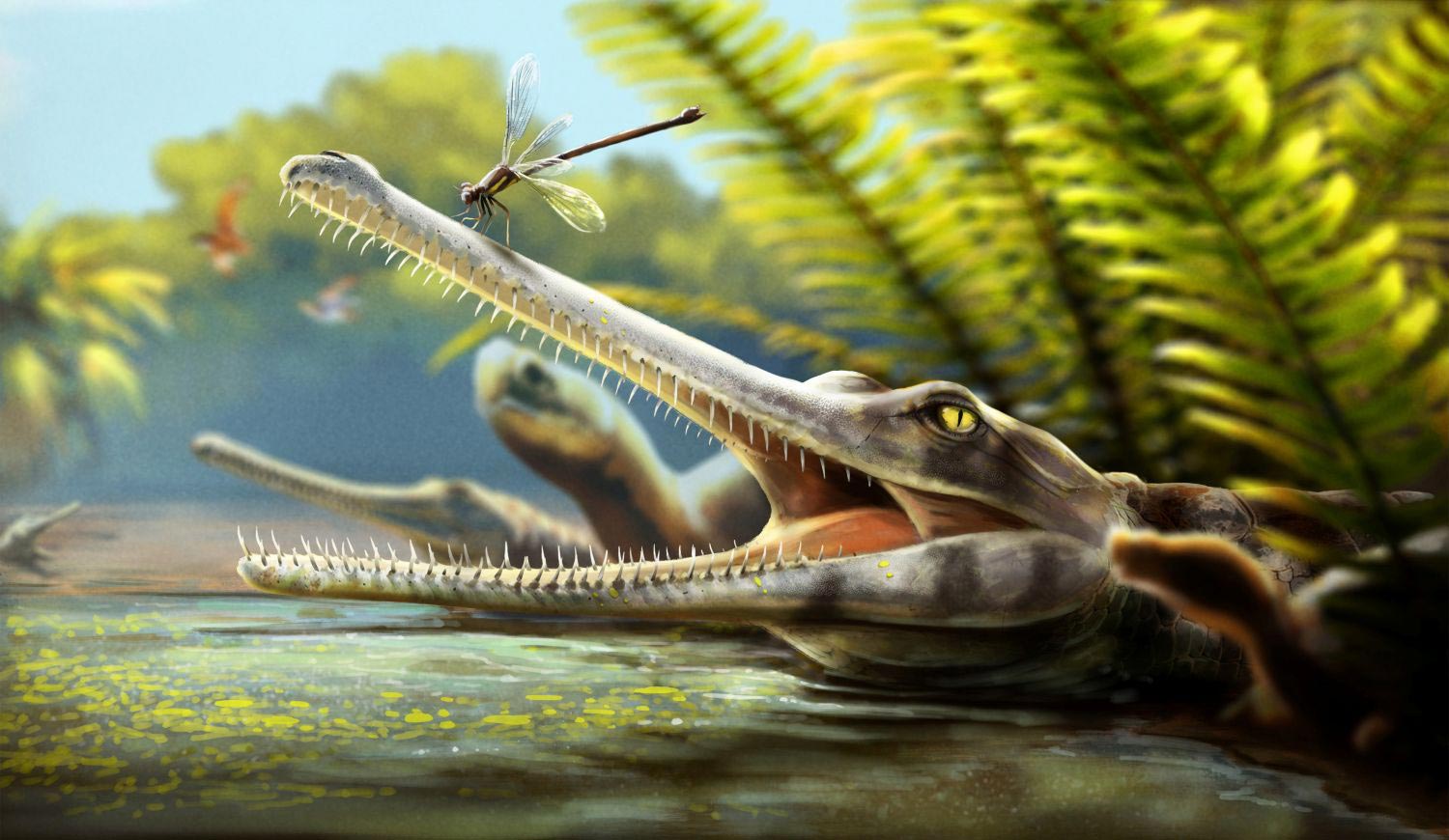
A Moroccan crocodile relative’s teeth resemble those of prehistoric filter feeders, suggesting that different reptile groups independently evolved similar tools for catching tiny aquatic prey.
A crocodile relative that lived around 170 million years ago had a long, narrow snout lined with exceptionally thin, needle-like teeth. No known close relative has teeth quite like them. Their delicacy suggests a diet of very small fish, crustaceans such as fairy shrimp, and other small aquatic creatures rather than large prey.
Scientists at the University of Portsmouth and Hassan II University of Casablanca, Morocco, identified the new species, named Ctenosuchus tenuidens. It belonged to the thalattosuchians, a group of marine and freshwater reptiles that lived during the age of the dinosaurs. Its fossils came from rocks formed in ancient rivers and lakes in what is now the Atlas Mountains of southeastern Morocco.
Large prey could break fragile teeth
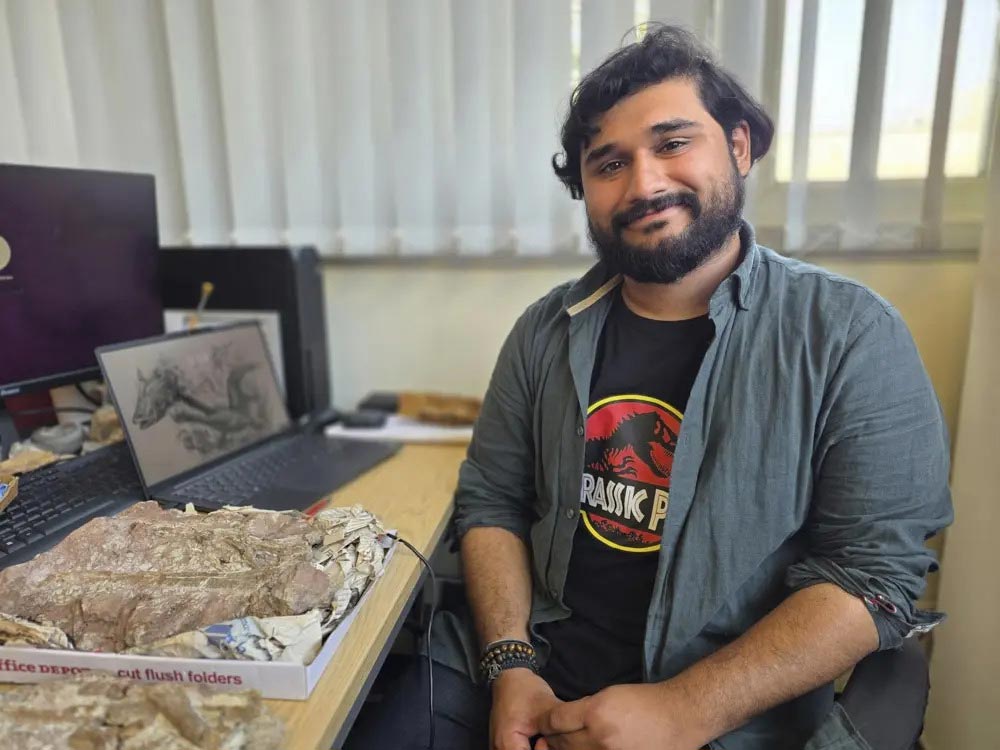
The researchers examined the fossil teeth under powerful microscopes and studied their internal structure, finding specialized ridges and a closely spaced arrangement. For lead author Hamzah Imran, from the University of Portsmouth’s School of the Environment and Life Sciences, the teeth’s fragility offered a clue to what the animal could safely catch.
He said: “The teeth are so fine that we don’t think it was catching normal prey. If it caught a big fish, and the fish wriggled, those delicate teeth would get smashed. We think the animal was probably eating soft prey like shrimp, worms and tiny fish, so nothing that would break its teeth.
“These feeding habits make this particular species very different to other long-snouted crocodiles, so it really is quite an exciting discovery!”
Black circles reveal comb-like teeth
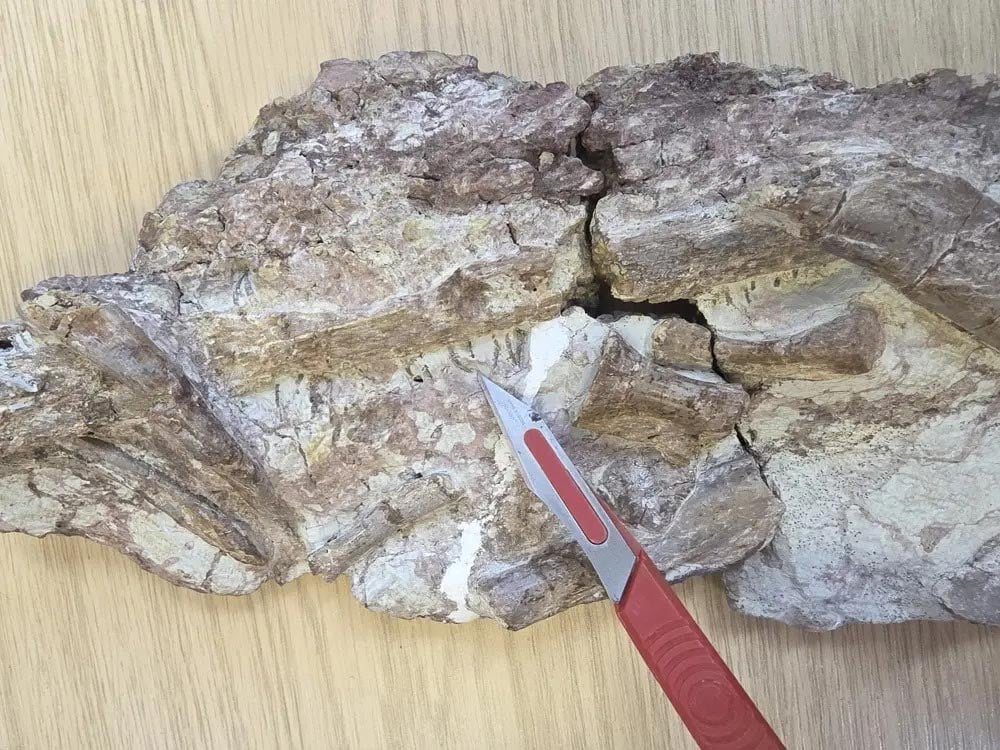
Recognizing the teeth in the first place required a microscope and careful work with a scalpel. Imran recalled: “We noticed these little black circles on either side of the long bone in the middle of one of the fossils, so we put it under a microscope.
“We carefully scratched around one of the black circles with a scalpel, and as we uncovered more of it, it became longer and longer. That’s when we realized these little black circles were actually incredibly thin teeth.
“These comb-like teeth inspired the name Ctenosuchus tenuidens as ‘cteno’ means ‘comb,’ ‘suchus’ means ‘crocodile,’ and ‘tenuidens’ means ‘thin teeth.’”
Similar teeth, separate evolutionary paths
Although unusual among its close relatives, Ctenosuchus had teeth resembling those of other prehistoric animals. Similar teeth occur in ancient aquatic reptiles called mesosaurs and in certain long-snouted pterosaurs that lived millions of years later. Its jaws and teeth share features with those of the Jurassic pterosaurs Gnathosaurus and Ctenochasma, which scientists believe were filter feeders, using their teeth to separate small food items from water. These similarities indicate that different groups independently evolved comparable feeding adaptations.
The Moroccan fossils broaden scientists’ understanding of the habitats and feeding roles occupied by Jurassic crocodile relatives in Gondwana, the southern supercontinent that included modern-day Africa. They also add to the picture of the varied prehistoric ecosystems that once existed in Morocco.
Imran added: “It just shows there is much more out there that needs to be explored. Morocco has an incredibly rich fossil history, but there is still so much waiting to be discovered.”
Reference: “A new teleosauroid (Crocodylomorpha, Thalattosuchia) with a unique dentition from the Middle Jurassic of eastern Morocco” by Hamzah Imran, David M. Martill, Roy E. Smith, Samir Zouhri, James Gunn and Nizar Ibrahim, 8 October 2026, Journal of Vertebrate Paleontology.
DOI: 10.1080/02724634.2026.2728670
Never miss a breakthrough: Join the SciTechDaily newsletter.
Follow us on Google and Google News.