
Close Menu
    Facebook X (Twitter) Instagram
    SciTechDaily
    • Biology
    • Chemistry
    • Earth
    • Health
    • Physics
    • Science
    • Space
    • Technology
    Facebook X (Twitter) Pinterest YouTube RSS
    SciTechDaily
    Home»Science»Chinese Pterodactyl Wings Its Way to England
    Science

    Chinese Pterodactyl Wings Its Way to England

    By University of PortsmouthMay 29, 2020No Comments3 Mins Read
    Facebook Twitter Pinterest Telegram LinkedIn WhatsApp Email Reddit
    Share
    Facebook Twitter LinkedIn Pinterest Telegram Email Reddit
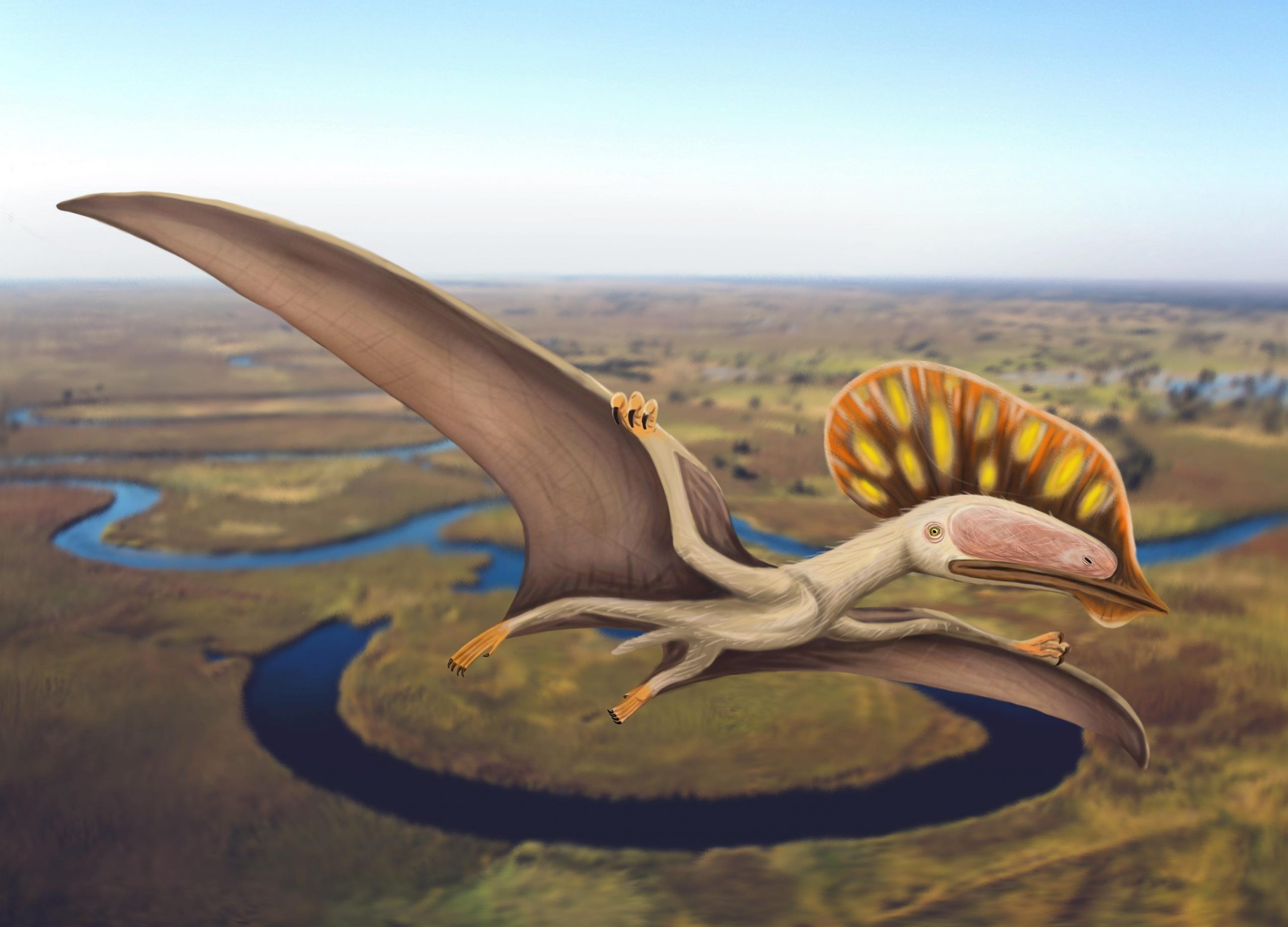
    Wightia declivirostris Flying
    The attached image shows Wightia declivirostris flying over an oxbow lake in the valley of the ancient Wessex River that flowed from Devon to the Isle of Wight. Credit: Megan Jacobs

    The first ever specimen of a pterodactyl, more commonly found in China and Brazil, has been found in the United Kingdom.

    A fossil hunter recently discovered a peculiar shaped fragment of fossil bone while out walking his dog in Sandown Bay on the Isle of Wight.

    Not sure what it was, he passed it to University of Portsmouth Palaeontology student Megan Jacobs, who thought it might be the jaw bone from a pterodactyl. Further research proved she was right.

    However, this was no ordinary pterodactyl jaw. This one lacked teeth and was remarkably similar to a bizarre group of pterosaurs called ‘tapejarids’. They are better known from China and Brazil and have never previously been found in the UK.

    Just last year a team from the University of Portsmouth discovered as similar specimen in North Africa (Morocco) which they named Afrotapejara.

    The new specimen from the Isle of Wight has been named Wightia declivirostris.

    Megan Jacobs said: “Although only a fragment of jaw, it has all the characteristic of a tapejarid jaw, including numerous tiny little holes that held minute sensory organs for detecting their food, and a downturned, finely pointed beak.

    “Complete examples from Brazil and China show that they had large head crests, with the crest sometime being twice as big as the skull. The crests were probably used in sexual display and may have been brightly colored.”

    The researchers determined that the Isle of Wight example seemed more closely related to the Chinese tapejarids rather than the Brazilian examples.

    Co-author of the study Professor David Martill, a paleontologist from the University of Portsmouth, said: “This new species adds to the diversity of dinosaurs and other prehistoric reptiles found on the Island, which is now one of the most important places for Cretaceous dinosaurs in the world.”

    The finder has kindly donated the specimen to Dinosaur Isle Museum at Sandown, where it is hoped it will go on display in the future.

    The new discovery is reported in the scientific journal Cretaceous Research.

    Reference: “First tapejarid pterosaur from the Wessex Formation (Wealden Group: Lower Cretaceous, Barremian) of the United Kingdom” by David M. Martill, Mick Green, Roy E. Smith, Megan L. Jacobs and John Winch, 22 April 2020, Cretaceous Research.
    DOI: 10.1016/j.cretres.2020.104487

    Never miss a breakthrough: Join the SciTechDaily newsletter.
    Follow us on Google and Google News.

    Dinosaurs Evolution Paleontology University of Portsmouth
    Share. Facebook Twitter Pinterest LinkedIn Email Reddit

    Related Articles

    Agile Fliers: Newly-Hatched Pterosaurs May Have Been Able To Fly

    Paleontologists Surprising Discovery: Fossil Shark Turns Into Mystery Pterosaur

    Naked Prehistoric Monsters! Pterosaurs, Ancient Flying Reptiles, May Not Have Had Feathers at All

    Three New Species of Flying Reptiles Discovered – Pterosaurs That Inhabited the Sahara 100 Million Years Ago

    New Dinosaur Discovered in New Mexico Is One of the Last Known Surviving Raptors

    One-of-a-Kind Dinosaur Specimen Discovered in China Offers View Into Dinosaur-Bird Evolution

    It Seems There Were Too Many Meat-Eating Dinosaurs – This May Be the Explanation

    New Species of Giant Predatory Dinosaur Discovered in Thailand Provides a New Glimpse at Dinosaur Evolution

    New Insight on Pterosaur Specimen, Istiodactylus Latidens

    Leave A Reply Cancel Reply

    • Facebook
    • Twitter
    • Pinterest
    • YouTube

    Don't Miss a Discovery

    Subscribe for the Latest in Science & Tech!

    Trending News

    Largest-Ever Study Finds Medicinal Cannabis Ineffective for Anxiety, Depression, PTSD

    250-Million-Year-Old Egg Solves One of Evolution’s Biggest Mysteries

    Living With Roommates Might Be Changing Your Gut Microbiome Without You Knowing

    Century-Old Cleaning Chemical Linked to 500% Increased Risk of Parkinson’s Disease

    What if Your Memories Never Happened? Physicists Take a New Look at the Boltzmann Brain Paradox

    One of the Universe’s Largest Stars May Be Getting Ready To Explode

    Scientists Discover Enzyme That Could Supercharge Ozempic-Like Weight Loss Drugs

    Popular Sweetener Linked to DNA Damage – “It’s Something You Should Not Be Eating”

    Follow SciTechDaily
    • Facebook
    • Twitter
    • YouTube
    • Pinterest
    • Newsletter
    • RSS
    SciTech News
    • Biology News
    • Chemistry News
    • Earth News
    • Health News
    • Physics News
    • Science News
    • Space News
    • Technology News
    Recent Posts
    • Scientists Say This Overlooked Organ Could Hold the Key to Longer Life
    • Want Less Stress? Landmark Study Points to a Simple Habit
    • Scientists Reveal Eating Fruits and Vegetables May Increase Your Risk of Lung Cancer
    • AI Reveals Explosive Growth of Floating Algae Across the World’s Oceans
    • 5.5 Million Bees Discovered Living Beneath a New York Cemetery
    Copyright © 1998 - 2026 SciTechDaily. All Rights Reserved.
    • Science News
    • About
    • Contact
    • Editorial Board
    • Privacy Policy
    • Terms of Use

    Type above and press Enter to search. Press Esc to cancel.