

A healthy thymus in adults is tied to longer life, reduced disease risk, and improved cancer treatment response.
Two new studies from researchers at Mass General Brigham are challenging the long-standing belief that the thymus becomes unimportant after childhood. By using artificial intelligence (AI) to review standard CT scans, scientists found that adults with a healthier thymus tend to live longer and have lower risks of heart disease and cancer. A separate analysis of cancer patients showed that thymic condition may also affect how well individuals respond to immunotherapy, a treatment that relies on the immune system.
The results, reported in two papers in Nature, indicate that the thymus has a much larger role in adult health than previously thought. It may also serve as a new focus for tailoring disease prevention and cancer care.
“The thymus has been overlooked for decades and may be a missing piece in explaining why people age differently and why cancer treatments fail in some patients,” said Hugo Aerts, PhD, corresponding author on the papers and director of the Artificial Intelligence in Medicine (AIM) Program at Mass General Brigham. “Our findings suggest thymic health deserves much more attention and may open new avenues for understanding how to protect the immune system as we age.”
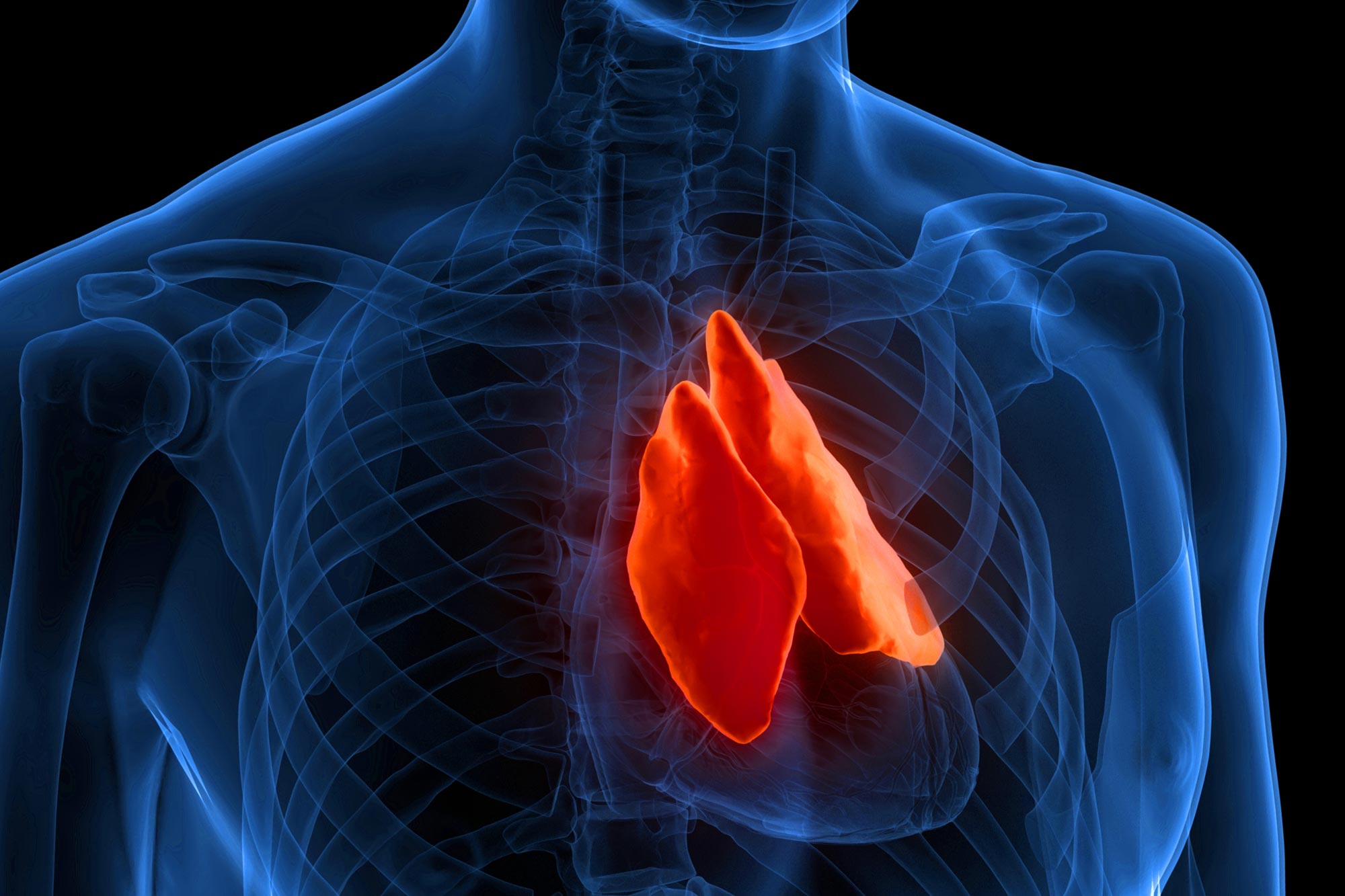
Thymus Function Beyond Childhood
The thymus is a small organ located in the chest that helps train T cells, which are essential for defending the body against infections and disease. For many years, scientists believed it became largely inactive after puberty because it shrinks with age and produces fewer new T cells. Because of this assumption, its role in adult health has not been widely studied in large populations.
Earlier studies connected T cell diversity with aging and declining immune function, but most relied on small blood-based samples. In contrast, the new research analyzed data from more than 25,000 adults in a national lung cancer screening program and over 2,500 participants in the Framingham Heart Study, a long-running group of generally healthy individuals.
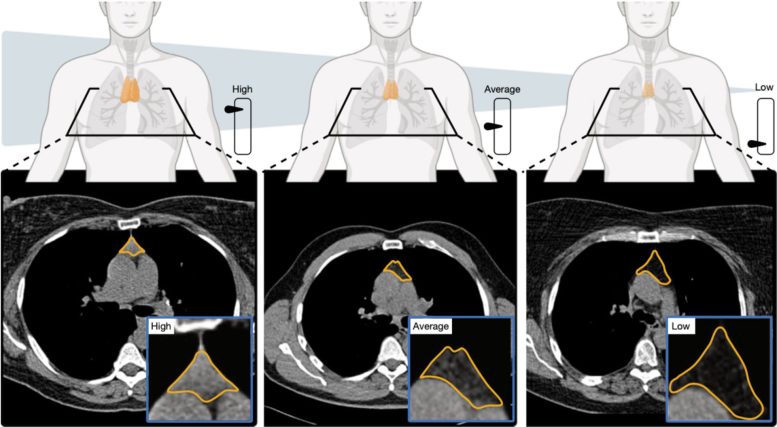
Researchers evaluated the thymus by measuring its size, structure, and composition, creating a “thymic health” score. Individuals with higher scores had about a 50% lower risk of death, a 63% lower risk of dying from cardiovascular disease, and a 36% lower risk of developing lung cancer compared to those with lower scores. These results held even after accounting for age and other health factors.
Immune Aging and Lifestyle Links
The team suggests that as thymic function and T cell diversity decline, the immune system may become less effective at responding to new threats such as cancer. Their findings also showed that chronic inflammation, smoking, and higher body weight were linked to poorer thymic health. This points to a possible connection between lifestyle, inflammation, and the body’s ability to maintain strong immune defenses over time.
In a second study, researchers reviewed CT scans and outcomes from more than 1,200 patients treated with immunotherapy. Those with better thymic health had about a 37% lower risk of cancer progression and a 44% lower risk of death, even after adjusting for differences in patients, tumors, and treatments. These results highlight a previously underrecognized role for the thymus in determining how patients respond to modern cancer therapies.
The researchers note that more studies are needed to confirm these findings, and the imaging approach is not yet ready for routine clinical use. Although certain lifestyle factors were associated with thymic health, the studies did not test whether changing those factors can directly improve thymus function.
Future Research and Clinical Potential
The team is continuing to explore other influences on thymic health. One ongoing study is examining whether unintended radiation exposure to the thymus in lung cancer patients affects treatment outcomes.
“Improving our understanding and monitoring of thymic health could eventually help physicians better assess disease risk and guide treatment decisions,” said Aerts.
References:
“Thymic health consequences in adults” by Simon Bernatz, Vasco Prudente, Suraj Pai, Asbjørn K. Attermann, Yumeng Cao, Jiachen Chen, Asya Lyass, Borek Foldyna, Leonard Nürnberg, Keno Bressem, Christopher Abbosh, Charles Swanton, Mariam Jamal-Hanjani, Michael T. Lu, Joanne M. Murabito, Kathryn L. Lunetta, Nicolai J. Birkbak and Hugo J. W. L. Aerts, 18 March 2026, Nature.
DOI: 10.1038/s41586-026-10242-y
“Thymic health and immunotherapy outcomes in patients with cancer” by Simon Bernatz, Vasco Prudente, Suraj Pai, Asbjørn K. Attermann, Alessandro Di Federico, Andrew Rowan, Selvaraju Veeriah, Lars Dyrskjøt, Leonard Nürnberg, Joao V. Alessi, Patrick A. Ott, Elad Sharon, Allan Hackshaw, Nicholas McGranahan, Christopher Abbosh, Raymond H. Mak, Danielle Bitterman, Mark Awad, Biagio Ricciuti, Charles Swanton, Mariam Jamal-Hanjani, Nicolai J. Birkbak and Hugo J. W. L. Aerts, 18 March 2026, Nature.
DOI: 10.1038/s41586-026-10243-x
This research received funding support from the National Institutes of Health, European Research Council, Deutsche Forschungsgemeinschaft (DFG, German Research Foundation), Lundbeck Foundation, Novo Nordisk Foundation, and Savvaerksejer Jeppe Juhl og Hustru Ovita Juhl Research Stipend.
Never miss a breakthrough: Join the SciTechDaily newsletter.
Follow us on Google and Google News.
3 Comments
thanks
Hah!!! They are finally on the trail. The Devolving Thymus also is responsible for choking in adults. Good work.
If the thymus is healthy, wouldn’t that signify that the rest of the body is healthy as well, hence the lower percentage of illness, death, etc?
Seems shortsighted to correlate it to a healthy thymus.