
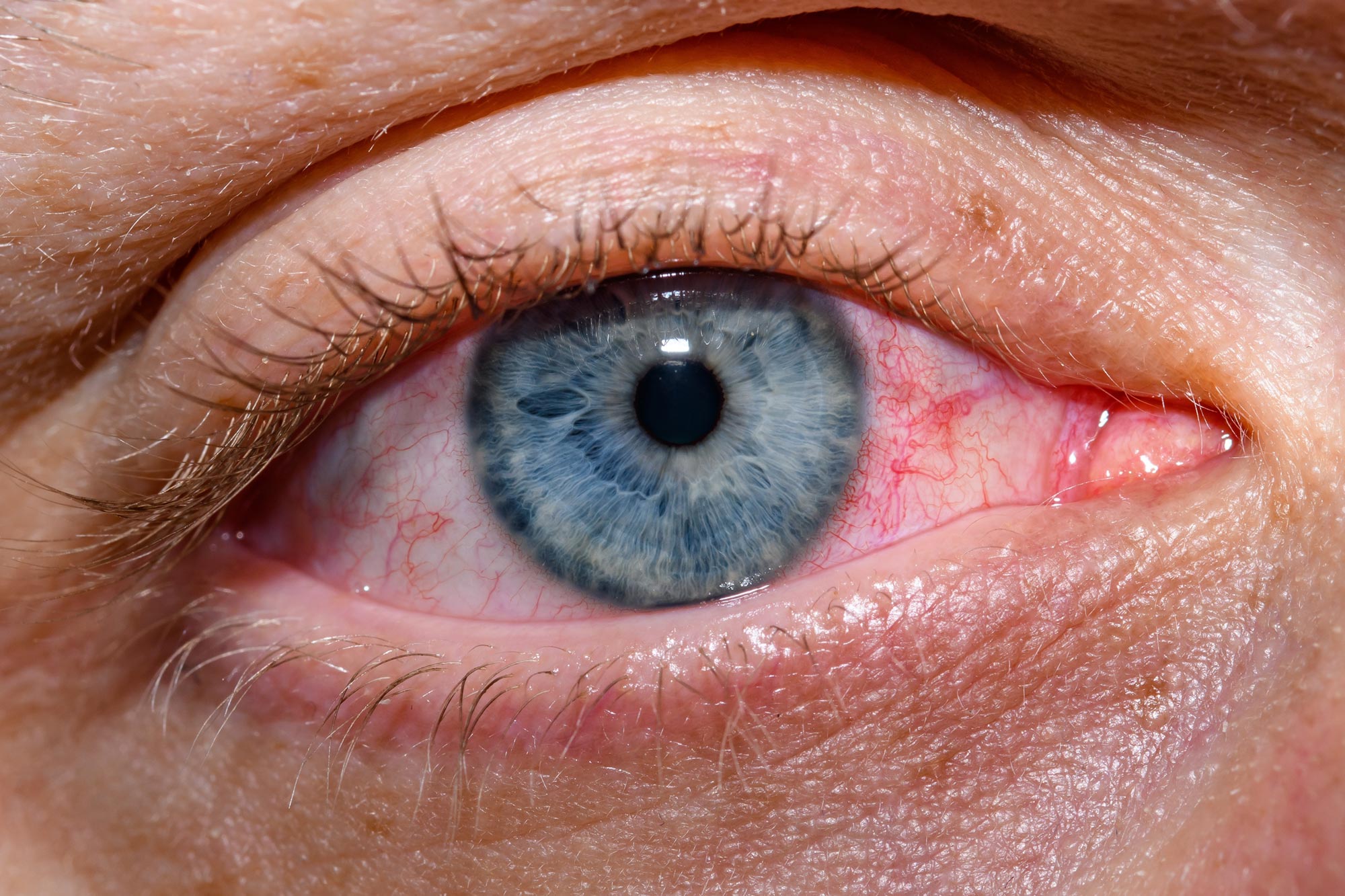
A steroid alternative may offer a new way to treat dry eye by restoring the eye’s natural protective defenses.
Scientists at Baylor College of Medicine and Okayama University in Japan have developed an experimental eye drop that does more than calm inflammation. In mouse studies, it appeared to restore some of the eye’s own protective defenses, helping preserve the delicate surface that keeps vision clear and comfortable.
The treatment, described in Investigative Ophthalmology & Visual Science, reduced several major signs of dry eye disease, including inflammation, corneal surface damage, and the loss of goblet cells. These specialized cells help maintain a stable tear film, the thin layer of moisture that protects and lubricates the eye every time a person blinks.
The results suggest that human studies are warranted to evaluate whether the treatment is safe and effective. If successful, it could offer a new option for millions of people affected by dry eye disease.
A Common Condition With Long-Term Effects
“Dry eye disease is a common condition that causes irritation, redness, and blurred vision,” said corresponding author Dr. Stephen C. Pflugfelder, professor and James and Margaret Elkins Chair in Ophthalmology at Baylor. “Dry eye disease occurs more commonly as we age and in women. It develops when the eyes do not produce enough tears or when tears evaporate too quickly, often due to environmental conditions like dryness or wind. In more severe cases, dry eye can damage the surface of the eye, the cornea, and affect daily activities such as reading or driving. People with the condition tend to have it for the rest of their lives.”
Steroid medications are among the current treatment options because they can suppress the immune activity that drives eye inflammation. “Unfortunately, long-term use of steroids is not recommended because it can lead to glaucoma – damage to the optic nerve that can result in blindness – or cataracts,” Pflugfelder said. “There is a need for improved treatments.”
The Immune System’s Role in Eye Health
Earlier research has shown that the immune system helps maintain eye health. Resident macrophages, a type of immune cell that remains in tissues for long periods, normally help protect the eye by clearing debris, calming inflammation, and aiding repair.
In dry eye disease, that protective system breaks down. Stress brings in circulating monocytes, immune cells from the blood that promote inflammation. At the same time, resident macrophages lose some of their protective activity and make fewer helpful molecules. Together, these changes can damage the cornea and reduce specialized goblet cells.
“We hypothesized that boosting the function of the protective macrophages could reduce inflammation and improve eye health,” Pflugfelder said. “We began a collaboration with Dr. Hiroki Kakuta, research professor at Okayama University, who is an expert in generating alternatives to steroids for the treatment of immune-mediated diseases. We were interested in testing his compounds called rexinoids in our mouse model of human dry eye.”
The Kakuta lab developed a rexinoid called NEt-3IB that strengthens the protective role of resident macrophages. The original compound, however, did not dissolve well in water, which is essential for an eye drop. Kakuta’s team modified it so it could dissolve properly while still activating the macrophages’ protective functions.
Reduced Inflammation and Better Protection
“In the current study, we were excited to find that applying NEt-3IB eye drops shifted the resident macrophages toward a protective role by suppressing their production of inflammatory compounds and stimulating their production of healing compounds that promote debris-clearing and immune balance,” Pflugfelder said. “The treatment also maintained the integrity of the corneal barrier and the number and size of goblet cells during exposure to desiccating stress.”
Steroid eye treatments can increase pressure inside the eye, which may contribute to glaucoma after extended use. In this study, NEt-3IB raised eye pressure far less than the steroid dexamethasone, suggesting it may be safer for long-term treatment. Researchers still need to study the effects of prolonged NEt-3IB use.
Many current dry eye therapies aim mainly to reduce inflammation. This study points to a different strategy: guiding immune cells to lower inflammation while also restoring some of the eye’s natural protective functions. That approach could lead to a better treatment for dry eye disease.
Reference: “Rexinoid NEt-3IB Promotes Resident Macrophage Gene Expression and Mitigates Desiccation-Induced Ocular Surface Disease” by Jehan Alam, Yangluowa Qu, Jianming Shao, Ebru Yaman, Karen Zheng, Hiroki Kakuta and Stephen C. Pflugfelder, April 2026, Investigative Ophthalmology & Visual Science.
DOI: 10.1167/iovs.67.4.31
This study was supported by Lions Foundation for Sight, National Institutes of Health (NIH) (grants EY11915, U01 EY034692, CA125123, S10OD018033, S10OD023469, 1S10OD02346901, 2P30ES030285), NIH Core Grant (EY002520), CPRIT Core Facility Support Award (CPRIT-RP180672), P30 Digestive Disease Center support grant (NIDDK-DK56338), P30 Cancer Center support grant (NCI-CA125123), an unrestricted grant from Research to Prevent Blindness, the Hamill Foundation and the Sid W. Richardson Foundation.
Never miss a breakthrough: Join the SciTechDaily newsletter.
Follow us on Google and Google News.