
Close Menu
    Facebook X (Twitter) Instagram
    SciTechDaily
    • Biology
    • Chemistry
    • Earth
    • Health
    • Physics
    • Science
    • Space
    • Technology
    Facebook X (Twitter) Pinterest YouTube RSS
    SciTechDaily
    Home»Biology»Panamanian Survey Puts Global Arthropod Species at 6 Million
    Biology

    Panamanian Survey Puts Global Arthropod Species at 6 Million

    By SciTechDailyDecember 16, 2012No Comments3 Mins Read
    Facebook Twitter Pinterest Telegram LinkedIn WhatsApp Email Reddit
    Share
    Facebook Twitter LinkedIn Pinterest Telegram Email Reddit
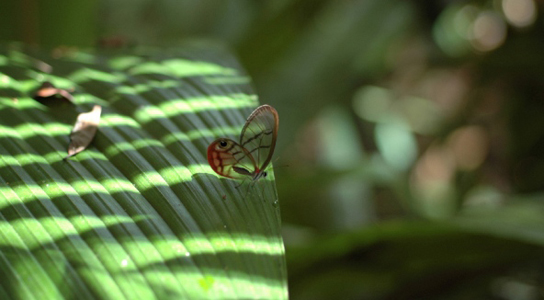
    blushing-phantom-butterfly-Cithaerias-pireta
    A “blushing phantom” butterfly, Cithaerias pireta, rests briefly on a palm leaf in San Lorenzo forest. Credit: Maurice Leponce, Royal Belgian Institute of Natural Sciences

    For two years in the Panamanian tropics, entomologists have been laboring in cranes, gliding amongst treetops using helium-filled balloons, hiking through the jungle at night, and setting traps that used light as bait in order to come up with an estimate on the biodiversity of arthropods.

    The scientists published their findings in the journal Science. It took another eight years to identify the 129,494 specimens, and to extrapolate that number to come up with a global estimate of 6 million species.
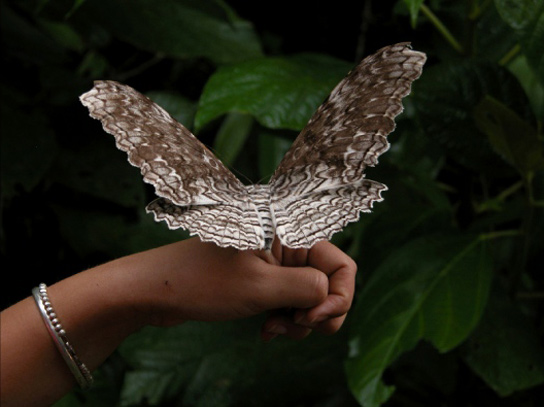
    white-witch-moth
    A ‘white witch moth’, Thysania agripina, perches on a hand. Credit: Yves Roisin, Université Libre de Bruxelles

    This is the most comprehensive survey done in one small area of tropical rainforest, states Andrew Hamilton, an entomologist at the University of Melbourne, Australia. Arthropods have hard, jointed exoskeletons, and they include insects, arachnids, and crustaceans. There are more species of arthropods than any other group, and their diversity is greatest in the tropical rainforest. Therefore, biologists scale up the richness of rainforest populations to make global estimates.

    A previous estimate started at 30 million species in 1982 and eventually was reduced to six million species. These studies used a subgroup of insects to predict the overall numbers. However, the new work counts all types of arthropods in larger sections of forests. Rather than assuming that one taxon is representative for all taxons, the scientists looked at the whole community.

    Lead author Yves Basset, an entomologist at the Smithsonian Tropical Research Institute in Panama City, and his team collected arthropods in 12 plots, each the size of a tennis court, in the San Lorenzo forest in Panama. They returned with 6,144 species, hundreds of which may be new discoveries.

    Plots with more trees contained more arthropod species. The team built a model to determine arthropod diversity on the basis that for every species of tree or other vascular plant, there were about 20 species of arthropods. This made things easier because plants are easier to survey than arthropods

    Using the number of tree species in the world, the team estimated that there were 6 million arthropod species globally. Scientists only know a fraction of these species, perhaps 1 million out of 6 million, but believe it may be possible for humans to discover all of the arthropod species.

    Other biologists disagree with this estimate, believing that the Panamanian tropics cannot be used to extrapolate a global population estimate. Since insect diversity increases with the number of trees and with the number of microhabitats formed by varying compositions of tree species, the Panamanian tropics are not representative of other forests around the world.

    Reference: “Arthropod Diversity in a Tropical Forest” by Yves Basset, Lukas Cizek, Philippe Cuénoud, Raphael K. Didham, François Guilhaumon, Olivier Missa, Vojtech Novotny, Frode Ødegaard, Tomas Roslin, Jürgen Schmidl, Alexey K. Tishechkin, Neville N. Winchester, David W. Roubik, Henri-Pierre Aberlenc, Johannes Bail, Héctor Barrios, Jon R. Bridle, Gabriela Castaño-Meneses, Bruno Corbara, Gianfranco Curletti, Wesley Duarte da Rocha, Domir De Bakker, Jacques H. C. Delabie, Alain Dejean, Laura L. Fagan, Andreas Floren, Roger L. Kitching, Enrique Medianero, Scott E. Miller, Evandro Gama de Oliveira, Jérôme Orivel, Marc Pollet, Mathieu Rapp, Sérvio P. Ribeiro, Yves Roisin, Jesper B. Schmidt, Line Sørensen and Maurice Leponce, 14 December 2012, Science.
    DOI: 10.1126/science.1226727

    Never miss a breakthrough: Join the SciTechDaily newsletter.
    Follow us on Google and Google News.

    Arthropod Conservation Entomology
    Share. Facebook Twitter Pinterest LinkedIn Email Reddit

    Related Articles

    Scientists Discover Strange New Species of “Devil” Bee

    Desert Secrets: Scientist Discovers 16 New Grasshopper Species in U.S. and Mexico

    Global Phenomenon of Firefly Tourism Takes Flight, Sparking Wonder and Concern

    Bumble Bees’ Favorite Flowers Identified to Aid Bee Restoration

    Study Shows That Cephalopods Travel Faster in Air Than in Water

    European Cave Spiders Produce Extremely Stretchable Silk

    Fungus Transforms North American Red Turpentine Beetle into Tree Killer in Asia

    Adanson’s Jumping Spiders Hunt Using Unusual Depth Perception

    Survey Team Rediscovers Near-Extinct Monkey In the Jungles of Borneo

    Leave A Reply Cancel Reply

    • Facebook
    • Twitter
    • Pinterest
    • YouTube

    Don't Miss a Discovery

    Subscribe for the Latest in Science & Tech!

    Trending News

    FDA-Approved Drug Shows Promise for Reversing Osteoarthritis Damage

    11,000-Year-Old Grains Reveal a Surprise About the Origins of Agriculture

    This Common Type of Medication Is Linked to Slower Cognitive Decline

    Quantum Computer Solves a Problem in 15 Minutes That Classical Methods Can’t Practically Compute

    Taking the Stairs Could Cut Your Risk of Heart-Related Death by 39%

    Scientists Uncover a Surprising New Route for Stonehenge’s Most Mysterious Stone

    A Star Near the Milky Way’s Black Hole Is Losing Mass at an Astonishing Rate

    Scientists Solve a Vitamin B12 Mystery With an Unexpected Culprit

    Follow SciTechDaily
    • Facebook
    • Twitter
    • YouTube
    • Pinterest
    • Newsletter
    • RSS
    SciTech News
    • Biology News
    • Chemistry News
    • Earth News
    • Health News
    • Physics News
    • Science News
    • Space News
    • Technology News
    Recent Posts
    • Natural Compound in Broccoli Could Help Treat a Rare, Incurable Neurological Disease
    • Common Supplements Show Antibiotic-Like Benefits Against Severe Gum Disease
    • Scientists Warn of a Nearly 400% Increase in Toxic Liver Injuries – One Common Drug Leads the List
    • Earth-Like Worlds Could Have Formed Billions of Years Earlier Than Scientists Thought
    • “I Jumped From My Chair” – Astronomers Discover a Hidden Star Orbiting Betelgeuse
    Copyright © 1998 - 2026 SciTechDaily. All Rights Reserved.
    • Science News
    • About
    • Contact
    • Editorial Board
    • Privacy Policy
    • Terms of Use

    Type above and press Enter to search. Press Esc to cancel.