
Close Menu
    Facebook X (Twitter) Instagram
    SciTechDaily
    • Biology
    • Chemistry
    • Earth
    • Health
    • Physics
    • Science
    • Space
    • Technology
    Facebook X (Twitter) Pinterest YouTube RSS
    SciTechDaily
    Home»Biology»Survey Team Rediscovers Near-Extinct Monkey In the Jungles of Borneo
    Biology

    Survey Team Rediscovers Near-Extinct Monkey In the Jungles of Borneo

    By SciTechDailyJanuary 20, 2012No Comments2 Mins Read
    Facebook Twitter Pinterest Telegram LinkedIn WhatsApp Email Reddit
    Share
    Facebook Twitter LinkedIn Pinterest Telegram Email Reddit
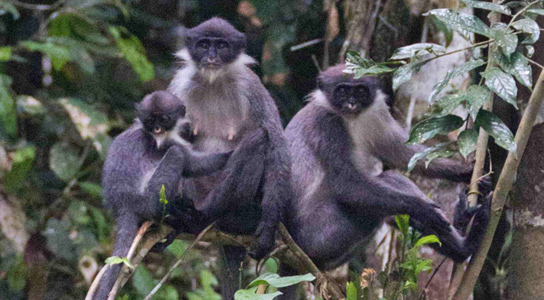
    grizzled-langur-monkey-group-eric-fell
    Miller’s Grizzled Langur

    Researchers rediscovered Miller’s grizzled langur in Borneo’s jungles, which was feared extinct, in the rain forest preserve of Wehea, located 90 miles (145 kilometers) west of the langur’s traditional territory. A mix of logging, agricultural encroachment, coal mining, and fire has destroyed most of its natural habitat.

    Initial surveys in the late 1970s placed the monkey in Borneo’s easternmost national forest. Thirty years later, all but 5% of its natural habitat has been destroyed. The langur was thought extinct, which is why researchers were shocked to spot it. A survey team accidentally captured the first images of the grizzled langurs in years.

    Brent Loken, a conservation scientist at Simon Fraser University is the co-author of a study published on January 24th in the American Journal of Primatology.
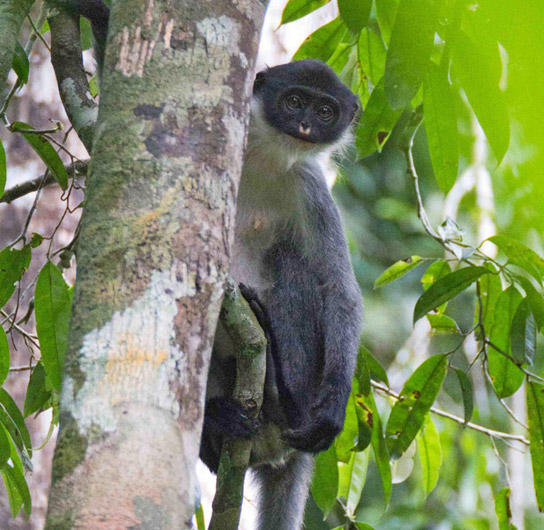
    grizzled-langur-monkey-tree-eric-fell

    Researchers don’t know much about Presbytis hosei canicrus. Loken and his team will have to act fast if they want to study the langurs, since they will move on quickly. It’s still uncertain if the Indonesian government will grant legal protection status for the Wehea area. P. hosei canicrus is among the most poorly understood of the primates in Borneo and among the IUCN’s critically endangered species list.

    Loken and his colleagues placed observation blinds and camera traps near locations where animals might naturally congregate. They hoped to spot the elusive clouded leopard but instead found the langur. Initially, Loken’s team was unsure of what they had found since there were no previously recorded photographs of the langurs. They had to find museum specimens for comparison purposes.

    Adult langurs weigh between 13 and 16 pounds (5.9 and 6.3 kilograms), primarily live off leaves and tend to live in groups of one male, several females, and their offspring. While the conservation laws in Indonesia are good, they are susceptible to corruption by logging, palm oil, and mining companies. Half of Borneo’s original rain forests have disappeared since the 1950s.

    Reference: “Discovery of Miller’s Grizzled Langur (Presbytis hosei canicrus) in Wehea Forest Confirms the Continued Existence and Extends Known Geographical Range of an Endangered Primate” by Stanislav Lhota, Brent Loken, Stephanie Spehar, Eric Fell, Alexandr Pospech and Nunuk Kasyanto, 24 January 2012, American Journal of Primatology.
    DOI: 10.1002/ajp.21983

    Never miss a breakthrough: Join the SciTechDaily newsletter.
    Follow us on Google and Google News.

    Borneo Conservation Extinct Monkey Scientists
    Share. Facebook Twitter Pinterest LinkedIn Email Reddit

    Related Articles

    Lost in the Desert? The “Extinct” Desert Rat-Kangaroo May Still Be Alive

    DNA From the Jungle Floor Reveals Mating Mysteries of Endangered Muriquis

    A Fifth of All Invertebrates on Earth Threatened by Extinction

    Previously Thought Extinct Sri Lankan Kandyan Dwarf Toad Reappears

    Monkeys Cured of Ebola Zaire Virus With Antibody Cocktail

    Native Hawaiian Vertebrate Species Reported Extinct

    Poisonous Dendrobatidae Frogs are Aposematic Organisms and Critically Endangered

    Human Y-Chromosome Has Enough Genes to Stay for Millions of Years

    Study Shows That Cephalopods Travel Faster in Air Than in Water

    Leave A Reply Cancel Reply

    • Facebook
    • Twitter
    • Pinterest
    • YouTube

    Don't Miss a Discovery

    Subscribe for the Latest in Science & Tech!

    Trending News

    1.4-Million-Year-Old Footprints Reveal a Giant Human Relative

    Astronomers May Have Found the First Moon Beyond Our Solar System

    Underwater Cameras Expose the Secret Lives of Whale Sharks

    Why Dreaming Leaves the Brain Running Low on Energy

    CERN Experiments Detect Signs of the Universe’s Primordial Matter

    Study Finds a Surprising Link Between Gut Microbes and Aging

    Frequent Cannabis Users Wake Up With More “Stress Hormone”

    Scientists Reveal Hidden DNA Traces in the Shroud of Turin

    Follow SciTechDaily
    • Facebook
    • Twitter
    • YouTube
    • Pinterest
    • Newsletter
    • RSS
    SciTech News
    • Biology News
    • Chemistry News
    • Earth News
    • Health News
    • Physics News
    • Science News
    • Space News
    • Technology News
    Recent Posts
    • A Daily Multivitamin May Help Older Adults Stay Active
    • Blood Test May Reveal Alzheimer’s Risk Years Before Symptoms
    • Scientists Thought SuperAgers Had Lucky Genes. They Were Wrong
    • Humans and Mice May Process Smells in Very Similar Ways
    • These Beautiful Flowers Can Paralyze You, but Their Chemistry Could Save Lives
    Copyright © 1998 - 2026 SciTechDaily. All Rights Reserved.
    • Science News
    • About
    • Contact
    • Editorial Board
    • Privacy Policy
    • Terms of Use

    Type above and press Enter to search. Press Esc to cancel.