
Close Menu
    Facebook X (Twitter) Instagram
    SciTechDaily
    • Biology
    • Chemistry
    • Earth
    • Health
    • Physics
    • Science
    • Space
    • Technology
    Facebook X (Twitter) Pinterest YouTube RSS
    SciTechDaily
    Home»Space»VISTA Telescope Uses IR to Show Helix Nebula In New Light
    Space

    VISTA Telescope Uses IR to Show Helix Nebula In New Light

    By SciTechDailyJanuary 20, 2012No Comments2 Mins Read
    Facebook Twitter Pinterest Telegram LinkedIn WhatsApp Email Reddit
    Share
    Facebook Twitter LinkedIn Pinterest Telegram Email Reddit
    helix-nebula-eso-vista
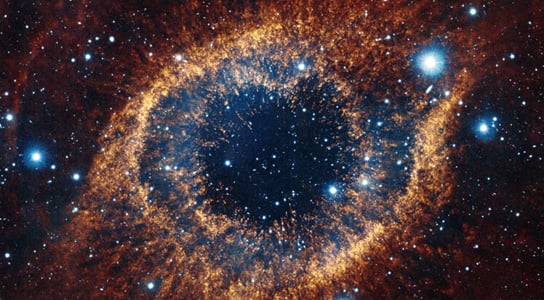
    The Helix Nebula is situated in the Aquarius constellation, approximately 700 light-years away from Earth.

    The Helix Nebula in the Aquarius constellation, located some 700 light-years away from Earth, was just observed by the piercing infrared gaze of the VISTA telescope at the Paranal Observatory in Chile. Some have referred to the images as the Eye of Sauron, from JRR Tolkien’s Lord of the Rings.

    The images reveal cold gas that is normally hidden from view among the warmer, star-lit material. Helix’s central star was once like Sol, but its outer layers of gas and dust have sloughed off. The planetary nebula scatters light in the visible spectrum, which is why it seems to emit a bluish glare.
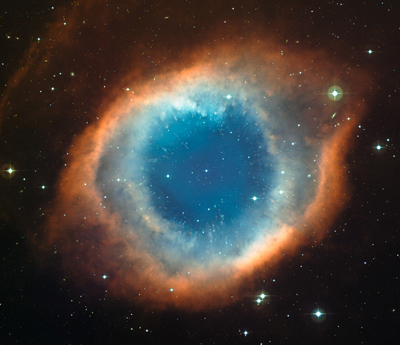
    visible-light-helix-nebula

    The VISTA telescope, with its 4.1 meter (13.4 ft) mirror, peered inside the nebula on the infrared light wavelength, which is invisible to the naked eye. The images that were released today show that the central region of gas extends at least 4 light-years around, instead of the 2 light-years which was the previous estimate. The images also show the distant stars and galaxies hiding behind the nebula.

    The cometary knots, filaments of material at the periphery, which are basically cooler strands of gas, are each as long as the Solar System is wide. Astronomers suspect that the intense radiation from the dying central star carves out such knots, but they are unaware of the exact origins.

    Never miss a breakthrough: Join the SciTechDaily newsletter.
    Follow us on Google and Google News.

    Astronomy Nebula Popular Telescope VISTA
    Share. Facebook Twitter Pinterest LinkedIn Email Reddit

    Related Articles

    Image of RCW 120 Nebula Shows Expanding Bubble of Ionized Gas

    New Image of the Helix Nebula Unraveling Into Space

    A New Image of The Pencil Nebula

    Detailed Image of Barnard 59, The Mouthpiece of the Pipe Nebula

    Popular VISTA Image of the Orion Nebula

    Fermi Detects the Highest-Energy Light Ever Associated With an Eruption on the Sun

    Astronomers Obtain Precise Measurements of the Two Kepler-16 Stars

    Adaptive Optics Will Put Gemini Twin Telescopes at the Forefront of Astronomy Again

    SOFIA Looking Deep Into the Orion Nebula

    Leave A Reply Cancel Reply

    • Facebook
    • Twitter
    • Pinterest
    • YouTube

    Don't Miss a Discovery

    Subscribe for the Latest in Science & Tech!

    Trending News

    Scientists May Have Discovered How To Heal Damaged Kidneys

    Interstellar Visitor 3I/ATLAS Is Bursting With an Unexpected Chemical

    Scientists Just Found All 5 Genetic “Letters” of DNA and RNA on an Asteroid

    The 4,000-Year-Old City That Defied History’s Rules on Wealth and Power

    The World’s Biggest Population Fear Has Flipped – and It Could Change Everything

    This “Fake” Pill Improved Memory and Physical Performance in Just 3 Weeks

    Scientists Say Frequent Ejaculation May Improve Sperm Quality and Fertility

    Scientists Have Found “The Heaven Sword” After Years of Looking

    Follow SciTechDaily
    • Facebook
    • Twitter
    • YouTube
    • Pinterest
    • Newsletter
    • RSS
    SciTech News
    • Biology News
    • Chemistry News
    • Earth News
    • Health News
    • Physics News
    • Science News
    • Space News
    • Technology News
    Recent Posts
    • Scientists Uncover a Previously Unknown Lineage of Ancient Marsupials
    • Critically Endangered Monkey Defies the Odds With New Baby After Surgery
    • 17-Million-Year-Old Ape Fossil in Egypt Could Change What We Know About Human Origins
    • NASA’s Orbiting Quantum Lab Pushes Deeper Into the Unknown
    • NASA’s James Webb Discovers Bizarre Salt Clouds on the Pink Planet
    Copyright © 1998 - 2026 SciTechDaily. All Rights Reserved.
    • Science News
    • About
    • Contact
    • Editorial Board
    • Privacy Policy
    • Terms of Use

    Type above and press Enter to search. Press Esc to cancel.