
Close Menu
    Facebook X (Twitter) Instagram
    SciTechDaily
    • Biology
    • Chemistry
    • Earth
    • Health
    • Physics
    • Science
    • Space
    • Technology
    Facebook X (Twitter) Pinterest YouTube RSS
    SciTechDaily
    Home»Earth»All Coral Reefs May be Dying by 2100
    Earth

    All Coral Reefs May be Dying by 2100

    By SciTechDailyDecember 26, 20121 Comment3 Mins Read
    Facebook Twitter Pinterest Telegram LinkedIn WhatsApp Email Reddit
    Share
    Facebook Twitter LinkedIn Pinterest Telegram Email Reddit
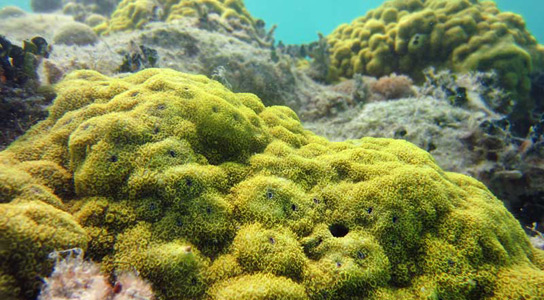
    Coral Reefs Might Disappear By 2100
    Oceanographers have blamed bleaching of Porites coral from Australia’s Great Barrier Reef on warming water temperatures, ocean acidification, and pollution. Credit: Louis Wray/Creative Commons

    If current carbon dioxide emission trends continue, nearly every coral reef would be decimated by 2100, according to a new review of major climate models. The only way to maintain the current chemical environment in which reefs need to live, would be to deeply cut emissions worldwide.

    The scientists presented their findings at the American Geophysical Union meeting earlier this fall. The findings indicate that it might even become necessary to actively remove carbon dioxide from the atmosphere, with massive tree-planting efforts or machines of some kind.

    The combined stresses of acidification and warming waters, coupled with overfishing and coastal pollution, is taking their toll on coral reefs. Carbon emissions have already lowered the pH of the ocean by 0.1, which has harmed and hindered the bivalves’ ability to grow. The historical record of previous mass extinctions indicates that acidified seas are usually accompanied by widespread die-offs.

    Scientists at the Carnegie Institution of Science in Palo Alto, California, analyzed the results of computer simulations performed by 13 teams worldwide. The models included how ocean chemistry would interact with an atmosphere with higher carbon dioxide content. Using the predictions of the models, scientists were able to calculate a key chemical measurement that affects coral. Corals make their shells out of the dissolved carbonate aragonite. As carbon dioxide continues to steadily acidify the ocean, chemical reactions change the extent to which the carbonate is available in the water for coral. Its saturation is generally thought to be between 3 and 3.5.

    Paleoclimate data indicates that the saturation level during preindustrial times, before carbon dioxide pollution began to accumulate, was greater than 3.5. The team compared the data with the location of 6,000 reefs for which there is data, two-thirds of the world’s total. This allowed them to do a chemical analysis of the future reef habitats.

    The amount of carbon dioxide that will be emitted in the coming decades could have a huge impact on the reefs. In a low-emissions trajectory, in which carbon pollution rates were slashed and carbon was actively removed from the air by trees or machines, between 77% and 87% of the reefs analyzed stayed in the safe zone with the aragonite saturation above 3.

    At today’s levels, aragonite saturation would fall below 3, dooming the reefs.

    Never miss a breakthrough: Join the SciTechDaily newsletter.
    Follow us on Google and Google News.

    Climate Change Conservation Coral Reefs Geophysics Oceanography
    Share. Facebook Twitter Pinterest LinkedIn Email Reddit

    Related Articles

    New Study Warns: By 2100, Coral Reefs Could Be Overtaken by Algae

    Who Is Driving Whom? Climate and Carbon Cycle in Perpetual Interaction and Changing Feedback Mechanisms

    Pumping Up Cold Water From Deep Within the Ocean to Halt Coral Bleaching

    Climate Change Already Affecting More Than Half of World’s Oceans

    Some Tropical Coral Reefs Resilient to Rising Temperatures – May Show “The Key to Survival for Future Reefs”

    Islands Might Not Actually “Drown” As Sea Levels Rise – Here’s Why

    How Climate Killed Corals, Devastating the Great Barrier Reef

    Decades of Knowledge of Marine Protected Areas Ruined by Climate Change

    Worrying Indian Ocean Phenomenon Spells Climate Trouble for Australia

    1 Comment

    1. a on September 18, 2013 11:04 am

      so this is not a significant issue then.

      Reply
    Leave A Reply Cancel Reply

    • Facebook
    • Twitter
    • Pinterest
    • YouTube

    Don't Miss a Discovery

    Subscribe for the Latest in Science & Tech!

    Trending News

    This Copper Drug Clears Alzheimer’s Brain Toxins and Boosts Memory

    Adults Over 65 Lost Massive Amounts of Weight With Ozempic

    How Flocking Birds “Defy” One of Physics’ Most Fundamental Laws

    Physicists Create a New Kind of Schrödinger’s Cat State From Exotic Quantum Building Blocks

    Your Diet Could Be Missing the Key Ingredient for Heart Protection

    Researchers Warn Widely Prescribed Blood Pressure Drugs Could Be Harming Diabetic Kidneys

    James Webb Spots Something Strange Between Day and Night on an Alien Planet

    How Ancient People Moved a 6-Ton Stone 700 Kilometers to Stonehenge

    Follow SciTechDaily
    • Facebook
    • Twitter
    • YouTube
    • Pinterest
    • Newsletter
    • RSS
    SciTech News
    • Biology News
    • Chemistry News
    • Earth News
    • Health News
    • Physics News
    • Science News
    • Space News
    • Technology News
    Recent Posts
    • Ancient Black Holes May Have Survived a Cosmic Era Before the Big Bang
    • What if Time Isn’t Fundamental? Physicists Just Tested the Idea in the Lab
    • Scientists Let People Play Video Games Using Only Their Thoughts
    • Women’s Brains May Be More Vulnerable to Dementia Risk Factors Than Scientists Realized
    • Scientists Say We’ve Been Wrong About the Aging Brain
    Copyright © 1998 - 2026 SciTechDaily. All Rights Reserved.
    • Science News
    • About
    • Contact
    • Editorial Board
    • Privacy Policy
    • Terms of Use

    Type above and press Enter to search. Press Esc to cancel.