
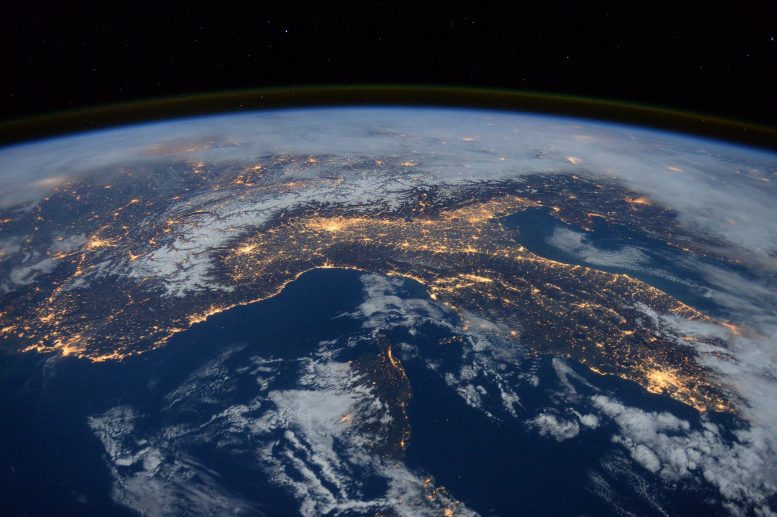
First estimate of the point at which areas of the world’s oceans will show evidence of the impacts of climate change.
More than 50% of the world’s oceans could already be affected by climate change, with this figure rising as high as 80% over the coming decades, a new study has shown.
Scientists used climate models and observations in deeper areas of ocean worldwide to calculate for the first time the point at which changes to temperatures and salt levels — good indicators of the impact of human-induced climate change — would overpower natural variations.
The study, published in Nature Climate Change, estimates that 20-55% of the Atlantic, Pacific, and Indian oceans now have noticeably different temperatures and salt levels, while this will rise to 40-60% by the middle of the century, and to 55-80% by 2080.
It also found the Southern Hemisphere oceans are being affected more rapidly by climate change than the Northern Hemisphere, with changes having been detectable there since as early as the 1980s.
Professor Eric Guilyardi, co-author at the University of Reading and LOCEAN-IPSL, Laboratory of Oceanography and Climate in Paris, said: “We have been detecting ocean temperatures change at the surface due to climate change for several decades now, but changes in vast areas of the ocean, particularly deeper parts, are much more challenging to detect.”
Yona Silvy, a doctoral student at LOCEAN-IPSL/Sorbonne University, and lead author of the study, said: “We were interested in whether the levels of temperatures and salt were great enough to overcome natural variability in these deeper areas, that is if they had risen or fallen higher than they ever would during the normal peaks and troughs. This affects global ocean circulation, sea level rise, and poses a threat to human societies and ecosystems.
Previous studies have gauged the impact of climate change on the ocean by looking at surface temperatures, rainfall, and sea level rise, but few have looked at the regional effects deeper down in the ocean to get a more complete picture.
The effects of climate change are harder to detect in deeper, more insulated parts of the ocean, where heat and salt spread at a slower rate due to weaker mixing processes. It is also difficult in areas that are poorly observed or where natural variability is high.
Yona Silvy and her co-authors used model simulations with and without the impact of human activity and an analysis that combines both temperature and ocean salt to detect significant changes and their date of likely detection, also known as “time of emergence.” Yet these are regions that will keep the memory of these changes for decades to centuries.
Changes detectable above natural variability were calculated to be seen in the Northern Hemisphere oceans between 2010-2030, meaning increases or decreases in temperature and salt levels are likely to have already taken place.
The more rapid and earlier changes seen in the Southern Hemisphere emphasizes the importance of the Southern Ocean for global heat and carbon storage as surface waters make their way to the deeper ocean more easily there. However, this part of the world is also particularly poorly observed and sampled, meaning changes are likely to remain undetected for longer.
The scientists argue that improved ocean observation and greater investment in ocean modeling is necessary to monitor the extent of the impact of climate change on the world’s oceans, and predict more accurately the wider effect this could have on the planet.
Reference: “Human-induced changes to the global ocean water masses and their time of emergence” by Yona Silvy, Eric Guilyardi, Jean-Baptiste Sallée and Paul J. Durack, 17 August 2020, Nature Climate Change.
DOI: 10.1038/s41558-020-0878-x
Never miss a breakthrough: Join the SciTechDaily newsletter.
Follow us on Google and Google News.
1 Comment
“It also found the Southern Hemisphere oceans are being affected more rapidly by climate change than the Northern Hemisphere, with changes having been detectable there since as early as the 1980s.”
While CO2, which is presumed to be driving the global warming, is considered well-mixed, most of the anthropogenic sources are in the Northern Hemisphere (NH) and there is a time delay in it spreading to the Southern Hemisphere (SH). There is also a greater seasonal flux of CO2 in the NH resulting from the greater land mass with abundant deciduous trees and annual forbs. The article doesn’t make it clear why the SH oceans are being impacted more quickly by warming if CO2 is the driving force.