
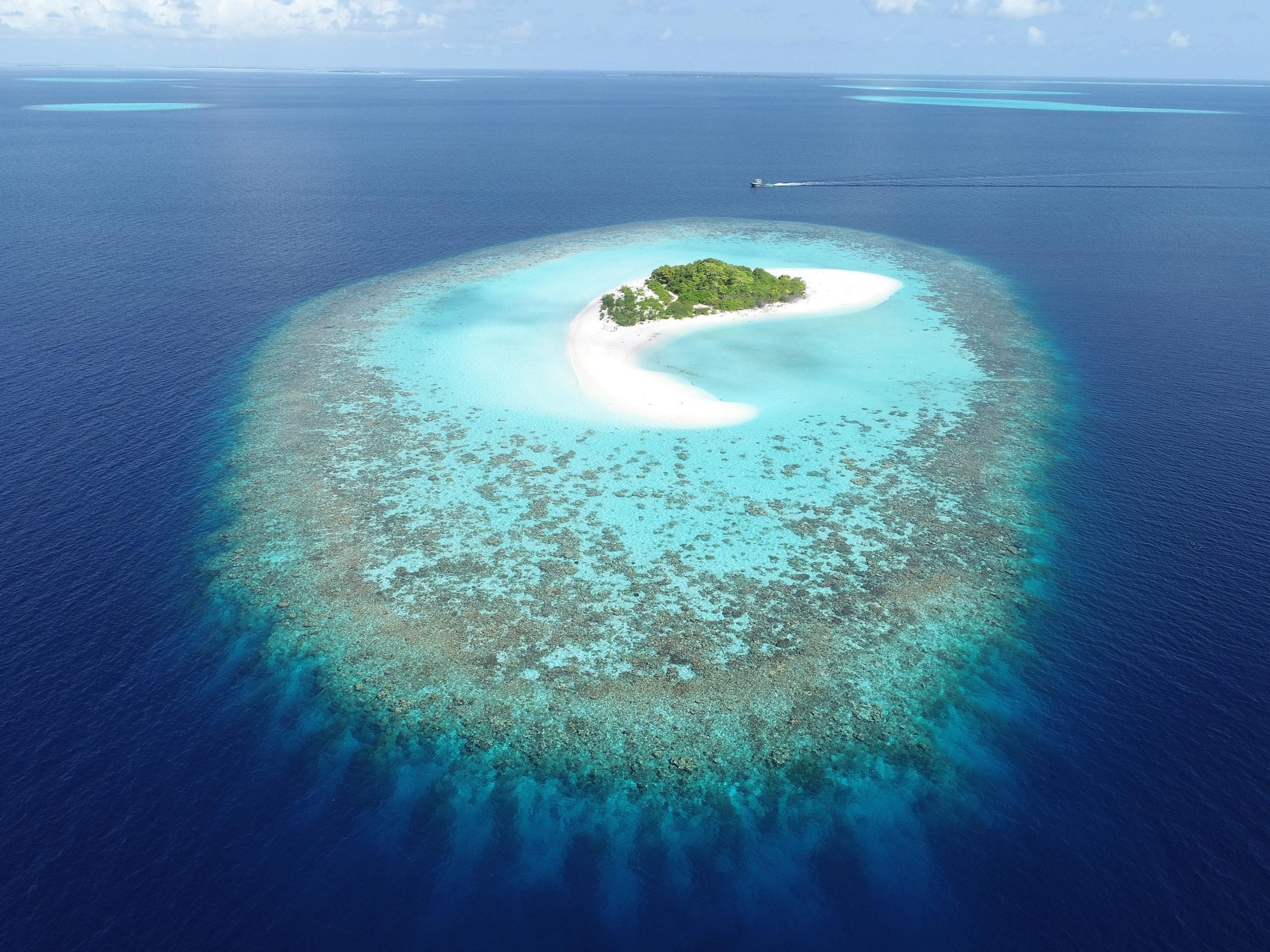
Coral reef islands across the world could naturally adapt to survive the impact of rising sea levels, according to new research.
The increased flooding caused by the changing global climate has been predicted to render such communities — where sandy or gravel islands sit on top of coral reef platforms — uninhabitable within decades.
However, an international study led by the University of Plymouth (UK) suggests that perceived fate is far from a foregone conclusion.
The research, published in Science Advances, for the first time uses numerical modeling of island morphology alongside physical model experiments to simulate how reef islands — which provide the only habitable land in atoll nations — can respond when sea levels rise.
The results show that islands composed of gravel material can evolve in the face of overtopping waves, with sediment from the beach face being transferred to the island’s surface.
This means the island’s crest is being raised as sea level rises, with scientists saying such natural adaptation may provide an alternative future that can potentially support near-term habitability, albeit with additional management challenges, possibly involving sediment nourishment, mobile infrastructure and flood-proof housing.
The research was led by Gerd Masselink, Professor of Coastal Geomorphology in Plymouth, working with colleagues at the University of Auckland (New Zealand) and Simon Fraser University (Canada).
Professor Masselink, who heads Plymouth’s Coastal Processes Research Group, said: “In the face of climate change and sea level rise, coral reef islands are among the most vulnerable coastal environments on the planet. Previous research into the future habitability of these islands typically considers them inert structures unable to adjust to rising sea level. Invariably, these studies predict significantly increased risk of coastal flooding and island inundation, and the concept of ‘island loss’ has become entrenched in discourses regarding the future of coral reef island communities. In turn, this has led to attention being focused on either building structural coastal defenses or the exodus of island communities, with limited consideration of alternative adaptation strategies.
“It is important to realize that these coral reef islands have developed over hundreds to thousands of years as a result of energetic wave conditions removing material from the reef structure and depositing the material towards the back of reef platforms, thereby creating islands. The height of their surface is actually determined by the most energetic wave conditions, therefore overtopping, flooding and island inundation are necessary, albeit inconvenient and sometime hazardous, processes required for island maintenance.”
Co-author Professor Paul Kench, currently Dean of Science at Simon Fraser University, Canada, said: “The model provides a step-change in our ability to simulate future island responses to sea level rise and better resolve what the on-ground transformations will look like for island communities. Importantly, our results suggest that island drowning within the next few decades is not universally inevitable. Understanding how islands will physically change due to sea level rise provides alternative options for island communities to deal with the consequences of climate change. It is important to stress there is no one-size-fits-all strategy that will be viable for all island communities — but neither are all islands doomed.”
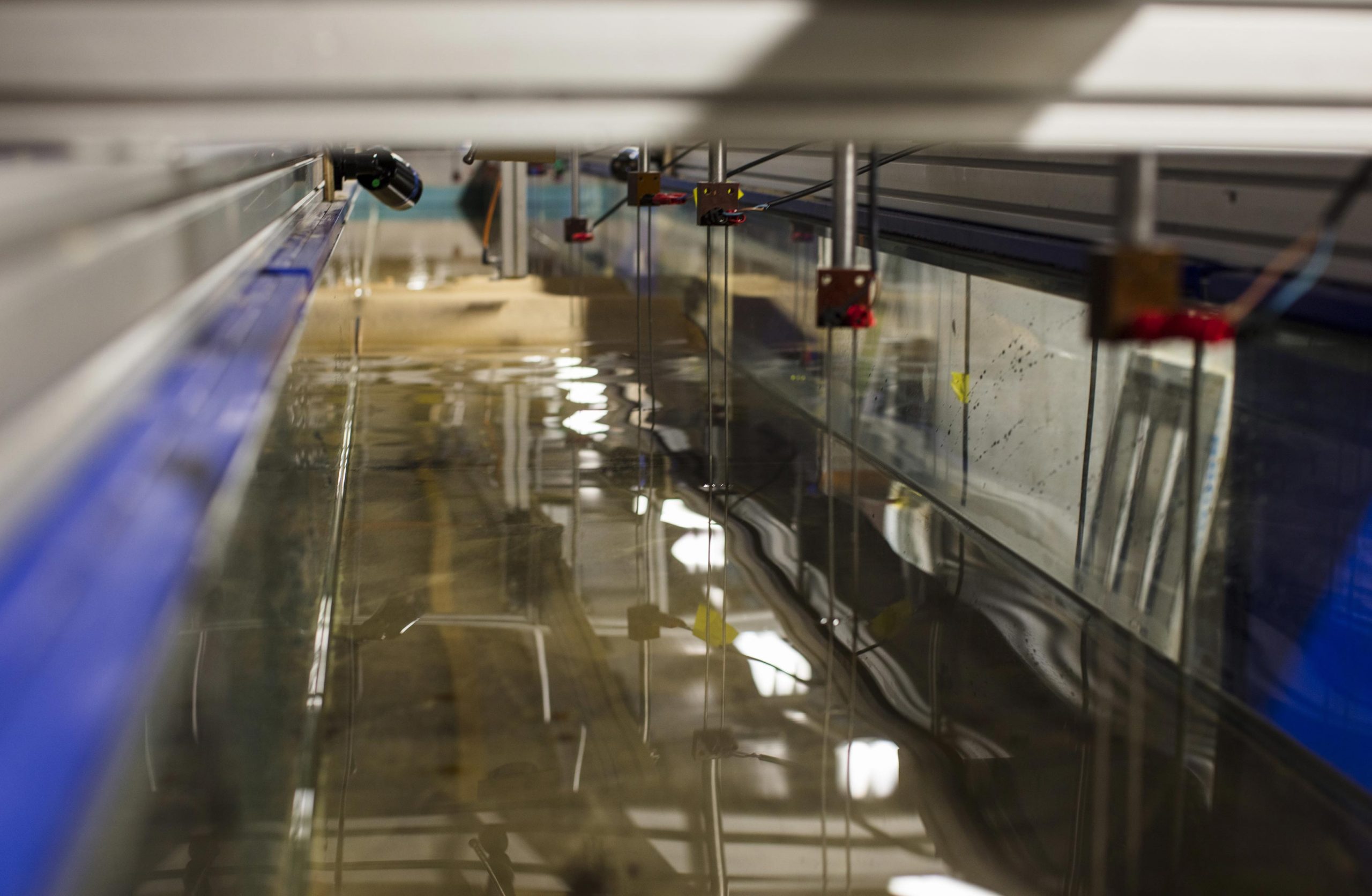
For the research, scientists created a scale model of Fatato Island, part of the Funafuti Atoll in Tuvalu, and placed it in the Coastal Ocean and Sediment Transport (COAST) Lab at the University of Plymouth.
It was then subjected to a series of experiments designed to simulate predicted sea level rises with the results showing that the island’s crest rose with the rising sea level, while retreating inland, as a result of water overwashing the island and depositing sediment on the island’s surface.
A numerical model was validated using these laboratory experiments, and three numerical modeling scenarios were then used to assess how the island adjusted to a sea level rise of 0.75m, the global average increase predicted for 2100 by the Intergovernmental Panel on Climate Change.
During the numerical simulations, the island crest rose by just under 0.7m (2.5ft), showing that islands can keep up with rising level and confirming the laboratory experiments, although the precise future rate of sea level rise will be critical in determining their future.
Reference: “Coral reef islands can accrete vertically in response to sea level rise” by Gerd Masselink, Eddie Beetham and Paul Kench, 10 June 2020, Science Advances.
DOI: 10.1126/sciadv.aay3656
Never miss a breakthrough: Join the SciTechDaily newsletter.
Follow us on Google and Google News.
16 Comments
Most corals grow 5 cm per year faster than the predicted sea level rises. Coral reef growth should be able to keep up with the sea level rises.
Not only that, the planet’s tectonic plates will shift, expanding oceanic area in response to any additional pressure applied by increase volumes. An increase in the regularity of earthquakes would be expected.
Not only “could,” but probably will adapt!
Except that corals are dying off around the world due to acidification and warming of the oceans. It’s quite possible there won’t be any living coral left by 2050, let alone 2100.
The periodic bleaching of reef corals is not making them die off. They recover. Sea surface temperatures have barely risen where these reef corals are bleaching. Small changes in alkalinity (acidification) are irrelevant.
You are dumb. Just like about everyone else who thinks nature can just adapt so fast to things that are QUICKLY spirialing out of controle. We don’t even realize as humans how much we are actually damaging the planet. We think we know. But we have no clue just how much damage. We are doing and we will only know what the consequences are when it is far far to late. And that time is fast approaching and will arrive decades before we expect it to come maybe centuries. We will suffer with the rest of the planet as well and we will then cease to exist due to our lack of care about things and our lack of wanting to realize what is punching us in the face rite NOW. We are just taking it like a stupid punching bag. Like, punch, “Duh Duh feels good Joe” punch punch. We are going to kill every last complex life form on this planet in the end. Why you ask. Because we won’t be satisfied until everything is good and dead. Get a clue dude the ocean is continually acidifying more and more every freaking day. Until the balance happens it will absorb more and more carbon dioxide and get more acidic and more acidic every single day until there will be no Crustaceans left because shells will dissolve. And whales and stuff can’t live in acid baths so yeah you can say we’re fine and dandy and there’s hardly a bit of acidification to the site and sound stupid as f***. Or realize what’s happening and stop drooling all over yourself just like everybody else cuz everybody else so stupid too wake up.
I went diving around a coral reef off Cairns, Australia 30 years ago and the colours are fantastic. Last year I went out to that same reef and it was abysmal. It was nearly all just grey.
I believe that Dr. Kench wrote an article earlier that used satellites to examine actual atoll island growth…
“The study found that as a whole, instead of declining, the islands grew in land area by a total of 63 ha or seven percent. The research findings show that although sea level in the central Pacific Ocean rose by about 2.0 mm/yr over the study period and that all 27 islands changed physically during that time, there is considerable variation in the amount and style of change between and among the islands, with an overall net increase in land area; 86 percent of the islands remained relatively stable or their outline or shape increased in size. Twelve of the 27 islands increased in size by more than three percent but only four islands reduced in area by more than three percent.”
Coral growing in acidic conditions? Waves growing islands? Science like this has taken us to where we are now! Laughing long time. LLT
You’re stupid as all heck too
Thinking, let alone writing something like this is dangerous, just think how we didnt care enough to change our actions before, now the ignorant will use this article, and ‘study’ as an excuse to carry on as business as usual. What is wrong with everybody, how can anyone let alone the majority of us be only concerned with ourselves, and not all the lives of the beautiful, bizarre, and unique lives that our selfishness, and laziness has, is, and will obliterate. We are such a self centered, and destructive species, I believe we should, and hope we go extinct. The last thing the universe needs is us expanding.
This study does not take into account the many reenforcing feedback processes that are likely to kick in as humans continue to fail to drastically reduce their use of fossil fuels and fail to extract the CO2 already in the atmosphere. Assuming that our species will prevail to the year 2100 demonstrates a cluelessness about statements such as the following.
UN chief: World has less than 2 years to avoid ‘runaway climate change’
https://thehill.com/policy/energy-environment/406291-un-chief-the-world-has-less-than-2-years-to-avoid-runaway-climate
UN Chief warns countries that the ‘point of no return’ on climate change is fast approaching
https://www.msn.com/en-gb/news/environment/un-chief-warns-countries-that-the-point-of-no-return-on-climate-change-is-fast-approaching/ar-BBXCJHl
The ONLY thing I have found absolutely certain regarding the effects of additional man made CO2 on the earth is plant growth accelleration. Everything else is a theory and has a level of speculation. http://www.bu.edu/articles/2020/plants-are-slowing-global-warming/
Under precious glacial and interglacial periods, according to conventional thinking, coral would be extinct already. Yet coral reefs have survived for millions of years. There had to be a natural mechanism that allowed coral communities to survive, yet whenever I discussed this on other sites, people reacted with vituperativeness and anger. This research seems to support my own conjecture and should be shared and forwarded with everyone we know. Ignorance always leads to anger. Let’s illuminate our angry friends.
Well said AJW
I think the planet was getting warmer anyway, maybe humans are making it worse, maybe not. Ever since I found out scientist can conduct 1000 experiments, and publish the results of 1, leaving the results of the other 999 unstated, I just can’t trust anything science says. So I have to trust my gut, and my gut says, we are supposed to get hotter, as the ice age is coming to an end.