
Coral Reefs Under Siege from Human and Climate Pressures
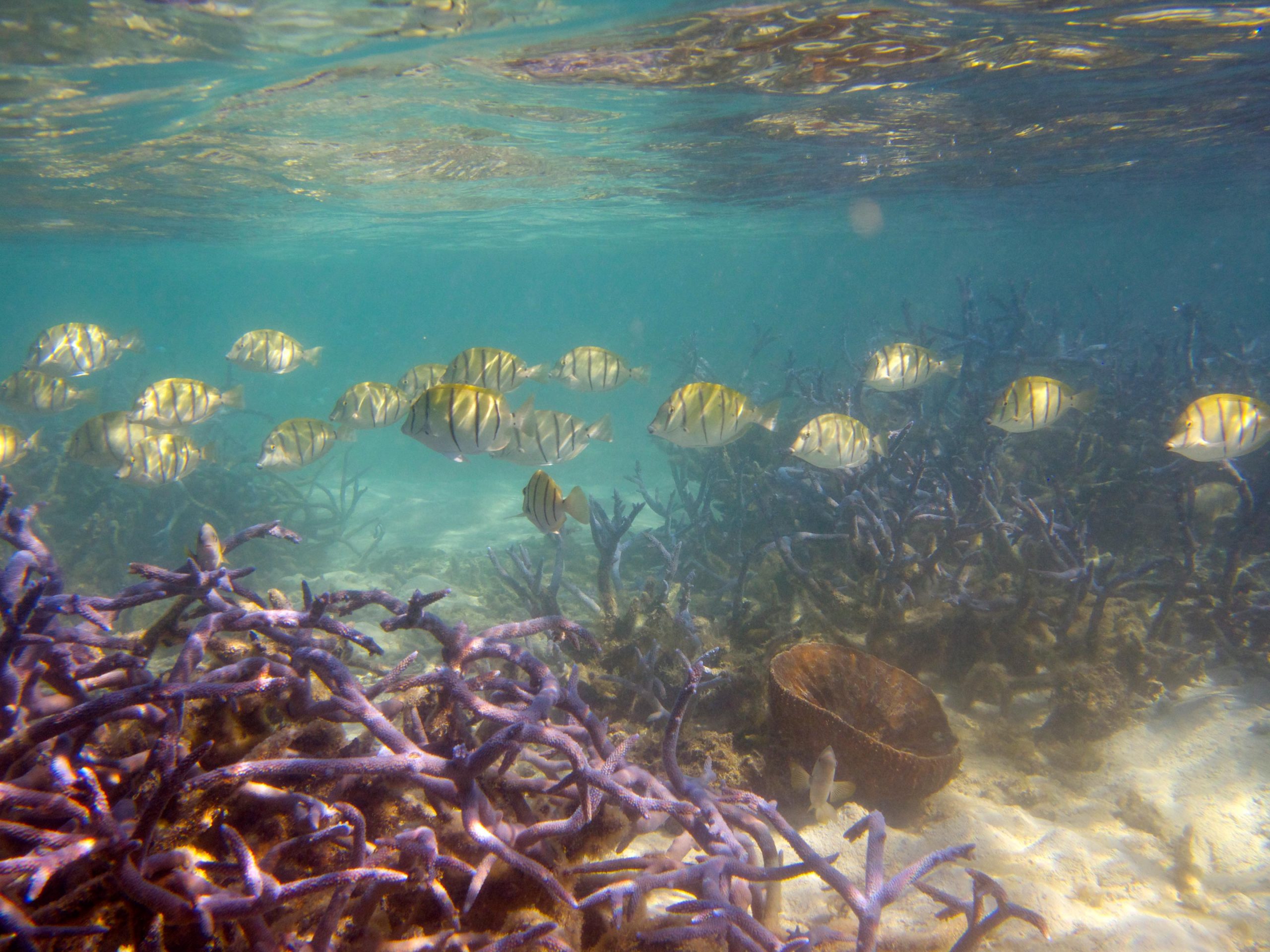
Coral reefs around the world are under threat because of climate change, overfishing, pollution, and more. Now, researchers reporting in the journal One Earth today (September 17, 2021) offer the first comprehensive global look at what these impacts on coral reefs mean for ecosystem services, the ability of the reef to provide essential benefits and services to humans. Overall, the findings show that the significant loss in coral reef coverage has led to an equally significant loss in the ability of the reef to provide basic services, including food and livelihoods.
“Coral reefs are known to be important habitats for biodiversity and are particularly sensitive to climate change, as marine heat waves can cause bleaching events,” said Tyler Eddy, a research scientist at the Fisheries & Marine Institute, Memorial University of Newfoundland who was a postdoctoral fellow at the University of British Columbia’s Institute for the Oceans & Fisheries when he started this research. “Coral reefs provide important ecosystem services to humans, through fisheries, economic opportunities, and protection from storms.”
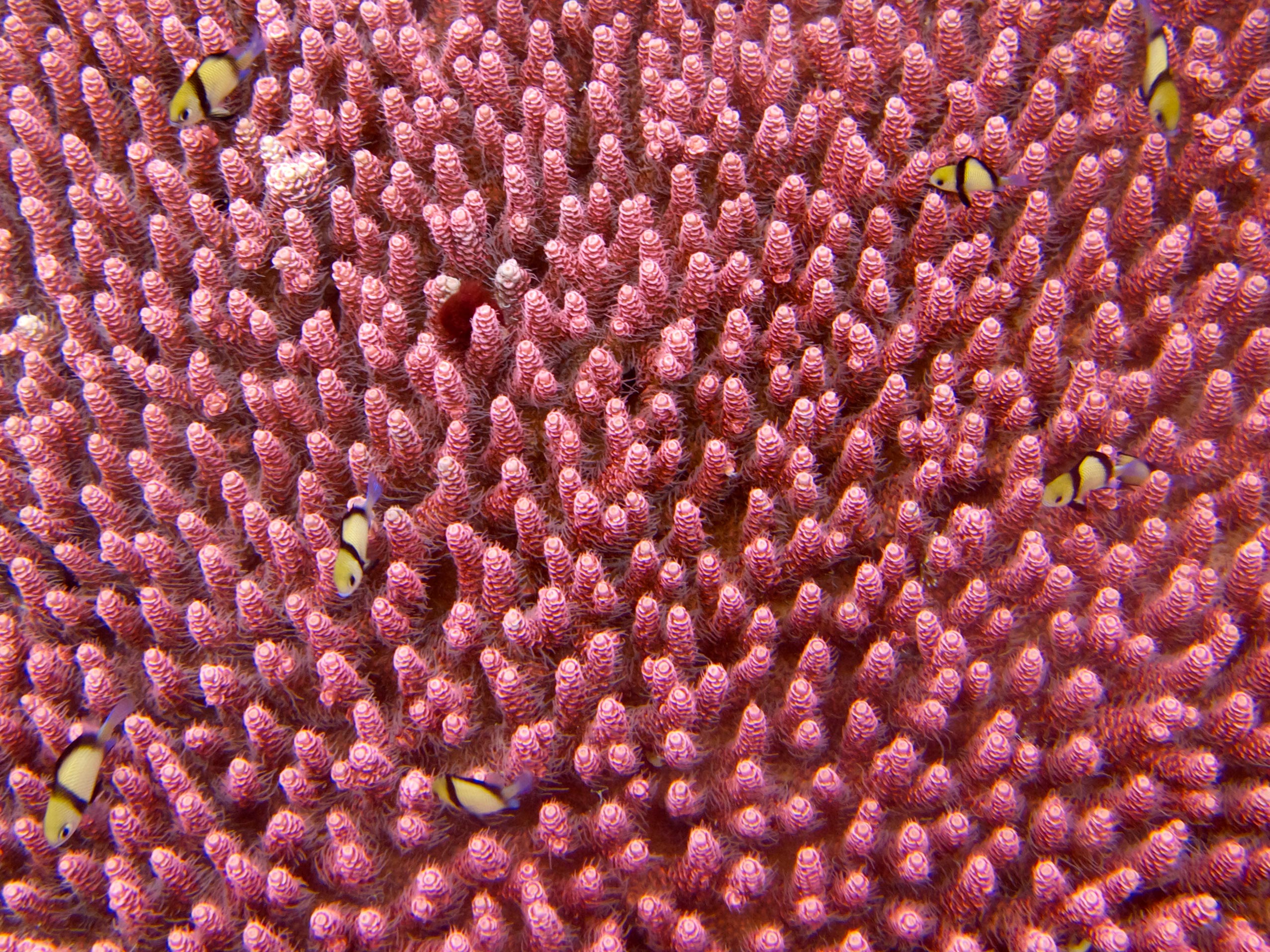
In the new study, Eddy and colleagues conducted a global analysis of trends in coral reefs and associated ecosystem services including the following:
- Living coral cover
- Associated fisheries catches and effort
- Differences fishing across the food-web
- Coral reef associated biodiversity
- Seafood consumption by coastal Indigenous peoples.
To explore these various aspects of the reef ecosystem, they combined datasets from coral reef surveys, estimated coral-reef-associated biodiversity, fishery catches and effort, fishery impacts on food web structure, and Indigenous consumption of coral-reef-associated fish to analyze global and country level trends in ecosystem services.
A Steep Decline in Coral Coverage and Fishery Yields
After putting it all together, the data show that the global coverage of living corals has declined by about half since the 1950s. So, too, has the capacity of coral reefs to provide ecosystem services. They find that the catches of fishes on the coral reef reached its peak nearly two decades ago and has been in decline ever since despite an increase in fishing effort. The catch per unit effort (CPUE), often used as an indication of changes in biomass, is now 60% lower than it was in 1950.
“Our analysis indicates that the capacity of coral reefs to provide ecosystem services has declined by about half globally,” said William Cheung, Professor at the UBC Institute for the Oceans and Fisheries and senior author of this study. “This study speaks to the importance of how we manage coral reefs not only at regional scales, but also at the global scale, and the livelihoods of communities that rely on them.”
The researchers also found that diversity of species on the reef has declined by more than 60%.
Indigenous and Coastal Communities at Risk
The findings lead the researchers to conclude that continued degradation of the reef in years to come now threaten the well-being and sustainable development of human communities on the coast that depend on the coral reef. “The effects of degraded and declining coral reefs are already evident through impacts on subsistence and commercial fisheries and tourism in Indonesia, the Caribbean, and South Pacific, even when marine protected areas are present, as they do not provide protection from climate change and may suffer from lack of enforcement and marine protected area staff capacity,” the researchers write.
“Fish and fisheries provide essential micronutrients in coastal developing regions with few alternative sources of nutrition,” they write. “Coral reef biodiversity and fisheries take on added importance for Indigenous communities, small island developing states, and coastal populations where they may be essential to traditions and cultural practices. The reduced capacity of coral reefs to provide ecosystem services undermines the well-being of millions of people with historical and continuing relationships with coral reef ecosystems.”
Reference: “Global decline in capacity of coral reefs to provide ecosystem services” by Tyler D. Eddy, Vicky W.Y. Lam, Gabriel Reygondeau, Andrés M. Cisneros-Montemayor, Krista Greer, Maria Lourdes D. Palomares, John F. Bruno, Yoshitaka Ota and William W.L. Cheung, 17 September 2021, One Earth.
DOI: 10.1016/j.oneear.2021.08.016
This work was supported by the Nippon Foundation to the Nereus Program and the Ocean Nexus Center.
Never miss a breakthrough: Join the SciTechDaily newsletter.
Follow us on Google and Google News.
1 Comment
It is generally accepted that the average global air temperature has increased less than 1 deg Celsius in the last 70 years, most of which has been at night, in the Winter, and at Arctic latitudes. That is, it generally doesn’t get as cold as previously. Because water has a high specific heat capacity compared to air and terrestrial materials, such as soil and rock, the average increase in ocean surface temperatures has been only a quarter of that 1 deg C! To put that in perspective, ocean water ranges in temperature from about -2 deg C to about 32 deg C in the tropics. Yet, the article places “climate change” at the beginning of the list of things affecting fish abundance and diversity! Why is that?
Most observers attribute the fisheries problem to over-fishing and pollution because pelagic fish are free to move to deeper, cooler water, or migrate pole-ward. Might there be some bias on the part of the researchers?