
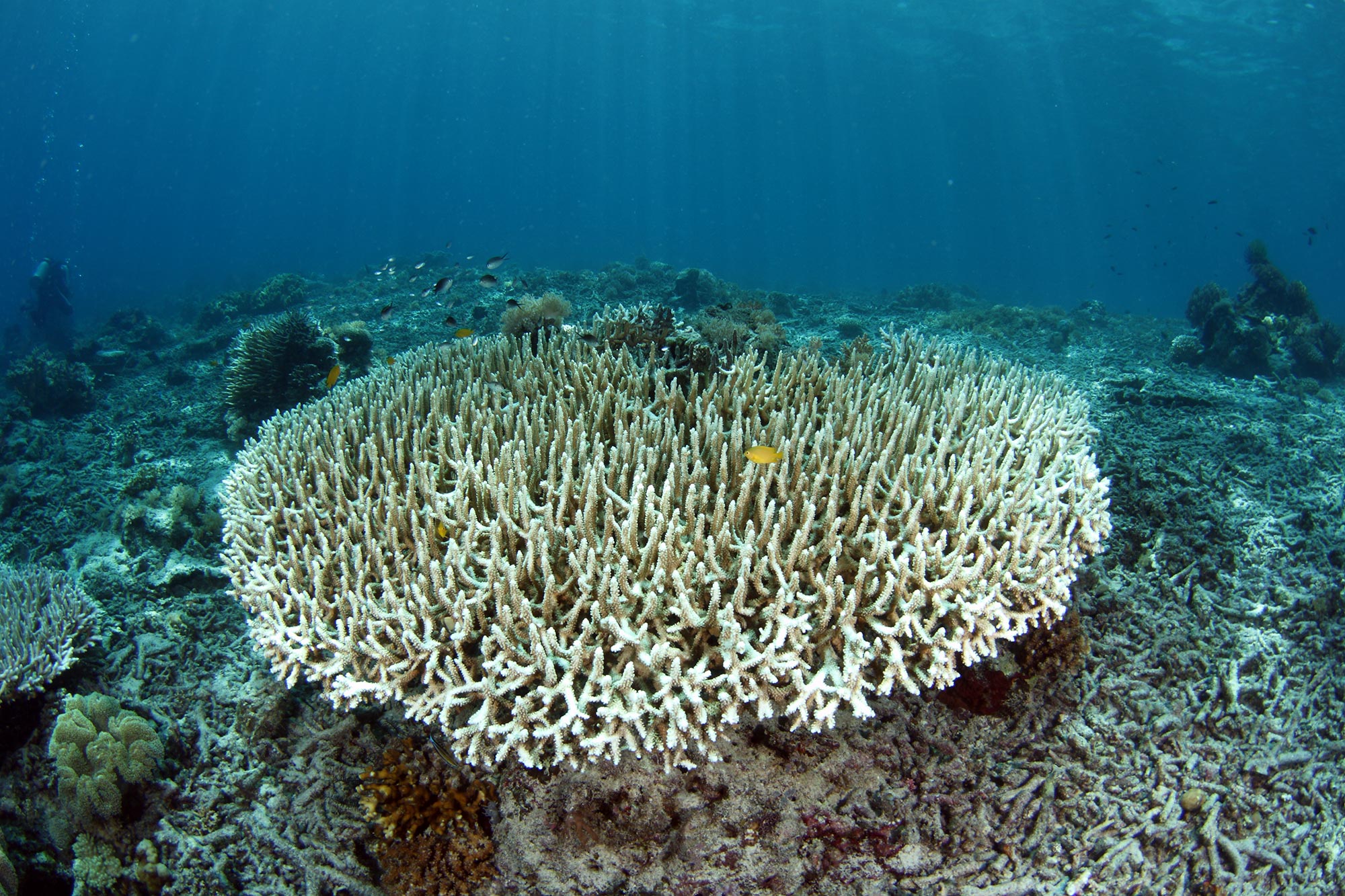
Multiple factors joined forces to devastate the Great Barrier Reef in 2016.
A squad of climate-related factors is responsible for the massive Australian coral bleaching event of 2016. If we’re counting culprits: it’s two by sea, and one by land.
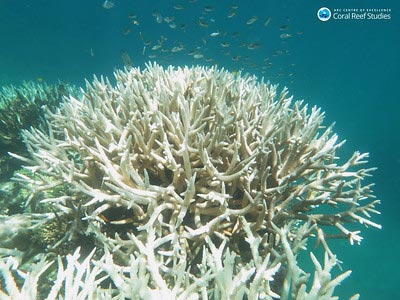
First, El Niño brought warmer water to the Coral Sea in 2016, threatening Australia’s Great Barrier Reef’s corals. Long-term global warming meant even more heat in the region, according to a new CIRES assessment. And in a final blow that year, a terrestrial heatwave swept over the coast, blanketing the reef system well into the winter, Karnauskas found. The final toll: more than half the coral in some parts of the Great Barrier Reef died.
“When the Great Barrier Reef bleached severely back in 2016, it earned global attention,” said Kris Karnauskas, CIRES Fellow, associate professor of atmospheric and oceanic sciences at the University of Colorado Boulder, and author on the study out today (May 18, 2020) in Geophysical Research Letters. “Some speculated it was global warming, others thought it was El Niño, but the actual role of those two forces have not really been disentangled. As a physical climate scientist with a bias for the ocean, I thought I should dig in.”
Karnauskas dissected the reasons behind the excessively warm water in Northern Australia’s Coral Sea — water warm enough to “bleach” and kill coral, especially in the northern Great Barrier Reef. Karnauskas used satellite observations and a mathematical technique to fingerprint what phenomena led to what amount of warming, and when. It was the interaction of two key things, he found, that caused the coral-killing heat: A marine heatwave followed by a terrestrial one, both exacerbated by global warming.
First came a marine heatwave. It was El Niño that initially caused a spike in sea surface temperature by shifting sun-blocking clouds away from the region, but global warming trends increased its intensity and extended it by several months by raising the background temperature. Then, a landborne heatwave moved across eastern Australia and spilled out over the ocean just as the first phase of the marine heatwave was ending.
“It turns out that El Niño did play a role, and the eventual warmth was certainly higher because of the long-term trend, but the reason it lasted so long was actually this terrestrial heatwave lurking over eastern Australia until the marine warming event was just finally waning, and then: bang, the heatwave leaked out over the coastline,” Karnauskas said. “That warm air over the ocean changed the way heat is exchanged between the ocean and atmosphere, keeping the ocean warm and bleaching for an extra month or so.”
Increased water temperatures off the northeastern Australian coast triggered the mass death of corals on an unprecedented scale. The hot water persisted for months and caused extensive damage to the ecosystem — drastically changing the species composition of the region.
“This new finding reveals that climate variability and change can lead to marine impacts in surprising, compounding ways, including heatwaves both on land and in the ocean,” said Karnauskas. “From heatwaves to hurricanes, we need to double down on efforts to understand the complexities of how anthropogenic climate change will influence extreme events in the future.”
Reference: “Physical Diagnosis of the 2016 Great Barrier Reef Bleaching Event” by Kristopher B. Karnauskas, 18 May 2020, Geophysical Research Letters.
DOI: 10.1029/2019GL086177
CIRES is a partnership of NOAA and the University of Colorado Boulder.
Never miss a breakthrough: Join the SciTechDaily newsletter.
Follow us on Google and Google News.
1 Comment
I have been out of Australia 43 years.
A few times a year, I would see a photo of the Pacific surf – usually NSW, FNC.
In each new photo, the surf was greener than the previous – from its original pale blue.
I knew that there would be a limit; it appears that we are approaching that limit, esp for effectively closed ocean systems, like the Spencer Gulf & Gulf of St Vincent.
I recommend an audit of all pissnshit going into all waterways in Australia – inland, and oceanic. And a study of how that might be redirected to agricultural land as fertiliser.
If that algal bloom gets to the Great Barrier Reef, that will be the end of it.