
Close Menu
    Facebook X (Twitter) Instagram
    SciTechDaily
    • Biology
    • Chemistry
    • Earth
    • Health
    • Physics
    • Science
    • Space
    • Technology
    Facebook X (Twitter) Pinterest YouTube RSS
    SciTechDaily
    Home»Space»Asteroid 1998 KN3 Zips Past the Orion Nebula
    Space

    Asteroid 1998 KN3 Zips Past the Orion Nebula

    By NASAAugust 26, 2013No Comments2 Mins Read
    Facebook Twitter Pinterest Telegram LinkedIn WhatsApp Email Reddit
    Share
    Facebook Twitter LinkedIn Pinterest Telegram Email Reddit
    Potentially Hazardous NEO 1998 KN3 Zips Past the Orion Nebula
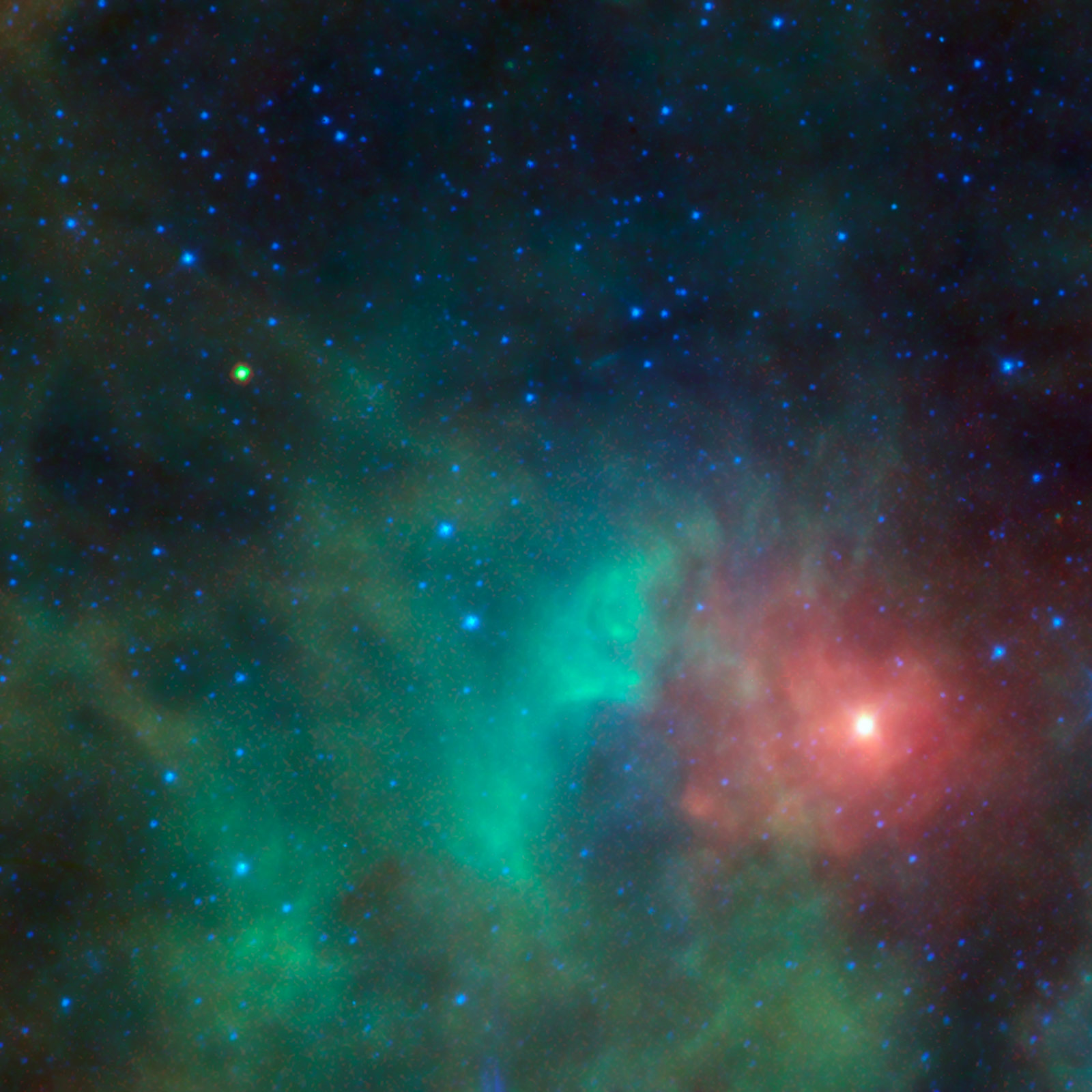
    Near-Earth object 1998 KN3 speeds past a dense gas and dust cloud near the Orion nebula. The asteroid is about .7 miles (1.1 kilometers) in diameter and reflects only about 7 percent of the visible light that falls on its surface, which means it is relatively dark. Credit: NASA/JPL-Caltech

    This NEOWISE image shows asteroid 1998 KN3 as it zips by the Orion nebula.

    This image shows the potentially hazardous near-Earth object 1998 KN3 as it zips past a cloud of dense gas and dust near the Orion nebula. NEOWISE, the asteroid-hunting portion of the Wide-field Infrared Survey Explorer, or WISE, mission, snapped infrared pictures of the asteroid, seen as the yellow-green dot at the upper left. Because asteroids are warmed by the sun to roughly room temperature, they glow brightly at the infrared wavelengths used by WISE.

    Astronomers use infrared light from asteroids to measure their sizes, and when combined with visible-light observations, they can also measure the reflectivity of their surfaces. The WISE infrared data reveal that this asteroid is about .7 miles (1.1 kilometers) in diameter and reflects only about 7 percent of the visible light that falls on its surface, which means it is relatively dark.

    In this image, blue denotes shorter infrared wavelengths, and red, longer. Hotter objects emit shorter-wavelength light, so they appear blue. The blue stars, for example, have temperatures of thousands of degrees. The coolest gas and dust appear red. The asteroid appears yellow in the image because it is about room temperature: cooler than the distant stars, but warmer than the dust.

    JPL manages the Wide-field Infrared Survey Explorer for NASA’s Science Mission Directorate, Washington. The principal investigator, Edward Wright, is at UCLA. The mission was competitively selected under NASA’s Explorers Program managed by the Goddard Space Flight Center, Greenbelt, Maryland. The science instrument was built by the Space Dynamics Laboratory, Logan, Utah, and the spacecraft was built by Ball Aerospace & Technologies Corp., Boulder, Colorado. Science operations and data processing take place at the Infrared Processing and Analysis Center at the California Institute of Technology in Pasadena. Caltech manages JPL for NASA.


    Never miss a breakthrough: Join the SciTechDaily newsletter.
    Follow us on Google and Google News.

    Asteroid Astronomy JPL NASA WISE
    Share. Facebook Twitter Pinterest LinkedIn Email Reddit

    Related Articles

    WISE Spacecraft Will Be Reactivated to Hunt for Asteroids

    NASA’s WISE Mission Identifies 28 New Asteroid Families

    NASA’s Dawn Gets a Close Up View of the Canuleia Crater on Vesta

    NASA’s WISE Uncovers New Clues on Jovian Trojans

    NASA’s WISE Discovers Millions of Black Holes

    Flame Nebula Burns Bright in New WISE Image

    WISE Observations Provide Crucial Information on Brown Dwarfs

    NEOWISE Data Reveals Potentially Hazardous Asteroids

    WISE Views Aging Star Erupting With Dust

    Leave A Reply Cancel Reply

    • Facebook
    • Twitter
    • Pinterest
    • YouTube

    Don't Miss a Discovery

    Subscribe for the Latest in Science & Tech!

    Trending News

    Researchers Warn Widely Prescribed Blood Pressure Drugs Could Be Harming Diabetic Kidneys

    James Webb Spots Something Strange Between Day and Night on an Alien Planet

    How Ancient People Moved a 6-Ton Stone 700 Kilometers to Stonehenge

    The Unexpected Gut Health Risk of Cutting Out Sugar

    Popular Weight-Loss Drugs Like Ozempic Linked to Lower Breast Cancer Risk

    AI Learned the Rules of the Universe and That Became a Problem

    Scientists Found a Hidden Brain Signal That Predicts Social Behavior

    Even GPT-5 Failed This Human Attention Test

    Follow SciTechDaily
    • Facebook
    • Twitter
    • YouTube
    • Pinterest
    • Newsletter
    • RSS
    SciTech News
    • Biology News
    • Chemistry News
    • Earth News
    • Health News
    • Physics News
    • Science News
    • Space News
    • Technology News
    Recent Posts
    • These Tiny Birds Became Giants on Remote Scottish Islands
    • A Fatal Deer Disease May Be Spreading in Ways No One Expected
    • 68 Quadrillion Miles: Scientists Map Earth’s Vast Hidden Fungal Network for the First Time
    • Breakthrough Fentanyl Vaccine Could Neutralize Designer Drugs and Prevent Overdoses
    • Researchers Expected Ozempic Weight Loss to Boost Exercise. It Didn’t
    Copyright © 1998 - 2026 SciTechDaily. All Rights Reserved.
    • Science News
    • About
    • Contact
    • Editorial Board
    • Privacy Policy
    • Terms of Use

    Type above and press Enter to search. Press Esc to cancel.